To serve chicken and waffles at scale without long lines, guarantee your fryer has enough capacity to handle high volumes efficiently. A larger fryer reduces wait times, keeps chicken crispy, and maintains quality during busy hours. Proper workflow and timing also prevent waffles from sitting too long or becoming soggy. Balancing equipment and process is key to delivering consistently delicious dishes fast—keep going to discover how to optimize every step for peak results.
Key Takeaways
- Ensure fryer capacity matches peak order volume to prevent delays and maintain consistent chicken quality.
- Use appropriately sized fryers to avoid overloading, which slows cooking and causes unevenly cooked chicken.
- Coordinate workflow so waffles and chicken are prepared simultaneously, reducing wait times and long lines.
- Maintain efficient kitchen flow to keep syrup and waffle prep timely, supporting quick service and hot dishes.
- Balance equipment and workflow to deliver hot, crispy chicken and waffles efficiently during busy periods.
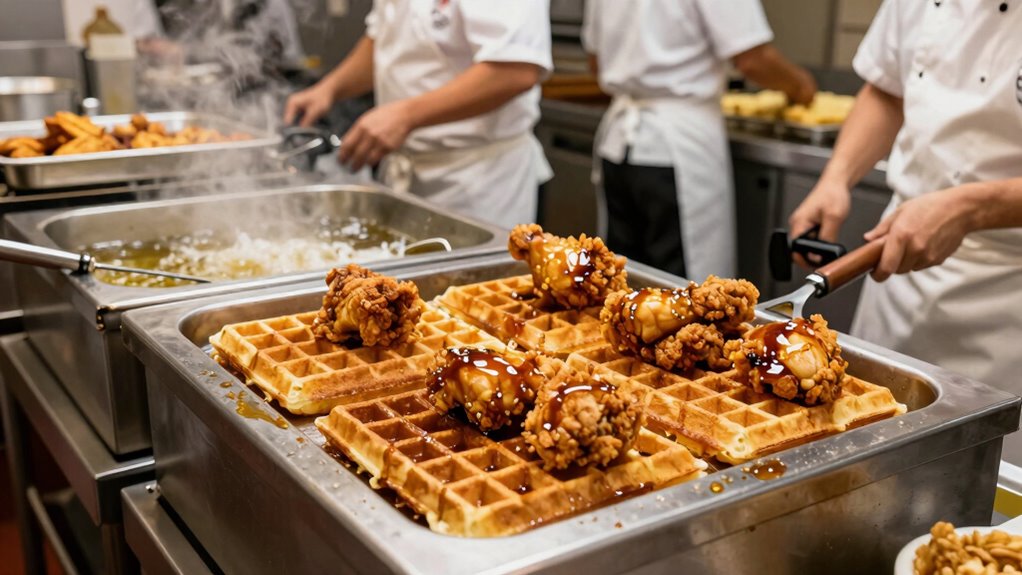
Chicken and waffles, once a niche comfort food, have now become a popular menu staple across restaurants of all sizes. As a restaurant owner or chef, you know that serving this dish well requires attention to detail, especially when it comes to consistency and speed. One of the biggest challenges is ensuring each plate hits the mark—crispy waffles with perfect syrup consistency and tender, flavorful chicken—without creating long lines or wait times that frustrate customers. That’s where understanding fryer capacity and managing your workflow become essential.
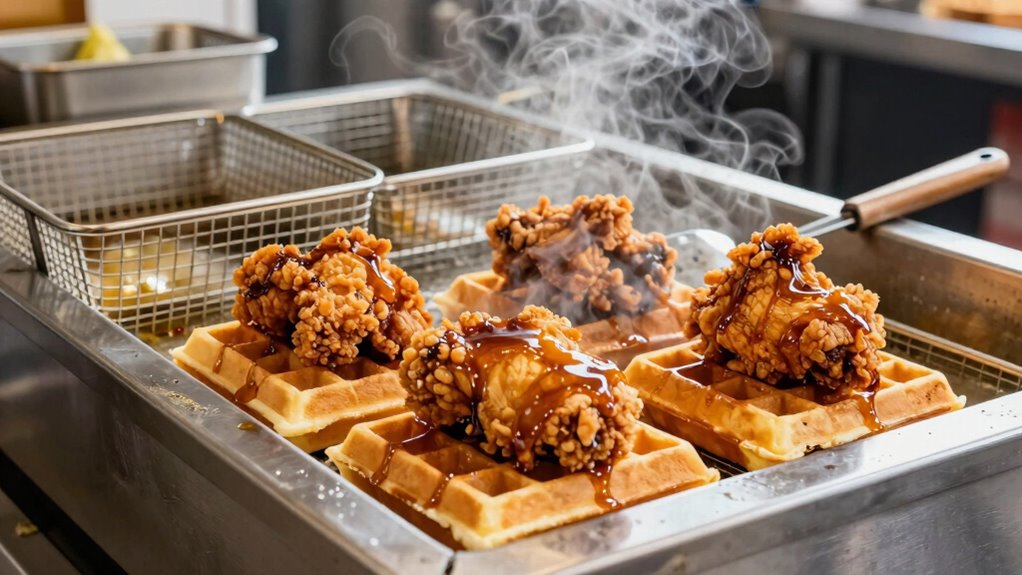
The key to preventing bottlenecks lies in your fryer capacity. When you’re cooking chicken at scale, you need enough fryer space to handle high volume without sacrificing quality. Overloading a fryer slows down cooking time, leading to unevenly cooked chicken or soggy waffle accompaniments, which can ruin the dish. With a properly sized fryer, you can cook chicken consistently, ensuring each piece is juicy and crispy. This consistency is critical, especially when serving multiple tables or a busy lunchtime rush. When your chicken is cooked efficiently, you can keep up with demand without sacrificing the quality that keeps customers coming back.
Proper fryer capacity ensures consistent, high-quality chicken for busy service times.
Waffle crispiness is another aspect where fryer capacity plays an indirect role. While waffles are typically made on a griddle, the timing and preparation process depend on your overall workflow. If your kitchen is overwhelmed, waffles might sit too long, losing their crispness. To avoid this, you need to streamline the process so that waffles are freshly made and served hot—crisp on the outside, tender inside. This is where managing your prep stations and timing becomes essential. When done right, you can serve waffles with just the right crunch, complementing the tender chicken perfectly.
Syrup consistency is often overlooked but equally important. When your kitchen runs smoothly, you can pour syrup that’s just the right thickness—neither too thick nor too runny—ensuring each bite of chicken and waffle combo is flavorful and satisfying. If you’re rushing, syrup can become uneven or cold, impacting the overall experience. Proper workflow and sufficient fryer capacity help maintain the dish’s integrity from kitchen to table, keeping the syrup at the perfect pourable consistency and the waffle crispiness intact.
Ultimately, preventing long lines and ensuring quality hinges on your ability to balance fryer capacity with kitchen workflow. When your equipment supports high-volume cooking, your team can deliver hot, crispy waffles paired with tender chicken and syrup that’s just right—every single time. This not only improves customer satisfaction but also boosts your restaurant’s reputation, making chicken and waffles a go-to menu item that’s reliably delicious at scale.

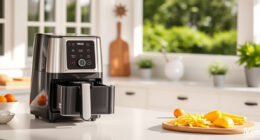
Commercial Deep Fryer with Basket 21QT/20L Stainless Steel Large Capacity
- Powerful Dual Heating System: 1700W with U-shaped heating tubes
- Large Capacity: 20L oil tank with multiple baskets
- Temperature Control Range: 140F to 390F (60C-200C)
As an affiliate, we earn on qualifying purchases.
As an affiliate, we earn on qualifying purchases.
Frequently Asked Questions
How Do I Calculate the Ideal Fryer Capacity for My Restaurant?
To calculate your ideal fryer capacity, start by evaluating your daily chicken orders and peak service times. Consider your fryer size and how many batches you need to cook simultaneously. Use a capacity calculation that accounts for cook time and turnover rate, ensuring your fryer can handle peak demand without delays. This way, you avoid long lines and keep service smooth, matching your fryer capacity to your restaurant’s specific needs.
What Are Common Mistakes When Scaling up Chicken and Waffle Production?
When scaling up chicken and waffle production, you often make the mistake of ignoring batch size efficiency, which slows service. Also, neglecting equipment redundancy causes delays if one fryer breaks down. To avoid these pitfalls, optimize your batch size for consistent output, and invest in extra fryers or backup equipment. This ensures smooth operations, reduces wait times, and keeps customers happy during busy hours.
How Does Fryer Capacity Impact Food Quality and Customer Satisfaction?
Imagine serving cold, soggy chicken because your fryer can’t keep up. Fryer capacity directly impacts food quality and customer satisfaction—overloaded fryers lead to uneven cooking and longer wait times. Regular fryer maintenance and proper ingredient prep guarantee consistent heat and quick turnaround, preventing quality drops. If you expand capacity thoughtfully, you maintain delicious, crispy chicken and happy customers, avoiding long lines and negative reviews.
Are There Cost-Effective Ways to Increase Fryer Capacity?
You can increase fryer capacity cost-effectively by investing in upgrades like larger fryers or adding multiple units. Consider alternative cooking methods such as convection ovens or batch fryers, which use space efficiently and reduce wait times. These options help you serve more customers without breaking the bank, ensuring consistent food quality and satisfaction. Regular maintenance and optimizing cooking schedules also maximize your existing capacity efficiently.
How Can I Optimize Fryer Usage During Peak Hours?
Think of your fryer as a well-tuned engine—every second counts. To optimize usage during peak hours, you should streamline safety protocols and staff training so your team works swiftly and safely. Schedule fryer rotations efficiently, pre-prep ingredients, and monitor oil temperature closely. Clear communication guarantees everyone’s on the same page, preventing bottlenecks. With precise coordination, your fryer runs smoothly, serving happy customers without long waits.
Conclusion
By understanding the fryer capacity rule, you can keep lines short and customers satisfied. Did you know that a single fryer can process up to 200 pieces of chicken per hour? That’s enough to serve a busy restaurant efficiently without long waits. When you scale your operation wisely, you guarantee everyone leaves happy and enthusiastic to return. So, prioritize fryer capacity, and watch your customer experience—and your business—thrive.