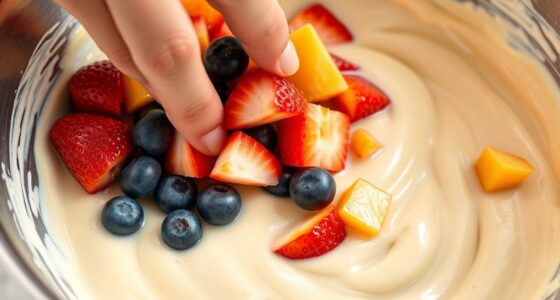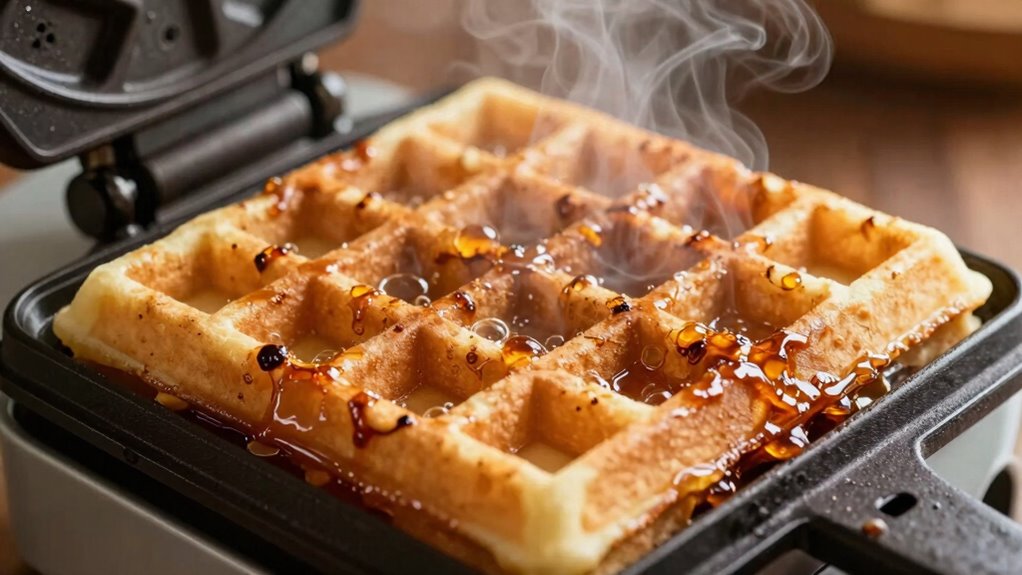

When you mix acid, heat, and time in waffle batter, they work together to create the perfect texture and flavor. Acid interacts with leavening agents to produce carbon dioxide, making your waffles rise and become tender. Heat transforms moisture into steam, browns the outside, and develops rich flavors through the Maillard reaction. Resting the batter allows ingredients to meld and reactions to complete. Keep exploring to discover how these elements combine for ideal waffle results.
Key Takeaways
- Acid reacts with leavening agents to produce carbon dioxide, aiding batter rise and creating a light, fluffy texture.
- Heat transforms moisture into steam, expanding the batter and developing a crispy crust through Maillard reactions.
- Resting the batter allows gluten relaxation and acid-leavening reactions to enhance flavor and leavening effectiveness.
- Proper heat application ensures even cooking, preventing undercooked centers and overbrowned exteriors.
- Adequate time for batter development ensures ingredient integration, optimal leavening, and improved overall waffle quality.
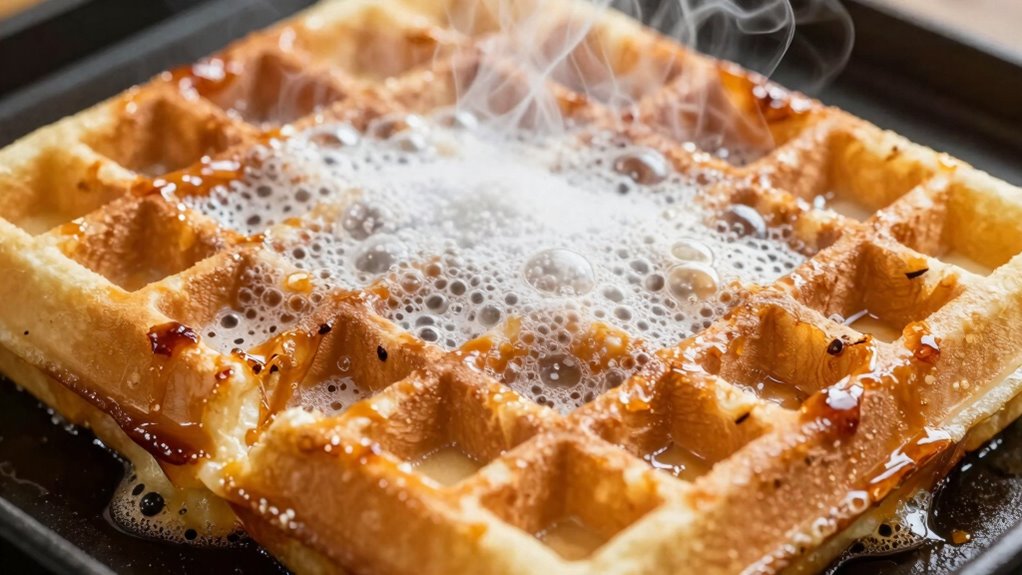
Waffle batter might seem simple, but understanding its chemistry reveals why certain ingredients and techniques matter. When you combine acid, heat, and time, you’re orchestrating a complex process that influences both flavor enhancement and texture development. These elements don’t just happen; they work together to produce waffles that are crispy on the outside, tender on the inside, and bursting with flavor.
Starting with acid, it plays a vital role in balancing flavors and tenderizing the batter. Adding ingredients like buttermilk, yogurt, or a splash of vinegar introduces acidity that reacts with baking soda or baking powder. This reaction produces carbon dioxide gas, which helps the batter rise. The acid also suppresses gluten formation, resulting in a softer, more delicate crumb. As a result, your waffles become lighter and more flavorful, with a subtle tang that complements the sweetness. Proper acidity isn’t just about taste—it’s about creating a harmonious texture that’s airy yet sturdy enough to hold toppings.
Heat is the catalyst that transforms chemical reactions into the crispy, golden-brown exterior you crave. When heat is applied to the batter, the moisture turns to steam, causing expansion and forming a crisp crust. The Maillard reaction kicks in at higher temperatures, creating complex flavors and a rich aroma. This browning process enhances flavor depth and adds a delightful crunch, making each bite more satisfying. Too hot, and you risk burning the outside before the inside cooks; too cool, and your waffles may turn out pale and limp. The key is controlling temperature to guarantee even heat distribution, giving you that perfect balance of crispness and tenderness. Additionally, understanding heat transfer can help you optimize cooking techniques for better results. Using proper cooking equipment can also make a significant difference in achieving consistent results. An understanding of thermal conductivity can further help in selecting the right tools for even cooking.
Time is the silent partner that allows these chemical reactions to fully develop. When you let the batter rest briefly before cooking, gluten strands relax, and ingredients meld together, resulting in an improved texture and flavor. Resting also allows the acid to fully react with leavening agents, ensuring maximum rise and fluffiness. During cooking, patience is essential; giving the batter enough time on the hot griddle ensures thorough heat penetration, promoting an even cook. Rushing the process can lead to undercooked centers or overly browned exteriors. Additionally, understanding the importance of batter resting can help you achieve consistently better results. The magic happens when heat, acid, and time align—each element working in concert to produce waffles that are crispy, tender, and rich in flavor.

Rotating Belgian Waffle Maker 1000W with 7 Browning Settings, 1 Inch Thick Nonstick Waffle Iron with Even Heating System and Removable Drip Tray (Rose)
- Powerful Heating System: 1000W for quick waffle cooking
- Fast Cooking Time: Cooks five 1-inch waffles in under 10 minutes
- Adjustable Browning Settings: Seven levels for perfect crispness
As an affiliate, we earn on qualifying purchases.
As an affiliate, we earn on qualifying purchases.
Frequently Asked Questions
How Does Acidity Affect Waffle Texture?
Acidity directly influences your waffle’s texture through pH balance and sourness impact. When the batter is more acidic, it creates a tender, airy crumb by breaking down gluten and proteins, making your waffles lighter. Too much acidity, however, can make the batter too sour and affect browning. By controlling acidity levels, you guarantee your waffles have the perfect balance of crispness and fluffiness, enhancing overall texture and flavor.
Can Over-Heating Ruin Waffle Batter?
Over-heating can totally ruin your waffle batter, turning it into an unrecognizable, flavorless disaster! When you go beyond the perfect temperature, heat destroys ingredient stability, risking burnt flavors and tough textures. It throws off the delicate flavor balance you want, making your waffles bitter or bland. Keep your heat in check, and you’ll preserve the batter’s integrity, ensuring fluffy, golden waffles with the right taste and texture every time.
Does Resting Time Improve Waffle Fluffiness?
Yes, resting time can improve waffle fluffiness. When you let the batter sit, the flour absorbs more liquid, improving batter viscosity, which results in a lighter, airier texture. This pause also helps develop flavors, enhancing your waffle’s taste. As the batter rests, the acid in your ingredients works with the heat during cooking to create a tender, fluffy waffle with better flavor. So, don’t rush—rest your batter for the best results.
What Role Does Acid Play in Browning?
Did you know that adding acid to waffle batter can increase browning by up to 30%? Acid plays an essential role in browning by adjusting the pH balance, which enhances Maillard reactions and caramelization. This not only gives your waffles a richer, more complex flavor but also creates a beautifully golden crust. So, a splash of acid boosts both flavor enhancement and visual appeal, making your waffles irresistible.
How Does Temperature Influence Batter Leavening?
Temperature considerably influences batter leavening by affecting the fermentation process and ingredient interactions. As you increase the heat, the gases produced during fermentation expand faster, creating more rise and a lighter texture. Too high, and the batter might over-expand or burn; too low, and it won’t rise properly. You control this balance by maintaining the right temperature, ensuring consistent leavening, and achieving the perfect waffle texture.
Conclusion
As you watch your batter transform in the waffle iron, remember that acid, heat, and time are the silent architects of perfection. The chemistry unfolds quietly, but its effects are dramatic—crisp edges, tender insides, golden hues. Just when you think you see it all, a sudden burst of steam reveals the secret: the magic happens in that fleeting moment when chemistry and heat collide. And in that instant, breakfast becomes unforgettable.