

For most home bakers, the KitchenAid Artisan Series 5-Quart Tilt-Head is the best all-around stand mixer here, with a versatile capacity for everyday cakes, cookies, and bread dough. The Cuisinart SM-50NAS is a strong alternative for bakers who want a 5.5-quart bowl and 12 speeds, while the Kitchen in the Box 3.2-quart compact models suit smaller kitchens and batches. The main tradeoff is between capacity and counter space: a larger bowl can handle more at once, but takes up more room and may be awkward for small recipes. Bowl-lift designs add stability for heavier mixing, while tilt-head models make it easier to reach the bowl. Read on for the full comparison and help matching a mixer to the way you bake.

Get baking supplies delivered free with Prime
- Fast, free delivery on millions of items
- Prime Video, Amazon Music and more included
- Member-only deals all year
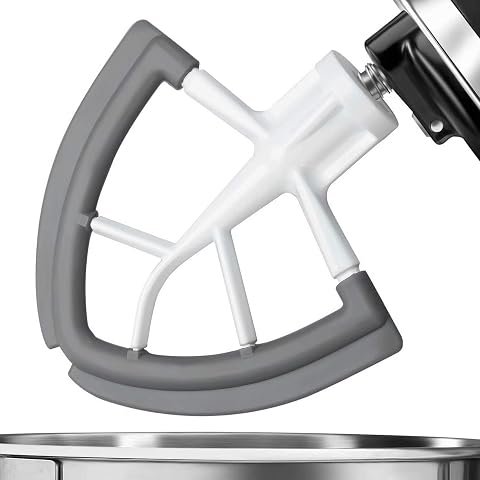
Complete the kit


Key Takeaways
- The 5-quart KitchenAid Artisan models offer the broadest fit for regular home baking, with several color options sharing the same basic capacity and tilt-head format.
- The Cuisinart SM-50NAS and KitchenAid 5.5-quart bowl-lift give bakers more bowl capacity, but the bowl-lift design favors larger or heavier batches over quick access.
- The Kitchen in the Box 8.5-quart mixers are the largest options in this lineup; their capacity makes more sense for big batches than for occasional small recipes.
- The 3.2- and 3.5-quart Kitchen in the Box models are better suited to compact kitchens and modest batches, with less room for doubling recipes.
- Several products share nearly identical capacity and format, so bowl size, head style, and expected batch size matter more to the choice than color or speed count alone.




| stand mixers for baking | Bowl material | Weight | Dimensions | Capacity |
|---|---|---|---|---|
| KitchenAid Artisan Series 5-Qu | Stainless steel | 22.8 pounds | 14.1 x 8.7 x 13.9 inches (D x W x H) | 5 quarts |
| Cuisinart SM-50NAS 5.5-Quart S | Stainless steel | 18.4 pounds | — | 5.5 quarts |
| KitchenAid Classic Series 4.5- | Stainless steel | 22 pounds | 14.1 x 8.7 x 13.9 inches | 4.5 quarts |
| KitchenAid 5.5-Quart Bowl-Lift | Stainless steel | — | 14.63 x 11.31 x 16.5 inches (D x W x H) | 5.5 quarts |
| Martha Stewart 5.3-Quart Tilt- | Stainless steel | — | — | 5.3 quarts |
| Kitchen in the Box 8.5-Quart S | Stainless steel | — | — | — |
| Kitchen in the Box 8.5-Quart S | Stainless steel | — | — | — |
| Kitchen in the Box 3.5-Quart 1 | — | 5 lb | 11.5 x 7.28 x 10.8 in | — |
| Kitchen in the Box 3.2-Qt Comp | Stainless steel | 7 lb | 12.9 x 7 x 10.2 in | — |
| KitchenAid Artisan 5-Quart Til | Stainless steel | 11 kg | 9.3 x 14.3 x 14 in (D x W x H) | — |
| Martha Stewart 5.3-Quart Tilt- | Stainless steel | — | — | — |
| Electactic 5.3-Quart Electric | Stainless steel | 8 lb | 15.75 × 8.9 × 13.62 in (D × W × H) | 5.3 qt |
| Kitchen in the Box 3.2-Quart C | Stainless steel | 7 lb | 12.9 × 7 × 10.2 in | 3.2 qt (3.02 L) |
| KitchenAid Artisan Series 5-Qu | Stainless steel | 22 lb | 14.1 × 8.7 × 13.9 in (D × W × H) | 5 qt |
| KitchenAid Artisan 5-Quart Til | Stainless steel | 22.8 lb | 14.1 × 8.7 × 13.9 in (D × W × H) | 5 qt |
More Details on Our Top Picks
KitchenAid Artisan Series 5-Quart Tilt-Head Stand Mixer, Juniper (KSM150PS)
I’d put the KitchenAid Artisan Series first for bakers who want one mixer to cover cakes, cookies, whipped mixtures, and occasional dough. Its 5-quart bowl and 10 speeds offer useful range for everyday batches, while the tilt-head makes it easier to add ingredients or remove the bowl than with the KitchenAid 5.5-Quart Bowl-Lift model. The included beater, dough hook, wire whip, and pouring shield make it ready for varied recipes without a separate accessory purchase. The tradeoff is that this is not the biggest-capacity option here: the Cuisinart SM-50NAS and KitchenAid bowl-lift both have 5.5-quart bowls. At 22.8 pounds, it is also better suited to a regular counter spot than frequent cupboard storage, and its hub attachments cost extra.
Pros:- 5-quart stainless steel bowl suits many everyday baking batches.
- Tilt-head design gives convenient access for adding ingredients and changing attachments.
- Includes a flat beater, dough hook, wire whip, and pouring shield.
- Ten speeds cover mixing, whipping, and kneading tasks.
Cons:- Smaller bowl than the Cuisinart SM-50NAS and KitchenAid 5.5-Quart Bowl-Lift.
- At 22.8 pounds, it is cumbersome to move frequently.
- Hub-powered attachments are sold separately.
Best for: Home bakers who make a mix of cakes, cookies, frostings, and moderate dough batches and want a familiar tilt-head format.
Not ideal for: Bakers who routinely make large batches or need to lift a mixer in and out of storage; its bowl is smaller than the 5.5-quart alternatives and the unit is heavy.
- Capacity:5 quarts
- Speeds:10
- Power:325 watts
- Bowl material:Stainless steel
- Head design:Tilt-head
- Weight:22.8 pounds
- Dimensions:14.1 x 8.7 x 13.9 inches (D x W x H)
- Included components:5-quart bowl, coated flat beater, coated dough hook, 6-wire whip, pouring shield
Our verdict“Choose this Artisan if you want a versatile tilt-head mixer for routine baking, but pick a 5.5-quart model for consistently larger batches.”
Cuisinart SM-50NAS 5.5-Quart Stand Mixer, 12 Speeds, White Linen
The Cuisinart SM-50NAS is a strong choice when you want more bowl room and a useful accessory set without moving to a bowl-lift design. Its 5.5-quart capacity edges out the KitchenAid Artisan’s 5-quart bowl, which can mean fewer split batches when a cookie or cake recipe scales up. The 500-watt motor and 12 speeds give it a broader stated range than the Artisan’s 325 watts and 10 speeds, while the splash guard with pour spout helps contain flour and add ingredients during mixing. The tilt-back head keeps bowl access straightforward. Its main tradeoff is the 18.4-pound weight: lighter than the Artisan, but still not especially convenient for constant storage and retrieval. Optional attachments are separate, and buyers who prefer KitchenAid’s hub ecosystem may favor the Artisan instead.
Pros:- 5.5-quart stainless steel bowl provides more capacity than the KitchenAid Artisan’s 5-quart bowl.
- Includes a chef’s whisk, dough hook, flat paddle, and splash guard with pour spout.
- Twelve speed settings support a range of mixing tasks.
- Bowl and accessories are dishwasher safe.
Cons:- Optional attachments are sold separately.
- At 18.4 pounds, it may be awkward to move in and out of storage.
- Its accessory ecosystem differs from KitchenAid’s hub-powered options.
Best for: Frequent home bakers who want a roomy bowl, multiple speed settings, and dishwasher-safe included accessories for varied recipes.
Not ideal for: Bakers committed to KitchenAid hub attachments or those seeking a particularly light mixer to store away after each use.
- Capacity:5.5 quarts
- Motor power:500 watts
- Speed settings:12
- Bowl material:Stainless steel
- Head design:Tilt-back
- Weight:18.4 pounds
- Included accessories:Chef’s whisk, dough hook, flat mixing paddle, splash guard with pour spout
- Warranty:Limited 3-year warranty
Our verdict“Pick the Cuisinart if extra bowl capacity and a dishwasher-safe accessory set matter more to you than KitchenAid’s attachment ecosystem.”
KitchenAid Classic Series 4.5-Quart Tilt-Head Stand Mixer, Onyx Black
The KitchenAid Classic Series keeps the tilt-head format and three core baking tools of the Artisan, but its 4.5-quart bowl makes it a better fit for modest household batches than for frequent large-scale baking. It can handle routine mixing, whipping, and kneading, and the power hub leaves room to add KitchenAid attachments later. Compared with the 5-quart Artisan, the Classic gives up some bowl capacity and has a lower 275-watt rating; in return, it offers a more pared-back option for bakers who do not need the Artisan’s larger bowl. The included stainless steel bowl, coated beater, dough hook, and wire whip cover common recipes. I would skip it if your typical baking day involves multiple trays or large dough batches, since the Cuisinart SM-50NAS offers a 5.5-quart bowl.
Pros:- Tilt-head design gives easy access to the bowl.
- Includes a stainless steel bowl, flat beater, dough hook, and wire whip.
- Power hub supports separately sold KitchenAid attachments.
- Ten speeds cover common mixing, kneading, and whipping tasks.
Cons:- 4.5-quart capacity is smaller than the Artisan and Cuisinart bowls.
- 275-watt rating is lower than the Artisan’s 325 watts and the 500-watt alternatives.
- Optional hub attachments require a separate purchase.
Best for: Bakers in smaller households who usually prepare standard or modest batches and want a KitchenAid tilt-head with a power hub.
Not ideal for: People who often double recipes or knead large quantities of dough; its 4.5-quart bowl is the smallest among these five picks.
- Capacity:4.5 quarts
- Speeds:10
- Wattage:275 watts
- Bowl material:Stainless steel
- Construction:Metal
- Weight:22 pounds
- Dimensions:14.1 x 8.7 x 13.9 inches
- Included accessories:Stainless steel bowl, coated flat beater, coated dough hook, 6-wire whip
Our verdict“Choose the Classic for regular, modest-size baking batches; move up to the Artisan or Cuisinart if you often need more bowl capacity.”
KitchenAid 5.5-Quart Bowl-Lift Stand Mixer, Porcelain White
For bigger baking sessions, I’d favor this 5.5-quart bowl-lift KitchenAid over the tilt-head Artisan: the larger bowl and three-point locking design are aimed at substantial mixing jobs, while the 500-watt motor and 11 speeds broaden its range. Its standout detail is the half-speed setting, which is designed for folding delicate ingredients without relying on a faster mixing speed. That gives it a more specific baking advantage than the Cuisinart SM-50NAS, whose 5.5-quart capacity and 12 speeds suit general-purpose mixing but do not list a dedicated folding speed. The compromise is the bowl-lift format, which some bakers find less convenient for adding ingredients or removing the bowl than a tilt-head. At 16.5 inches high, it also calls for more vertical counter clearance.
Pros:- 5.5-quart bowl and three-point locking design suit substantial batches.
- Half-speed setting is designed for gently folding delicate ingredients.
- 500-watt motor and 11 speeds offer broad mixing control.
- Includes a flat beater, dough hook, and wire whip.
Cons:- Bowl-lift design is less direct to access than the tilt-head Cuisinart or KitchenAid Artisan.
- At 16.5 inches tall, it may not fit comfortably beneath some cabinets.
- Additional stand mixer attachments are sold separately.
Best for: Bakers who make larger batches, work with dough regularly, or want a dedicated slow setting for folding delicate ingredients.
Not ideal for: Bakers who prioritize quick bowl access, frequently add ingredients mid-mix, or have limited overhead clearance for a taller mixer.
- Capacity:5.5 quarts
- Wattage:500 watts
- Speeds:11, including a half-speed folding setting
- Bowl material:Stainless steel
- Bowl design:Three-point locking
- Dimensions:14.63 x 11.31 x 16.5 inches (D x W x H)
- Included components:5.5-quart bowl, coated flat beater, coated dough hook, 6-wire whip
- Controls:Knob
Our verdict“Choose this bowl-lift model for large batches and controlled folding, but opt for a tilt-head mixer if easy bowl access is your priority.”
Martha Stewart 5.3-Quart Tilt-Head Stand Mixer with Stainless Steel Bowl
The Martha Stewart 5.3-quart mixer stands out for its included flat beater with a silicone edge, a practical choice for batters that tend to cling to the bowl. That feature gives it a different appeal from the KitchenAid Artisan, which includes a standard coated flat beater and a slightly smaller 5-quart bowl. The Martha Stewart model also offers 12 speeds, a removable splash shield, and the familiar tilt-head layout, so ingredient additions and bowl access remain straightforward. Its 5.3-quart bowl sits between the Artisan and the 5.5-quart Cuisinart or bowl-lift KitchenAid, making it a middle ground for batch size. The tradeoff is that the supplied details do not list motor power or a warranty, so buyers comparing those specifications have less information. Its bowl can still occupy significant space in a very small kitchen.
Pros:- Silicone-edge flat beater is designed to work along the bowl while mixing.
- 5.3-quart stainless steel bowl offers more capacity than the KitchenAid Artisan’s 5-quart bowl.
- Tilt-head design allows convenient bowl access.
- Includes a removable splash shield, whisk, dough hook, and flat beater.
Cons:- Bowl may take up too much room in a very small kitchen.
- Motor power and warranty are not specified in the supplied product data.
- Designed for countertop use rather than frequent portable storage.
Best for: Home bakers who make everyday cakes and batters and want a tilt-head mixer with a silicone-edge beater and splash shield included.
Not ideal for: Buyers who need a clearly stated motor-power specification, a compact appliance for very limited counters, or the largest bowl in this group.
- Capacity:5.3 quarts
- Speeds:12
- Bowl material:Stainless steel
- Head design:Tilt-head
- Color:Caviar Gray
- Attachments:Stainless steel whisk, dough hook, flat beater with silicone edge
- Splash shield:Removable
- Model:CC010829-001
Our verdict“Pick this mixer for everyday batches and its silicone-edge beater, but choose the Cuisinart or bowl-lift KitchenAid for a 5.5-quart bowl.”
Kitchen in the Box 8.5-Quart Stand Mixer, 900W, 10-Speed, Black
For baking several loaves or mixing a large batch of dough, the 8.5-quart bowl gives this model more room than the KitchenAid Artisan 5-Quart Tilt-Head Stand Mixer. Its 900-watt copper motor is specified for heavy dough and thick mixtures, while ten speeds and pulse offer flexibility for gentler mixing and whipping. The tilt head and included dough hook, flat beater, whisk, and splash guard cover the core baking jobs without requiring extra purchases. Cleanup is simpler because the bowl and accessories are described as dishwasher-safe. The capacity is also the main compromise: it can be more awkward to store and may be excessive for a small household’s everyday cakes. I’d choose it for batch size, not for a compact kitchen or frequent small recipes.
Pros:- Large 8.5-quart stainless steel bowl accommodates bigger batches than the 5-quart KitchenAid Artisan.
- 900-watt copper motor is specified for heavy dough and thick mixtures.
- Includes a dough hook, flat beater, whisk, and splash guard.
- Dishwasher-safe bowl and accessories simplify cleanup.
Cons:- The large bowl and mixer may take substantial counter or storage space.
- Its capacity can be cumbersome for small everyday batches.
- The listed voltage is 120 V, which may not suit buyers needing another electrical standard.
Best for: Home bakers who regularly prepare large batches of bread dough, cookies, or other recipes for a family or gathering.
Not ideal for: Small-kitchen bakers who mainly make single-loaf or small dessert batches and need an easy-to-store mixer.
- Bowl capacity:8.5 qt
- Motor power:900 W
- Motor type:Pure copper
- Speed settings:10 with pulse function
- Bowl material:Stainless steel
- Design:Tilt-head
- Included accessories:Dough hook, flat beater, whisk, splash guard
- Dishwasher-safe parts:Bowl and accessories
- Voltage:120 V
Our verdict“Choose this mixer if large baking batches matter more than compact storage or small-batch convenience.”
Kitchen in the Box 8.5-Quart Stand Mixer, 900W, Silver
The silver version shares the black model’s main baking advantage: an 8.5-quart stainless steel bowl paired with a 900-watt copper motor. That makes it a more suitable fit than the KitchenAid Artisan 5-Quart Tilt-Head Stand Mixer for bakers who routinely scale up dough or batter. Ten speeds, pulse, and a standard set of three attachments cover mixing, kneading, and whipping; dishwasher-safe bowl and accessories cut down on post-baking cleanup. Compared with the black 8.5-quart Kitchen in the Box, the practical choice is largely color and model labeling rather than a meaningful capacity difference. A large bowl can be overkill for small recipes, and the supplied speed guidance is reported to overlap at settings 3 and 6, which may make speed selection less clear. I’d favor it when batch volume is the priority.
Pros:- 8.5-quart stainless steel bowl provides ample room for large baking batches.
- 900-watt copper motor is designed for heavy dough and thick mixtures.
- Ten speeds and pulse support a range of mixing tasks.
- Tilt head and dishwasher-safe parts make bowl access and cleanup easier.
Cons:- Large capacity may be unnecessary and awkward for small-batch baking.
- Reported speed guidance overlaps at settings 3 and 6.
- The 120-volt specification may not match every kitchen’s electrical requirements.
Best for: Frequent family and event bakers who want a high-capacity bowl and a full set of basic baking attachments.
Not ideal for: Bakers making mostly small recipes, or anyone who wants clear, detailed guidance for choosing a speed.
- Bowl capacity:8.5 qt
- Motor power:900 W
- Motor material:Copper
- Speed settings:10 with pulse function
- Bowl material:Stainless steel
- Controls:Knob
- Design:Tilt-head
- Included attachments:Dough hook, flat beater, whisk, splash guard
- Dishwasher-safe parts:Bowl and accessories
Our verdict“Pick the silver model for large-batch baking if you value capacity over a compact footprint and straightforward speed guidance.”
Kitchen in the Box 3.5-Quart 10-Speed Stand Mixer
With a 3.5-quart bowl and a listed weight of just five pounds, this model is aimed at bakers who need a mixer they can put away between uses. Its ten speeds, suction cups, and included dough hook, flat beater, and wire whisk offer more task variety than the six-speed Kitchen in the Box 3.2-Quart Compact Stand Mixer. The smaller bowl suits everyday cakes, small batches of cookies, and modest amounts of whipped ingredients, while the splash guard and dishwasher-safe accessories help keep routine baking manageable. The tradeoff is capacity and construction: its 300-watt motor and plastic housing make it a less compelling match for frequent heavy dough than either 8.5-quart Kitchen in the Box model. I’d pick it for storage and smaller recipes, not for batch baking.
Pros:- Lightweight 5-pound design is easier to move and store than the large-bowl models.
- 3.5-quart stainless steel bowl fits many everyday small-batch recipes.
- Ten speeds and three baking attachments support varied mixing tasks.
- Suction cups help stabilize the mixer, and dishwasher-safe accessories simplify cleanup.
Cons:- The 3.5-quart bowl limits batch size compared with the 8.5-quart Kitchen in the Box mixers.
- The 300-watt motor is a less compelling choice for frequent heavy dough work.
- Plastic housing may appeal less to buyers seeking a more substantial metal-bodied mixer.
Best for: Apartment dwellers and small-household bakers who make modest recipes and need a lightweight mixer that is easy to store.
Not ideal for: Bread bakers who regularly knead large dough batches or households that need one mixer for high-volume baking.
- Bowl capacity:3.5 qt
- Motor power:300 W
- Speed settings:10
- Dimensions:11.5 x 7.28 x 10.8 in
- Weight:5 lb
- Materials:Plastic and stainless steel
- Special features:Tilt head, suction cups, adjustable speed control
- Included components:Stainless steel bowl, splash guard, dough hook, flat beater, wire whisk
- Voltage:120 V
Our verdict“Choose this compact model for small-batch baking and easy storage, but step up to a larger mixer for frequent bread or family-sized batches.”
Kitchen in the Box 3.2-Qt Compact Stand Mixer with 6 Speeds, Black
This is the most basic small-batch pick here: a 3.2-quart bowl, six speeds, and a set of core attachments for dough, batter, and whipped ingredients. Its four suction feet and tilt-head design help with stability and access, while the compact dimensions suit a counter or cupboard where the 8.5-quart Kitchen in the Box models would be impractical. Compared with the 3.5-quart Kitchen in the Box 10-Speed Stand Mixer, it gives up two speed settings and a little bowl capacity, but keeps the same general small-kitchen role. The listed dough hook and flat beater are aluminum, and the bowl is too limited for large batches. I’d choose it for occasional cakes and modest recipes when compactness matters more than extra capacity or speed options.
Pros:- Compact 3.2-quart design suits limited counters and storage space.
- Tilt head provides access to the bowl when adding ingredients or changing attachments.
- Includes a stainless steel bowl, whisk, flat beater, dough hook, and splash guard.
- Four suction feet help limit movement during mixing.
Cons:- The 3.2-quart bowl is limiting for family-sized recipes.
- Six speeds offer fewer adjustments than the 10-speed 3.5-quart Kitchen in the Box.
- The dough hook and flat beater are aluminum.
Best for: Occasional bakers in small kitchens who want a compact mixer for cakes, small cookie batches, and modest amounts of dough.
Not ideal for: Frequent bread bakers or households that regularly bake large batches and need more bowl capacity or a broader speed range.
- Bowl capacity:3.2 qt (3 L)
- Power:300 W
- Speed settings:6
- Dimensions:12.9 x 7 x 10.2 in
- Weight:7 lb
- Bowl material:Stainless steel
- Body material:ABS plastic
- Attachments:Whisk, flat beater, dough hook
- Special features:Tilt head, splash guard, four anti-slip suction feet
Our verdict“Choose this mixer for occasional, small-scale baking in a tight kitchen, but opt for the 3.5-quart model if you want more speeds and room.”
KitchenAid Artisan 5-Quart Tilt-Head Stand Mixer, Almond Cream
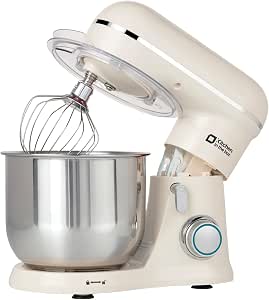
The KitchenAid Artisan takes a middle path between the compact Kitchen in the Box mixers and the 8.5-quart models: its 5-quart handled stainless steel bowl suits many everyday baking recipes without committing to a very large footprint. Metal construction, ten speeds, and a tilt head make it a more substantial all-rounder than the plastic-bodied compact options, while the bowl handle helps when lifting or pouring a finished mixture. It also supports optional hub-powered attachments, giving it a wider range of possible kitchen tasks than the included baking tools alone. Those extras are sold separately, and the listed weight of 11 kg may make it less convenient to move than the five-pound Kitchen in the Box 3.5-quart model. Its capacity also falls short of the two large-batch mixers. I’d choose it for regular, varied baking rather than maximum batch size or easy portability.
Pros:- Metal construction offers a more substantial build than the compact plastic-bodied Kitchen in the Box models.
- Five-quart handled stainless steel bowl fits many everyday baking recipes.
- Ten speeds and tilt-head access support a broad range of mixing tasks.
- Optional hub-powered attachments allow use beyond the included baking setup.
Cons:- The listed 11 kg weight makes it less convenient to move than the compact Kitchen in the Box mixers.
- Hub-powered attachments are sold separately.
- The 5-quart bowl holds less than the 8.5-quart Kitchen in the Box models.
Best for: Regular home bakers who want a sturdy, versatile mixer for everyday cakes, cookies, and moderate dough batches.
Not ideal for: Bakers who need an especially light mixer, routinely prepare very large batches, or expect hub-powered accessories to be included.
- Bowl capacity:5 qt
- Bowl material:Stainless steel
- Construction:Metal
- Speed settings:10
- Wattage:325 W
- Dimensions:9.3 x 14.3 x 14 in (D x W x H)
- Weight:11 kg
- Special features:Tilt-head design, removable bowl, pouring shield included
- Warranty:1-year hassle-free replacement warranty
Our verdict“Choose the Artisan for a sturdy, versatile everyday mixer if you value a metal build and attachment options over portability or maximum capacity.”
Martha Stewart 5.3-Quart Tilt-Head Stand Mixer with 12 Speeds
This Martha Stewart mixer pairs a 5.3-quart stainless steel bowl with the core tools for cakes, cookies, and occasional bread dough. Its tilt head makes it easier to reach the bowl when adding ingredients or changing attachments, while the silicone-edged flat beater can sweep more of the bowl as it mixes. Compared with the Electactic 5.3-Quart Electric Stand Mixer, it has a similar capacity and speed count but no listed motor wattage or pulse function, so the Electactic offers more detail for buyers weighing performance controls. The removable splash shield helps contain flour and batter, though the bowl still needs room on the counter. I’d favor this pick for familiar baking tasks; frequent heavy dough mixing is harder to judge because its motor power is unspecified.
Pros:- 5.3-quart stainless steel bowl suits many everyday baking batches.
- Tilt-head design gives access for scraping the bowl and changing tools.
- Silicone-edged flat beater can contact more of the bowl during mixing.
- Removable splash shield helps contain flour and batter.
Cons:- Motor power is not specified, making heavy-duty dough suitability difficult to assess.
- The 5.3-quart bowl may be too large for especially tight kitchens.
Best for: Home bakers who want a mid-size bowl, basic baking attachments, and easy access to the bowl for routine cakes and cookies.
Not ideal for: Bakers who regularly knead heavy dough or want a stated motor wattage to compare mixing capability.
- Bowl capacity:5.3 qt
- Bowl material:Stainless steel
- Mixer type:Tilt-head electric stand mixer
- Speed settings:12
- Included attachments:Stainless steel whisk, dough hook, silicone-edge flat beater
- Additional features:Removable splash shield, heavy-duty base, bowl handle
- Accessories:Dishwasher-safe and BPA-free
Our verdict“Choose this Martha Stewart model for routine baking with a roomy bowl and simple controls, but look elsewhere if you need clearly specified power for frequent bread dough.”
Electactic 5.3-Quart Electric Stand Mixer with 12 Speeds
The Electactic stands out among the mid-size mixers here by stating its 300-watt motor and adding a pulse function to its 12 speeds. That gives buyers more information about the machine than the Martha Stewart 5.3-Quart Tilt-Head Stand Mixer, whose motor power is not specified, and the pulse setting offers an extra way to control short bursts of mixing. Its 5.3-quart bowl and whisk, dough hook, and flat beater cover familiar baking jobs; the included egg white separator is a small extra rather than a reason to choose it. At 8 pounds with suction feet, it is easier to move and store than the 22-pound KitchenAid Artisan Series 5-Quart. The tradeoff is capacity: its compact, light format is aimed at one- to two-person households and is less suited to large batches.
Pros:- 300-watt motor rating gives buyers a clear power specification.
- Pulse function adds short-burst control alongside 12 speeds.
- Includes whisk, dough hook, flat beater, splash guard, and egg white separator.
- Lightweight body and suction feet support easy storage and stable operation.
Cons:- 5.3-quart capacity may be limiting for large batches.
- Its 8-pound build may be less reassuring for frequent heavy mixing.
Best for: One- or two-person households with limited storage that want a stated motor rating, pulse control, and a mid-size bowl.
Not ideal for: Families baking large batches or frequent bread makers who need more capacity and a heavier-duty machine.
- Capacity:5.3 qt
- Power:300 W
- Voltage:120 V
- Speed settings:12 with pulse function
- Dimensions:15.75 × 8.9 × 13.62 in (D × W × H)
- Weight:8 lb
- Bowl material:Stainless steel
- Included attachments:Whisk, dough hook, flat beater, egg white separator
Our verdict“Pick the Electactic for a compact kitchen and varied small-batch mixing, but choose a larger, sturdier model for regular family-size baking or dense dough.”
Kitchen in the Box 3.2-Quart Compact Stand Mixer with 6 Speeds
With a 3.2-quart bowl and a 7-pound body, this Kitchen in the Box is the most space-conscious baking pick in this group. It has a whisk, dough hook, and flat beater like the larger Electactic 5.3-Quart Electric Stand Mixer, but its smaller bowl is a better fit for a couple of muffins or a modest cookie batch than a full family recipe. Six speeds cover basic mixing and whipping, while four suction cups and a splash guard help keep countertop work steadier and tidier. The Electactic offers twice as many speed settings and a larger bowl, so it gives more flexibility as batch sizes grow. This compact model’s main compromise is capacity, and its light ABS body is not the choice I’d make for repeated heavy dough kneading.
Pros:- Compact 12.9 × 7 × 10.2-inch footprint suits limited counter and cabinet space.
- Light 7-pound body is easier to move and store.
- Includes whisk, dough hook, flat beater, and stainless steel bowl.
- Splash guard and four suction cups support cleaner, steadier mixing.
Cons:- 3.2-quart capacity limits batch size.
- Six speeds provide less control than the 12-speed Electactic mixer.
- Light ABS construction is less suited to demanding, repeated dough work.
Best for: Apartment bakers, occasional bakers, or couples who make small batches and need a mixer that is easy to store.
Not ideal for: Families baking double batches or bread enthusiasts who frequently knead dense dough.
- Capacity:3.2 qt (3.02 L)
- Wattage:300 W
- Voltage:120 V
- Speeds:6
- Dimensions:12.9 × 7 × 10.2 in
- Weight:7 lb
- Bowl material:Stainless steel
- Included attachments:Whisk, dough hook, flat beater
Our verdict“Choose this mixer for occasional small-batch baking where storage space matters more than capacity or heavy-duty kneading.”
KitchenAid Artisan Series 5-Quart Tilt-Head Stand Mixer, Dried Rose (KSM150PSDR)
The Artisan’s metal construction, 5-quart bowl, and 10 speeds make it a more substantial choice than the lightweight Kitchen in the Box 3.2-Quart Compact Stand Mixer. Its included flat beater, dough hook, and six-wire whip cover the central baking tasks, and the pouring shield helps when adding ingredients without stopping to clear a mess. The tilt head offers familiar bowl access, while the attachment hub opens the door to optional tools such as grinders and pasta makers. That ecosystem is a useful expansion path, though those tools are sold separately. Compared with the Blue Velvet KitchenAid Artisan, the Dried Rose version has the same listed capacity, power, and core setup, so the meaningful difference is color. At 22 pounds, it is best left on the counter rather than moved after each bake.
Pros:- Metal construction provides a substantial base for regular baking.
- 5-quart stainless steel bowl accommodates many standard recipes.
- Includes flat beater, dough hook, six-wire whip, and pouring shield.
- Attachment hub supports separately sold accessories for added kitchen tasks.
Cons:- At 22 pounds, it is cumbersome to move and store.
- Hub-powered accessories are sold separately.
- Its 5-quart capacity is smaller than the 5.3-quart Martha Stewart and Electactic bowls.
Best for: Frequent home bakers who want a sturdy, expandable mixer for cakes, cookies, whipping, and occasional dough.
Not ideal for: Bakers with little counter space who need to lift and store their mixer after each use.
- Series and model:Artisan, KSM150PSDR
- Capacity:5 qt
- Wattage:325 W
- Speeds:10
- Dimensions:14.1 × 8.7 × 13.9 in (D × W × H)
- Weight:22 lb
- Bowl material:Stainless steel
- Included components:Stainless steel bowl, coated flat beater, coated dough hook, six-wire whip, pouring shield
- Warranty:1-year limited
Our verdict“Choose the Dried Rose Artisan for a durable, expandable mixer that can stay on the counter, provided its weight and separate accessory costs fit your kitchen.”
KitchenAid Artisan 5-Quart Tilt-Head Stand Mixer, Blue Velvet (KSM150PS)
The Blue Velvet Artisan brings the same core baking setup as the Dried Rose KitchenAid Artisan: 5-quart stainless steel bowl, 10 speeds, tilt head, and tools for beating, kneading, and whipping. Its 325-watt motor and metal construction make it a more substantial countertop fixture than the 7-pound Kitchen in the Box 3.2-Quart Compact Stand Mixer, though the smaller mixer is easier to put away and takes less space. Here, the distinctive draw is the Blue Velvet finish for bakers who want their mixer to complement a particular kitchen palette; the listed baking capabilities do not set it apart from the Dried Rose model. It weighs 22.8 pounds, and optional hub accessories add separate purchases for buyers seeking more functions. I’d choose it for its finish and familiar Artisan format, not for a different baking toolset.
Pros:- Metal construction provides a sturdy countertop mixer.
- 5-quart stainless steel bowl and 10 speeds suit a broad range of baking tasks.
- Includes coated flat beater, coated dough hook, six-wire whip, and pouring shield.
- Attachment hub allows use with optional accessories.
Cons:- At 22.8 pounds, it is difficult to move frequently.
- Optional hub-powered attachments are sold separately.
- Its baking setup closely matches the Dried Rose Artisan, leaving color as the main listed distinction.
Best for: Home bakers who want the Artisan’s standard baking attachments and specifically prefer a Blue Velvet finish for a permanent countertop spot.
Not ideal for: Buyers who prioritize low weight, compact storage, or a meaningful functional difference from the Dried Rose Artisan.
- Series and model:Artisan, KSM150PSVB
- Capacity:5 qt
- Wattage:325 W
- Voltage:120 V
- Speeds:10
- Dimensions:14.1 × 8.7 × 13.9 in (D × W × H)
- Weight:22.8 lb
- Bowl material:Stainless steel
- Included accessories:Stainless steel bowl, coated flat beater, coated dough hook, six-wire whip, pouring shield
Our verdict“Choose the Blue Velvet Artisan if its finish is the one you want for a stay-on-counter mixer; the Dried Rose model offers the same listed baking setup.”

How We Picked
I ranked these mixers around the jobs home bakers are most likely to do: creaming butter and sugar, mixing batters, whipping, and kneading dough. I weighed bowl capacity against practical usability, including how easily a baker can access the bowl, whether the stated size suits small or large batches, and how the design fits a kitchen counter. I also considered build and versatility based on the listed design and attachments, while treating wattage and speed count as supporting details rather than proof of mixing performance.
The ranking favors models with a useful balance for varied baking, then moves toward options built for a narrower need, such as very large batches or limited counter space. Where multiple listings share a brand, capacity, and head style, I distinguish them by their stated configuration rather than assuming color changes performance. Product specifications alone cannot establish how well a mixer handles a particular dough, so buyers with frequent bread-making needs should check the maker’s guidance for dough capacity and recommended mixing duration.
Factors to Consider When Choosing Stand Mixers For Baking
Before choosing a stand mixer, start with the recipes you make most often and the space you can give the machine. Bowl capacity is only part of the decision: head style, small-batch reach, storage, and the frequency of heavy dough mixing can shape how useful a mixer feels day to day.
Choose Capacity Around Your Usual Batch
A larger bowl is useful when you regularly bake multiple loaves or double cookie recipes, but it does not automatically make a mixer better for every kitchen. Small quantities can be harder to mix evenly in an oversized bowl if the beater does not reach the ingredients well. Think about your typical recipe, not the biggest batch you might make once a year. If you often scale recipes up, leave room for the mixture to move without approaching the bowl’s limit. For modest batches, a compact mixer can save storage and counter space. Check the maker’s recommended ingredient and dough limits, since bowl volume alone does not describe what a mixer can handle.
Match the Head Style to Your Work
Tilt-head mixers let you raise the head to add ingredients or remove the bowl, which can make frequent task changes easier. Bowl-lift designs raise the bowl into position and can provide a more planted setup for heavier mixing, though accessing the bowl takes a different motion. Consider where the mixer will sit and whether overhead cabinets leave room to lift a head. If you move the mixer often, its overall footprint and handling may matter as much as the bowl size. Buyers sometimes focus only on capacity and discover that the machine is inconvenient to open or store. Match the mechanism to your kitchen routine, especially if you bake in short sessions and clean up between recipes.
Think About Dough Separately From Batter
Cake batter, whipped cream, and bread dough put different demands on a mixer. A large bowl does not by itself indicate that a model is suited to repeated kneading, and a speed count does not reveal how steadily it handles thick mixtures. If bread is a regular part of your baking, look for the manufacturer’s dough capacity and mixing guidance before buying. For occasional loaves, a more general-purpose mixer may be enough if used within its limits. Overloading a bowl can lead to uneven mixing and strain the machine. Choose around the heaviest recipe you make often, rather than the lightest task or the largest capacity figure.
Check Small-Batch Performance Needs
People who mostly bake for one or two may get more value from a compact bowl than from spare capacity they rarely use. Small bowls take less room, but they also limit how much dough or batter can be made at once. For very small quantities, the beater’s reach can matter: ingredients left below it may need occasional scraping by hand. A stand mixer may not replace a hand mixer for every tiny job, particularly when you only need to whip one egg white or mix a small amount of frosting. Consider whether you want one machine for many batch sizes or a compact option for a narrower set of recipes. This helps avoid buying a large machine that is awkward for the baking you do most.
Budget for Attachments and Cleanup
Included beaters and dough tools cover common baking tasks, while optional attachments can add uses such as grinding or pasta making. Before choosing a mixer for future versatility, confirm which attachments fit that exact model and whether they are sold separately. More accessories can add storage and cleaning work, so buy for jobs you expect to do. Stainless steel bowls are generally practical for routine cleanup, but bowl shape and the number of parts also affect how quickly a baking session ends. Removable parts that are dishwasher safe may help, though the product’s care instructions should decide how you wash them. A mixer that is easy to maintain is more likely to earn counter space between special occasions.
Pay More for a Need You Can Name
A higher-end or larger mixer is easiest to justify when it addresses a recurring task: frequent bread dough, larger household batches, or a specific attachment system you will use. Extra capacity can become wasted space if your recipes stay small, while a compact model can feel limiting if you bake for gatherings. Compare the machine’s stated capacities, included tools, and dimensions before paying for features that sound impressive but do not change your routine. Color choices can help a mixer fit the kitchen, but they should follow the practical decision. If you are new to baking, a straightforward mid-size tilt-head model often offers room to learn without committing to an especially large setup. Buy for the next few years of likely baking, not an imagined version of your kitchen.
Frequently Asked Questions
Is a 5-quart stand mixer enough for baking bread at home?
A 5-quart bowl can suit many home recipes, but bowl volume does not set the safe dough limit on its own. Bread dough can be much more demanding than cake batter, so check the manufacturer’s guidance for dough type, flour quantity, and mixing time. If you bake one or two loaves occasionally, a mid-size mixer may fit your routine. Frequent large or stiff dough batches call for checking the model’s specified limits before choosing. Leave room for the dough to move rather than filling the bowl to its rim.
Should I choose a bowl-lift mixer or a tilt-head mixer?
A tilt-head design is convenient when you frequently add ingredients or remove the bowl, while a bowl-lift model raises the bowl into position and can suit heavier mixing routines. The choice also depends on your kitchen: a tilt head needs space above it, and a bowl-lift mechanism changes how you access the bowl. Neither format guarantees better results for every recipe. Compare the machine’s capacity and the manufacturer’s mixing guidance alongside the mechanism. If possible, check the dimensions and how the bowl locks in place before committing to a permanent counter spot.
Does a higher speed count mean a better mixer for baking?
Not by itself. A wider range of settings can offer more control when moving from gentle mixing to whipping, but the count does not tell you how the machine performs under load or how well the beater reaches the ingredients. For baking, consistency and suitability for your recipes matter more than a headline number. Look at the included attachments and the maker’s instructions for dough and batter. If you mostly make cakes and cookies, a manageable set of speeds may be all you need.
Is an 8.5-quart stand mixer too large for an average home baker?
It may be more bowl than you need if you usually make one cake, a small batch of cookies, or a single loaf. Larger capacity is useful when you often prepare big batches, but it takes up more counter and storage space. Small recipes can also be less convenient in an oversized bowl if the mixing tool does not reach the ingredients effectively. Think about your typical batch size and check whether the manufacturer provides small-batch guidance. If your baking is occasional or modest, a mid-size or compact option may fit better.
Can a compact stand mixer replace a full-size model?
A compact mixer can cover everyday small batches while using less space, but its bowl capacity can rule out doubled recipes and larger doughs. It can be a sensible primary machine for a small household if your recipes fit its limits. For frequent entertaining or batch baking, a larger bowl saves time by reducing the number of mixing rounds. Compare the compact model’s stated capacity with the quantities in your most-used recipes. If you often scale recipes up, the convenience of a full-size bowl may outweigh the storage savings.
Conclusion
For the broadest range of home baking, I recommend the KitchenAid Artisan Series 5-Quart Tilt-Head as the best overall choice. The Cuisinart SM-50NAS is a good value alternative for buyers who want a 5.5-quart bowl and 12 speeds, while the KitchenAid 5.5-quart bowl-lift is the premium fit for bakers who prioritize a larger bowl and a more planted design. Beginners can start with a mid-size tilt-head such as the KitchenAid Classic 4.5-quart, which keeps the setup focused on common baking jobs. For small kitchens and modest batches, choose one of the Kitchen in the Box compact models; for large batches, compare the 8.5-quart Kitchen in the Box options against the maker’s workload guidance. Pick the bowl size and style that match the recipes you make most, and the choice should become clear.