TL;DR
Silicone baking mats are reusable, flexible sheets placed on baking trays to create a nonstick surface for foods such as cookies, macarons, and caramel. They can reduce parchment use and help food release, but they may change browning and crispness, so use them according to the recipe and the manufacturer’s temperature and care instructions.
Use a silicone mat flat on a baking tray, and check the product’s own temperature and care instructions.
Expect cookie bottoms and crispness to differ from parchment or bare metal; test the surface with your recipe.
Wash with warm soapy water and a soft sponge, and avoid cutting directly on the mat.
Replace a mat with tears, peeling, exposed reinforcement, or damage that affects performance.
A reusable mat may reduce disposable liner use for frequent bakers, but it still requires cleaning, storage, and eventual replacement.

Get baking supplies delivered free with Prime
- Fast, free delivery on millions of items
- Prime Video, Amazon Music and more included
- Member-only deals all year
What a silicone baking mat does for your tray
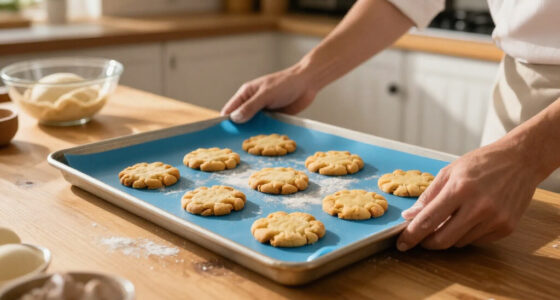
A silicone baking mat is a reusable, flexible sheet that sits on a baking tray and gives food a nonstick surface. Many mats use food-grade silicone, sometimes reinforced with fiberglass mesh to help the sheet hold its shape. The silicone bends easily for storage, while the tray beneath it provides the firm, flat support needed for baking. That setup is handy when you’re piping macarons or making caramel, two foods that can cling stubbornly to a bare pan. For instance, you can line a tray with the mat, pipe evenly spaced macarons, and lift them off after baking without scraping each one loose. The mat works like a reusable landing pad: it stays put on the tray while the food releases from its surface. Sizes vary, so check the dimensions against your baking sheet before buying. A mat that curls up at the edges or hangs over the tray can make spreading dough harder and may interfere with handling. Use it flat on a tray, and follow the mat’s instructions for its material, temperature limits, and care.Products Worth Considering

Le Creuset Alpine Enameled Cast Iron Fondue Set, 2.5 qt., Nuit

Le Creuset Enameled Cast Iron Round Bread Oven, 9.5-Inch, Cerise

Traeger Pro 22 Wood Pellet Grill & Smoker
As an affiliate, we earn on qualifying purchases.
When a silicone mat beats parchment—and when it doesn’t
Silicone baking mats are most useful when you want repeated nonstick performance for sticky or delicate foods; parchment is often easier when you want quick cleanup or a crisp, browned bottom. Neither surface wins every recipe. A mat can save disposable liners over many bakes, but parchment takes less effort to discard and replace.| Surface | Best fit | Trade-off |
|---|---|---|
| Silicone mat | Macarons, caramel, kneaded dough, repeat baking | May change browning; needs washing and storage |
| Parchment paper | Easy cleanup, many cookie recipes, crisp results | Usually discarded after use |
| Bare metal tray | Recipes that rely on direct contact and browning | Food may stick; cleanup can take more work |
Why cookies and roasted food can brown differently
A silicone baking mat can change how heat reaches the bottom of food because it sits between the food and the metal tray. That layer may insulate the base, so cookies can brown differently than they do on parchment or bare metal. The result also depends on your oven, pan color, recipe, and how cold or warm the dough is. Imagine two trays of the same chocolate chip cookie dough. One sits on a dark metal sheet with parchment; the other rests on a mat. The mat batch might emerge with smooth, pale undersides while the parchment batch develops a deeper golden crust. Neither result automatically means the cookies are underbaked; check their texture and the recipe’s cues, not color alone. This difference matters most when a recipe depends on crispness or strong contact with a hot surface. If your mat cookies spread too much or stay softer than you like, test parchment, chill the dough, or use the pan and surface named in the recipe. Change one variable at a time, and jot down the result. Your oven’s personality can be as distinctive as a favorite cast-iron pan.How to use a silicone baking mat safely and get reliable results
Use a silicone baking mat on a flat baking tray, check its stated temperature range, and match it to a recipe that benefits from a nonstick surface. Product instructions matter because mats differ in construction, temperature limits, and care guidance. Follow this quick routine before your next batch.- Check the mat. Look for tears, peeling, or exposed reinforcement. Skip a damaged mat.
- Read the label. Confirm the oven temperature limit and any appliance restrictions for your particular product.
- Fit it to a tray. Lay it flat on a baking sheet; don’t use it as a freestanding pan.
- Place food directly on the surface. Most recipes don’t require extra grease, but follow the recipe and product guidance.
- Use tools carefully. Lift food with an appropriate utensil, and never cut directly on the mat.
How to wash away grease without wearing out the mat
Wash a silicone baking mat with warm water, dish soap, and a soft sponge, then let it dry before storing it. Fatty foods can leave a slick film, and strongly flavored dishes may leave a lingering smell. Gentle, regular cleaning is a sensible first move; check the product’s care instructions before trying a special treatment or abrasive tool. Picture cleaning up after a tray of roasted vegetables. The mat looks clean at first, but a thin sheen remains where oil pooled. A careful wash with warm, soapy water and a soft sponge can lift ordinary residue without scraping the surface. If the film persists, repeat the wash and consult the maker’s guidance rather than reaching for an unverified cleaning hack. Many mats are described as dishwasher-safe, though some manufacturers recommend hand-washing or say it can help extend the mat’s useful life. Roll or store it as directed, away from sharp utensils that could nick it. A cut, tear, peeling patch, or exposed reinforcing layer is a clear reason to replace the mat. There’s no universal lifespan: how often you bake, how you clean it, and the product’s quality all play a part.How to decide whether a reusable mat is worth keeping
A silicone baking mat can reduce your use of disposable parchment or foil if you bake often, but it still needs washing, storage, and eventual replacement. Its environmental value depends on how long you use it and what it replaces; calling any reusable product impact-free skips part of the story. The useful question is whether it fits your actual routine. Suppose you bake several trays of macarons each month. A mat’s easy release and repeated use may make it a practical favorite. If you bake a handful of cookies a few times a year and prefer crisp bottoms, parchment may feel simpler because you can throw it away and tuck the box into a drawer. Your cupboard space and cleanup habits matter alongside the baking result.- Choose a mat if you bake frequently and value a reusable, nonstick surface for sticky foods.
- Choose parchment when quick cleanup or familiar browning matters more to you.
- Keep both options if different recipes call for different textures or release behavior.