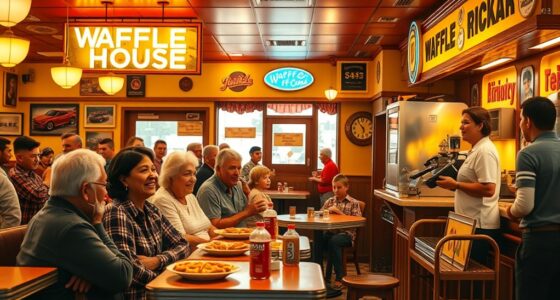

During wartime, making waffles and enjoying them together can boost morale by creating moments of normalcy and community, even amid shortages. Rationing might limit ingredients, but creative recipes and shared traditions keep spirits high. Small gestures, like celebrating special meals, help foster hope and resilience. If you want to learn how food, like waffles, can serve as a symbol of hope and unity during tough times, keep exploring the story of wartime food morale.

Get baking supplies delivered free with Prime
- Fast, free delivery on millions of items
- Prime Video, Amazon Music and more included
- Member-only deals all year
Key Takeaways
- Creative adaptation of waffle recipes using limited ingredients boosted morale and fostered community pride.
- Sharing homemade waffles served as a comforting tradition, maintaining normalcy during wartime shortages.
- Special waffle events or coupons recognized citizens’ sacrifices, strengthening feelings of appreciation.
- Transforming rationed supplies into festive treats helped uplift spirits and reinforce hope.
- Community waffle gatherings promoted social bonding, resilience, and collective morale despite food scarcity.

Have you ever wondered how food rationing during wartime impacts people’s spirits? It’s a question that goes beyond just the physical effects of limited supplies. Rations’ psychological impact can be profound, influencing how individuals feel about their safety, community, and hope for the future. When resources become scarce, it’s natural to feel anxious or frustrated, but the way authorities and communities respond can considerably alter morale. That’s where morale boosting strategies come into play, aiming to uplift spirits even when food is tight.
During wartime, rationing isn’t just about controlling supplies; it’s also about maintaining a sense of fairness and unity. Clear communication about rationing policies helps reduce uncertainty and suspicion, which can otherwise erode confidence. When people understand why limits are in place and see that everyone is sharing equally, it fosters a collective resilience. This sense of fairness acts as a psychological buffer, helping to sustain morale even amid hardship. Additionally, community-driven initiatives like rationing clubs or shared cooking events serve as morale boosters. They create opportunities for social interaction and solidarity, reminding everyone that they are not alone in facing shortages.
The psychological impact of rations can be alleviated through simple yet effective morale boosting strategies. Governments and organizations often distributed small tokens of appreciation—like coupons for treats or special events—to thank citizens for their sacrifices. These gestures boost morale by making people feel valued and recognized, reinforcing the idea that their efforts matter. Furthermore, encouraging creative use of limited ingredients can instill pride and innovation, transforming rationed supplies into comforting, even festive, meals. Such activities provide a mental uplift, helping people to see beyond scarcity and focus on positivity.
Additionally, maintaining routines and traditions despite rationing helps preserve mental well-being. For example, families might continue special breakfast rituals or holiday meals, adapting recipes to available ingredients. These traditions foster a sense of normalcy and hope, reinforcing morale. The psychological impact of knowing that life continues in meaningful ways—even under rationing—serves as a powerful morale booster. People find strength in these small acts of normalcy, reminding themselves that the war’s hardships are temporary. Incorporating positive community efforts can further enhance collective resilience and emotional well-being during challenging times.
As an affiliate, we earn on qualifying purchases.
Frequently Asked Questions
How Did Wartime Food Rationing Impact Civilian Diets Long-Term?
You might find that wartime food rationing led to lasting changes in your diet, as you adapted to limited supplies through culinary innovations. These adaptations sometimes caused nutritional deficiencies, influencing your health even after the war ended. The experience encouraged you to explore new ingredients and recipes, shaping your eating habits long-term. Rationing taught you resilience and creativity, which impacted how you approach food and nutrition in the years that followed.
Were There Regional Differences in Morale Related to Food Scarcity?
Like a painter blending colors, you see regional disparities in morale linked to food scarcity. In some areas, cultural adaptations, such as inventive recipes or shared traditions, boosted spirits, echoing the resilience of communities like those in Homer’s tales. Other regions struggled more, facing greater hardships. These differences shaped how people coped, showing that local customs and resourcefulness played vital roles in maintaining morale during tough times.
Did Rationing Policies Vary Between Allied and Axis Countries?
You’ll find that rationing systems varied markedly between allied and axis countries, reflecting their cultural differences. Allies often implemented more structured and equitable policies, aiming to maintain morale, while axis nations sometimes prioritized resource allocation for military needs. These differences affected daily life and public perception, with some cultures accepting rationing more readily than others. Understanding these variations helps explain how each side managed food scarcity and maintained morale during wartime.
How Did Food Rationing Influence Women’s Roles During Wartime?
You might think food rationing limited women’s roles, but it actually expanded their influence. As men went to war, women stepped into employment roles and took on domestic responsibilities more actively, ensuring food was used efficiently. Rationing fostered a sense of shared sacrifice, empowering women to contribute profoundly at home and work. This shift not only supported the war effort but also laid groundwork for post-war gender equality.
Were There Any Notable Protests or Resistance Against Rationing Measures?
You might notice that some people engaged in civil disobedience by protesting rationing measures, often secretly sharing supply to resist restrictions. These acts of resistance included hiding food or creating secret supplies to undermine government controls. Such protests reflected frustration with rationing policies and showed how citizens, including women and men, actively challenged wartime restrictions to maintain their morale and access to essential resources.
Conclusion
You see, food rationing during wartime wasn’t just about survival; it was about keeping spirits high when times were tough. Even with limited supplies, people found ways to stay hopeful and united. Remember, sometimes you have to make do with what you’ve got, and in doing so, you discover just how resilient you can be. So, when life gives you lemons, make the best of it—because morale is the secret ingredient that keeps everyone going.
Halloween Picks
halloween
As an affiliate, we earn on qualifying purchases.