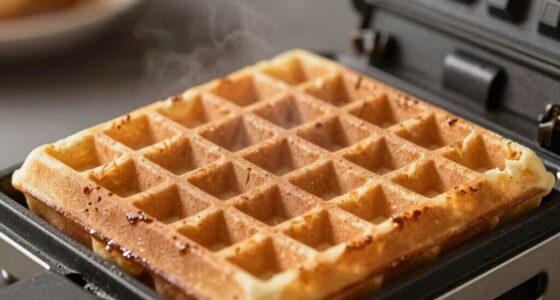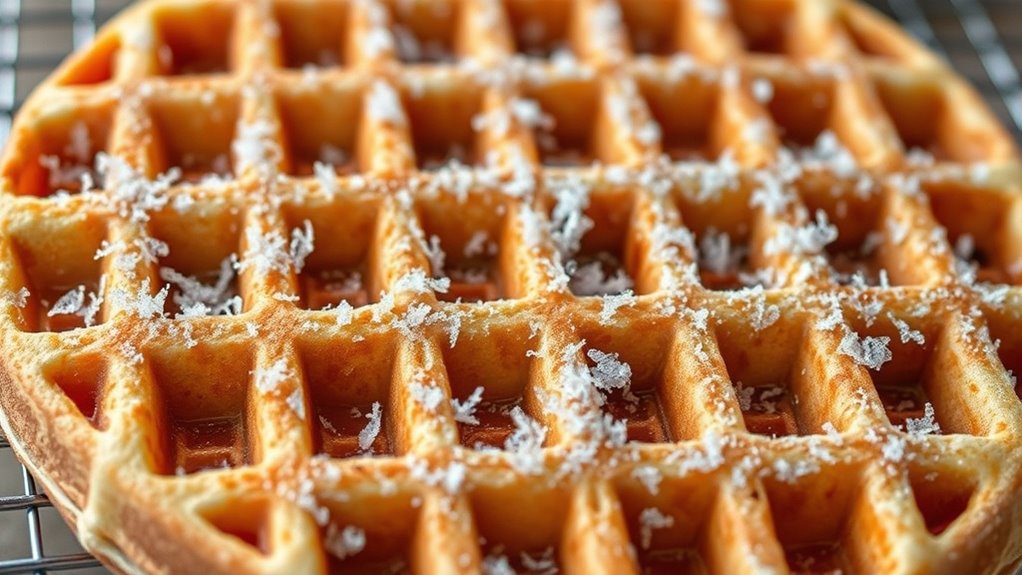

When you freeze waffles, ice crystals form from the water inside them. If freezing is slow, large crystals develop, which can puncture the waffle’s delicate structure and make it soggy when thawed. To keep your waffles crispy, you need to freeze them quickly, creating tiny ice crystals that cause less damage. This helps maintain their texture and flavor. Want to find out how to freeze and reheat waffles perfectly? Keep exploring for more tips.

Get baking supplies delivered free — and shop member deals
- Fast, free delivery on millions of items
- Access to Prime Big Deal Days deals on October 6–7
- Prime Video, Amazon Music and more included
Key Takeaways
- Smaller ice crystals formed by rapid freezing cause less damage to waffle structure.
- Large ice crystals from slow freezing puncture surface, leading to sogginess after thawing.
- Ice crystal size directly impacts texture, with bigger crystals resulting in mushy or soggy waffles.
- Proper freezing minimizes crystal growth, preserving the waffle’s original crispness and flavor.
- Quick freezing methods are essential to maintain waffle quality by controlling ice crystal formation.

Freezing waffles is an excellent way to save time and enjoy breakfast on busy mornings. When you freeze waffles, you’re essentially practicing waffle preservation, which allows you to have a tasty breakfast ready whenever you need it. However, to maintain the waffles’ original texture and flavor, it’s crucial to understand how ice crystal formation impacts their quality during storage. Ice crystals develop as water inside the waffles freezes, and their size and distribution play a significant role in how the waffles will turn out once thawed.
If ice crystals form slowly or grow too large, they can damage the delicate structure of your waffles. Large ice crystals tend to puncture the waffle’s surface, leading to a soggy or mushy texture when you reheat them. That’s why quick freezing is critical. When you freeze waffles rapidly, smaller ice crystals are formed, which minimizes damage to the waffle’s cellular structure. Smaller crystals are less likely to cause a noticeable change in texture and help preserve the crispness you love in freshly made waffles.
To maximize waffle preservation, it’s best to use airtight packaging, such as freezer-safe bags or containers. Removing as much air as possible reduces the risk of freezer burn and helps prevent moisture loss. Label your packages with the date, so you keep track of how long the waffles have been stored; ideally, consume them within one to two months for top-quality results. When you’re ready to eat, avoid letting the waffles sit at room temperature for too long, as this can cause condensation inside the packaging, leading to ice crystal growth and sogginess upon thawing.
Reheating also impacts the texture of your frozen waffles. The key is to reheat them in a way that minimizes moisture loss and prevents further ice crystal formation. Using a toaster or a toaster oven is often the best approach because it helps restore crispness without introducing too much moisture. If you prefer to microwave, do it in short intervals and consider placing a paper towel underneath to absorb excess moisture. This helps keep the waffles from becoming overly soggy or chewy.
As an affiliate, we earn on qualifying purchases.
Frequently Asked Questions
How Does Temperature Fluctuation Impact Waffle Texture During Storage?
Temperature fluctuations during storage cause moisture migration inside your waffles, leading to a soggy or freezer-burned texture. When temperatures aren’t stable, ice crystals form and melt repeatedly, damaging cell structure and making waffles less crisp and more rubbery. To keep their texture intact, you need temperature stability. Properly sealing and storing waffles in airtight containers helps prevent moisture loss and keeps their quality consistent over time.
Can the Type of Waffle Batter Influence Ice Crystal Formation?
Yes, the type of waffle batter influences ice crystal formation. Batter composition, especially fat and water content, affects crystal size and distribution. Ingredient substitutions, like using more sugar or dairy, can alter how ice crystals form and melt, impacting texture. You should consider these factors when preparing your batter, as they can help minimize ice crystal damage, keeping your waffles crispy and fluffy after freezing.
What Is the Ideal Freezing Duration for Maintaining Waffle Quality?
You should freeze your waffles for about 1 to 2 hours to maintain waffle freshness and prevent ice crystal formation. Use effective freezing techniques like wrapping each waffle tightly in plastic wrap or aluminum foil before placing them in an airtight container. This minimizes air exposure, slows ice crystal growth, and preserves texture. Keep your waffles frozen at a consistent 0°F (-18°C) for ideal quality during storage.
Do Different Waffle Toppings Affect Freezing and Thawing Outcomes?
Different waffle toppings do affect freezing and thawing outcomes. Topping moisture, like fresh fruit or syrup, can introduce excess water that forms larger ice crystals, making your waffle soggy or mushy after thawing. Sugar crystallization from sweet toppings may also cause texture changes. To maintain quality, add toppings after reheating or freeze waffles plain, then add toppings when serving to avoid texture issues caused by moisture and sugar crystallization.
How Can Storage Containers Minimize Ice Crystal Damage in Frozen Waffles?
You can minimize ice crystal damage in frozen waffles by choosing storage containers with airtight seals and insulation materials. These features prevent moisture loss, reduce freezer burn, and maintain consistent temperatures. Make sure to pack waffles tightly, removing excess air, and double-wrap if necessary. By doing so, you preserve texture, keep waffles fresh longer, and prevent ice crystals from forming large, damaging crystals that ruin the waffle’s quality.
Conclusion
Now that you know how ice crystals impact your waffles’ texture, you can freeze them like a pro—no more sogginess or freezer burn. Remember, even in this modern age, a little care makes all the difference. Think of it as your own culinary time machine, preserving that perfect crunch for whenever you crave it. So, next time you freeze your waffles, do it with confidence—your taste buds will thank you, just like they did in the good old days.
Fall Picks
fall essentials
As an affiliate, we earn on qualifying purchases.