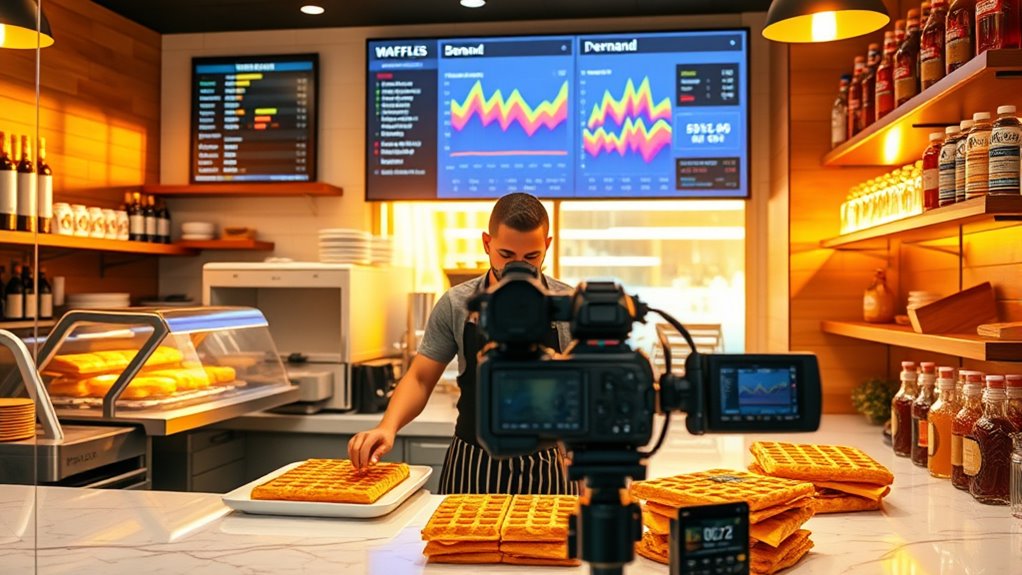

By analyzing your customer preferences, sales trends, and seasonal patterns, you can accurately foresee demand fluctuations in your waffle shop. Using data analytics, you’ll identify popular flavors, predict busy periods like holidays or weekends, and adjust your inventory accordingly. This optimization reduces waste and prevents stock shortages. Incorporating external sources like social media feedback further sharpens your predictions. Keep exploring to discover how to harness data even more effectively for your business success.
Key Takeaways
- Analyze customer flavor and topping preferences to forecast popular waffle varieties and adjust production accordingly.
- Use historical sales data and seasonal trends to predict demand spikes during holidays or weekends.
- Incorporate external data like social media trends and reviews to identify emerging customer interests early.
- Monitor real-time sales to quickly adapt menu offerings and optimize inventory levels.
- Leverage data insights to plan ingredient procurement, reducing waste and preventing shortages during demand surges.
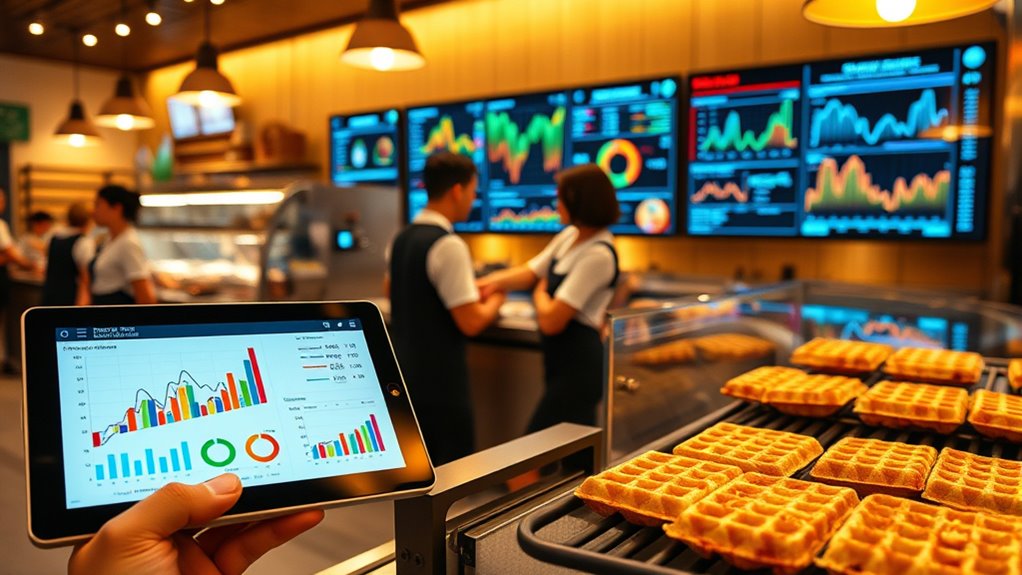
Data analytics has become an essential tool for waffle businesses looking to stay competitive and grow. By analyzing customer preferences, you gain valuable insights into what flavors, toppings, and presentation styles resonate most with your target audience. This knowledge allows you to tailor your offerings to meet demand more precisely, increasing customer satisfaction and loyalty. For example, if data shows that customers prefer vegan options or seasonal flavors, you can prioritize these in your menu planning. Tracking trends over time helps you predict shifts in taste and plan accordingly, reducing the risk of overstocking unpopular ingredients or missing out on trending items.
Understanding customer preferences also influences your supply chain decisions. When you know what products are most popular, you can optimize your inventory levels to avoid shortages or excess stock. This ensures you have the right ingredients on hand when demand spikes and minimizes waste when demand drops. Data analytics enables you to identify which suppliers consistently deliver quality ingredients on time, helping you build a reliable supply chain. This is particularly important in the food industry, where freshness and availability directly impact customer satisfaction. Additionally, leveraging accurate sales forecasts can further refine inventory management, aligning supply with anticipated demand more effectively.
Knowing your popular products helps optimize inventory and build a reliable, quality-focused supply chain.
Predicting demand through data analytics involves examining historical sales data, seasonal patterns, and local events that might influence customer traffic. For instance, if you notice a surge in waffle sales during certain holidays or weekends, you can adjust your production schedule accordingly. This proactive approach prevents last-minute shortages and ensures you’re prepared for busy times. Additionally, by monitoring real-time sales data, you can make quick decisions about menu adjustments or promotional efforts to boost sales during slow periods.
Furthermore, integrating data from social media, online reviews, and customer feedback provides a broad view of customer preferences. These sources often highlight emerging trends and unmet needs that can inform your product development and marketing strategies. For example, if many customers express a desire for gluten-free options, you can introduce such items and promote them to attract a broader audience.

Hamilton Beach Belgian Waffle Maker with PFAS-Free Non-Stick Ceramic-Coated Plates, Browning Control, Indicator Lights, Stainless Steel (26081)
Create quick and easy waffles at home. With the Hamilton Beach Ceramic Belgian Waffle Maker, you'll make restaurant-quality…
As an affiliate, we earn on qualifying purchases.
As an affiliate, we earn on qualifying purchases.
Frequently Asked Questions
How Can Real-Time Data Improve Waffle Sales Forecasting?
Real-time data helps you improve waffle sales forecasting by enabling dynamic pricing and better inventory management. You can adjust prices instantly based on current demand, attracting more customers or maximizing profits. Additionally, real-time insights help you track inventory levels, reducing waste and ensuring you have enough ingredients during peak times. This responsiveness leads to more accurate forecasts, increases sales, and keeps your waffle shop competitive in a fast-changing market.
What Are the Best Tools for Small Waffle Businesses to Analyze Data?
You can use user-friendly tools like Google Analytics to track social media metrics and gain insights into customer preferences. For inventory management, apps like Square or Toast provide simple analytics to monitor stock levels and sales trends. While some might think these are limited, they actually offer valuable data for small waffle businesses to optimize sales, manage inventory, and understand customer behaviors without needing complex systems.
How Does Seasonal Variation Affect Waffle Demand Prediction Accuracy?
Seasonal trends considerably impact your waffle demand predictions, making it harder to forecast accurately. Demand fluctuations during holidays, weather changes, or local events can cause spikes or drops that models might miss if not properly accounted for. To improve accuracy, you should incorporate historical data on seasonal patterns, adjust your forecasts accordingly, and stay flexible. This way, you can better anticipate demand fluctuations and optimize your inventory and staffing.
Can Customer Feedback Influence Analytics Models in Waffle Businesses?
Yes, customer feedback can influence your analytics models by providing insights into satisfaction levels and preferences. When you incorporate feedback loops, you actively update your models based on customer satisfaction data, making predictions more accurate. By listening to your customers and adjusting your offerings accordingly, you can refine demand forecasts, ensuring your waffles meet expectations and boosting overall satisfaction. This continuous process helps keep your business responsive and customer-focused.
What Challenges Exist in Collecting Accurate Sales Data for Waffles?
Imagine trying to tune a waffle iron with inconsistent temperature controls—that’s how tricky collecting accurate sales data can be. Data consistency is a challenge because sales figures may vary due to manual entry errors or system glitches. Plus, data privacy concerns restrict access to detailed transaction info. You need reliable, secure methods to guarantee your sales data accurately reflects reality, helping you make smarter, data-driven decisions.

New Star Foodservice Pancake Batter Dispenser with Stand, Commercial 18/8 Stainless Steel Batter Dispenser for Pancakes, Waffles, Portion Control, Silver
Designed for dispensing pancake, waffle, and donut batter with better consistency in commercial kitchens, bakeries, food trucks, and…
As an affiliate, we earn on qualifying purchases.
As an affiliate, we earn on qualifying purchases.
Conclusion
By harnessing data analytics, you unveil the secret recipe to predicting waffle demand with precision. Just as a master chef knows the perfect bake time, you’ll anticipate customer needs before they even ask. Don’t let guesswork crumble your success—embrace data-driven insights and watch your waffle business rise to new heights. Remember, in this game, the data you gather is the sprinkle that makes everything sweeter. The future of your waffle empire is just a smart analysis away.

Warehouse Management and Inventory Control System
As an affiliate, we earn on qualifying purchases.
As an affiliate, we earn on qualifying purchases.
social media trend analysis tools for restaurants
As an affiliate, we earn on qualifying purchases.
As an affiliate, we earn on qualifying purchases.