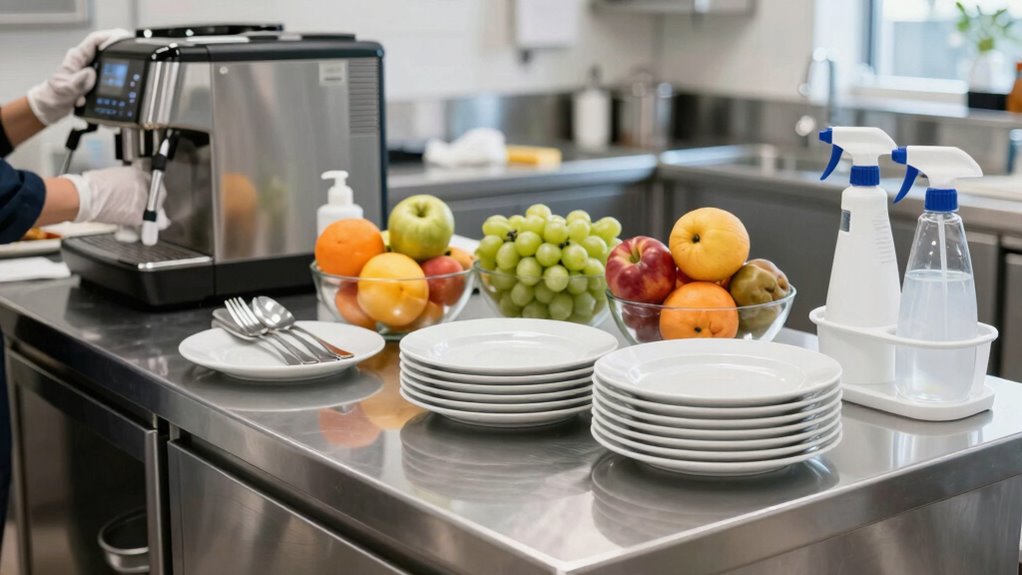

For sticky breakfast service, you should follow a strict sanitation routine by cleaning and sanitizing surfaces like countertops, cutting boards, and utensils immediately after use. Regularly disinfect high-touch areas such as handles and switches, and inspect equipment to guarantee it’s functioning correctly. Train your staff on hygiene practices and proper cleaning protocols, maintaining detailed records of all activities. Staying consistent with these steps helps create a hygienic environment—your next steps will ensure you master this routine effectively.

Get baking supplies delivered free with Prime
- Fast, free delivery on millions of items
- Prime Video, Amazon Music and more included
- Member-only deals all year
Key Takeaways
- Establish and follow a strict cleaning schedule for all surfaces, utensils, and equipment used during breakfast service.
- Regularly sanitize high-touch areas like handles, switches, and appliance buttons to prevent cross-contamination.
- Train staff on proper hygiene and cleaning protocols specific to sticky breakfast items to ensure consistency.
- Inspect and maintain equipment regularly to ensure it functions properly and remains hygienic.
- Keep detailed records of cleaning and maintenance activities to monitor compliance and identify improvement areas.

Maintaining a strict sanitation routine is indispensable when serving sticky breakfast items, as these foods are prone to bacteria buildup and cross-contamination. To keep your food safe and your customers satisfied, you need a well-structured plan that emphasizes consistent cleaning schedules and diligent equipment maintenance. This routine isn’t just about cleanliness; it’s about creating a hygienic environment where sticky foods are handled properly, and contamination risks are minimized.
Start by establishing clear cleaning schedules that specify when and how each area and piece of equipment should be cleaned. Sticky breakfast items like syrup-covered pancakes or oatmeal can leave residues that attract bacteria if not cleaned promptly. You should clean and sanitize all surfaces—countertops, cutting boards, and serving utensils—after each use. For high-touch areas like handles, switches, and appliance buttons, develop a frequent cleaning cycle, ideally after every shift or at set intervals throughout the day. This guarantees that bacteria don’t have a chance to multiply and spread. Implementing proper cleaning protocols helps reinforce consistent practices among staff members. Additionally, staying informed about food safety standards can help ensure your sanitation routine remains compliant and effective. Regular staff training on these standards can reinforce the importance of hygiene and reduce the risk of lapses in protocol.
Equipment maintenance is just as crucial. Regularly inspect your appliances, mixers, and warmers to guarantee they’re functioning correctly. Sticky residues can accumulate in hard-to-reach areas, creating breeding grounds for bacteria if not properly cleaned. Make it a priority to deep-clean equipment at scheduled intervals, following manufacturer instructions for disassembly and sanitation. Pay special attention to blenders and syrup dispensers, as these are often overlooked but can harbor mold or bacteria if neglected. Proper maintenance also involves calibrating temperature controls to assure foods are kept at safe temperatures, reducing the risk of bacterial growth. Incorporating smart home technology can help monitor and automate some of these maintenance tasks, ensuring consistency in sanitation routines. Regular maintenance not only prolongs equipment lifespan but also supports food safety. Additionally, documenting maintenance activities can help identify recurring issues and improve your overall sanitation process.
In addition to routine cleaning, training your staff on best practices is imperative. Everyone involved in food prep should understand the importance of adhering to the cleaning schedule and maintaining equipment. Encourage a culture where hygiene is a top priority, and mistakes are promptly corrected. Using food-safe cleaning agents and sanitizers is essential to avoid chemical contamination, so keep these products accessible and clearly labeled. Regularly reviewing sanitation procedures with your team can also help identify areas for improvement. Establishing standard operating procedures ensures everyone follows the same guidelines and maintains a high level of cleanliness consistently.
Finally, document your cleaning schedules and maintenance activities. Keeping detailed records helps you identify patterns and gaps in sanitation efforts, assuring compliance with health standards. Regular audits and inspections should be part of your routine, providing opportunities to refine processes and reinforce the importance of cleanliness. When your staff understands that sanitation is a continuous priority, and your equipment stays in top shape, you’ll create a safe environment for serving sticky breakfast treats that your customers can enjoy with confidence. Recognizing the significance of consistent sanitation efforts can significantly reduce contamination risks and improve overall food safety.
commercial kitchen surface sanitizer
As an affiliate, we earn on qualifying purchases.
As an affiliate, we earn on qualifying purchases.
Frequently Asked Questions
How Often Should Kitchen Surfaces Be Sanitized During Breakfast Service?
You should sanitize kitchen surfaces at least every 2 hours during breakfast service to maintain food safety and meet sanitation standards. If there’s a spill or contamination, clean immediately. Regular sanitation prevents bacteria buildup and cross-contamination, ensuring safe food handling. Remember, consistent cleaning not only protects your guests but also keeps your kitchen compliant with health regulations. Stay vigilant and prioritize sanitation to uphold high food safety standards.
What Specific Cleaning Products Are Best for Sticky Breakfast Foods?
You should use a heavy-duty degreasing cleaner or a gentle dish soap combined with warm water for sticky breakfast foods. Cleaning tools like scrub brushes or non-abrasive sponges help remove residues effectively. Incorporate these into your sanitation schedules to guarantee surfaces stay clean and safe. Regularly disinfect after cleaning with an approved sanitizer, especially during peak hours, to maintain a hygienic breakfast service environment.
How Should Staff Handle Cross-Contamination With Sticky Residues?
To handle cross-contamination with sticky residues, you should practice sticky residue management by frequently changing cleaning cloths and tools to prevent spread. Always sanitize surfaces thoroughly after cleaning sticky areas, especially around food prep zones. Use color-coded cloths to prevent cross contamination, and wash your hands thoroughly after handling sticky residues. Properly storing cleaning supplies also reduces risk, ensuring that sticky residues don’t transfer to other surfaces or utensils.
Are There Any Special Disposal Procedures for Sticky Breakfast Waste?
For sticky breakfast waste, you should follow specific disposal procedures as part of your breakfast cleanup protocols. First, scoop or scrape the sticky waste into designated trash bins to prevent messes elsewhere. Use damp, disposable cloths or tools for sticky waste disposal, ensuring thorough cleaning afterward. Always handle sticky waste carefully to avoid cross-contamination, and wash your hands afterward to maintain hygiene standards. Proper disposal helps keep your area clean and safe.
What Training Is Recommended for Staff on Sanitation Protocols?
You should train your staff on proper sanitation protocols by emphasizing staff hygiene and equipment maintenance. Investigate the effectiveness of hands-on training and refresher courses, which have proven to improve compliance. Make certain they understand how to properly clean and sanitize all surfaces and utensils after sticky breakfast service. Reinforce the importance of personal hygiene, glove use, and timely cleaning to prevent contamination and maintain a safe, hygienic environment.
Conclusion
Remember, maintaining a strict sanitation routine around sticky breakfast service isn’t just about cleanliness—it’s about safety. Did you know that improper sanitation can lead to foodborne illnesses affecting up to 48 million Americans each year? By thoroughly cleaning surfaces, utensils, and equipment, you reduce this risk considerably. Staying vigilant with your routine ensures a safe, enjoyable breakfast for everyone. Keep your standards high, and sanitation will become second nature—protecting your guests and your reputation.
Halloween Picks
halloween
As an affiliate, we earn on qualifying purchases.