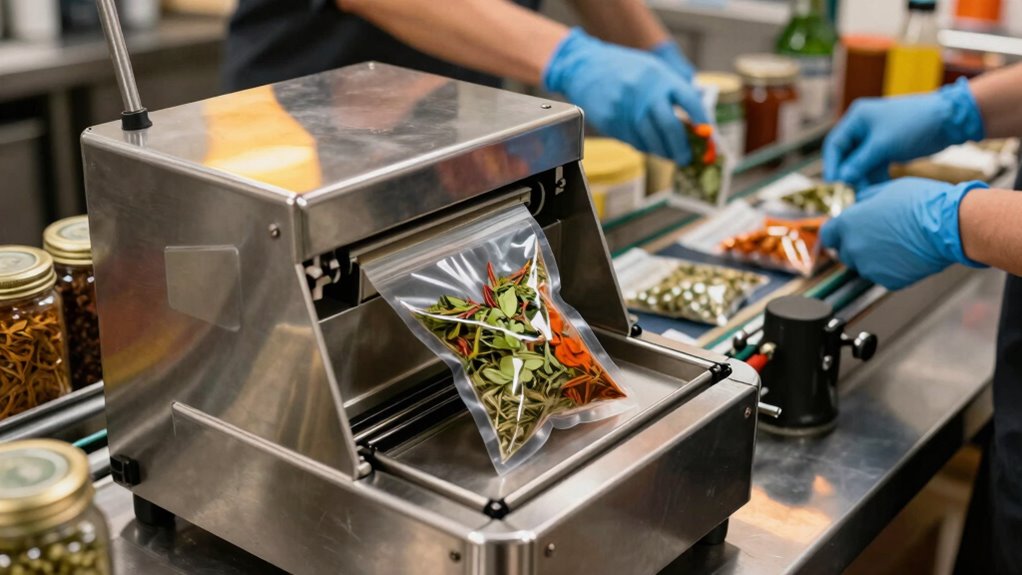
A chamber sealer fits seamlessly into your small food business workflow by simplifying packaging, boosting efficiency, and guaranteeing your products stay fresh longer. It helps you create professional, airtight packages that extend shelf life and reduce spoilage, while also saving space in your workspace. Proper use and regular maintenance keep it running smoothly, and staff training ensures safety and accuracy. Keep exploring how it can elevate your operation even further as you uncover more tips below.

Get baking supplies delivered free with Prime
- Fast, free delivery on millions of items
- Prime Video, Amazon Music and more included
- Member-only deals all year
Key Takeaways
- Chamber sealers streamline packaging, increasing efficiency and enabling handling larger orders seamlessly.
- They integrate into existing workflows by providing airtight, professional packaging for freshness and presentation.
- Proper staff training ensures smooth operation and reduces errors during the sealing process.
- Regular maintenance maintains equipment reliability, minimizing downtime and ensuring consistent product quality.
- Utilizing advanced sealing technology supports continuous improvement and adaptation to changing business needs.
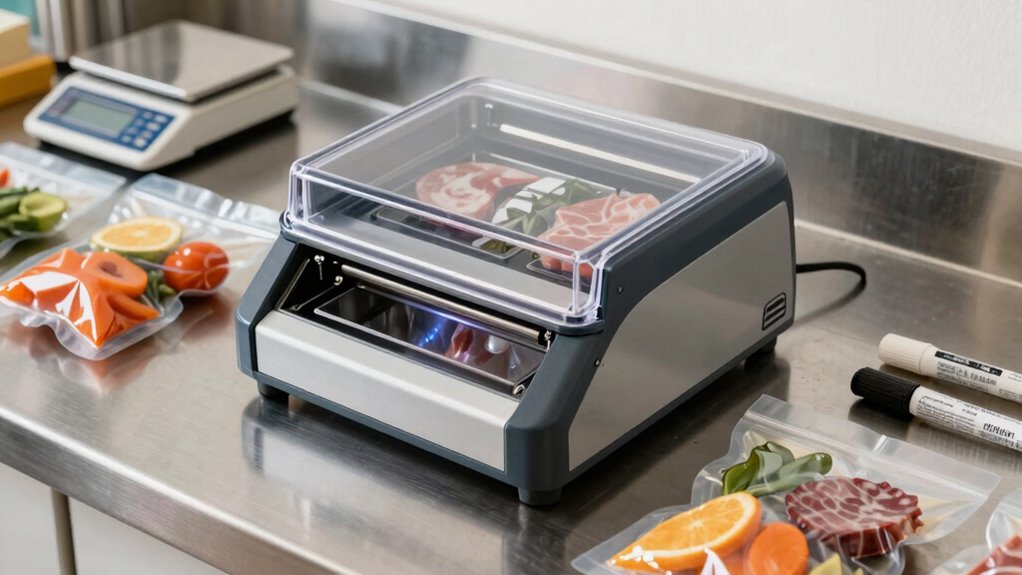
If you’re running a small food business, investing in a chamber sealer can substantially improve your packaging process. This piece of equipment streamlines your workflow, ensuring your products stay fresh longer and look professional. When integrating a chamber sealer into your operation, you’ll need to pay attention to packaging materials, as the right bags or pouches are essential for creating a tight, airtight seal. Using high-quality packaging materials guarantees that your food remains fresh, prevents leaks, and enhances shelf life. You’ll find that choosing compatible materials also reduces the risk of seal failure, saving you money and time in the long run.
As you incorporate a chamber sealer into your process, regular equipment maintenance becomes critical. Proper upkeep involves cleaning and inspecting the sealing bars, vacuum chambers, and control panels to prevent malfunctions. Neglecting maintenance can lead to inconsistent seals, which compromise food safety and product presentation. Establishing a routine check will help you identify issues early, reducing downtime and repair costs. Keep spare parts handy, and follow the manufacturer’s instructions for cleaning and servicing to extend the lifespan of your machine. Additionally, understanding the importance of vacuum packing technology can help you optimize your packaging process and improve product preservation. Being familiar with proper storage practices also plays a vital role in maintaining the quality of your sealed products. Incorporating proper maintenance routines can further ensure your equipment remains in top condition, reducing unexpected breakdowns. Regularly reviewing machine operation protocols also helps maintain consistent sealing performance. Furthermore, staying informed about technological advancements in packaging equipment can help you adopt more efficient and reliable solutions over time.
From a workflow perspective, a chamber sealer fits seamlessly into your packaging line, allowing you to package high volumes efficiently. Once you prepare your food items, you place them into the appropriate packaging materials, then load them into the chamber sealer. The machine vacuums out the air, sealing the package tightly. This process not only preserves freshness but also minimizes space and clutter, making your workspace more organized. By automating the sealing process, you can handle larger orders with less effort, enabling faster turnaround times and improved customer satisfaction.
Your staff must be trained on proper operation and routine maintenance to keep the chamber sealer functioning optimally. This includes understanding how to load packaging materials correctly, monitor machine settings, and perform basic troubleshooting. Proper training reduces errors, enhances safety, and prolongs your equipment’s service life. Incorporating a chamber sealer into your small food business workflow ultimately leads to more consistent product quality, less waste, and a more professional presentation. When paired with the right packaging materials and diligent equipment maintenance, a chamber sealer becomes an invaluable asset that supports the growth and reputation of your business.
chamber vacuum sealer for small food business
As an affiliate, we earn on qualifying purchases.
As an affiliate, we earn on qualifying purchases.
Frequently Asked Questions
What Is the Typical Lifespan of a Chamber Sealer?
A chamber sealer typically lasts between 3 to 5 years, depending on usage and maintenance. You’ll want to take into account the quality of packaging materials and sealant types you use, as these can impact the machine’s lifespan. Proper cleaning and regular servicing help extend its life, ensuring your food packaging remains effective. Investing in a durable chamber sealer means fewer replacements and consistent sealing performance for your small food business.
Are Chamber Sealers Suitable for All Types of Food Products?
Chamber sealers are suitable for many types of food products because of their product versatility and packaging customization capabilities. You can use them to seal meats, cheeses, baked goods, and more, ensuring freshness and extending shelf life. Their adjustable settings let you customize packaging to match different food textures and sizes. While they work well for most foods, some delicate or porous items might require specialized sealing methods.
How Much Training Is Needed to Operate a Chamber Sealer Effectively?
You’ll need about a day of training to operate a chamber sealer effectively. Studies show that proper training reduces sealing errors by 30%, highlighting its importance. You’ll learn vacuum sealing techniques, how to set the correct parameters, and follow operator safety procedures. Hands-on practice helps you master the machine quickly, ensuring consistent, airtight seals while keeping safety a priority. This investment in training boosts efficiency and product quality.
Can Chamber Sealers Handle High-Volume Packaging Needs?
Yes, chamber sealers can handle high-volume packaging needs effectively. They offer rapid packaging speeds, allowing you to seal large quantities quickly, which boosts productivity. Additionally, they guarantee sealing consistency, maintaining airtight seals even during continuous operation. This reliability helps keep your products fresh and safe for longer. With the right chamber sealer, you can meet your high-volume demands while maintaining quality and efficiency in your small food business.
What Maintenance Is Required to Keep a Chamber Sealer in Optimal Condition?
To keep your chamber sealer in tip-top shape, you must perform cleaning routines daily—think of it as giving your machine a spa day! Regular calibration procedures are equally vital, ensuring perfect seals every time. Neglect routine maintenance, and your sealer might start acting up, causing delays and waste. Stay vigilant, clean meticulously, and recalibrate periodically, and your chamber sealer will serve you reliably, sealing freshness like a champion!
Conclusion
Incorporating chamber sealers into your small food business streamlines packaging, boosts product freshness, and saves you time. They’re a smart investment that can help you meet customer expectations and stand out in a competitive market. So, why not take the leap and integrate chamber sealing into your workflow? With the right equipment, you’ll be packaging smarter, not harder—making your business more efficient and your products more appealing. Ready to seal the deal?
Halloween Picks
halloween
As an affiliate, we earn on qualifying purchases.