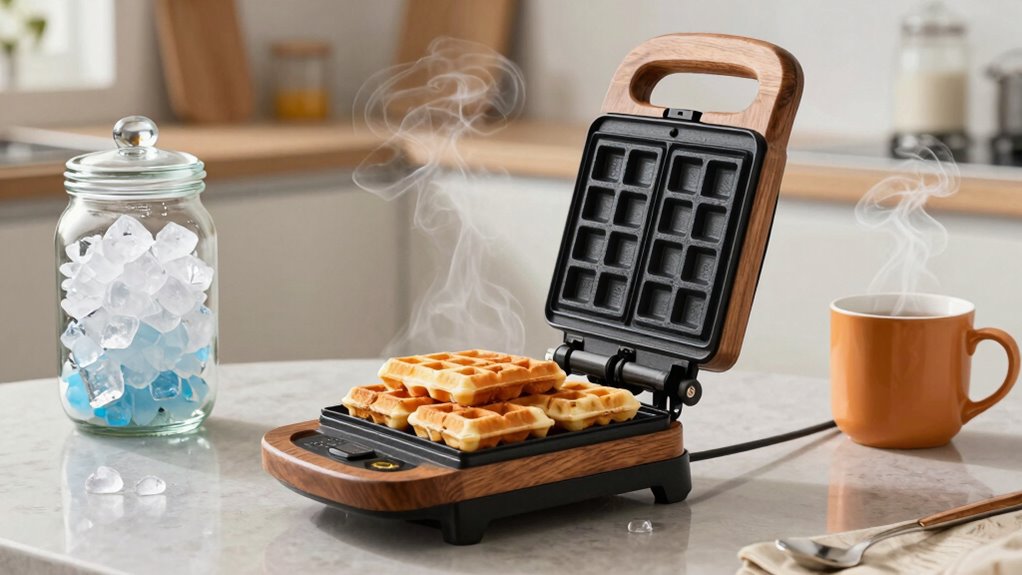

Think of refrigeration, warming, and freezing as a connected system in your waffle workflow. Proper temperature control at each step keeps ingredients fresh, safe, and ready for the next phase. Refrigeration prevents spoilage, freezing locks in flavor, and warming ensures ideal serving temperature. When you view these processes as interdependent, you can manage your workflow smoothly and maintain consistent quality. Keep exploring how aligning these steps improves overall efficiency and product results.

Get baking supplies delivered free with Prime
- Fast, free delivery on millions of items
- Prime Video, Amazon Music and more included
- Member-only deals all year
Key Takeaways
- View refrigeration, warming, and freezing as interconnected steps that collectively maintain ingredient quality and safety throughout the waffle production process.
- Use temperature control to prevent microbial growth, spoilage, and ensure consistency in final waffle quality.
- Recognize that each step supports the other: freezing preserves, refrigeration prepares, and warming finishes the waffle.
- Maintain temperature stability across all stages to minimize waste, ensure safety, and optimize workflow efficiency.
- Incorporate proper timing and transitions between steps to create a seamless, effective waffle manufacturing system.
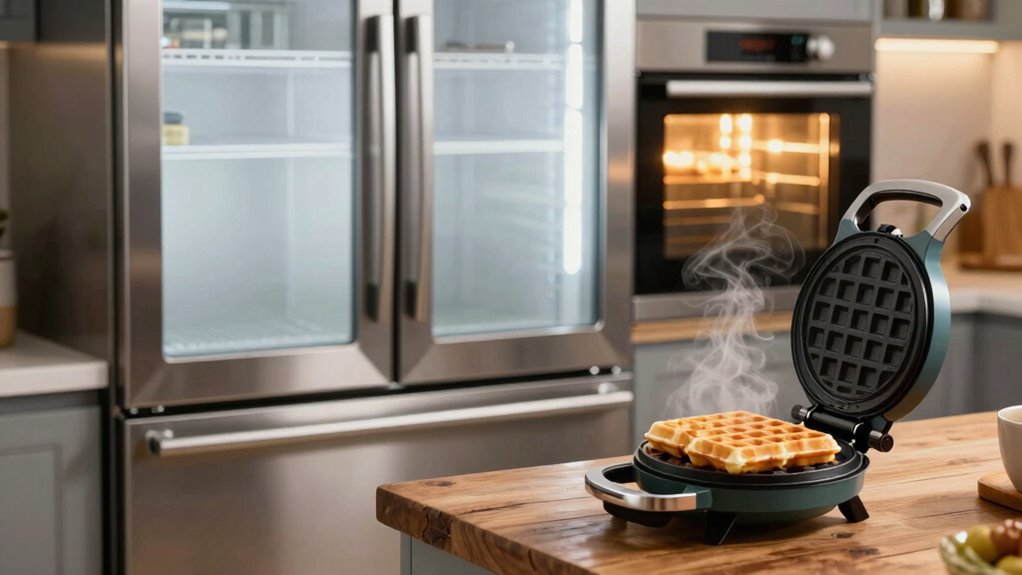
Understanding how refrigeration, warming, and freezing work together is essential to mastering the waffle workflow. When you think of these processes as interconnected parts of a single system, you can better manage food safety and assure consistent quality. The key is to see them not as isolated steps but as critical phases that maintain the proper temperature stability needed for safe and delicious waffles. Proper refrigeration prevents bacterial growth and spoilage, keeping ingredients fresh until you’re ready to use them. Warming, on the other hand, is about controlling heat to achieve the perfect texture and serving temperature. Freezing locks in freshness and halts microbial activity, preserving ingredients for longer periods. Additionally, understanding the temperature stability of each process helps prevent unwanted fluctuations that could compromise safety or quality. Recognizing the interdependence of these processes allows for a more seamless and efficient workflow, reducing the risk of foodborne illnesses and waste. Moreover, maintaining a consistent temperature across all these steps is crucial for preserving ingredient integrity and ensuring optimal results. By understanding how these processes work together, you can streamline your workflow, reduce waste, and enhance the safety of your food.
commercial refrigerator for food safety
As an affiliate, we earn on qualifying purchases.
As an affiliate, we earn on qualifying purchases.
Frequently Asked Questions
How Do Temperature Fluctuations Affect Food Safety?
Temperature fluctuations can seriously impact food safety by disrupting temperature stability, which allows microbial growth to accelerate. When temperatures rise above safe levels, bacteria multiply quickly, increasing the risk of foodborne illnesses. Conversely, sudden drops can cause freezing damage. To keep food safe, you must maintain consistent temperatures, avoid fluctuations, and monitor storage conditions closely, ensuring microbial growth stays under control and food remains safe to eat.
Can the Waffle Workflow Be Customized for Different Cuisines?
Yes, you can customize the waffle workflow for different cuisines by focusing on cultural adaptation and ingredient diversity. Adjust your refrigeration, warming, and freezing processes to suit specific ingredients and traditional cooking methods. For example, incorporate unique spices or regional preparation techniques. This flexibility guarantees authentic flavors are preserved while maintaining food safety and efficiency. Tailoring the workflow allows you to serve a wide variety of cuisines seamlessly.
What Are the Energy Considerations for Continuous Refrigeration?
You should prioritize energy efficiency to reduce ongoing costs and environmental impact. Use effective insulation techniques to minimize heat transfer, keeping the refrigeration unit cool without overworking the compressor. Regular maintenance, such as cleaning coils and sealing doors properly, also enhances efficiency. Consider upgrading to energy-efficient models with advanced insulation, which can greatly lower energy consumption over time. These steps ensure continuous refrigeration operates sustainably and cost-effectively.
How Does Humidity Impact Warming and Freezing Processes?
Humidity can dramatically influence warming and freezing, almost like a wild beast you must tame. High humidity hampers moisture retention, causing foods to dry out during warming and form ice crystals during freezing. Proper humidity control is essential; it preserves texture, flavor, and quality. By managing humidity, you guarantee your process maintains ideal moisture levels, preventing spoilage and ensuring the best results every time.
Is There a Recommended Maintenance Schedule for Waffle Workflow Equipment?
You should establish a regular maintenance schedule for your waffle workflow equipment, including equipment calibration and preventive inspections. Calibrate machines monthly to guarantee consistent quality, and perform preventive inspections quarterly to catch issues early. Regular cleaning and lubrication also help prolong equipment life. Keeping detailed records of these activities helps maintain peak performance, reduces downtime, and ensures your workflow remains efficient and safe.
Conclusion
Think of refrigeration, warming, and freezing as a waffle workflow—each step essential yet contrasting. Like the crisp outer layer and soft interior of your favorite waffle, these processes work together to preserve, transform, and serve. Embrace their differences; they’re the sweet spots of food management. When you see them as parts of a tasty whole, your approach becomes more intuitive, turning complex concepts into a simple, delicious rhythm you can trust.
Halloween Picks
halloween
As an affiliate, we earn on qualifying purchases.