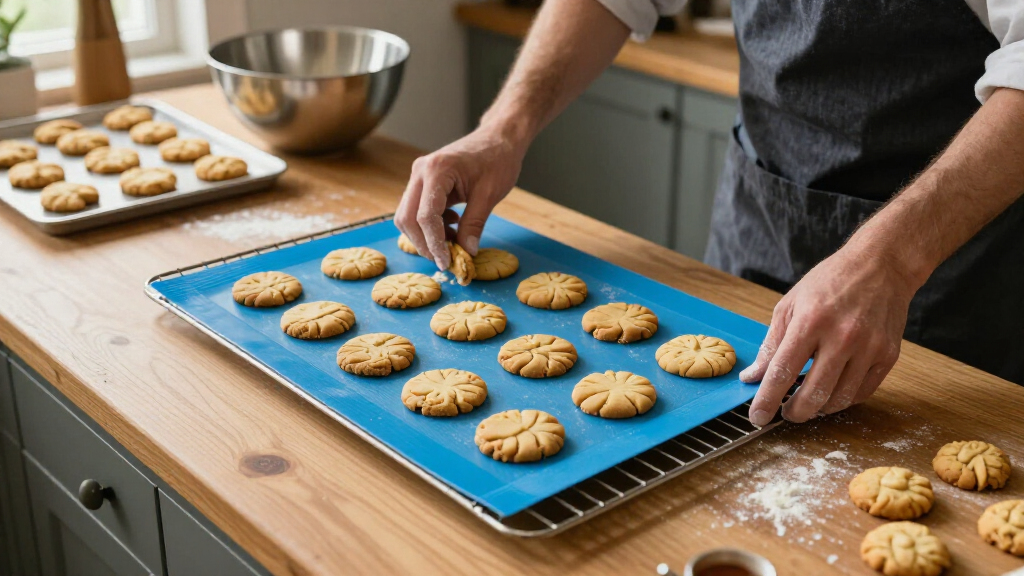

When choosing a liner for baking sheets, the real question is whether you would rather reuse a durable mat or reach for a fresh sheet of parchment paper each time. Silicone baking mats are designed for repeated use and can help keep food from sticking; parchment is disposable, flexible, and convenient to cut or replace. Neither is automatically better for every kitchen. A mat tends to suit frequent bakers who want to reduce ongoing liner purchases, while parchment is often the simpler choice for occasional baking, irregular pans, or recipes that need a fresh surface. The deciding factors are not just cleanup: baking results, care, storage, compatibility, and total cost also matter.

Get baking supplies delivered free — and shop member deals
- Fast, free delivery on millions of items
- Access to Prime Big Deal Days deals on October 6–7
- Prime Video, Amazon Music and more included

Koolstuffs Silicone Baking Mats, Nonstick, Reusable, 3-Pack
- ✔ Material: Silicone
- ✔ Quantity: 3 mats
- ✔ Half-sheet dimensions: 16.53 × 11.61 in (2 mats)

Amazon Basics Silicone Baking Mat, 2-Pack, 16.5 x 11.6 in
- ✔ Material: Food-safe silicone
- ✔ Quantity: 2 mats
- ✔ Dimensions: 16.5 × 11.6 in per mat

Reusable Nonstick Silicone Baking Mats, 4-Piece Set
- ✔ Material: Silicone
- ✔ Quantity: 4 mats
- ✔ Half-sheet dimensions: 16.53 × 11.61 in (2 mats)
At a Glance
| Criteria | Reusable silicone baking mats | Parchment paper | Winner |
|---|---|---|---|
| Reuse and waste | Reusable many times when cared for according to the maker’s instructions | Usually used once and discarded, though careful reuse may be possible in some cases | A |
| Baking performance | Helps prevent sticking; can affect browning and heat transfer compared with bare metal | Provides a disposable nonstick barrier; results depend on recipe and oven conditions | Depends |
| Pan fit and versatility | Best on compatible flat baking sheets; less adaptable to unusual shapes | Can be trimmed or shaped for many pans and tasks | B |
| Cleaning and care | Wash and dry after use; grease and residue can take extra effort to remove | Often simple to discard after use, with no liner to wash | B |
| Storage and convenience | Takes up drawer or cabinet space and needs washing between uses | Stores compactly in a roll or box and is ready when needed | B |
| Long-term value | Higher initial cost can pay off for frequent baking | Low upfront cost, but repeat purchases add up with frequent use | Depends |
Koolstuffs Silicone Baking Mats, Nonstick, Reusable, 3-Pack
Koolstuffs is our best overall choice because it balances everyday coverage with a useful smaller option: two half-sheet mats handle familiar cookie and roasting jobs, while the quarter-sheet mat suits a smaller batch or a compact pan. That mix makes the set more adaptable than Amazon Basics, whose two mats are both half-sheet size, without requiring buyers to store four pieces like the other mixed-size set.The listed operating range runs from -40°F to 500°F, giving it the highest stated upper limit among these three options. That is a distinction, not a reason to bake at the maximum by default: the supplied guidance says to avoid prolonged use at 500°F. Like the other picks, Koolstuffs must lie flat on a baking pan rather than directly on an oven rack. The reusable nonstick surface can reduce dependence on parchment for routine baking, and the mats are dishwasher-safe once cool.There are limits to that convenience. Sticky or high-sugar foods may still need light greasing, and the two sizes only help if they correspond to pans you own. Buyers seeking four mats for parallel batches should consider the four-piece set instead; people who use only standard half-sheet pans may find Amazon Basics’ matching pair more straightforward. Koolstuffs is the strongest all-rounder when varied pan sizes and the stated heat range matter together.
Pros:
- Includes two half-sheet mats and one quarter-sheet mat
- Listed temperature range reaches 500°F, with guidance to avoid prolonged use at that temperature
- Reusable nonstick surface supports routine baking and roasting
- Dishwasher-safe once cool
Cons:
- Must be supported by a baking pan rather than placed directly on an oven rack
- Sticky or high-sugar foods may need light greasing
- The maximum temperature should not be treated as suitable for prolonged baking
Best for: Home bakers who want two standard half-sheet mats plus one smaller mat for varied batch sizes and pan formats.
Not ideal for: Buyers who need four mats for simultaneous baking, use only one standard pan size, or expect silicone to release every sugary recipe without added preparation.
Bottom line: Choose Koolstuffs for the best balance of common half-sheet coverage, a smaller-format mat, and a carefully used 500°F listed ceiling.
“Choose Koolstuffs for the best balance of common half-sheet coverage, a smaller-format mat, and a carefully used 500°F listed ceiling.”
Amazon Basics Silicone Baking Mat, 2-Pack, 16.5 x 11.6 in
Amazon Basics is the straightforward pick when two matching half-sheet mats are exactly what we need. Each measures 16.5 × 11.6 inches, close to the half-sheet size in the Koolstuffs and four-piece sets, so buyers can outfit two standard-size pans without paying for a smaller format they may rarely use. Its food-safe silicone surface is described for baking, roasting, and food prep, with a 480°F maximum oven temperature.That focused format is also its main compromise. Compared with Koolstuffs or the four-piece set, it has no quarter-sheet mat for a smaller pan or separate small batch. And although its maximum is close to Koolstuffs’ listed ceiling, it is lower; shoppers who need the highest stated temperature limit should look at Koolstuffs while observing its warning against prolonged use at 500°F. The four-piece option is a better fit for households that want more mats ready at once.For buyers who bake on matching half-sheet pans, the simplicity is appealing: the pair is reusable, dishwasher-safe, and intended to help food release without oil or parchment in ordinary use. But “nonstick” is not a promise that every recipe behaves identically, particularly sticky or sugary foods. Pan support is required, so these are liners for baking trays, not freestanding oven surfaces. The set makes most sense when dependable standard sizing is more important than size variety.
Pros:
- Two matching 16.5 × 11.6-inch mats suit standard half-sheet pans
- Reusable surface can reduce routine reliance on parchment or added oil
- Rated for oven use up to 480°F
- Dishwasher-safe
Cons:
- Both mats are the same size, with no quarter-sheet option
- Requires a baking tray for support and should not sit directly on an oven rack
- The listed maximum is below Koolstuffs’ 500°F ceiling
Best for: Bakers with one or two standard half-sheet pans who want a matching reusable pair for routine baking and roasting.
Not ideal for: Buyers who need quarter-sheet coverage, want several different mat sizes, or prioritize the highest listed temperature ceiling in this comparison.
Bottom line: Choose Amazon Basics when two matching half-sheet mats meet your needs and you prefer a simpler set over mixed sizes.
“Choose Amazon Basics when two matching half-sheet mats meet your needs and you prefer a simpler set over mixed sizes.”
Reusable Nonstick Silicone Baking Mats, 4-Piece Set
This four-piece set is the most flexible choice by quantity: it includes two half-sheet mats and two quarter-sheet mats, making it easier to line multiple pans or prepare separate recipes in different formats. That extra quarter-sheet mat is the key difference from Koolstuffs, which provides only one; compared with Amazon Basics, this set adds both a smaller size and two additional mats. For households that regularly use several sheet pans at once, those differences may matter more than having a compact, matching pair.The set is listed for temperatures from -40°F to 480°F, with hand washing or dishwasher cleaning available. Its described even heat distribution and nonstick release support general baking tasks, while the stated reusable lifespan of up to 1,000 uses offers a durability expectation. That figure should be understood as a product claim rather than a guarantee for every kitchen: care, recipe residue, and repeated high-heat exposure can affect how any silicone mat holds up.More pieces are only useful if the sizes fit the pans on hand. The included dimensions match the other mixed-size set’s stated formats, but buyers should still compare those measurements with their own tray interiors. At 480°F, its stated ceiling is lower than Koolstuffs’, and it does not provide an advantage for someone who only needs two half-sheet liners. Choose it for parallel baking and small-pan flexibility; choose Amazon Basics for a leaner standard-size pair, or Koolstuffs for its higher listed temperature ceiling and three-piece balance.
Pros:
- Includes two half-sheet mats and two quarter-sheet mats
- Useful for lining multiple pans or separating recipes by size
- Listed temperature range is -40°F to 480°F
- Can be hand-washed or cleaned in a dishwasher
Cons:
- Mixed sizes may not fit every buyer’s pans, so measurements need checking
- Its 480°F ceiling is lower than Koolstuffs’ listed 500°F maximum
- Four mats may be unnecessary for occasional or single-pan baking
Best for: Households that bake multiple batches at once and own both half-sheet and quarter-sheet pans.
Not ideal for: Bakers who only use one or two half-sheet pans, have limited storage, or specifically want a listed maximum above 480°F.
Bottom line: Pick the four-piece set when simultaneous batches and two useful pan sizes outweigh the need for a simpler set or a higher listed heat ceiling.
“Pick the four-piece set when simultaneous batches and two useful pan sizes outweigh the need for a simpler set or a higher listed heat ceiling.”
As an Amazon Associate we earn from qualifying purchases.
Key Differences
The clearest distinction is the routine each liner creates. A silicone mat is a reusable tool: set it on a suitable baking sheet, bake, then wash and store it. Parchment is a consumable: cut or tear a piece, use it, and usually discard it. If you bake several times a week, that difference can reduce repeated parchment purchases and paper waste. If you bake only now and then, the mat’s higher upfront cost and required cleaning may not repay the extra step.
The choice also affects flexibility. Parchment can be cut to size, used in different pans, and replaced quickly if it gets messy. A mat is tied more closely to its dimensions and care limits. Both can reduce sticking, but neither should be treated as a universal replacement for recipe instructions or pan preparation. A mat’s surface and thickness can change how heat reaches the food; parchment is also a barrier, though its behavior differs by product and use. For delicate or unusually shaped jobs, having parchment available can be more convenient even if a mat is your everyday liner.
There is no universal winner on value or baking results. Frequent users with compatible pans may get more from a mat, provided they are willing to wash and store it. People who prioritize quick cleanup, adaptable sizing, and low commitment are better served by parchment. Some kitchens will benefit from both: a mat for routine batches of cookies or vegetables and parchment for tasks where a disposable, cut-to-fit liner is easier.
Detailed Comparison
Reuse and waste (Reusable silicone baking mats wins — major)
Silicone mats win, with a major practical difference for frequent bakers. A mat is made for repeated use, so it can replace many sheets of parchment over time. That cuts down on disposable liner use, though the mat still needs eventual replacement and proper care. Parchment is generally discarded after baking, so it produces more ongoing waste when used often. If you bake occasionally, the absolute difference may be small; if you bake every week, it becomes more noticeable.
Baking performance (moderate difference)
This is a recipe-dependent tie. Both options can provide a nonstick surface, but a silicone mat is not identical to parchment or a bare metal sheet. The added layer can influence browning and crisping, and results vary with the recipe, pan, oven, and mat. Parchment also changes the baking surface, so it should not be assumed to produce exactly the same result as an unlined pan. For recipes with precise texture expectations, follow the recipe’s stated liner guidance and the product’s temperature limits. The gap is moderate for recipes sensitive to browning and minor for many routine uses.
Pan fit and versatility (Parchment paper wins — moderate)
Parchment wins by a moderate margin. It can be torn or trimmed to fit different sheet pans and can be replaced with a fresh piece for a new task. Silicone mats work best when their dimensions match a compatible, flat pan; trimming a mat is not a substitute for buying the right size. For a kitchen with several pan sizes or occasional specialty baking, parchment is more adaptable. If you routinely use one standard sheet pan, a correctly sized mat may be sufficient.
Cleaning and care (Parchment paper wins — moderate)
Parchment wins by a moderate margin for convenience. After baking, parchment can usually be lifted away and thrown out, leaving less direct washing. A silicone mat must be cleaned, dried, and stored before its next use; baked-on grease or residue may need more attention than a quick rinse. That extra work is manageable for many home bakers, but it is still a recurring task. The mat saves disposable sheets, not the cleanup step.
Storage and convenience (Parchment paper wins — minor)
Parchment wins, though the difference is minor in a well-equipped kitchen. A roll or box can be tucked away and cut as needed, while a mat needs a place where it can lie flat or be stored in a way its manufacturer permits. The mat is convenient once it is beside the pan, but it is not always as compact or flexible to put away. If cabinet space is tight or you use many pan shapes, parchment asks less of your storage setup.
Long-term value (major difference)
The winner depends on how often you bake, making this a major decision for heavy users and a minor one for occasional bakers. A mat costs more at the start but may reduce repeated parchment purchases if used regularly and kept in good condition. Parchment has a smaller initial commitment, but buying it again and again raises its lifetime cost. There is no universal break-even point: prices, baking frequency, mat lifespan, and how often a mat is actually used all matter. Buy the mat for its repeat-use role, not on the assumption that it will save money quickly.
Everyday flexibility (Parchment paper wins — moderate)
Parchment wins by a moderate margin. A fresh sheet can be cut to fit, discarded if soiled, and used without reserving a particular pan for a particular mat size. That makes it useful when a recipe is messy, when you need several liners at once, or when you bake across assorted trays. A mat is a dependable repeat option for familiar pans and routine batches, but it is less forgiving when the task or pan changes.
Reusable silicone baking mats: Pros and Cons
Pros:
- Can replace many disposable liners for repeat baking.
- May reduce ongoing parchment purchases for frequent users.
- A suitable mat can be ready to use without tearing or cutting a new sheet.
Cons:
- Requires washing and thorough drying after use.
- Needs compatible pan dimensions and storage space.
- Can affect baking results compared with other surfaces; follow recipe and product guidance.
- Costs more upfront than a roll or box of parchment.
Parchment paper: Pros and Cons
Pros:
- Easy to cut or tear for different pan sizes.
- Can be discarded after a messy or greasy bake, simplifying liner cleanup.
- Compact to store and inexpensive to try.
Cons:
- Usually creates recurring purchases and disposable waste.
- Needs replacing as supplies run out.
- Can be less economical than a reusable mat for frequent baking.
Who Should Choose What
Choose Reusable silicone baking mats if:
- You bake often and want to reduce how many disposable liners you use.
- You regularly bake on a standard sheet pan that matches an available mat.
- You are willing to wash and store the mat after each use.
Choose Parchment paper if:
- You bake occasionally and prefer a low-cost, no-commitment option.
- You use pans in several sizes or need to cut liners to fit.
- You want to discard the liner after a messy bake rather than wash it.
Skip both if: Skip both for recipes that call for a specifically prepared pan or a different surface, such as direct contact with a bare sheet. Follow the recipe and cookware maker’s instructions rather than assuming a liner is appropriate.
Value for Money
A silicone mat is worth paying more for when it will see regular use on compatible pans. Frequent baking makes the reusable design more useful and can offset the initial purchase through fewer parchment reorders, though the exact payback depends on local prices and how long the mat lasts. If you bake only a few times a year, paying extra may not create meaningful savings; parchment’s low upfront cost and easier storage are better value for that pattern. Choose a mat because you will reuse it, not simply because reusable sounds cheaper. For many households, keeping parchment on hand alongside one mat offers better practical value than expecting either liner to cover every job.
Final Verdict
Choose a silicone baking mat if you bake regularly, have a compatible sheet pan, and are comfortable washing and storing a reusable liner. It is the better fit for cutting down on repeated parchment use. Choose parchment paper if you bake occasionally, need to adapt liners to different pans, or value quick disposal over washing. The biggest deciding factor is your routine: frequent repeat baking favors the mat, while flexibility and low-effort cleanup favor parchment. For most occasional home bakers, parchment is the simpler buy; for regular bakers who will use and care for a mat consistently, the higher upfront cost is justified.
Frequently Asked Questions
Can a silicone baking mat replace parchment paper for every recipe?
No. They serve similar lining roles but are not identical, and a mat may affect browning or crisping differently. Follow the recipe’s instructions and the mat maker’s use and temperature guidance, especially for recipes where texture matters.
Which option is better for cookies?
Either can work, but the result depends on the recipe and the surface it specifies. A mat suits repeated batches on a compatible sheet pan; parchment is easier when you want a fresh liner for each batch or need to fit a different pan. Follow the recipe if it names one.
Is a silicone mat cheaper than parchment over time?
It can be for someone who bakes often and reuses the mat for a long time. Occasional bakers may not use it enough to offset its higher upfront cost. Compare the mat’s price and likely lifespan with how much parchment you actually buy.
Do silicone baking mats need to be washed after each use?
Yes. Clean and dry the mat according to its maker’s instructions before storing it. A mat avoids throwing away a liner after every use, but it does not remove the washing step.
Halloween Picks
halloween
As an affiliate, we earn on qualifying purchases.