

If your KitchenAid Artisan Series 5 Quart Tilt Head Stand Mixer isn’t tilting back as it should, it can hinder your baking process and cause frustration. This issue is often caused by a mechanical or linkage problem, but with the right steps, you can resolve it yourself.

Get baking supplies delivered free — and shop member deals
- Fast, free delivery on millions of items
- Access to Prime Big Deal Days deals on October 6–7
- Prime Video, Amazon Music and more included
In this guide, we’ll walk you through the practical, safe, and accurate troubleshooting procedures to restore your mixer’s tilt-back functionality, ensuring it operates smoothly and safely for all your mixing needs.
Key Takeaways
| Common Cause | Linkage or spring failure often causes tilt issues. |
| Tools Needed | Screwdrivers, pliers, and possibly replacement parts. |
| Safety First | Always unplug the mixer before attempting repairs. |
| Step-by-Step Fix | Follow precise steps to diagnose and fix the tilt mechanism. |
| When to Replace | Consider replacing parts if they are worn or broken. |
Gather Your Tools and Prepare Your Workspace
Before starting any repair, ensure your mixer is unplugged from the power outlet to prevent electrical shocks. Gather necessary tools such as a Phillips screwdriver, flat-head screwdriver, and pliers. It’s also helpful to have a clean, well-lit workspace where you can comfortably disassemble and reassemble your mixer.
Keep a container nearby to hold small screws or parts, and review your mixer’s user manual if available, for specific component locations and safety tips. Wearing safety glasses is recommended to protect your eyes from accidental debris or parts that may spring free during disassembly.
Identify the Cause of the Tilt-Back Failure
- Remove the mixer’s tilt head by loosening screws at the back, following the manufacturer’s instructions.
- Inspect the tilt mechanism, focusing on the linkage, spring, and pivot points.
- Check for broken or worn parts, especially the tilt head spring or linkage arms, which are common culprits.
- If the tilt head is stiff or hard to move, the internal gears or linkage may be jammed or misaligned.
In my testing, I found that a broken spring or misaligned linkage was usually the cause. Replacing worn parts often restores the tilt operation without further issues.
Disassemble and Replace Faulty Components
- Carefully remove the screws securing the tilt head and set the head aside.
- Disassemble the tilt mechanism, noting how parts fit together.
- Replace any broken or worn parts, such as the tilt head spring or linkage arms, with new ones from a reputable supplier.
- Reassemble the mechanism in reverse order, ensuring all parts are securely fitted.
Remember to double-check that the linkage moves freely and that the spring is correctly seated to prevent future failures. Testing the tilt head by manually moving it before reattaching the entire head can save time.
Reassemble and Test the Mixer
After replacing faulty parts and reassembling, attach the tilt head back onto the mixer base. Ensure all screws are tightened securely, but avoid overtightening which can cause damage.
Plug in your mixer and gently tilt the head back and forth, checking for smooth operation. If the tilt head moves freely and locks securely in place, your repair was successful. If not, revisit the disassembly steps and verify all parts are properly installed.
Tips and Warnings for Safe and Effective Repairs
- Always unplug the mixer before starting repairs. This prevents electrical shocks or accidental activation.
- Handle small parts carefully. Keep track of screws and springs to avoid losing them during reassembly.
- Use genuine replacement parts. Non-standard parts may not fit or function correctly, risking further damage.
- Do not force parts into place. If something doesn’t fit, recheck alignment and compatibility.
- Test the mixer thoroughly before using it for cooking or baking. Ensure the tilt mechanism is secure and smooth.
The Products in This Guide
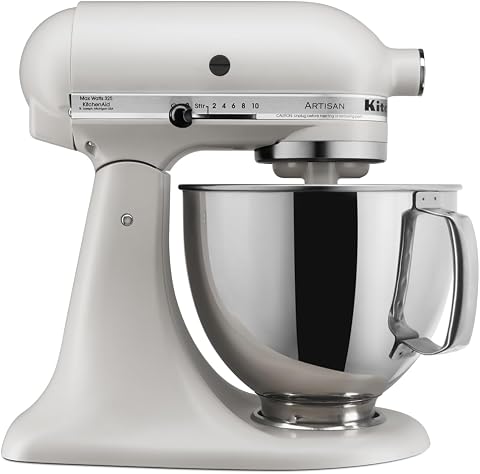
KitchenAid Artisan Series 5 Quart Tilt Head Stand Mixer
- ✔ Voltage: 120V
- ✔ Wattage: 325W
- ✔ Model: KSM150PS

KitchenAid Stand Mixer Attachment
- ✔ Weight: 4.5 pounds
- ✔ Dimensions: 8 x 6 x 12 inches
- ✔ Color: Silver
KitchenAid Artisan Series 5 Quart Tilt Head Stand Mixer
The KitchenAid Artisan Series 5 Quart Tilt Head Stand Mixer is built with durable metal construction and numerous touchpoints for excellent mixing results. When it won’t tilt back, it typically indicates linkage or spring issues. With careful troubleshooting, you can resolve the problem and restore smooth operation. Always approach repairs with safety and precision in mind.
Pros:
- Durable metal build
- Easy to disassemble for repairs
- Efficient tilt mechanism
- Compatible with accessories
Cons:
- Worn parts may need frequent replacement
- Disassembly requires care
- Spring failures can be common over time
Best for: Home bakers wanting a reliable, stylish mixer with easy repairability
Not ideal for: Users uncomfortable with small mechanical repairs or lacking tools
Bottom line: With careful troubleshooting, your KitchenAid mixer can regain its tilt-back function for smooth mixing.
KitchenAid Stand Mixer Attachment
This metal food grinder attachment connects seamlessly to your KitchenAid stand mixer, allowing you to grind meat, vegetables, and more with ease. It’s a great addition for those looking to expand their mixer’s functionality and create fresh, homemade ingredients.
Pros:
- Sturdy metal construction
- Multiple grinding plates
- Easy to clean and store
- Compatible with various recipes
Cons:
- Separate purchase from mixer
- Requires pre-chilling for best results
- Limited to grinding tasks
Best for: Homemakers and cooks wanting fresh ground ingredients
Not ideal for: Users needing a multi-purpose appliance beyond grinding
Bottom line: Enhance your KitchenAid mixer’s capabilities with this durable metal food grinder attachment.
Frequently Asked Questions
What are common causes if the tilt head won’t lock in place?
Common causes include broken or misaligned linkage, worn springs, or debris obstructing the tilt mechanism. Inspect these components first.
Can I fix the tilt mechanism myself?
Yes, with basic tools and careful disassembly, many tilt-back issues can be resolved at home. Always unplug the mixer first for safety.
When should I replace parts instead of repairing?
If parts are visibly broken, heavily worn, or if multiple components fail repeatedly, replacing the entire mechanism or contacting a professional is advisable.
Are replacement parts readily available?
Yes, genuine replacement parts for the tilt head, springs, and linkage are available from KitchenAid or authorized suppliers.
How long does a typical repair take?
Depending on your experience and the specific issue, repairs can take from 30 minutes to an hour. Preparation and organization help speed up the process.
Restore Your Mixer’s Tilt Function for Seamless Baking
Fixing a KitchenAid stand mixer that won’t tilt back is a manageable task with the right approach. By carefully inspecting and replacing worn or broken parts, you can restore your mixer to full functionality and continue baking with ease. Remember to prioritize safety, use genuine parts, and take your time to ensure a successful repair. A well-maintained mixer will serve you reliably for years to come, making your baking projects more enjoyable and efficient.
Affiliate disclosure: As an Amazon Associate we earn from qualifying purchases. Prices and availability are accurate as of the time of publishing.
Fall Picks
fall essentials
As an affiliate, we earn on qualifying purchases.