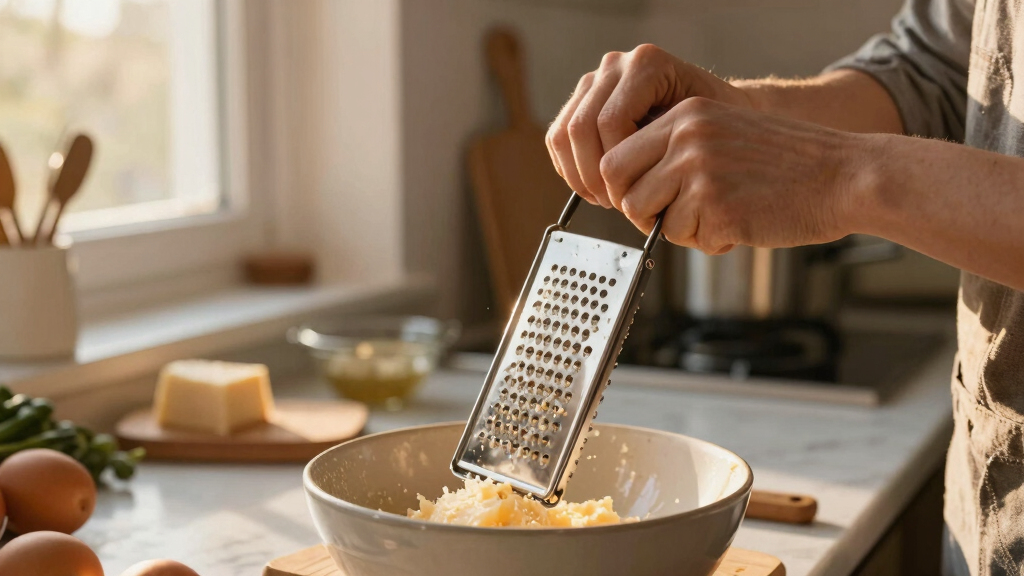

The best cheese grater for most kitchens is the OXO Good Grips Box Grater because it balances sharp cutting surfaces, steady handling, and everyday versatility better than the rest of this lineup. The Spring Chef Professional XL 4-Sided Grater stands out as the value pick for cooks who want a larger box grater without paying more, while the Zyliss Classic Rotary Cheese Grater is the better choice for hard cheeses at the table. The main tradeoff is format: box graters handle more ingredients, rasp-style graters make finer shavings, and rotary graters keep hands farther from the blade but take more storage space. I ranked these picks by shredding range, comfort, stability, cleanup, build quality, and how well each model fits a real kitchen routine. Continue reading for the full breakdown of which grater makes sense for your cooking style.

Get baking supplies delivered free with Prime
- Fast, free delivery on millions of items
- Prime Video, Amazon Music and more included
- Member-only deals all year
Key Takeaways
- OXO Good Grips Box Grater earns the top spot because it offers the best mix of control, versatility, and storage-friendly design among the box graters.
- Spring Chef Professional XL and Gorilla Grip XL are strong value choices, but they favor capacity and sturdiness over compact storage.
- Zyliss Classic Rotary is the best pick for Parmesan and tableside use, while crank-style models like Geedel and Cambom make more sense for volume prep.
- Rasp graters such as the Deiss PRO and OXO Etched Coarse Grater are better for finishing, citrus zest, and small amounts than for shredding blocks of cheese.
- Premium-feeling models like Cuisipro and KitchenAid Gourmet justify their place when comfort, durability, and a steadier hand feel matter more than the lowest price.







More Details on Our Top Picks
OXO Good Grips Box Grater
I would rank the OXO Good Grips Box Grater first because it balances the things most people need from a cheese grater: four useful surfaces, a steady grip, and a detachable measuring container. Compared with the Spring Chef Professional XL, it is less built for high-volume prep, but it is easier to store and more practical for everyday cheese, vegetables, and quick slicing. The container gives it an advantage over the OXO Etched Coarse Grater when a recipe calls for measured amounts. The tradeoff is durability under heavy use; the slimmer build and plastic container make it less appealing for cooks who shred large blocks every week.
Pros:- Four grating and slicing surfaces cover most daily prep jobs
- Detachable marked container helps with measuring and short-term storage
- Non-slip handle and base make it steadier than simpler handheld graters
- Slim profile is easier to store than bulkier XL box graters
Cons:- May not hold up as well as heavier box graters under frequent hard use
- Container adds convenience but also creates another piece to wash
- Standard grate sizes offer less precision than specialty zesters or rotary models
Best for: Home cooks who want one everyday grater for cheese, vegetables, slicing, measuring, and storage without taking up much drawer space.
Not ideal for: High-volume meal preppers who regularly shred large blocks of cheese, since the Spring Chef XL offers more surface area and a sturdier prep feel.
- Brand:OXO
- Model Number:1057961
- UPC:719812005973
- Material:Stainless steel
- Surface Types:Coarse, medium, fine, slicing
- Container:Detachable with measurement markings and lid
- Handle:Non-slip
- Manufacture Year:2015
Bottom line: This is the best fit for most kitchens because it offers the broadest everyday usefulness without becoming bulky.
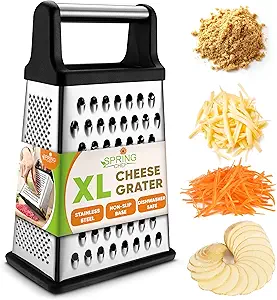
Spring Chef Professional Cheese Grater – Stainless Steel, XL Size, 4 Sides
The Spring Chef Professional XL earns its spot for cooks who care about speed more than compact storage. Its extra-wide stainless steel body gives cheese and vegetables more room to move, so it makes more sense than the OXO Good Grips Box Grater when prepping for casseroles, salads, or family dinners. It also feels more prep-focused than the Gorilla Grip XL, which leans harder into its measuring container. The downside is size: this is not the grater I would pick for a crowded drawer or a small apartment kitchen. It may also be tiring for users with limited hand strength, since the larger face still asks for steady pressure.
Pros:- Extra-wide grating surface speeds up larger prep tasks
- Four sides cover coarse, medium, fine, and slicing needs
- Stainless steel construction is suited to frequent kitchen use
- Dishwasher-safe design helps after messy cheese prep
Cons:- Bulkier than standard box graters and harder to fit in tight drawers
- Can require more grip and arm strength during longer prep sessions
- No measuring container, unlike the OXO and Gorilla Grip options
Best for: Families and batch cooks who shred cheese or vegetables in larger amounts and want a wide, fast box grater.
Not ideal for: Small-kitchen cooks with limited storage, since the XL frame is bulkier than the OXO Good Grips Box Grater.
- Material:Stainless steel
- Size:XL
- Sides:4
- Surface Types:Coarse, medium, fine, slicer
- Dishwasher Safe:Yes
- Handle:Ergonomic, multi-functional
- Base:Removable rubber bottom
- Use Case:Cheese, vegetables, citrus zest
Bottom line: Pick this grater when volume and speed matter more than storage space.
Gorilla Grip XL 4-Sided Stainless Steel Cheese Grater with Measurement Container, BPA-Free, Slip-Resistant Base, Dishwasher Safe, Black
The Gorilla Grip XL 4-Sided Grater is the strongest pick here for cooks who want a box grater that also helps manage portions. Like the OXO Good Grips Box Grater, it includes a detachable measurement container, but its XL shape and large handle make it feel better suited to bigger prep jobs. Compared with the Spring Chef Professional XL, it gives up some simple all-metal durability because of the plastic container, yet it gains storage and measuring convenience. The size is the main compromise. At 9.2 inches tall, it can feel oversized for quick garnish work, and the plastic pieces may age faster than the stainless grating panels.
Pros:- Marked container helps portion grated cheese directly while prepping
- XL frame and large handle support bigger grating jobs
- Slip-resistant base keeps the grater steadier on the counter
- Dishwasher-safe design is useful after sticky cheese or vegetables
Cons:- Large footprint can feel cumbersome in tight kitchens
- Plastic container may wear before the stainless steel grating surfaces
- More parts to clean than a simple handheld coarse grater
Best for: Recipe-driven cooks who grate cheese or vegetables in measured amounts and want a larger, stable box grater.
Not ideal for: Minimalist kitchens that prefer fewer removable parts, since the container adds bulk and extra cleanup.
- Material:Stainless steel
- Dimensions:5 x 3.1 x 9.2 inches
- Color:Black
- Design:4-sided
- Container:Detachable with measurement markings
- Base:Slip-resistant
- Dishwasher Safe:Yes
- BPA-Free:Yes
Bottom line: This is the right pick when measuring and larger prep capacity matter in the same tool.
Zyliss Classic Rotary Cheese Grater – NSF Certified Handheld Grater for Hard Cheese, Chocolate & More
The Zyliss Classic Rotary Cheese Grater fills a different role from the box graters in this lineup. Instead of making piles of shredded cheese, it is better for hard cheese, chocolate, and nuts in controlled amounts, especially at the table or over pasta. Compared with the Spring Chef Professional XL, it is slower for big prep, but it keeps fingers farther from the blade and folds away more neatly. It also has an NSF Restaurant Certified design, which gives it a more service-minded angle than the OXO Etched Coarse Grater. The tradeoff is effort and cleanup: the crank can feel slow with hard foods, and disassembly takes more patience than rinsing a flat grater.
Pros:- Rotary design keeps hands farther from the grating drum
- Works well for hard cheese, chocolate, and nuts
- Folds for compact storage compared with full-size box graters
- NSF Restaurant Certified for a more service-oriented design
Cons:- Manual crank is slower for large quantities
- Less useful for soft cheeses and broad vegetable prep
- Cleaning takes extra time because parts need disassembly
Best for: Pasta lovers, tableside servers, and cooks who mostly grate hard cheese in small, controlled amounts.
Not ideal for: Meal preppers shredding mozzarella or cheddar by the cup, since a box grater like the Spring Chef XL is faster.
- Brand:Zyliss
- Model Number:E900020U
- Material:Plastic and stainless steel
- Color:White
- Certification:NSF Restaurant Certified
- Item Count:1
- UPC:054067000206
- Storage:Folds for compact storage
Bottom line: Choose this for controlled hard-cheese grating, not for high-volume shredding.
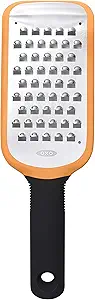
OXO Good Grips Etched Coarse Grater, Orange
The OXO Good Grips Etched Coarse Grater is the pick I would place below the box graters but above them for one specific job: fast coarse grating without a bulky frame. Its etched stainless steel surface is aimed at semi-soft cheese, vegetables, and fruit, making it handier than the Zyliss Classic Rotary when prepping ingredients away from the table. Compared with the OXO Good Grips Box Grater, it loses slicing, fine grating, and measuring, but gains easy storage and direct bowl grating. The protective cover is useful in a drawer, though the orange handle may show staining over time. Skip it if you need zesting or multiple shred sizes.
Pros:- Sharp etched surface handles coarse grating efficiently
- Slim handheld shape stores more easily than a box grater
- Non-slip foot adds stability against a plate or cutting board
- Protective cover makes drawer storage safer
Cons:- Only coarse grating, with no fine, medium, or slicing surface
- Less stable for large blocks than a box grater with a broad base
- Orange handle may stain with colorful vegetables over time
Best for: Small-kitchen cooks who mostly need coarse shreds for cheese, carrots, potatoes, or fruit directly over a bowl.
Not ideal for: Bakers and garnish-focused cooks who need fine zesting or multiple textures from one tool.
- Brand:OXO
- Material:Stainless steel
- Color:Orange
- Grating Style:Coarse
- Handle:Soft, non-slip
- Cover:Protective cover included
- Foot:Non-slip
- Best Uses:Semi-soft cheeses, vegetables, fruits
Bottom line: This is the best compact choice for cooks who want coarse shreds and do not need a full box grater.
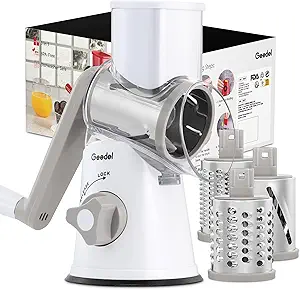
Geedel Rotary Cheese Grater with Interchangeable Blades
Geedel’s rotary design earns its spot for buyers who want faster shredding without dragging out a full box grater. Compared with the Martha Stewart Sprucedale box grater, this model keeps fingers farther from the blades and turns cheese, nuts, or vegetables with a crank instead of repeated downward strokes. I’d rank it behind larger box graters for volume, though, because the feeding jar works best with small batches. Against the Cambom Rotary Cheese Grater, it feels similar in purpose, but the Geedel leans more toward quick everyday prep than heavier countertop use. The tradeoff is technique: overfilling it or feeding awkward chunks can cause jams, and the manual crank still asks for effort with firm cheeses.
Pros:- Crank handle speeds up small-batch shredding compared with repeated hand strokes
- Three interchangeable blades cover slicing, shredding, and grinding
- Suction base helps keep the unit steady on smooth counters
- Food-grade ABS body and stainless steel blades suit everyday kitchen prep
Cons:- Can jam if pieces are too large or fed too quickly
- Less efficient than a large box grater for high-volume shredding
- Manual crank still takes effort with hard cheeses or nuts
Best for: I’d point this toward small households that grate cheese, nuts, or vegetables in quick portions and want a safer alternative to exposed box-grater surfaces.
Not ideal for: Batch cooks who shred large blocks at once should skip it because the feed chamber is better suited to smaller amounts.
- Material:Food-grade ABS with stainless steel blades
- Blade Types:Slicing, shredding, grinding
- Operation:Manual rotary hand crank
- Base:Suction base for countertop stability
- Included Components:Feeding jar, handle, 3 blades, pusher, suction base
- Dishwasher Safe:Yes
- Model Number:PS-336A
Bottom line: This is the rotary grater I’d choose for safer, faster small-batch prep rather than big block-cheese projects.
Martha Stewart Sprucedale 9.5-Inch Stainless Steel 4-Sided Box Grater
The Martha Stewart Sprucedale is the most straightforward pick here for buyers who still prefer a traditional box grater. Its four grating surfaces make it more flexible than the Deiss PRO Lemon Zester, which is excellent for fine work but limited for slicing or coarse shreds. Compared with the Spring Chef Professional Large Parmesan Grater, this one has a familiar 9.5-inch size and a sturdy stainless steel build that fits general kitchen use without feeling specialized. I’d choose it for households that want one grater for cheese, citrus, and vegetables, but the size cuts both ways: it takes more drawer or cabinet space than a handheld zester, and the stainless steel body may feel heavier than plastic rotary models like the Geedel.
Pros:- Four sides give buyers fine, coarse, slicer, and extra-fine options in one tool
- Stainless steel construction suits frequent use and repeated washing
- Non-slip base adds control while grating firmer cheese
- Comfortable handle makes the box format easier to steady
Cons:- Bulkier to store than zester-style or flat handheld graters
- Heavier than many plastic-bodied rotary options
- Exposed grating surfaces require more care around fingers
Best for: I’d recommend it to home cooks who want one traditional grater for coarse cheese, fine cheese, citrus zest, and occasional vegetable slicing.
Not ideal for: Apartment kitchens with very limited storage may find the 9.5-inch box shape harder to stash than a flat or handheld grater.
- Material:Stainless steel
- Size:9.5 inches
- Sides:4
- Surface Options:Fine, coarse, slicer, extra-fine
- Base:Non-slip base
- Handle:Comfortable top handle
- Dishwasher Safe:Yes
- Brand:Martha Stewart
Bottom line: This is the best fit if I wanted a durable, familiar box grater that handles the widest range of everyday cheese textures.
Spring Chef Professional Large Parmesan Cheese Grater, Stainless Steel, 4-Sided Handheld Kitchen Food Shredder
Spring Chef’s 4-sided grater makes the most sense for buyers who like the box-grater format but want extra attention on control. The rubber-grip handle and non-slip bottom separate it from the Martha Stewart Sprucedale, which is also versatile but less specific about grip materials. It covers coarse, medium, fine, and slicing jobs, so it offers more texture range than the Deiss PRO when cheese is the main task. I’d rank it as a comfort-first box option rather than the most compact choice. The drawback is that hard foods may still need pressure, and the lack of listed dimensions makes storage planning less precise than with the 9.5-inch Martha Stewart model. Very large hands may also find the handle less roomy.
Pros:- Four sides provide coarse, medium, fine, and slicing options
- Rubber-grip handle supports better control during repeated grating
- Non-slip rubber bottom helps reduce movement on the counter
- Dishwasher-safe stainless steel design keeps cleanup simple
Cons:- Hard cheeses or dense vegetables may still require noticeable pressure
- Dimensions are not specified, which makes storage fit harder to judge
- Handle may feel tight for buyers with very large hands
Best for: I’d choose this for cooks who grate cheese often and want a stable box grater with a more secure handle and base.
Not ideal for: Buyers who need exact drawer-fit measurements before ordering may prefer a model with listed dimensions.
- Material:Stainless steel
- Sides:4
- Surface Options:Coarse, medium, fine, slicer
- Handle:Ergonomic handle with rubber grip
- Base:Non-slip rubber bottom
- Dishwasher Safe:Yes
- Dimensions:Not specified
Bottom line: This is the box grater I’d pick when grip, stability, and everyday cheese prep matter more than compact storage.
Deiss PRO Lemon Zester & Heavy Duty Cheese & Vegetable Grater
The Deiss PRO belongs in this lineup because not every cheese grater needs to be a box. For Parmesan over pasta, citrus zest, ginger, spices, and small garnishing jobs, its razor-sharp stainless steel blade is more direct and easier to rinse than the Martha Stewart Sprucedale or Spring Chef box grater. I’d place it below those models for buyers who want piles of shredded cheddar, because its narrow surface is built for precision rather than volume. Compared with the OXO Good Grips Etched Coarse Grater, this pick leans finer and more compact, which helps with zesting but limits shred size. The lifetime warranty adds confidence, but very hard cheeses can still demand pressure.
Pros:- Compact shape stores more easily than box graters
- Razor-sharp stainless steel blade suits fine cheese and zesting work
- Non-slip handle helps with controlled strokes
- Easy to clean under running water
Cons:- Too narrow for fast high-volume cheese shredding
- Produces finer results than buyers may want for melting cheese
- Very hard cheeses may require extra force
Best for: I’d buy this for cooks who mostly finish dishes with fine Parmesan, citrus zest, ginger, nutmeg, or chocolate shavings.
Not ideal for: Families who shred large amounts of mozzarella, cheddar, or vegetables should skip it because the narrow blade is slow for bulk prep.
- Material:Stainless steel
- Blade Type:Razor-sharp, rust-resistant
- Handle:Non-slip ergonomic handle
- Primary Uses:Zesting, grating cheese, vegetables, and spices
- Cleaning:Rinses under running water
- Dimensions:Not specified
- Warranty:Lifetime
Bottom line: This is the grater I’d keep for finishing and fine prep, not for replacing a full-size box grater.
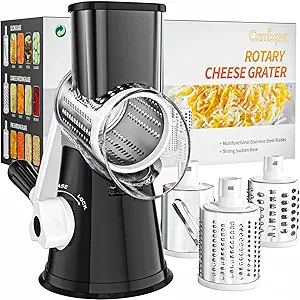
Cambom Rotary Cheese Grater Hand Crank Cheese Shredder for Fresh Cheese, Vegetables, Nuts, Black
The Cambom Rotary Cheese Grater is the better rotary choice when countertop stability and safer hand placement matter most. Like the Geedel Rotary Cheese Grater, it uses interchangeable blades and a suction base, but Cambom’s package adds a transparent barrel, cleaning brush, food pusher, and three defined blade styles for coarse, fine, and slicing work. I’d choose it over the Deiss PRO for families making tacos, salads, or pizza toppings because the crank setup handles more repeated prep than a narrow zester. It still is not a replacement for an electric shredder or a large box grater when volume gets high. The suction cup also needs a smooth surface, and softer or overly firm foods may not feed as neatly.
Pros:- Three blades cover coarse shredding, fine shredding, and slicing
- Suction cup base supports steadier countertop use
- Food pusher keeps hands away from the blades
- Includes a cleaning brush for removing trapped bits
Cons:- Manual crank can feel slow for large quantities
- Works best with moderately firm foods rather than every cheese texture
- Suction base may lose grip on uneven or textured surfaces
Best for: I’d recommend it to families who want a hand-crank grater for fresh cheese, vegetables, and nuts while keeping fingers away from exposed blades.
Not ideal for: People with textured counters or frequent large-batch shredding needs should skip it because the suction base and manual crank may slow them down.
- Blade Types:Coarse, fine, slicing
- Material:Food-grade plastic with 430 stainless steel blades
- Base:Non-slip suction cup
- Operation:Manual hand crank
- Included Components:Transparent barrel, blades, handle, food pusher, cleaning brush, manual
- Dishwasher Safe:Dishwasher-safe parts
- Model Number:315D
- Manufacture Year:2024
Bottom line: This is the rotary grater I’d choose for safer countertop prep when moderate batches matter more than drawer-friendly storage.
KEOUKE Rotary Cheese Grater Hand Crank with 3 Stainless Steel Blades
I rank the KEOUKE Rotary Cheese Grater as the more flexible rotary pick because its three stainless steel blades handle shredding, slicing, and grinding without exposing fingers to a flat grating surface. Compared with the Zyliss Classic Rotary Cheese Grater, this model is better suited to cooks who want vegetables, nuts, and chocolate in the same tool, not just hard cheese at the table. It also feels more prep-oriented than the Deiss PRO Lemon Zester, which is better for small finishing jobs. The tradeoff is surface dependence: the suction base needs a smooth counter, so wooden tables or textured worktops reduce its appeal. Harder foods may still need pressure, and storage is less tidy than a slim handheld grater.
Pros:- Hand-crank design keeps fingers away from the blades
- Three interchangeable blades cover shredding, slicing, and grinding
- Suction base adds stability on smooth counters
- Disassembles for easier cleaning and storage
Cons:- Suction does not work well on wooden or textured surfaces
- Harder foods may still require steady force
- Bulkier than a handheld paddle or zester-style grater
Best for: Home cooks who want a safer hand-crank grater for cheese plus vegetables, nuts, and chocolate on a smooth countertop.
Not ideal for: Buyers with wooden, textured, or very small work surfaces, since the suction base needs a smooth area to stay stable.
- Material:BPA-free food-grade ABS plastic and stainless steel blades
- Blade Count:3
- Operation:Manual hand crank
- Base:Suction base
- Safety Feature:Protective feeding port
- Food Uses:Cheese, vegetables, nuts, and chocolate
- Cleaning:Disassemblable parts
Bottom line: I would choose this for safer, versatile prep if the kitchen has a smooth counter for the suction base.
Cuisipro Stainless Steel Cheese Grater with Handle, 4-Sided Box Grater for Kitchen, Ginger, Fruit, Vegetables, Cheese, Chocolate
I place the Cuisipro Stainless Steel Cheese Grater ahead of many standard box graters for buyers who want durability more than extras. Its 304 stainless steel body, four grating surfaces, and Surface Glide Technology point to easier repeated grating, especially when compared with lighter plastic-heavy rotary options like the KEOUKE Rotary Cheese Grater. Against the Urbanstrive Cheese Grater with Container Box, Cuisipro feels like the sturdier long-haul choice, helped by its 25-year warranty, while Urbanstrive is better for catching and measuring ingredients. The tradeoff is practicality: this box grater can feel heavier, needs cabinet space, and its handle may loosen under heavy use. It is a better fit for frequent cooks than for tiny kitchens chasing the smallest footprint.
Pros:- 304 stainless steel construction supports long-term use
- Four grating surfaces cover fine, coarse, and general prep tasks
- Surface Glide Technology is designed to reduce grating effort
- Dishwasher-safe design simplifies cleanup
Cons:- Heavier than many plastic or handheld graters
- Box shape requires more storage space
- Handle may loosen over time with heavy use
Best for: Frequent home cooks who want a durable stainless steel box grater with multiple surfaces and dishwasher-safe cleanup.
Not ideal for: Small-apartment cooks who need a compact grater, since the box shape takes more storage space than flat or handheld designs.
- Material:304 stainless steel
- Number of Sides:4
- Handle:Non-slip
- Dishwasher Safe:Yes
- Technology:Surface Glide Technology
- Model Number:746850
- UPC:065506068503
- Warranty:25 years
Bottom line: I would pick this for a main kitchen grater when durability matters more than built-in measuring.
Urbanstrive Cheese Grater with Container Box, Stainless Steel, Dishwasher Safe, Kitchen Gadget
The Urbanstrive Cheese Grater with Container Box earns its spot because it solves the mess and portioning problem that plain box graters leave behind. Its detachable measuring container catches shredded cheese or vegetables, which makes it more controlled than the Cuisipro Stainless Steel Cheese Grater if a recipe depends on measured output. Compared with the KitchenAid Gourmet Box Grater, Urbanstrive offers a similar container idea, but leans into a non-slip TPE base and four blade surfaces for everyday prep. The drawback is upkeep: the box, blades, and container add more pieces to rinse, and stainless steel can feel weighty during longer grating sessions. I would not choose it for color-driven kitchens either, since the options are limited.
Pros:- Detachable measuring container catches food as it is grated
- Four blade surfaces support coarse, medium, fine, and slicing tasks
- 304 stainless steel construction gives it a sturdy feel
- Non-slip TPE base helps keep the grater steady
Cons:- More parts to rinse than a simple handheld grater
- Heavier than plastic alternatives
- Limited color options
Best for: Recipe-focused cooks who want to grate cheese or vegetables directly into a measuring container with less counter mess.
Not ideal for: Minimalists who want the fewest parts to wash, since the detachable container and multiple surfaces add cleanup steps.
- Material:304 stainless steel
- Blade Surfaces:Coarse, medium, fine, and slicing
- Handle:Ergonomic, non-slip
- Base:Non-slip TPE
- Container:Detachable measuring container
- Dishwasher Safe:Yes
- Model Number:XSMP-HEI
- Food Uses:Cheese and vegetables
Bottom line: I would choose this when measured prep and a cleaner counter matter more than the lightest possible grater.
KitchenAid Gourmet Box Grater, Charcoal Gray, 10 Inch
I see the KitchenAid Gourmet Box Grater as the measured-portion pick for cooks who want a familiar box grater with a tidier workflow. The detachable container with measurement markings makes it easier to stop at 1/2 cup, 1 cup, 1 1/2 cups, or 2 cups, so it feels more recipe-friendly than the Spring Chef Professional Cheese Grater if volume matters. Compared with the Urbanstrive Cheese Grater with Container Box, KitchenAid has a softer grip and a compact 10-inch profile, but the smaller container can slow down large-batch shredding. Its coarse, medium, fine, and slicer surfaces cover the basics well, though buyers with grip issues may find the handle less accommodating than expected.
Pros:- Measurement-marked container supports portion control
- Multiple grating and slicing surfaces cover common kitchen prep
- Soft-grip handle improves control during regular use
- Dishwasher-safe construction helps with cleanup
Cons:- Container capacity may be too small for large quantities
- Handle may not suit users with grip limitations
- Less specialized than a rotary grater for finger-safe table use
Best for: Cooks who follow recipes closely and want a box grater that catches and measures cheese in smaller batches.
Not ideal for: Large families or meal preppers shredding big blocks at once, since the 2-cup container may need frequent emptying.
- Size:10 inch
- Color:Charcoal gray
- Material:Stainless steel
- Surfaces:Coarse, medium, fine grater, and slicer
- Container:Detachable with measurement markings
- Container Capacity:1/2 cup, 1 cup, 1 1/2 cup, and 2 cup markings
- Handle:Soft-grip
- Dishwasher Safe:Yes
Bottom line: I would pick this for recipe-driven kitchens that want measured cheese portions without switching tools.
How We Picked
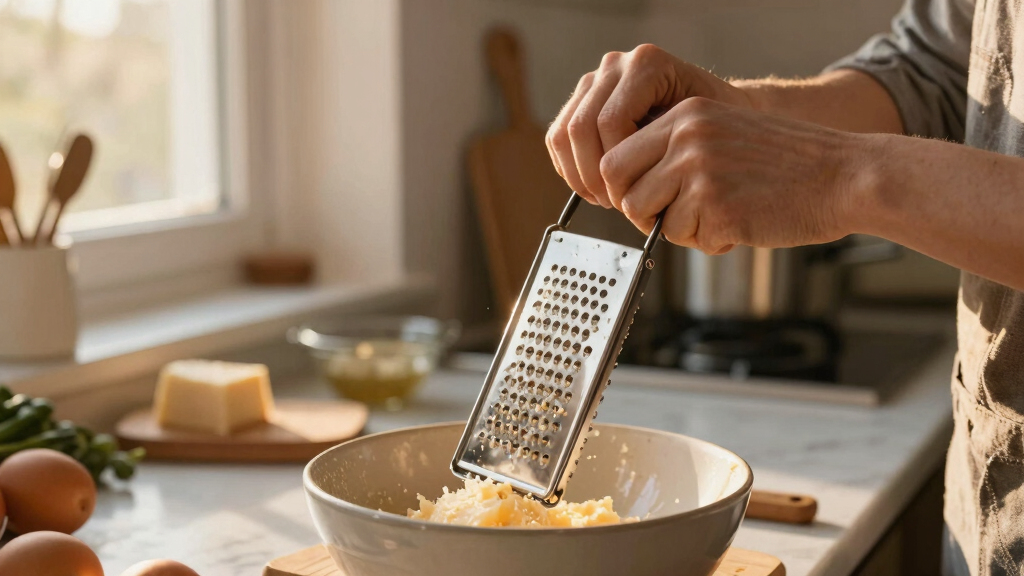
I ranked these cheese graters by how well they solve the real buyer problem: turning cheese into the texture you want without making prep awkward, messy, or risky. The highest-ranked models combine sharp grating surfaces, stable bases or handles, useful grating sizes, easy cleanup, and a design that works for more than one recipe. A box grater scored higher when it handled coarse shreds, fine shreds, slices, and zesting with less fuss; a rotary grater scored higher when it gave safer, cleaner output for hard cheeses or larger batches.
I also weighed the tradeoff between versatility and storage. Larger box graters such as the Spring Chef XL and Gorilla Grip XL are appealing for meal prep, but they ask for more cabinet space. Slim graters such as the Deiss PRO are easy to store and precise for finishing, but they cannot replace a full box grater for a casserole or taco night. That is why the ranking favors models that cover the widest range first, then highlights narrower tools when they are clearly better for a specific buyer.
Factors to Consider When Choosing Best Cheese Graters
Choosing among the best cheese graters is less about finding the fanciest blade and more about matching the tool to how often, how much, and what kind of cheese you grate. I would start with the format, then narrow by stability, cleanup, and storage.
Choose The Right Grater Style
A box grater is the safest default for most kitchens because it gives several textures in one tool. That matters if you grate cheddar for tacos one night, Parmesan for pasta the next, and carrots or potatoes on the weekend. A rotary grater is better for hard cheese when you want to keep fingers away from sharp surfaces, but it usually has more parts to wash. A rasp grater is the right choice for citrus zest, nutmeg, garlic, and fluffy Parmesan over finished dishes, yet it is slow for a full block of cheese. The common mistake is buying a narrow finishing tool when the daily need is bulk shredding. If this is your only grater, I would start with a stable box model like the OXO Good Grips Box Grater before adding a specialty tool.
Match Blade Size To Cheese Texture
Cheese texture changes the way a recipe feels, so blade size has a bigger effect than many buyers expect. Coarse holes make better melting shreds for quesadillas, baked pasta, pizza, and salads because the pieces keep some structure. Fine holes are better for hard cheeses, sauces, and toppings where you want the cheese to melt or spread quickly. Extra-sharp etched blades can feel faster, but they may also grab softer cheese more aggressively and create clumps if the cheese is warm. A slicer side can be handy, yet it should not be the reason to buy a grater unless you regularly prep vegetables or cheese slices. For most cooks, a grater with reliable coarse and fine surfaces beats one with extra surfaces that feel flimsy.
Pay Attention To Grip And Stability
The difference between a pleasant grater and an annoying one often comes down to how steady it feels. A slip-resistant base helps when shredding a firm block of cheddar because downward pressure can push a lightweight grater across the cutting board. A padded or shaped handle matters during longer prep because it helps keep the wrist in a more natural position. Rotary graters avoid the same vertical pressure problem, but they introduce a different question: whether the crank feels smooth and the hopper holds enough cheese. If your kitchen counters are small, a wide base can feel secure but awkward to store. I would prioritize stability over extra attachments because a grater that shifts around is slower and less confidence-building.
Think About Cleanup Before You Buy
Cheese graters can be irritating to clean because tiny shreds stick around blade edges, corners, and seams. Simple box graters are usually the easiest to rinse quickly, especially if they do not have complicated inserts. Container attachments can reduce mess while grating, but they also add pieces that need washing and drying. Rotary graters can be dishwasher safe, yet trapped cheese near the drum or crank may still need a brush. Softer cheeses are messier than hard cheeses, so buyers who grate mozzarella or Monterey Jack should value open surfaces and fewer crevices. The best habit is rinsing right after use, before cheese dries into the holes.
Know When To Pay More
A more expensive grater makes sense when it improves sharpness, comfort, durability, or safety, not just when it has a heavier brand name. Premium models like the Cuisipro Stainless Steel Cheese Grater and KitchenAid Gourmet Box Grater are appealing if you cook often and want a sturdier feel in hand. Budget picks can still work well, especially for occasional shredding, but thinner metal may flex more and dull sooner. If you grate cheese only once a month, a simple box grater or handheld coarse grater is enough. If fresh cheese is part of weekly cooking, paying more for a sharper surface and better handle saves effort over time. The upgrade is most worthwhile when the grater replaces bagged shredded cheese in regular meals.
Frequently Asked Questions
Is A Box Grater Or Rotary Cheese Grater Better For Most People?
For most buyers, a box grater is the better first choice because it handles more textures and more ingredients. It can grate cheddar, Parmesan, vegetables, chocolate, and citrus zest depending on the sides included. A rotary grater is safer for fingers and cleaner for hard cheeses, but it is less flexible for soft cheese and larger ingredients. If you mostly grate Parmesan over pasta, the Zyliss Classic Rotary makes sense. If you need one tool for everyday cooking, I would choose the OXO Good Grips Box Grater instead.
Which Cheese Grater Is Best For Parmesan?
For Parmesan, the best choice depends on whether you want fine finishing cheese or larger cooking portions. The Zyliss Classic Rotary Cheese Grater is the strongest pick for tableside Parmesan because it keeps hands away from the blade and creates controlled output. The Deiss PRO is better when you want airy, fine shavings directly over pasta, soup, or salad. A box grater can also handle Parmesan, but it may feel less graceful for small finishing amounts. If Parmesan is your main use, I would choose rotary for convenience and rasp-style for the lightest texture.
Are Graters With Containers Worth It?
Container graters are worth it if you dislike cheese scattering across the counter or you want to measure as you prep. Models like the Gorilla Grip XL and Urbanstrive Cheese Grater With Container Box make portioning easier and can reduce cleanup around the cutting board. The tradeoff is that containers add bulk, and they can become one more piece to wash and store. They also need to fit securely, or the convenience disappears during heavy grating. I would pick a container model for meal prep, but not for the smallest kitchen drawer.
What Is The Best Cheese Grater For Beginners?
The best beginner pick is one that feels steady, has obvious grating surfaces, and does not require assembly. The OXO Good Grips Box Grater fits that role well because it is versatile without being fussy. The Martha Stewart Sprucedale is another approachable option if the buyer wants a simpler stainless steel box grater at a friendlier price. I would avoid multi-blade rotary systems as a first grater unless the main goal is safer hand-crank shredding. Beginners usually benefit more from stability and easy cleanup than from extra attachments.
Should I Buy A Separate Zester If I Already Have A Box Grater?
A separate zester is worth buying if you often use citrus, garlic, ginger, nutmeg, or finely grated Parmesan as a finishing touch. A box grater may include a fine side, but it usually feels less precise than a slim rasp-style tool like the Deiss PRO Lemon Zester. The narrow shape lets you grate directly over a bowl or pan with better control. That said, a zester is not a replacement for a box grater if you need piles of shredded cheese. I would treat it as a useful second tool rather than the main grater for most kitchens.
Conclusion
If I were choosing one grater for most kitchens, I would pick the OXO Good Grips Box Grater as the best overall because it gives the strongest mix of versatility, comfort, and everyday usability. For best value, the Spring Chef Professional XL 4-Sided Grater gives plenty of capacity for the price, while the Cuisipro Stainless Steel Cheese Grater is the better premium choice for frequent cooks who want a sturdier feel. The Martha Stewart Sprucedale makes sense for beginners who want a simple box grater, and the Zyliss Classic Rotary is my pick for hard cheese and tableside Parmesan. For small finishing tasks, the Deiss PRO is the more precise add-on, while the Gorilla Grip XL suits buyers who want a box grater with a container. The right choice comes down to whether you need an all-purpose kitchen tool, a safer hard-cheese grater, or a compact finishing grater.
Halloween Picks
halloween
As an affiliate, we earn on qualifying purchases.