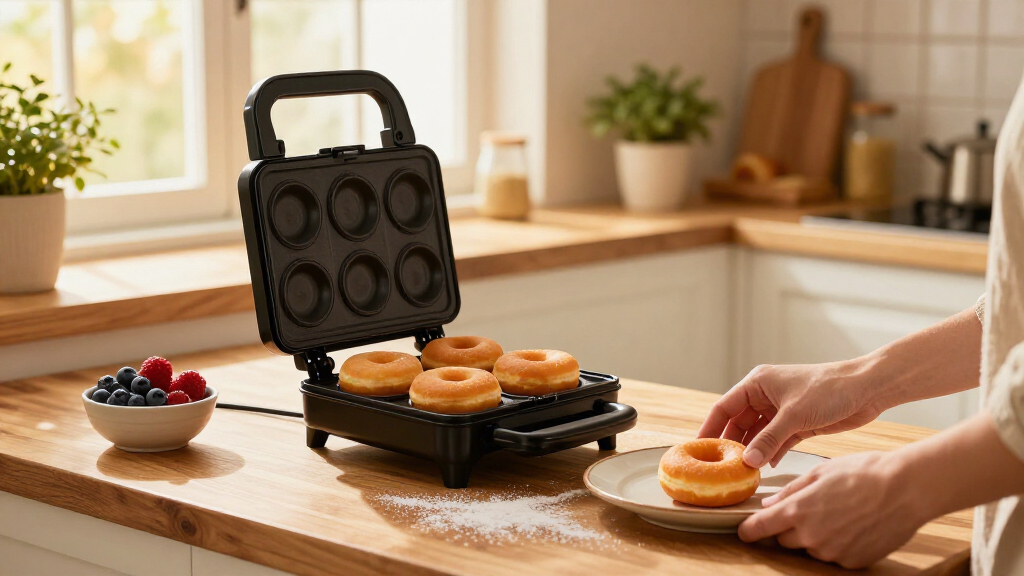

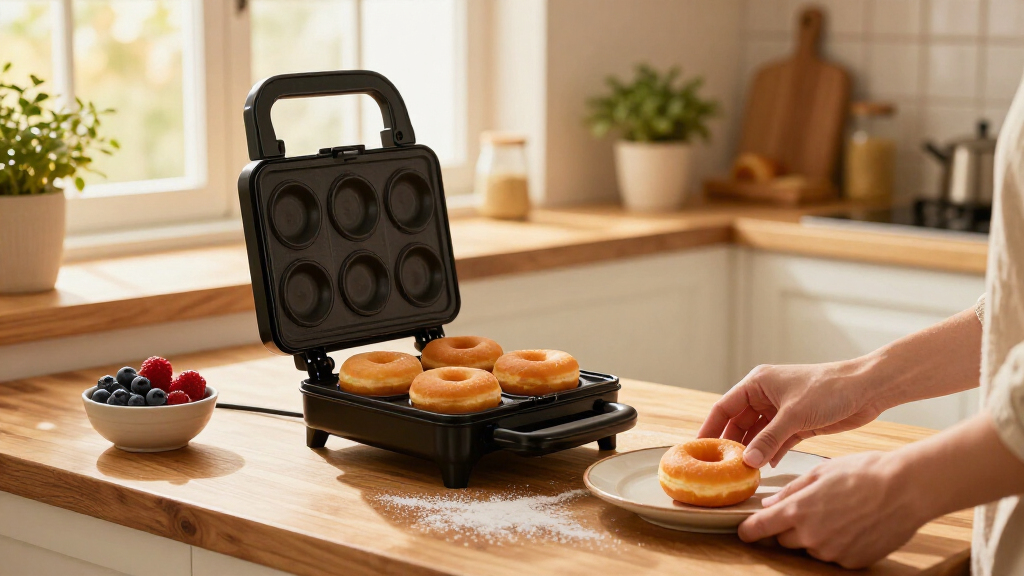
For most home cooks, the Baker’s Friend Mini Donut Maker Machine (Aqua) is my best overall pick for a straightforward countertop option, while the DASH Mini Donut Maker stands out for beginners and the VEVOR Commercial Automatic Donut Maker with Three Size Molds suits buyers who need more production flexibility. The biggest choice is between an electric mold that bakes several donuts at once and a commercial machine designed for continuous, higher-volume frying. Home models are compact and approachable, but their batch sizes limit output; commercial machines offer more capacity, though they need more room, setup, and care. Slot count, cleanup, and the style of donut you want matter as much as the headline capacity. Read on for a side-by-side breakdown of all 15 mini donut makers and help matching one to your kitchen or operation.

Get baking supplies delivered free with Prime
- Fast, free delivery on millions of items
- Prime Video, Amazon Music and more included
- Member-only deals all year
Complete the kit


Key Takeaways
- Home presses and commercial fryers serve different jobs: the compact Baker’s Friend and DASH models suit occasional home batches, while the Kolice, VEVOR, HNZXIB, and FOHERE machines target sustained production.
- Slot count is only one part of home capacity: the 16-hole JOVELL and 12-donut Baker’s Friend can produce more per batch than 6- and 7-slot models, but batch time and counter space still affect how quickly treats reach the table.
- The VEVOR three-size-mold model prioritizes flexibility: it offers a different reason to choose a commercial machine than the single-format, high-throughput options.
- Commercial output claims need context: figures such as 360 donuts per hour or 1800+ per hour are not directly comparable without accounting for loading, finishing, and the buyer’s actual workflow.
- Compact electric makers reduce the learning curve: models such as DASH and DSP are better fits for casual home use than equipment that calls for dedicated space and a higher-volume production plan.
| Baker’s Friend Mini Donut Maker Machine (Aqua) |  | Best for Larger Home-Style Donuts | Brand: Baker’s Friend | Model: BF-6DM01 | Donut size: 3 inches | VIEW LATEST PRICE | See Our Full Breakdown |
| DSP Mini Donut Maker, 6 Donuts |  | Best for Quick Small Batches | Brand: DSP | Capacity: 6 donuts | Stated baking time: About 3 minutes | VIEW LATEST PRICE | See Our Full Breakdown |
| KEINVE Mini Donut Maker, 7 Slots |  | Best for a Seven-Donut Batch | Brand: KEINVE | Model: JK-156 | Capacity: 7 mini donuts | VIEW LATEST PRICE | See Our Full Breakdown |
| Norpro Donut Maker |  | Best for Batter Portioning and Versatility | Brand: Norpro | Model: 3168 | Capacity: 2 cups (16 oz / 480 ml) | VIEW LATEST PRICE | See Our Full Breakdown |
| Kolice Commercial 6-Row Automatic Mini Donut Maker |  | Best for High-Volume Food Service | Brand: Kolice | Model: KODM-6 | Rows: 6 | VIEW LATEST PRICE | See Our Full Breakdown |
| JOVELL 16-Hole Mini Donut Maker with Oven Mitts and Oil Brush |  | Best for High-Capacity Home Baking | Capacity: 16 mini doughnuts | Power: 1400 watts | Hole diameter: About 1.97 inches (5 cm) | VIEW LATEST PRICE | See Our Full Breakdown |
| VEVOR Commercial Automatic Donut Maker, 6-Row, 360 Donuts per Hour |  | Best for Commercial Ring-Donut Throughput | Production rate: Up to 360 donuts per hour | Rows: 6 | Donut size: Approximately 50 mm diameter and 25 mm thick | VIEW LATEST PRICE | See Our Full Breakdown |
| HNZXIB Commercial Mini Donut Maker, 4-Row, 1800+ Donuts per Hour |  | Best for Maximum Automated Mini-Donut Output | Production rate: 1800+ donuts per hour | Rows: 4 | Hopper capacity: 5.5 L | VIEW LATEST PRICE | See Our Full Breakdown |
| FOHERE Commercial Automatic 4-Row Mini Donut Maker |  | Best for Small Commercial Operations | Production capacity: Up to 250 donuts per hour | Rows and molds: 4 rows; four 40 mm molds | Hopper capacity: 3 L | VIEW LATEST PRICE | See Our Full Breakdown |
| DASH Express Mini Donut Maker, 7 Donuts, Aqua |  | Best Compact Pick for Casual Home Treats | Capacity: 7 mini donuts | Model: DDM007GBAQ04 | Color: Aqua | VIEW LATEST PRICE | See Our Full Breakdown |
| DASH Mini Donut Maker, Makes 7 Mini Donuts |  | Best for Compact Everyday Batches | Brand: DASH | Model: DDM007GBDP04 | Capacity: 7 mini donuts | VIEW LATEST PRICE | See Our Full Breakdown |
| Baker’s Friend Mini Donut Maker, Makes 12 Mini Donuts |  | Best for Bigger Home Batches | Brand: Baker’s Friend | Model: BF-DM01 | Capacity: 12 mini donuts | VIEW LATEST PRICE | See Our Full Breakdown |
| DSP Mini Donut Maker |  | Best for Decorating and Quick Batches | Donut size: About 1.93 inches wide | Cooking time: About 3 minutes | Body material: Stainless steel and plastic | VIEW LATEST PRICE | See Our Full Breakdown |
| VEVOR Commercial Automatic Donut Maker with Three Size Molds |  | Best for Commercial Multi-Size Production | Power: 3000W | Material: 304 stainless steel | Donut sizes: Mini: 30–50 mm; standard: 55–90 mm; large: 70–120 mm | VIEW LATEST PRICE | See Our Full Breakdown |
| AshGlen Mini Donut Maker, 8-Count, Graphite |  | Best for Small Kitchens and Flexible Batters | Brand: AshGlen | Model: AG-PMDM01G | Capacity: 8 mini donuts | VIEW LATEST PRICE | See Our Full Breakdown |
| mini donut maker | Model | Brand | Capacity |
|---|---|---|---|
| Baker’s Friend Mini Donut Make | BF-6DM01 | Baker’s Friend | — |
| DSP Mini Donut Maker | — | DSP | 6 donuts |
| KEINVE Mini Donut Maker | JK-156 | KEINVE | 7 mini donuts |
| Norpro Donut Maker | 3168 | Norpro | 2 cups (16 oz / 480 ml) |
| Kolice Commercial 6-Row Automa | KODM-6 | Kolice | — |
| JOVELL 16-Hole Mini Donut Make | — | — | 16 mini doughnuts |
| VEVOR Commercial Automatic Don | — | — | — |
| HNZXIB Commercial Mini Donut M | — | — | — |
| FOHERE Commercial Automatic 4- | — | — | — |
| DASH Express Mini Donut Maker | DDM007GBAQ04 | — | 7 mini donuts |
| DASH Mini Donut Maker | DDM007GBDP04 | DASH | 7 mini donuts |
| Baker’s Friend Mini Donut Make | BF-DM01 | Baker’s Friend | 12 mini donuts |
| DSP Mini Donut Maker | — | — | — |
| VEVOR Commercial Automatic Don | DH-15L | — | — |
| AshGlen Mini Donut Maker | AG-PMDM01G | AshGlen | 8 mini donuts |
More Details on Our Top Picks
Baker’s Friend Mini Donut Maker Machine (Aqua)
The Baker’s Friend is the pick for buyers who want 3-inch donuts rather than the smaller treats made by the KEINVE Mini Donut Maker. Its red and green readiness lights make the basic bake cycle easy to follow, while the nonstick surface and included brush help keep cleanup manageable. At 1,000 watts, it has more listed power than the DSP Mini Donut Maker, though the product information does not specify a faster baking time. The tradeoff is simplicity: there is one cooking setting, so you cannot adjust heat for different batters, and it is dedicated to donuts rather than serving as a multipurpose appliance. I’d choose it for a compact household treat-maker when donut size matters more than recipe flexibility.
Pros:- Makes larger 3-inch donuts than the mini-donut formats listed for KEINVE.
- Red and green indicator lights show readiness.
- Nonstick coating and included brush support easier cleanup.
- Compact dimensions and 3.8-pound weight suit limited counter space.
Cons:- One setting limits control over browning and different batters.
- Designed for donuts only, with no stated versatility for other foods.
Best for: Home cooks and families who want compact equipment for making larger 3-inch donuts and prefer simple readiness indicators.
Not ideal for: Buyers who want adjustable temperature control or an appliance that can cook foods beyond donuts.
- Brand:Baker’s Friend
- Model:BF-6DM01
- Donut size:3 inches
- Wattage:1,000 watts
- Voltage:120 volts
- Dimensions:11.2 × 4.3 × 10 inches
- Weight:3.8 pounds
- Included components:Brush and recipe booklet
Our verdict“Choose the Baker’s Friend if you want 3-inch donuts in a compact appliance and can live without temperature adjustment.”
DSP Mini Donut Maker, 6 Donuts
The DSP suits buyers who value a short stated bake time and a light machine over a larger batch. It makes six donuts in about three minutes, while the KEINVE Mini Donut Maker fits seven but lists a longer 4–6-minute cooking time. That makes the DSP a practical choice for a fast snack or a small round of treats, although the capacity difference matters if you regularly serve a group. Its cool-touch design, indicator lights, and wipe-clean nonstick surface keep operation straightforward. The constraints are a single setting and a 110-volt requirement, so there is little control over cooking and buyers should check outlet compatibility. Compared with the Baker’s Friend, it prioritizes lighter weight and speed over larger 3-inch donuts.
Pros:- Lists an approximately three-minute bake time for a batch of six.
- At 16 ounces, it is lighter than the other electric makers in this group.
- Cool-touch design and indicator lights simplify routine operation.
- Nonstick surfaces are described as wipe-clean and scratch resistant.
Cons:- Six-donut capacity is smaller than the KEINVE’s seven-donut batch.
- One setting provides no listed temperature adjustment.
- Requires a 110-volt outlet.
Best for: People in small households who want six donuts quickly, simple cleanup, and a lightweight appliance they can store easily.
Not ideal for: Buyers who need larger donuts, adjustable heat, or a machine that makes more than six per batch.
- Brand:DSP
- Capacity:6 donuts
- Stated baking time:About 3 minutes
- Wattage:750 watts
- Voltage:110 volts
- Dimensions:9 × 2.8 × 8.3 inches
- Weight:16 ounces
- Features:Cool-touch design, indicator lights, nonstick coating
- Warranty:1-year limited
Our verdict“Pick the DSP for a lightweight six-donut maker with a quick stated cycle, not for capacity or cooking control.”
KEINVE Mini Donut Maker, 7 Slots
With room for seven mini donuts at once, the KEINVE edges past the DSP Mini Donut Maker’s six-donut capacity when you want an extra serving without moving to a commercial machine. Its 4–6-minute cooking time is longer than the DSP’s stated three minutes, so the added slot does not make it the faster option. The nonstick plates help release the donuts and reduce cleanup effort, and its compact 2.4-pound build is easy to accommodate in a home kitchen. This is a focused appliance, not a flexible griddle: the product is described as limited to mini donuts and offers no listed temperature controls. I’d favor it over the Baker’s Friend when batch count matters more than that model’s larger 3-inch donut size.
Pros:- Makes seven mini donuts per batch, one more than the DSP.
- Nonstick plates support easier donut release and cleanup.
- Compact dimensions and 2.4-pound weight suit home storage.
- Uses a standard 120-volt supply.
Cons:- Listed cooking time of 4–6 minutes is longer than the DSP’s stated cycle.
- Limited to mini donuts, with no other cooking use specified.
- No temperature-control settings are listed.
Best for: Households that want seven small donuts per batch and have room for a dedicated, compact countertop appliance.
Not ideal for: Buyers who prefer larger 3-inch donuts, need temperature adjustment, or want a multipurpose cooker.
- Brand:KEINVE
- Model:JK-156
- Capacity:7 mini donuts
- Cooking time:4–6 minutes
- Wattage:750 watts
- Voltage:120 volts
- Dimensions:8.95 × 7.37 × 4.23 inches
- Weight:2.4 pounds
- Coating:Nonstick
Our verdict“Choose the KEINVE if seven mini donuts per round matter more than faster baking or larger donut size.”
Norpro Donut Maker
The Norpro is not an electric donut maker: it is a manual batter dispenser for shaping portions on a separate cooking surface. That distinction makes it a different kind of choice from the DSP or KEINVE, which bake donuts in self-contained appliances. Its two-cup capacity and listed uses—including donut holes, funnel cakes, pancakes, and waffles—make it the more adaptable tool for cooks who already have a fryer, pan, or griddle. The benefit is control over where and how the batter cooks; the tradeoff is that it does not heat, bake, or fry anything by itself. Hand washing is recommended, so cleanup is less convenient than wiping a nonstick electric maker. I’d pick it for versatility, not for a one-button countertop donut batch.
Pros:- Dispenses batter for several foods, including donuts, funnel cakes, pancakes, and waffles.
- Two-cup capacity holds a useful batch of batter.
- Instructions and recipes are included.
- Does not require a dedicated electric cooking appliance.
Cons:- Does not cook or heat batter; a separate cooking surface is required.
- Hand washing is recommended rather than simple wipe-clean care.
- No electric capacity or baking-time specification is provided.
Best for: Cooks who already own a pan, fryer, or griddle and want one dispenser for donuts, pancakes, waffles, and similar batters.
Not ideal for: Shoppers seeking a plug-in appliance that cooks donuts automatically or offers a timed, contained baking cycle.
- Brand:Norpro
- Model:3168
- Capacity:2 cups (16 oz / 480 ml)
- Dimensions:7 × 5 × 4 inches
- Listed uses:Donuts, donut holes, funnel cakes, pancakes, waffles, and other batters
- Included:Instructions and recipes
- Care:Hand washing recommended
Our verdict“Buy the Norpro if you want a versatile batter dispenser and already have the equipment to cook what it dispenses.”
Kolice Commercial 6-Row Automatic Mini Donut Maker
The Kolice sits in a different class from the home appliances here: it is a commercial, automated fryer designed for sustained production, not occasional countertop batches. Its six-row system combines forming, frying, flipping, and counting, with listed output of up to 2,600 donuts per hour. That throughput far exceeds the small-batch DSP and KEINVE, but the machine also demands substantially more space, oil, and operational attention. A 17-liter oil tank, 9-liter hopper, and 31.5-inch width make it a food-service installation rather than a casual home purchase. Temperature control and adjustable donut thickness add process flexibility, though settings are in Celsius and the safety warnings call for careful operation. I’d consider it only when commercial volume justifies its footprint and setup.
Pros:- Automates forming, frying, flipping, and counting in one process.
- Listed production capacity reaches up to 2,600 donuts per hour.
- 304 stainless steel construction is suited to commercial food-service use.
- Adjustable donut thickness and size range support production flexibility.
Cons:- Large dimensions and oil capacity make it unsuitable for most home kitchens.
- Requires careful adherence to warnings about operating with oil and water.
- Temperature settings are in Celsius, which may require conversion for US operators.
Best for: Bakeries, cafes, and food stalls that need automated, high-volume mini-donut production and have space and staff for commercial equipment.
Not ideal for: Home cooks, small kitchens, or low-volume sellers who need a simple, compact electric donut maker rather than an oil-based production machine.
- Brand:Kolice
- Model:KODM-6
- Rows:6
- Production capacity:Up to 2,600 pieces per hour
- Power:1,500 watts
- Voltage:110V, 60Hz
- Machine dimensions:31.50 × 23.62 × 15.75 inches
- Oil tank and hopper capacity:17 L oil tank; 9 L hopper
- Donut size range:1.18–1.97 inches (3–5 cm)
Our verdict“Choose the Kolice only for a food-service operation that can use its automated volume and accommodate its commercial footprint.”
JOVELL 16-Hole Mini Donut Maker with Oven Mitts and Oil Brush
The JOVELL suits home cooks who want to bake a larger batch without moving to a commercial fryer. Its 16-hole capacity is more than the DASH Express Mini Donut Maker’s seven, which can mean fewer rounds when serving a group. Double-sided heating cooks from above and below, while the nonstick surface is designed to help release small donuts without as much fuss. The included mini mitts and oil brush are practical extras for handling the hot appliance and preparing the surface. The tradeoff is its larger footprint: at 13.3 × 11.4 × 13.3 inches, it asks for more counter and storage room than the compact DASH. It also bakes rather than frying automatically, so it is not a substitute for commercial-volume machines such as the VEVOR.
Pros:- Bakes up to 16 mini donuts in one batch
- Double-sided heating cooks from both sides
- Nonstick surface supports easier release
- Includes mini oven mitts and an oil brush
Cons:- Larger dimensions make storage less convenient than compact seven-hole makers
- Baking capacity is suited to home batches, not high-volume commercial production
Best for: Home bakers who regularly make mini donuts for family gatherings and want more capacity per batch than a seven-hole maker offers.
Not ideal for: People with limited cabinet or counter space, or sellers who need an automated commercial production rate.
- Capacity:16 mini doughnuts
- Power:1400 watts
- Hole diameter:About 1.97 inches (5 cm)
- Heating:Double-sided
- Surface:Nonstick coating
- Dimensions:13.3 × 11.4 × 13.3 inches (D × W × H)
- Included components:Mini donut maker, mini oven mitts, oil brush, user guide
Our verdict“Choose the JOVELL if you want a generous home-baking batch size and have room for a larger countertop appliance.”
VEVOR Commercial Automatic Donut Maker, 6-Row, 360 Donuts per Hour
The VEVOR is a commercial fryer, not an oversized version of the countertop baking plates elsewhere in this roundup. It is designed for operators who need up to 360 ring donuts per hour, with automatic flipping to reduce manual handling during cooking. Its 6-row layout, 4.5 L hopper, and 9.1 L oil tank support ongoing production, while the stainless steel body is better suited to a working kitchen than a home cabinet. Compared with the HNZXIB, which advertises a much higher mini-donut rate and adds forming and counting functions, this model has a lower stated output and a simpler listed setup. The VEVOR’s 41.2-pound weight and 22-inch depth make it a substantial commitment, and recipe and frying-time differences can affect donut size.
Pros:- Stated production rate of up to 360 donuts per hour
- Automatically flips donuts during cooking
- Smart control panel supports consistent operation
- 304 stainless steel construction suits commercial kitchen use
Cons:- Large, heavy unit needs dedicated space and stable placement
- Actual donut size can vary with recipe and frying time
- Less suitable for low-volume home batches than electric baking makers
Best for: Cafes, concession operators, and small food businesses that need automated ring-donut production and have a dedicated commercial work area.
Not ideal for: Home bakers or small kitchens that need a compact appliance, bake-style donuts, or equipment that stores easily between uses.
- Production rate:Up to 360 donuts per hour
- Rows:6
- Donut size:Approximately 50 mm diameter and 25 mm thick
- Hopper capacity:4.5 L
- Oil tank capacity:9.1 L
- Material:304 stainless steel
- Power and voltage:1750 W; 120 V
- Dimensions and weight:22 × 19.5 × 15 in; 41.2 lb
Our verdict“Pick the VEVOR for a commercial station needing automatic ring-donut frying, not for occasional home mini-donut baking.”
HNZXIB Commercial Mini Donut Maker, 4-Row, 1800+ Donuts per Hour
For a business prioritizing volume, the HNZXIB stands apart from the home-use DASH Express: it is a commercial forming-and-frying machine that advertises more than 1,800 mini donuts per hour. Automatic forming, frying, flipping, and counting reduce hands-on steps, while adjustable temperature, timer, and five thickness settings offer more control than the VEVOR’s listed ring-donut setup. That capacity comes with a different scale of commitment: the unit measures 31 inches long and weighs 40 pounds, so it needs a dedicated production area rather than a spot on a home counter. The listing also gives conflicting power figures—1800 W in the title and 2000 watt-hours in the specifications—which makes electrical planning less straightforward. I would verify the required power details before choosing it for a kitchen.
Pros:- Advertised output exceeds 1,800 mini donuts per hour
- Automates forming, frying, flipping, and counting
- Temperature, timer, and five thickness settings allow process adjustments
- Includes overheating and double-switch safety protections
Cons:- Large footprint requires dedicated kitchen space
- Power information is inconsistent between the title and specifications
- Commercial production capacity is excessive for occasional home baking
Best for: High-volume bakeries, dessert shops, hotels, and cafes that need automated mini-donut production with adjustable size and cooking controls.
Not ideal for: Home cooks, occasional sellers, or businesses without dedicated space and the ability to confirm its electrical requirements.
- Production rate:1800+ donuts per hour
- Rows:4
- Hopper capacity:5.5 L
- Donut diameter:1.18–1.97 in (3–5 cm)
- Controls:Adjustable temperature and timer; five thickness settings
- Material:Stainless steel
- Voltage and listed power:110 V; 1800 W in title, 2000 watt-hours in specifications
- Dimensions and weight:31 × 15.7 × 15.7 in; 40 lb
Our verdict“Choose the HNZXIB when automated mini-donut volume and adjustable production settings matter more than compact size or simple setup.”
FOHERE Commercial Automatic 4-Row Mini Donut Maker
The FOHERE offers a more moderate production scale than the HNZXIB while still automating the work that makes commercial frying faster: it forms, fries, flips, counts, and collects mini donuts, with a stated output of up to 250 per hour. Its 3 L hopper and four 40 mm molds make it a more compact choice than the VEVOR six-row machine, though it remains a heavy, nearly 22-inch-long piece of equipment. Temperature control, adjustable frying speed, and overheating protection give operators useful process controls; disassembly also supports cleaning after service. Unlike the DASH Express, this machine uses an oil tank and requires oil before operation, so it brings more setup and cleanup than bake-style home makers. It fits a small commercial kitchen better than a household counter, but its footprint still needs planning.
Pros:- Automates forming, frying, flipping, counting, and collecting
- Produces up to 250 mini donuts per hour
- Temperature and frying-speed controls support process adjustment
- 304 food-grade stainless steel construction and disassembly aid cleaning
Cons:- Requires oil in the tank before operation
- At 35.2 pounds, it is not easy to move or store
- Commercial footprint and workflow are excessive for occasional home batches
Best for: Small cafes, food stalls, and dessert businesses that want automated mini-donut handling without the HNZXIB’s advertised production scale.
Not ideal for: Home users or operators who want a low-maintenance bake-style appliance and do not want to manage an oil tank.
- Production capacity:Up to 250 donuts per hour
- Rows and molds:4 rows; four 40 mm molds
- Hopper capacity:3 L
- Wattage:1750 watts
- Construction:304 food-grade stainless steel
- Controls and protection:Adjustable frying speed, temperature control, overheating protection
- Dimensions and weight:21.85 × 14.76 × 14.57 in; 35.2 lbs
- Included components:Tray, food clips, and 4 fuses
Our verdict“The FOHERE makes sense for a small food business that needs automated frying at a more moderate stated output than the HNZXIB.”
DASH Express Mini Donut Maker, 7 Donuts, Aqua
The DASH Express is the straightforward home option in a lineup that also includes commercial fryers such as the FOHERE. It bakes seven mini donuts per batch, so it is better suited to a quick snack or small household serving than the JOVELL, which has 16 holes. Its compact, lightweight design makes storage easier, and the double-sided nonstick surface supports release and cleanup without managing a fryer’s oil tank. Fast heating also suits cooks who want a short, simple appliance routine rather than adjustable production controls. The tradeoff is limited batch size: serving a group means making multiple rounds. It also makes mini rather than full-size donuts and needs an electrical outlet, so it is not a portable option for kitchens without convenient counter access.
Pros:- Compact and lightweight for easier storage
- Makes seven mini donuts per batch
- Fast heating suits quick home treats
- Double-sided nonstick surface helps with release and cleanup
Cons:- Smaller batch capacity means repeated rounds for groups
- Makes mini donuts rather than full-size donuts
- Requires an electrical outlet and is not suited to commercial production
Best for: Small households, first-time mini-donut makers, and cooks who want an easy-to-store appliance for occasional homemade batches.
Not ideal for: People serving large groups frequently, anyone seeking full-size donuts, or commercial operators who need high output.
- Capacity:7 mini donuts
- Model:DDM007GBAQ04
- Color:Aqua
- Surface:Double-sided nonstick
- Heating:Fast heating
- Included components:Product and manual
Our verdict“Choose the DASH Express for occasional small-batch treats and easy storage, but opt for the JOVELL if you need more donuts per round.”
DASH Mini Donut Maker, Makes 7 Mini Donuts
The DASH Mini Donut Maker is a space-conscious pick for home bakers who want a simple batch without dedicating much counter or cupboard space. Its seven-donut capacity lands between the AshGlen’s eight and the Baker’s Friend’s twelve, making it a better fit for smaller households than for serving a crowd. The double-sided nonstick cooking surface is designed to release donuts easily and keep cleanup manageable, while the included recipe guide gives beginners a starting point. At 760 watts, it has a listed power rating, though the supplied details do not state a cooking time. The tradeoff is versatility: unlike the DSP Mini Donut Maker, which includes decorating tools, this DASH model is focused on baking donuts and provides no listed accessories beyond its recipe guide.
Pros:- Makes up to seven mini donuts per batch
- Compact design takes little counter space
- Double-sided nonstick surface supports easier release and cleanup
- Recipe guide is included
Cons:- Limited to mini donuts rather than serving as a more versatile appliance
- Product details do not provide dimensions or a cooking time
Best for: Small households and beginner bakers who want a compact appliance for occasional batches of seven mini donuts.
Not ideal for: People making donuts for larger groups or seeking decorating accessories, a stated cooking time, or an appliance that handles other foods.
- Brand:DASH
- Model:DDM007GBDP04
- Capacity:7 mini donuts
- Power:760 watts
- Cooking surface:Double-sided nonstick
- Included components:Mini donut maker and recipe guide
- Warranty:1-year manufacturer warranty
Our verdict“Choose this DASH model for a compact, straightforward seven-donut batch; pick the Baker’s Friend if you need more donuts per round.”
Baker’s Friend Mini Donut Maker, Makes 12 Mini Donuts
Capacity is the main reason to choose the Baker’s Friend Mini Donut Maker: it turns out 12 mini donuts per batch, more than the seven from the DASH and the eight from the AshGlen. That extra room can mean fewer rounds when baking for family or guests, while its 12-by-11-inch footprint remains countertop-friendly compared with commercial equipment such as the VEVOR automatic maker. The PFOA-free nonstick coating is intended to help with release and cleanup, and the unit can use cake mix, brownie mix, or other batters. Those batters still need to be prepared separately, so this is not an all-in-one shortcut. It also remains a dedicated mini-donut appliance, with no listed extras or cooking-time information to distinguish it beyond its higher home-use capacity.
Pros:- Makes 12 mini donuts in one batch
- PFOA-free nonstick surfaces are designed for easier release and cleanup
- Compact listed dimensions suit home kitchens
- Works with cake mix, brownie mix, and other batters
Cons:- Batter must be prepared separately
- Dedicated to mini donuts, with no additional functions listed
- Product details do not specify power or cooking time
Best for: Home bakers who regularly serve several people and want more mini donuts per batch without moving to commercial equipment.
Not ideal for: Bakers who want an appliance that prepares batter, makes standard-size donuts, or includes accessories and detailed operating information.
- Brand:Baker’s Friend
- Model:BF-DM01
- Capacity:12 mini donuts
- Dimensions:12 × 11 × 2.75 inches
- Weight:4.84 pounds
- Coating:PFOA-free nonstick
Our verdict“Pick the Baker’s Friend when batch size matters more than extra accessories or the smaller footprint of the DASH.”
DSP Mini Donut Maker
The DSP Mini Donut Maker suits bakers who want to move quickly from baking to decorating. Its donuts are about 1.93 inches wide and the listed cooking time is approximately three minutes, while included piping bags and kitchen tools provide a useful starter set for finishing small batches. That accessory bundle gives it a different role from the DASH Mini Donut Maker, which includes a recipe guide but no comparable decorating kit. The DSP also lists a cool-touch exterior and indicator lights, practical cues for handling and monitoring the appliance. The tradeoffs are the especially small donut size and wipe-clean care: the surfaces are not described as removable or washable, so cleanup means wiping them down. Buyers seeking a larger home batch may prefer the Baker’s Friend’s 12-donut capacity.
Pros:- Listed cooking time is about three minutes
- Includes 100 piping bags and several kitchen tools
- Cool-touch exterior and red and green indicator lights are listed
- Nonstick coating supports easier release
Cons:- Makes very small donuts, about 1.93 inches wide
- Cleaning is specified as wipe-clean rather than removable-plate washing
- No batch capacity is provided in the supplied product details
Best for: Baking hobbyists who want a quick small-donut cycle and accessories for piping and decorating.
Not ideal for: People who prefer standard-size donuts, want a larger batch capacity, or need cooking plates that can be removed for washing.
- Donut size:About 1.93 inches wide
- Cooking time:About 3 minutes
- Body material:Stainless steel and plastic
- Coating:Nonstick
- Indicator lights:Red and green
- Included accessories:100 piping bags, spatula, balloon whisk, kitchen tong, and cooking brush
- Cleaning:Wipe clean
Our verdict“Choose the DSP for a quick, accessory-rich decorating setup, but consider the Baker’s Friend if making more donuts per batch is the priority.”
VEVOR Commercial Automatic Donut Maker with Three Size Molds
The VEVOR Commercial Automatic Donut Maker is a clear departure from countertop home appliances: its 3000W motor, automatic frying and flipping, and large hopper and oil tank are aimed at sustained production, not occasional weekend batches. Three mold ranges cover mini, standard, and large donuts, with adjustable thickness, so operators can vary the output instead of being restricted to the mini-only formats of the DASH or AshGlen. That flexibility comes with substantial demands. At 61.7 pounds and roughly 41 inches long, this is equipment for a dedicated work area, and its 14.5-liter oil tank means handling and cleaning involve more than wiping nonstick plates. Compared with the household makers in this roundup, it offers much higher-volume capability but is far less practical for a typical kitchen.
Pros:- Automates frying and donut flipping for production work
- Three mold ranges accommodate mini, standard, and large donuts
- Adjustable thickness provides control over output
- Large hopper and oil tank support higher-volume operation
Cons:- Large and heavy, at 61.7 pounds and over 41 inches long
- Oil-based commercial operation requires more space and cleanup than home electric makers
- Capacity and upkeep are excessive for occasional household batches
Best for: Food businesses, event vendors, or other operators who need automated production across mini, standard, and large donut sizes.
Not ideal for: Home bakers with limited space or anyone seeking a lightweight, plug-in-style appliance for occasional mini-donut batches.
- Power:3000W
- Material:304 stainless steel
- Donut sizes:Mini: 30–50 mm; standard: 55–90 mm; large: 70–120 mm
- Adjustable thickness:15–30 mm
- Hopper capacity:5.5 L
- Oil tank capacity:14.5 L
- Dimensions:15.74 × 41.34 × 25.59 inches
- Item weight:61.7 pounds
- Model:DH-15L
Our verdict“Choose the VEVOR only for a dedicated commercial setup that needs automated output in several donut sizes.”
AshGlen Mini Donut Maker, 8-Count, Graphite
The AshGlen Mini Donut Maker is the most clearly sized small-kitchen pick in this group: its 8.7-inch square footprint and 2.7-pound weight make storage less of a commitment than the larger Baker’s Friend. It bakes eight 2-inch mini donuts per round, just one more than the DASH, and the ceramic nonstick plates are designed for easy release and wipe-clean care. Its stated compatibility with gluten-free and vegan recipes makes it appealing to households using different batters, though the product data does not describe separate settings for them. At 750 watts, it is close to the DASH’s listed 760 watts, but neither listing provides a cooking-time comparison. The main limitation is size: this makes only small donuts and requires a 120-volt outlet.
Pros:- Compact 8.7-inch square dimensions and 2.7-pound weight aid storage
- Makes eight 2-inch donuts per batch
- Ceramic nonstick coating is designed for easy release and wipe-clean care
- Listed as compatible with gluten-free and vegan batters
Cons:- Limited to 2-inch mini donuts
- Requires a 120-volt outlet
- Product details do not specify cooking time
Best for: Apartment dwellers and small-kitchen bakers who want a lightweight maker for eight mini donuts and use varied batters.
Not ideal for: People who want standard-size donuts, a large batch, or cooking-time details before choosing an appliance.
- Brand:AshGlen
- Model:AG-PMDM01G
- Capacity:8 mini donuts
- Donut size:2 inches
- Coating:Ceramic nonstick
- Wattage:750 watts
- Voltage:120 volts
- Dimensions and weight:8.7 × 8.7 × 3.5 inches; 2.7 pounds
- Included components:Brush
Our verdict“Pick the AshGlen for a lightweight, compact eight-donut maker and varied batters; choose the Baker’s Friend for a larger batch.”
How We Picked
I ranked these mini donut makers by how well their design fits the buyer’s likely use, not by treating every model as a substitute for every other one. For home options, I focused on batch capacity, countertop footprint, ease of operation, and whether the format makes sense for occasional cooking. For commercial machines, I weighed intended throughput, row or mold configuration, versatility, and the practical demands of setup and maintenance. I also considered whether included accessories or a more flexible mold arrangement change the day-to-day value.
The order favors options with a useful balance of fit, usability, and capability for their target buyer. A compact press can rank ahead of a larger machine for household use because commercial output is not an advantage when space and workload do not justify it. Within the commercial group, higher stated capacity or multiple mold sizes can help, but those features matter only when they match a real production need. Since these products span two distinct categories, I call out who should choose each style and who is better off skipping it.
Factors to Consider When Choosing Mini Donut Makers
Before choosing a mini donut maker, decide what kind of donut-making job you have: occasional batches at home, frequent treats for groups, or sustained commercial production. The right machine depends on more than the number of cavities or a stated hourly output. These factors help translate product specifications into a realistic fit.
Choose baked molds or commercial frying around the result you want
Many compact home makers use heated molds to cook several small donuts at once, while commercial automatic machines are built around a higher-volume production process. These approaches produce different workflows and may yield different textures, so do not assume every machine makes the same style of donut. Think about whether you want an easy countertop treat or a product closer to what a dedicated donut operation serves. A molded electric appliance can be a sensible choice for households that value a contained process and manageable cleanup. A commercial fryer makes more sense when output and repeat production matter enough to justify added space and handling. If you are unsure, start with the style you actually want to eat and serve rather than the machine with the most dramatic capacity claim.
Translate capacity into the number of batches you will actually make
A 6-, 7-, 8-, 12-, or 16-cavity home maker describes how many donuts fit in one cycle, not how quickly a gathering will be served. Consider how many people you usually feed, whether everyone expects a fresh batch at once, and how long you are willing to run successive cycles. For commercial products, stated hourly output can also depend on loading, cooking conditions, and how the rest of the operation is organized. A bigger number does not automatically mean a better fit for a small kitchen or a low-volume stall. Estimate your likely peak demand, then leave room for interruptions and finishing tasks. This avoids paying in space and complexity for capacity that will sit unused.
Measure the full footprint, not just the machine’s cooking surface
Before buying, identify where the appliance will sit during use and where it will live between batches. The countertop needs space for the machine, its opening or working area, and a safe place to set batter, utensils, and finished donuts. A compact home press is easier to store than commercial equipment, but a smaller appliance can still become inconvenient if the cord or lid needs extra clearance. Commercial models may also need a dedicated work area and a plan for moving, setting up, and cleaning the unit. Measure storage access as well as the counter, especially if the machine will be put away after each use. A footprint that works on paper can feel impractical when the surrounding workspace is crowded.
Look past accessories to the routine they support
Included items such as the oil brush and oven mitts with the JOVELL may help with a particular task, but accessories do not replace a good fit between machine and kitchen. Check how you will apply batter or oil, remove hot donuts, and move finished batches without creating extra mess. Before choosing, find out what the maker’s surfaces and components require for cleaning; do not assume every part can be submerged or placed in a dishwasher. Stubborn batter around cavities can make an otherwise simple appliance a chore after repeated batches. A manageable cleanup routine matters more if you plan to use the machine often. Favor clear care instructions and a workflow you can maintain over add-ons you may rarely reach for.
Pay for versatility only when it changes your menu
Multiple mold sizes, like the option offered by one VEVOR commercial model, can serve operators who plan to sell or make more than one donut size. That flexibility brings value only when the different formats fit a real menu or customer preference. For home use, a single size may be simpler to portion, cook, and finish consistently. Ask whether you will use the extra molds often enough to justify the added equipment and setup. Also consider whether changing formats slows your routine or complicates storage. If your plan is to make one familiar mini donut, a focused machine may be the more practical choice.
Match operating complexity to your experience and workload
A beginner often benefits more from a simple electric press than from a machine built for a commercial production line. Commercial equipment may require more attention to setup, operating technique, workspace, and cleaning, even when automation handles part of the process. Think about who will use the machine, how frequently, and whether more than one person needs to learn the routine. For occasional family cooking, a straightforward appliance can keep the process approachable. For a business, prioritize a workflow staff can repeat safely and consistently rather than choosing on output alone. If your volume is growing, compare the work involved in operating a larger machine with the time it could save during busy periods.
Frequently Asked Questions
Should I buy a home donut press or a commercial automatic machine?
Choose a home press if you want occasional batches, a countertop-friendly appliance, and a simpler routine. Commercial automatic machines are aimed at buyers who need sustained output and have room for larger equipment and its working area. The two formats are not interchangeable just because both make mini donuts. Think through the donut style you want, how often you will produce it, and how much setup and cleanup you can manage. If your demand is only a few batches at a time, commercial capacity may add more burden than value.
Is a 16-hole mini donut maker necessarily better than a 7-hole model?
Not automatically: more cavities can mean more donuts in one cycle, but it does not tell you how long a cycle takes or how convenient the machine is to store. A 16-hole model may suit larger groups, while a smaller 7-hole maker can be easier to fit into a compact kitchen or use for occasional treats. Consider how many people you usually serve and whether you are comfortable making multiple rounds. Also check the appliance’s overall footprint, not just its cavity count. Pick the capacity that matches your routine rather than the largest number available.
How should I compare commercial machines that list different hourly outputs?
Treat stated output as a starting point, not a guaranteed result for your operation. Machines may count production differently, and real service can involve loading, handling, and finishing steps outside the cooking cycle. Compare the machine’s rows or mold layout, the kind of operation it supports, and the workspace it requires. Ask whether the stated capacity aligns with the volume you expect during your busiest period. A lower-output model can be a better match if it suits your scale and is easier to integrate into your workflow.
What should I check before buying a mini donut maker for a small kitchen?
Measure the storage spot and the counter area where you plan to operate the appliance, including room to open it and handle hot food. Check the product’s full dimensions and think about cord placement, nearby outlets, and where ingredients and finished donuts will sit. A high cavity count may save batches but can also take up more room. Look at cleaning directions and storage needs as well, since those affect how willing you will be to use the maker regularly. For limited space, a compact home model is usually easier to manage than commercial equipment.
Do I need interchangeable donut sizes, or is one size enough?
One size is often enough for a household that wants a consistent snack or dessert. Interchangeable sizes are more useful when you plan to serve different portions, offer menu variety, or respond to distinct customer preferences. Extra mold options can mean more flexibility, but they also add decisions around storage, setup, and consistency. Before choosing a multi-size machine, name the occasions when you would use each format. If you cannot identify a regular use for the alternatives, a single-size model may keep the process simpler.
Conclusion
For most households, I recommend the Baker’s Friend Mini Donut Maker Machine (Aqua) as the best overall fit, with the DASH Mini Donut Maker as my pick for beginners who want a simple, compact format. Buyers focused on value should compare the straightforward home options, including the DSP Mini Donut Maker, against their required batch size and storage space rather than paying for commercial capacity they will not use. For premium, high-volume needs, the commercial group is the right place to look: the VEVOR model with three size molds favors format flexibility, while Kolice, HNZXIB, FOHERE, and the other VEVOR machine suit buyers weighing production configuration and stated throughput. If your specific need is a larger home batch, compare the JOVELL 16-hole and Baker’s Friend 12-donut models; if you need commercial-scale output, choose by workflow and space, not headline claims alone. The best mini donut maker is the one whose cooking style, capacity, and cleanup routine match how you will actually use it.
Halloween Picks

Thuodo 8 FT Tall Halloween Inflatable Three-Headed Dragon with LEDs

Govee Outdoor Halloween Projector Light with 3D Effects

Kalolary 11 ft Halloween Inflatable Archway Ghost House Tunnel
As an affiliate, we earn on qualifying purchases.