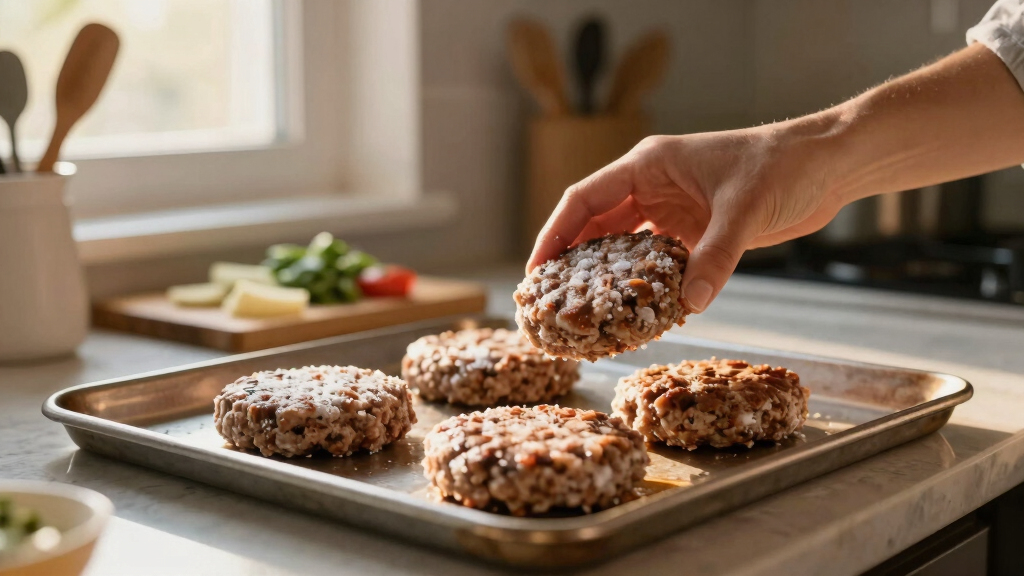

The best frozen burger patties balance beef flavor, reliable cooking, and the right fat level for the way you grill or pan-cook. My best overall pick is Teton Waters Ranch 100% Grass-Fed Beef Burgers because it combines a cleaner ingredient profile with stronger beef quality than the basic bulk packs. For budget-minded cookouts, Ground Beef Burgers, 80% Lean, 20% Fat offer the juiciest value, while Ball Park Fully Cooked Flame Grilled Beef Patties make the most sense when speed matters more than a fresh-off-the-grill texture. The biggest tradeoffs are flavor versus leanness, price versus sourcing, and convenience versus control. Continue reading for the full breakdown of which frozen patties fit each kind of buyer.

Get baking supplies delivered free — and shop member deals
- Fast, free delivery on millions of items
- Access to Prime Big Deal Days deals on October 6–7
- Prime Video, Amazon Music and more included
Key Takeaways
- Teton Waters Ranch earns the top spot because grass-fed sourcing, simple claims, and a 4-pack format make it the most curated choice for buyers who care about beef quality over bulk savings.
- 80% lean patties are the strongest value play because the higher fat content helps protect juiciness, especially when cooking from frozen.
- Ball Park Fully Cooked Flame Grilled Patties win on speed, but they give up the browning control and fresh texture of raw frozen patties.
- 93% lean patties are the best fit for lighter meals, yet they need more careful cooking because low fat leaves less margin for dryness.
- Organic Rancher Organic Beef Burger is the premium organic pick, but its smaller 16-ounce pack makes it less practical for feeding a crowd than the 32-ounce options.


More Details on Our Top Picks
Teton Waters Ranch 100% Grass-Fed Beef Burgers, Frozen Burger Patties, No Sugar, No Antibiotics or Added Hormones, Gluten Free – 4 Count (1 lb)
I rank Teton Waters Ranch 100% Grass-Fed Beef Burgers as my Best Overall because it balances clean sourcing with the frozen-patty convenience buyers are usually chasing. Compared with Organic Rancher Organic Beef Burger, it does not carry the same USDA Organic and G.A.P. Step 4 claims, but it gives a similar grass-fed, pasture-raised direction in a straightforward four-patty pack. Against Ground Beef Burgers, 80% Lean, 20% Fat, the draw is less about volume and more about a more ingredient-focused freezer staple with no sugar, fillers, antibiotics, or added hormones. The tradeoff is clear: this is not the best cookout bulk buy, and the unseasoned profile leaves all flavor building to the buyer. I would place it first for quality-minded shoppers who still want patties that cook directly from frozen.
Pros:- Made with 100% grass-fed, pasture-raised beef
- No sugar, fillers, antibiotics, or added hormones
- Cooks directly from frozen for easy weeknight use
- Gluten free and flexible for grilling or quick meals
Cons:- Only 4 patties per pack, which limits value for groups
- No seasoning included, so flavor depends on the cook
- No USDA Organic certification listed, unlike Organic Rancher
Best for: I would choose this for quality-focused shoppers who want grass-fed frozen patties without fillers, sugar, antibiotics, or added hormones.
Not ideal for: I would skip it for large cookouts, since the 4-patty pack runs out faster than the 8-count ground beef options.
- Weight:1 lb
- Count:4 patties
- Approx. Patty Size:4 oz
- Beef Type:100% grass-fed beef
- Raising Claims:Pasture-raised, grass-finished
- Dietary Features:Gluten free, no sugar
- Ingredient Exclusions:No fillers, antibiotics, or added hormones
- Preparation:Cook from frozen
Bottom line: I would buy this first when ingredient quality matters more than pack size.
Ground Angus Beef Burgers, 32 Oz, 6 Count, Frozen
I would put Ground Angus Beef Burgers, 32 Oz, 6 Count in the Best High-Protein Angus Pick slot. Its strongest argument is the 26 grams of protein per serving, which gives it a more meal-prep-friendly profile than Ground Beef Burgers, 80% Lean, 20% Fat with 19 grams per serving. It also offers more total food than Teton Waters Ranch’s 1-pound pack, though it does not match Teton’s grass-fed, no-antibiotics sourcing claims. The six-patty count sits in the middle of the lineup: easier for a small household than an 8-count pack, but less useful for a larger cookout. I see this as a practical freezer pick for buyers who care more about Angus beef and protein than organic labels or pre-cooked speed.
Pros:- Ground Angus beef gives it a more specific beef identity than basic ground beef patties
- 26 grams of protein per serving is the highest claim in this batch
- 32 oz package gives more total food than 1 lb packs
- Works for grilling or pan-frying
Cons:- No grass-fed, organic, antibiotic-free, or hormone-free claims supplied
- Six patties fall short for larger gatherings
- Raw frozen format needs more active cooking than Ball Park Fully Cooked
Best for: I would choose this for small households or meal preppers who want Angus beef and a higher protein claim per serving.
Not ideal for: I would skip it for organic-first shoppers or anyone who needs a fully cooked burger for microwave-speed meals.
- Weight:32 oz
- Quantity:6 patties
- Approx. Patty Size:About 5.3 oz
- Beef Type:Ground Angus beef
- Protein Per Serving:Approx. 26g
- Packaging:Frozen
- Preparation:Cook before eating
- Cooking Methods:Grill or pan-fry
Bottom line: I would pick this when protein and Angus beef matter more than organic sourcing or maximum patty count.
Ball Park Fully Cooked Flame Grilled Beef Patties, 1.01 lb, 6 Count
Ball Park Fully Cooked Flame Grilled Beef Patties earns my Best Speed Pick because it solves a different problem than the raw frozen patties here: getting burgers on the table in minutes. Compared with Ground Angus Beef Burgers or Teton Waters Ranch, it gives up raw-patty control over browning, seasoning, and doneness, but the fully cooked format is much easier for a rushed lunch or after-school meal. The flame-grilled note and 100% beef formula make it more burger-like than many heat-and-eat shortcuts, and the resealable package helps with repeat use. Still, buyers who want a thick grill burger may find the smaller patties less satisfying than the Angus or 80/20 options. I rank it below raw patties for flavor control, but above them for speed.
Pros:- Fully cooked format heats faster than raw frozen patties
- Made with 100% beef
- No artificial flavors, colors, by-products, or preservatives
- Resealable packaging helps with repeated freezer use
Cons:- Less control over browning and doneness than raw patties
- Texture and flavor depend heavily on the heating method
- Smaller patties may not satisfy buyers wanting thick grill burgers
Best for: I would choose it for busy households that need already-cooked burgers for quick lunches, kids’ meals, or office freezer backup.
Not ideal for: I would skip it for grill-focused buyers who want to control crust, seasoning, and doneness from a raw patty.
- Weight:1.01 lbs
- Count:6 patties
- Approx. Patty Size:About 2.7 oz
- Beef Type:100% beef
- Cook Status:Fully cooked
- Heating Methods:Grill, microwave, or skillet
- Ingredient Exclusions:No artificial flavors, colors, by-products, or preservatives
- Packaging:Resealable frozen package
- Ready Time:Heats in minutes
Bottom line: I would buy this for speed, not for the most customizable burger night.
Organic Rancher Organic Beef Burger 80% Lean/10% Fat, 16 oz
I give Organic Rancher Organic Beef Burger the Best Organic Pick role because it has the most specific sourcing stack in this group: USDA Organic, grass-fed, pasture-raised, no antibiotics, no hormones, non-GMO, and G.A.P. Step 4 animal welfare. Compared with Teton Waters Ranch 100% Grass-Fed Beef Burgers, it adds more certification, which matters for buyers who want more verification behind the label. It is less easy to recommend as the main frozen-burger stock-up choice, though, because the pack is only 16 ounces and the product data points to Whole Foods Market availability. Next to Ground Beef Burgers, 80% Lean, 20% Fat, this is the more values-driven pick, while the 8-count pack is the better party freezer option. I would buy this for standards first, volume second.
Pros:- USDA Organic certification adds a stronger sourcing signal
- Made from 100% grass-fed, pasture-raised cattle
- G.A.P. Step 4 animal welfare certification
- Free from antibiotics, hormones, and GMOs
Cons:- 16 oz package gives fewer servings than 32 oz packs
- Whole Foods Market availability narrows access
- May cost more than conventional frozen beef patties
Best for: I would choose it for organic-first buyers who want animal welfare claims and are already shopping at Whole Foods Market.
Not ideal for: I would skip it for budget cookouts or shoppers who need a large multi-pack in one freezer run.
- Weight:16 oz
- Lean Content:80%
- Fat Content:10%
- Certification:USDA Organic
- Animal Welfare:G.A.P. Step 4
- Cattle Source:100% grass-fed, pasture-raised
- Free-From Claims:No antibiotics, hormones, or GMOs
- Cooking Methods:Grill, pan-sear, or air fry
- Availability:Whole Foods Market
Bottom line: I would pick this when organic certification and animal welfare claims outweigh price and pack size.
Ground Beef Burgers, 80% Lean, 20% Fat, 32 Oz, 8 Count
Ground Beef Burgers, 80% Lean, 20% Fat, 32 Oz, 8 Count is my Best Value for Cookouts because it gives the most patties in this batch and uses the classic 80/20 ratio many burger buyers expect for juiciness. Compared with Ground Angus Beef Burgers, it trades the Angus label and higher 26-gram protein claim for two extra patties and a familiar fat level that is forgiving on the grill. It is also much more crowd-ready than Teton Waters Ranch, though it lacks the grass-fed, no-antibiotics, and no-hormones claims that make Teton feel more curated. The drawback is dietary fit: 20% fat will be too rich for some shoppers, and the plain patties still need seasoning. I would rank it highest for quantity, not ingredient pedigree.
Pros:- 8-count pack is the largest patty count in this batch
- 80/20 lean-to-fat ratio supports a juicy burger
- 32 oz package works well for cookouts and meal prep
- All-natural ingredient claim gives it a cleaner basic profile than unnamed conventional patties
Cons:- 20% fat may be too rich for some diets
- No seasoning included, so it needs flavor added during cooking
- Lacks the grass-fed, organic, and animal welfare claims found in premium picks
Best for: I would choose it for hosts, families, and meal preppers who want eight 4-ounce patties with a juicy 80/20 profile.
Not ideal for: I would skip it for lower-fat diets or shoppers who prioritize grass-fed, organic, or antibiotic-free sourcing.
- Weight:32 oz
- Quantity:8 burgers
- Approx. Patty Size:4 oz
- Lean Content:80%
- Fat Content:20%
- Protein Per Serving:19g
- Ingredients:All-natural ingredients
- Storage:Frozen
- Meal Use:Meal prep and quick meals
Bottom line: I would buy this for feeding more people with a classic juicy patty at a practical pack size.
Ground Beef Burgers, 93% Lean, 7% Fat, 32 oz, 8 count, Frozen
I would rank Ground Beef Burgers, 93% Lean, 7% Fat as the leanest choice in this frozen burger patty lineup. The 93/7 ratio makes it better suited to buyers who want a lighter beef burger with less rendered fat on the pan or grill. Compared with the Ground Beef Burgers, 85% Lean, 15% Fat, this option is less likely to feel rich or juicy, but it gives calorie- and fat-conscious shoppers a cleaner fit. It also differs from the 80/20 patties, which are built more for classic backyard burger flavor. The tradeoff is clear: convenience and lean protein come at the cost of a drier patty if overcooked, and the frozen format may limit recipes that need loose ground beef.
Pros:- Very lean 93/7 beef profile suits lower-fat burger meals
- Eight frozen patties make portioning easy for weeknight cooking
- Cooks directly from frozen for faster meal planning
- All-natural positioning appeals to shoppers avoiding heavily processed patties
Cons:- Less fat means less built-in juiciness than 85/15 or 80/20 patties
- Can become dry if cooked aggressively from frozen
- Packaging may vary, which can be frustrating for shoppers who like predictable storage
Best for: Buyers who want a leaner beef burger for quick weeknight meals without moving to turkey, veggie patties, or pre-cooked burgers.
Not ideal for: Burger fans who want a richer, juicier patty, since the 7% fat level is much leaner than 85/15 or 80/20 options.
- Total Weight:32 oz
- Package Weight:2 lbs
- Quantity:8 patties
- Lean Content:93%
- Fat Content:7%
- Storage Format:Frozen
- Cooking Format:Cooks directly from frozen
- Suggested Cooking Methods:Grilling or pan-frying
- Ingredient Claim:All-natural
Bottom line: Choose this if you want the leanest beef patty in the group and are willing to manage cooking carefully for moisture.
Ground Beef Burgers, 85% Lean, 15% Fat, 32 Oz, 8 Count, Frozen
I’d place Ground Beef Burgers, 85% Lean, 15% Fat above the 93/7 patties for shoppers who care more about a familiar burger bite than the lowest fat number. The 85/15 blend gives it more cushion against dryness, so it makes sense for casual family dinners, skillet burgers, and grill nights where flavor matters. Compared with Ball Park Fully Cooked Flame Grilled Beef Patties, it takes more cooking time, but it offers a more traditional raw-to-cooked burger setup. Against the 80/20 patties, though, it is still a little leaner and may not deliver the same richness. The main tradeoff is that balanced fat and protein come in one fixed ratio, so shoppers wanting very lean meals or extra-indulgent burgers may prefer another pick.
Pros:- 85/15 ratio gives a practical balance of beef flavor and moderate fat
- Eight-count 2-pound pack works well for family meals or batch cooking
- About 21 grams of protein per burger supports filling meals
- Frozen format helps keep burgers ready for unplanned dinners
Cons:- Less convenient than fully cooked frozen patties
- Single 85/15 fat ratio will not suit very lean or extra-juicy burger preferences
- Beef-only option excludes shoppers avoiding red meat
Best for: Households that want a dependable frozen beef patty with more flavor than lean 93/7 burgers but less fat than 80/20 options.
Not ideal for: Buyers who need the fastest possible meal, since fully cooked patties like Ball Park require less active cooking.
- Total Weight:32 oz
- Package Size:2 pounds
- Quantity:8 burgers
- Lean Content:85%
- Fat Content:15%
- Protein:Approximately 21 g per burger
- Storage Format:Frozen
- Ingredient Claim:All-natural
- Product Type:Ground beef burger patties
Bottom line: Pick this one when you want a freezer-friendly beef burger that lands between lean-meal practicality and classic burger flavor.

How We Picked
I ranked these frozen burger patties by looking at the buying choices that actually change dinner: beef quality, fat ratio, convenience, pack size, and value per meal. Patties with clearer sourcing or organic and grass-fed positioning ranked higher when they also made sense for real weeknight cooking. Bulk packs gained ground when they offered a better cookout format, while very lean patties were judged by how well they fit a specific health-leaning use case rather than pure burger indulgence.
The order favors patties that give buyers the fewest regrets. Teton Waters Ranch sits first because it has the strongest quality story without becoming too niche. The 80% lean and 85% lean bulk beef patties rank well for everyday grilling because fat content and pack size matter more than label prestige for many families. Fully cooked and extra-lean picks are useful, but they are more specialized, so they sit behind the more versatile raw beef options.
Factors to Consider When Choosing Best Frozen Burger Patties
Choosing frozen burger patties is less about finding a single perfect box and more about matching the patty to the meal. I would start with how you cook, how many people you feed, and whether you care more about rich flavor, lean nutrition, sourcing, or speed.
Pick The Fat Ratio Before The Brand
The fat ratio shapes the burger more than almost any label claim. 80% lean, 20% fat patties usually deliver the juiciest result because the fat renders as the burger cooks, which helps protect against dryness. 85% lean, 15% fat is a good middle ground for buyers who want a beefy burger without as much grease. 93% lean, 7% fat works better for bowls, lighter sandwiches, or buyers who plan to add sauce, cheese, or avocado for moisture. A common mistake is choosing the leanest patty and expecting steakhouse-style richness. If flavor is the priority, I would choose 80/20 or 85/15 before chasing a leaner number.
Raw Patties Give More Control
Raw frozen patties are better for buyers who care about browning, seasoning, and doneness. Compared with Ball Park Fully Cooked Flame Grilled Patties, raw options like Ground Angus Beef Burgers or the 85% lean patties let you build a crust and adjust the finish. The tradeoff is time: fully cooked patties are faster and easier for lunches, kids, or last-minute dinners. They also reduce the guesswork around doneness, which can help beginners. Still, convenience comes with a softer ceiling on texture. If the burger is the main event, I would lean raw; if it is a quick protein, fully cooked makes sense.
Sourcing Claims Matter Most When Flavor And Values Both Count
Grass-fed and organic labels can justify a higher price when the buyer wants more than a basic freezer staple. Teton Waters Ranch 100% Grass-Fed Beef Burgers stand apart because the no sugar, no antibiotics, no added hormones, and gluten-free claims create a cleaner-positioned pick than the plain bulk beef patties. Organic Rancher Organic Beef Burger has a strong organic angle, but the smaller pack makes it less flexible for group meals. These choices are not automatically juicier than 80/20 value patties, especially if they are leaner. Their appeal is about ingredient standards and sourcing confidence. I would pay more here for smaller meals where the patty quality is easier to notice.
Pack Size Changes The Real Value
A low shelf price can be misleading if the pack does not match how many burgers you need. The 32-ounce packs are better for families, cookouts, and meal planning because they spread the cost across more servings. Smaller 16-ounce or 1-pound packs are easier to store and better for buyers who do not want freezer leftovers. The tradeoff is flexibility versus freezer efficiency. If you cook burgers often, larger packs are usually the smarter buy. If burgers are an occasional meal, a premium smaller pack can prevent waste and leave more freezer room.
Choose By Cooking Method
Grilling rewards patties with enough fat to handle high heat, which is why 80/20 and 85/15 beef patties are so practical. Pan cooking works well with leaner patties because you can control heat more gently and add a small amount of oil if needed. Fully cooked patties are best for microwave, skillet reheating, or fast sandwiches where char is less important. Air fryers can work, but very lean patties may dry out quickly if cooked too long. The best choice depends on whether you want speed, crust, or easy cleanup. I would match the patty to the cooking method before worrying about small differences in count or package wording.
Frequently Asked Questions
Are 80% Lean Frozen Burger Patties Better Than 93% Lean Patties?
80% lean patties are usually better for classic burgers because the higher fat level helps create a juicier bite and better browning. 93% lean patties make more sense for buyers who want a lighter beef option or plan to add moisture through toppings and sauces. The leaner patty can taste cleaner, but it gives less room for overcooking. If the burger will be cooked from frozen over high heat, 80/20 is more forgiving. I would choose 93/7 for calorie-conscious meals and 80/20 for cookouts.
Are Fully Cooked Frozen Burger Patties Worth Buying?
Fully cooked frozen patties are worth buying when speed and consistency matter more than a fresh-cooked texture. Ball Park Fully Cooked Flame Grilled Beef Patties are the easiest option here because they remove most of the timing and doneness guesswork. The drawback is that you cannot build the same crust or control the seasoning as easily as with raw patties. They are better for quick lunches, kids, dorm cooking, or office-style meals than for a backyard burger night. I would treat them as a convenience protein rather than the best flavor pick.
Should I Pay More For Grass-Fed Or Organic Frozen Burger Patties?
Paying more can make sense if ingredient standards and sourcing are part of the decision. Teton Waters Ranch 100% Grass-Fed Beef Burgers and Organic Rancher Organic Beef Burger have clearer quality positioning than the plain ground beef packs. That said, premium sourcing does not always mean the juiciest burger, especially compared with a fatty 80/20 patty. Buyers who mainly want a rich cookout burger may get more satisfaction from a value 80/20 pack. I would spend more on grass-fed or organic patties for smaller meals where the beef itself matters most.
Which Frozen Burger Patties Are Best For A Crowd?
For a crowd, I would start with the 32-ounce multi-count packs because they are easier to plan around and usually offer stronger value per serving. Ground Beef Burgers, 80% Lean, 20% Fat are especially practical because the fat content helps keep burgers juicy even when cooking several patties at once. The 85% lean patties are a slightly cleaner middle option if guests have mixed preferences. Premium 1-pound packs can work for a small dinner, but they are less efficient for larger groups. Fully cooked patties are useful when speed matters, though they feel less like a true grill-out pick.
What Is The Best Frozen Burger Patty For Beginners?
The best beginner choice depends on whether the buyer wants to cook or simply reheat. Ball Park Fully Cooked Flame Grilled Beef Patties are the easiest because doneness is already handled. For learning to cook raw patties, I would choose 85% lean, 15% fat because it offers a good balance of flavor and less splatter than 80/20. Extra-lean 93/7 patties are less forgiving and can dry out quickly. A beginner who wants a classic burger should start with 85/15, while a beginner who wants speed should choose fully cooked.
Conclusion
My overall recommendation is Teton Waters Ranch 100% Grass-Fed Beef Burgers because it offers the strongest mix of beef quality, cleaner positioning, and everyday usability. For value, I would choose Ground Beef Burgers, 80% Lean, 20% Fat because they are built for juicy cookout-style burgers at a practical pack size. For a premium organic choice, Organic Rancher Organic Beef Burger makes the most sense, though it is better for smaller meals than big gatherings. Beginners should pick Ball Park Fully Cooked Flame Grilled Beef Patties for the lowest effort or 85% lean patties if they want to cook raw burgers with a wider margin for success. For leaner meals, Ground Beef Burgers, 93% Lean, 7% Fat are the specific-use pick, while Ground Angus Beef Burgers are a good middle choice for buyers who want a beef-forward name without moving into the premium grass-fed tier.
Fall Picks
fall essentials
As an affiliate, we earn on qualifying purchases.