
The Ninja CREAMi Deluxe is my best overall ice cream maker because its 11 programs, larger containers, and broad dessert range suit households that want more than traditional ice cream. The Whynter ICM-201SB is my premium pick for buyers who want compressor-powered churning without freezing a bowl ahead of time, while the Hamilton Beach 4-Quart offers better value for large batches. The main choice is between the CREAMi approach, conventional churning, and old-style ice-and-salt machines. Buyers also need to balance preparation time, freezer space, batch capacity, texture, and cleanup. Continue reading for the full breakdown and a buyer-specific recommendation.

Get baking supplies delivered free with Prime
- Fast, free delivery on millions of items
- Prime Video, Amazon Music and more included
- Member-only deals all year
Complete the kit


Key Takeaways
- The Ninja CREAMi Deluxe ranks first because it handles the widest range of frozen desserts and offers more capacity than the smaller Ninja NC301.
- The Whynter ICM-201SB offers the greatest convenience for repeated batches because its compressor removes the need for a pre-frozen bowl, but it costs more and occupies more counter space.
- Large capacity does not always mean greater convenience: the Elite Gourmet and Hamilton Beach models make four quarts, yet both require ice and salt during operation.
- The Ninja NC301 is the stronger compact pick for individual flavors, while the Deluxe makes more sense for families and buyers interested in extra programs.
- The three Cuisinart machines serve narrower roles: the 2-quart silver model favors family batches, the 1.5-quart model suits beginners, and the red version prioritizes color and simple operation.


| Ice Cream Maker | Capacity | Warranty |
|---|---|---|
| Ninja CREAMi Deluxe Ice Cream | 24 oz. | — |
| Whynter ICM-201SB Automatic Ic | 2.1 quarts | — |
| Ninja NC301 CREAMi Ice Cream M | — | — |
| Elite Gourmet 4 Quart Vintage | 4 quarts | — |
| Hamilton Beach 68330N Automati | 4 quarts | 1-year limited warranty |
| Cuisinart Ice Cream Maker Mach | 1.5 quarts | 3-year limited warranty |
| Cuisinart Ice Cream Maker Mach | 2 quarts | 3 years |
| Cuisinart Ice Cream Maker | 1.5 quarts | 3 years |
More Details on Our Top Picks
Ninja CREAMi Deluxe Ice Cream Maker
I place the Ninja CREAMi Deluxe first because it offers the strongest balance of capacity, recipe flexibility, and texture control. Its 11 one-touch programs cover more dessert styles than the seven-program Ninja NC301, while the 24-ounce tub provides 50% more room per batch. Dual processing also makes it easier to prepare two flavor variations without freezing separate full containers. Unlike the Whynter ICM-201SB, this model lacks a compressor, so the base must be frozen ahead and spontaneous batches are off the table. It also locks buyers into NC500 Series XL tubs. Even with those limits, I find its support for dairy-free, low-sugar, and keto recipes makes it the most versatile household pick in this lineup.
Pros:- Eleven programs cover a broad range of frozen desserts
- 24-ounce tubs hold more than the Ninja NC301 pint containers
- Dual processing supports two flavor variations from one base
- Accommodates dairy-free, low-sugar, and keto recipes
Cons:- Prepared bases must be frozen before processing
- Only compatible with NC500 Series XL tubs
- Full functionality depends on several proprietary accessories
Best for: Families and dietary-conscious households that want varied frozen desserts in larger customizable batches
Not ideal for: Spontaneous dessert makers who do not want to freeze prepared bases ahead of processing
- Capacity:24 oz.
- Programs:11
- Tub Compatibility:NC500 Series XL tubs
- Included Tubs:2 XL tubs
- Processing Paddle:XL Creamerizer Paddle
- Outer Bowl:Included
- Lids:Included
- Recipe Guide:Included
Our verdict“I recommend this as the strongest all-around choice for households that value customization more than instant batch preparation.”
Whynter ICM-201SB Automatic Ice Cream Maker
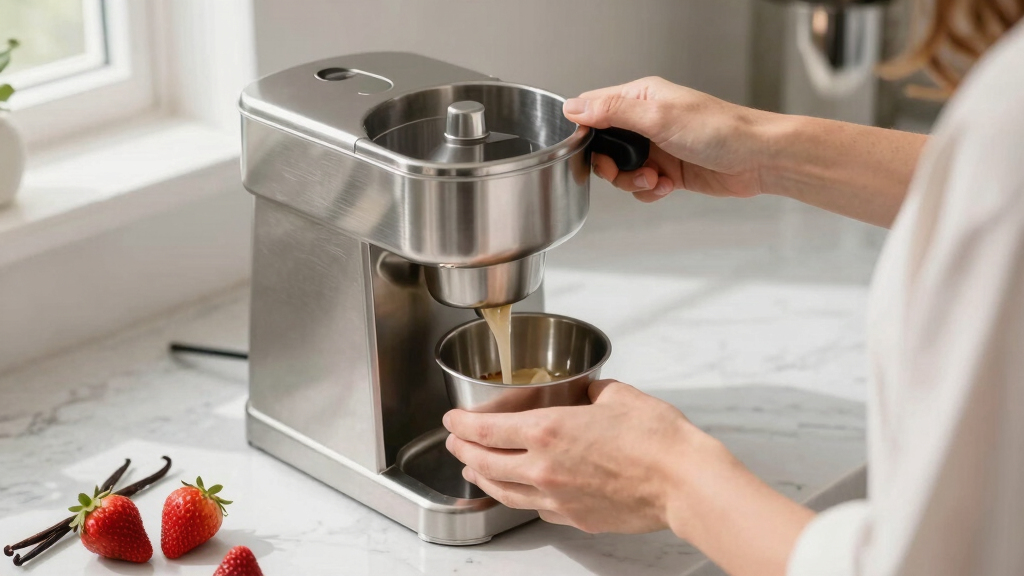
I assign the Whynter ICM-201SB the premium slot because its built-in compressor removes the day-ahead freezer planning required by both Ninja CREAMi models. That self-cooling system also supports consecutive batches, making this a better match for frequent dessert making or testing several recipes in one session. Its 2.1-quart bowl holds less than the four-quart Elite Gourmet and Hamilton Beach machines, but it avoids their ice-and-rock-salt routine. An LCD display and timer provide more control than either large-batch alternative. The price and compressor bulk keep it from my top overall position, and the machine needs permanent counter or cabinet space. For buyers willing to pay for on-demand preparation, however, its mix of convenience and repeat-batch capability is hard to match.
Pros:- Built-in compressor eliminates bowl pre-freezing
- Supports consecutive batches without resetting a freezer bowl
- LCD display and timer offer direct process control
- 2.1-quart capacity suits family servings
Cons:- Compressor construction is bulky and heavy
- Costs more than basic freezer-bowl and ice-and-salt machines
- Capacity trails the four-quart Elite Gourmet and Hamilton Beach models
Best for: Frequent home dessert makers who want consecutive batches without freezing bowls or handling rock salt
Not ideal for: Occasional users with limited counter space or buyers who need four-quart party batches
- Capacity:2.1 quarts
- Finish:Stainless steel
- Cooling Technology:Self-cooling
- Compressor:Built in
- Display:LCD digital display
- Timer:Included
- Churn Blade:BPA-free
- Pre-Freezing Required:No
Our verdict“I recommend the Whynter to frequent users who will pay more for genuinely on-demand frozen desserts.”
Ninja NC301 CREAMi Ice Cream Maker
The Ninja NC301 CREAMi earns my compact pick because its 16-ounce pint format is easier to store and portion than the Ninja CREAMi Deluxe’s 24-ounce tubs. Two included containers let households keep different bases ready, while seven one-touch programs provide enough range for ice cream, gelato, sorbet, and milkshakes without the Deluxe model’s broader menu. Compared with a 1.5-quart Cuisinart, the pint workflow favors individual recipes and dietary customization rather than serving a group from one batch. The tradeoff is patience: every base needs about 24 hours of freezing, and small batches disappear quickly in a family setting. Proprietary pint compatibility also limits replacement choices. I rank it below the Deluxe because it sacrifices capacity and program variety, but its dishwasher-safe parts and smaller footprint suit modest kitchens.
Pros:- Compact pint-based system is easier to store
- Seven programs handle several dessert styles
- Two included containers support separate recipes
- Dishwasher-safe parts simplify cleanup
Cons:- Bases require approximately 24 hours of advance freezing
- 16-ounce batches are small for families or gatherings
- Replacement containers must match the proprietary pint system
Best for: Couples, apartment dwellers, and solo users who want individually customized frozen desserts
Not ideal for: Large families or hosts who need more than a pint of one flavor at a time
- Power:800W
- Voltage:120V
- Frequency:60Hz
- Programs:7
- Container Capacity:16 oz.
- Number of Containers:2
- Material:Plastic
- Dishwasher Safe:Yes
Our verdict“I recommend the NC301 for small households that prefer personalized pints over large shared batches.”
Elite Gourmet 4 Quart Vintage Wood Bucket Electric Ice Cream Maker
I reserve the party role for the Elite Gourmet 4 Quart because its large canister and wooden bucket turn ice cream making into part of the gathering. It matches the Hamilton Beach machine’s four-quart capacity, but the vintage wood presentation feels better suited to cookouts and family events. A 90 rpm electric motor handles routine churning, while the included hand crank offers a backup and a more participatory approach. That charm creates extra work: users still need ice and rock salt, the bucket consumes substantial storage space, and cleanup involves more pieces than with either Ninja CREAMi. I place it ahead of Hamilton Beach for hosts who value atmosphere, not simplicity. The heavy-duty aluminum canister supports large batches, yet buyers seeking quiet, tidy counter operation should favor the Whynter compressor model.
Pros:- Four-quart capacity serves large groups
- Electric motor reduces routine hand churning
- Included hand crank provides a backup method
- Wooden bucket adds visual appeal at gatherings
Cons:- Requires a supply of ice and rock salt
- Bulky bucket needs substantial storage room
- Setup and cleanup are more involved than with Ninja models
Best for: Hosts, large families, and cookout planners who want four-quart batches with an old-fashioned presentation
Not ideal for: Apartment residents or convenience-focused buyers who want compact storage and mess-free preparation
- Capacity:4 quarts
- Motor Speed:90 rpm
- Canister Material:Aluminum
- Bucket Material:Wood
- Hand Crank:Included
- Lid:Included
Our verdict“I recommend this model for social occasions where batch size and presentation outweigh tidy, compact operation.”
Hamilton Beach 68330N Automatic Electric Ice Cream Maker
I choose the Hamilton Beach 68330N for buyers who want four-quart output without paying for digital controls or compressor cooling. Like the Elite Gourmet model, it can serve a crowd and requires ice plus rock salt, but its fully automatic churning avoids routine hand work. The design is more utilitarian than Elite Gourmet’s wooden bucket, making it less of a party centerpiece but easier to treat as a basic kitchen appliance. Compared with the Whynter ICM-201SB, it offers nearly twice the capacity but lacks on-demand self-cooling, a timer, and an LCD display. Churning also takes 20 to 40 minutes after setup. I give it the no-frills large-batch role because its appeal rests on volume and simplicity; buyers seeking precise controls or low-mess preparation should spend more elsewhere.
Pros:- Four-quart capacity supports family gatherings
- Automatic electric operation removes manual churning
- Works with ice cream, frozen yogurt, sorbet, gelato, and custard
- Simple controls have a short learning curve
Cons:- Requires ice and rock salt for every batch
- Offers no digital display or built-in timer
- Churning takes approximately 20 to 40 minutes
Best for: Budget-minded families and hosts who need four quarts and are comfortable managing ice and rock salt
Not ideal for: Buyers who want compressor cooling, digital timing, or a clean countertop process
- Brand:Hamilton Beach
- Model Number:68330N
- Capacity:4 quarts
- Color:White
- Recommended Uses:Ice cream, frozen yogurt, sorbet, gelato, and custard
- Included Component:Ice cream maker
- Warranty:1-year limited warranty
- UPC:040094683307
Our verdict“I recommend this machine for buyers who prioritize large batches and straightforward operation over polished controls.”
Cuisinart Ice Cream Maker Machine, 1.5 Quart, Double Insulated, Red
I rank the Cuisinart 1.5-Quart Red Ice Cream Maker as the best match for small families because its capacity provides several servings without demanding the counter space of a larger machine. The 20-minute cycle is quicker than the under-30-minute Cuisinart 2-Quart model, while the transparent lid and wide spout make mix-ins easy to add without stopping production. It also avoids the ice and salt required by the Elite Gourmet 4-Quart maker. The tradeoff is planning: its double-insulated bowl must be frozen beforehand, unlike the compressor-equipped Whynter ICM-201SB. It also lacks digital settings and automated programs. I would choose this model for straightforward family batches, but buyers hosting crowds will get more useful capacity from either 2- or 4-quart alternatives.
Pros:- Makes up to 1.5 quarts in 20 minutes or less
- Double-insulated bowl removes the need for ice
- Transparent lid and large spout simplify mix-in additions
- Smaller capacity is easier to accommodate than 2- and 4-quart machines
Cons:- Freezer bowl must be chilled before every batch
- 1.5-quart output is restrictive for parties
- No digital controls or preset dessert programs
Best for: Small families who want quick homemade ice cream in several-serving batches without handling ice and salt
Not ideal for: Frequent entertainers or spontaneous dessert makers who need more than 1.5 quarts or cannot pre-freeze a bowl
- Capacity:1.5 quarts
- Color:Red
- Bowl insulation:Double insulated
- Preparation time:20 minutes or less
- Bowl preparation:Pre-freezing required
- Lid:Easy-lock transparent lid with large spout
- Warranty:3-year limited warranty
Our verdict“This is my pick for small households that value speed and simplicity more than large capacity or programmable controls.”
Cuisinart Ice Cream Maker Machine, 2-Quart, Fully Automatic, Silver
The Cuisinart 2-Quart Fully Automatic Ice Cream Maker earns its place through capacity: it makes half a quart more than either 1.5-quart Cuisinart in this batch, which means fewer repeat runs for family dessert night. Its automatic motor and large ingredient spout keep operation simple, and the included paddle and recipe book give first-time owners a useful starting point. I place it ahead of the smaller red Cuisinart for larger households, though that model finishes faster and occupies less space. It is also far less spontaneous than the Whynter ICM-201SB because the bowl needs freezer time before churning. The under-30-minute production time applies only after that preparation. Buyers also get no digital timer or multiple processing programs, making this a capable high-volume basic rather than a feature-rich machine.
Pros:- Two-quart capacity reduces the need for repeat family batches
- Fully automatic motor minimizes hands-on work
- Large spout allows ingredients and mix-ins to be added during churning
- Paddle and recipe book are included
Cons:- Large freezer bowl requires advance chilling and substantial freezer space
- Bulkier than the 1.5-quart Cuisinart models
- No digital timer or specialized automatic programs
Best for: Families of four or more who want a full 2-quart batch and prefer simple automatic churning
Not ideal for: Compact-kitchen owners or spontaneous cooks who lack freezer space for a large pre-freeze bowl
- Capacity:2 quarts
- Color:Silver
- Material:Stainless steel
- Operation:Fully automatic
- Preparation time:Under 30 minutes
- Bowl type:Double-insulated freezer bowl
- Included items:Paddle and recipe book
- Food-contact material:BPA-free
- Warranty:3 years
Our verdict“I recommend this model to larger households that need more output per batch and can plan around the pre-freezing requirement.”
Cuisinart Ice Cream Maker, 1.5 Quart, Double Insulated, Frozen Yogurt and Sorbet Maker
I chose the Cuisinart 1.5-Quart Frozen Yogurt and Sorbet Maker for beginners because its controls and setup are deliberately simple: freeze the bowl, add the mixture, and let it churn. The transparent lid and large spout make it easier to follow the process and add ingredients cleanly, while a batch can finish in 20 minutes or less. Compared with the Ninja CREAMi Deluxe, this Cuisinart offers far fewer programs and less control over specialized textures, but it presents a gentler learning curve. It matches the red 1.5-quart Cuisinart on speed and capacity, yet its stated BPA-free construction gives material-conscious buyers a clearer reason to choose it. The drawbacks are the same ones common to basic freezer-bowl machines: advance freezing, modest output, and little automation beyond churning.
Pros:- Simple operation suits first-time frozen-dessert makers
- Produces up to 1.5 quarts in 20 minutes or less
- Transparent lid and large spout make ingredient additions easy
- BPA-free construction and a three-year warranty add reassurance
Cons:- Bowl requires advance freezer preparation
- Cannot readily make consecutive batches without refreezing the bowl
- Lacks the programs and texture controls offered by the Ninja CREAMi Deluxe
Best for: First-time ice cream makers who want uncomplicated controls, quick 1.5-quart batches, and stated BPA-free construction
Not ideal for: Experiment-focused buyers who want one-touch programs, texture customization, or back-to-back batches
- Capacity:1.5 quarts
- Bowl insulation:Double insulated
- Preparation time:20 minutes or less
- Bowl preparation:Pre-freezing required
- Supported treats:Ice cream, frozen yogurt, and sorbet
- Lid:Easy-lock transparent lid with large spout
- Material:BPA-free
- Warranty:3 years
Our verdict“This is my beginner pick for buyers who want an easy route to ice cream, frozen yogurt, and sorbet without paying for advanced programs.”
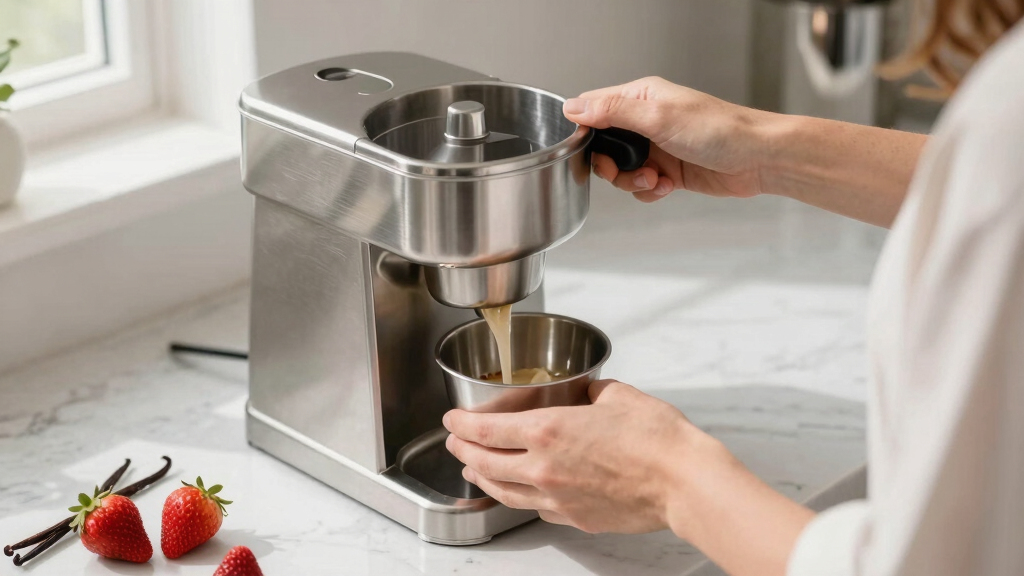
How We Picked
I ranked these ice cream makers by dessert quality potential, preparation demands, capacity, versatility, cleanup, and the amount of attention each machine requires. I gave extra weight to differences that change the ownership experience, including whether a machine uses a compressor, a frozen bowl, pre-frozen pint containers, or ice and salt. Capacity was judged by usable serving needs rather than treating a larger number as automatically better. I also compared program variety with practical value, since additional settings matter only when they support desserts a buyer plans to make. Build style, storage demands, and overall value helped separate models with similar capabilities.
The top positions favor machines that work for several buyer types without hiding major compromises. The Ninja CREAMi Deluxe leads through versatility and larger containers, while the Whynter ICM-201SB ranks highly for self-refrigerating convenience and conventional churned texture. The smaller Ninja follows because it delivers much of the CREAMi concept in a more compact format, though its seven programs and pint capacity are more limiting. Large ice-and-salt machines occupy specialized positions because their volume is useful for gatherings but their setup is less convenient. The Cuisinart models remain appealing for straightforward churning, yet their frozen bowls demand advance planning and give them less flexibility than the leaders.
Factors to Consider When Choosing Ice Cream Makers
I would start by choosing a freezing method, since that decision affects preparation time, texture, storage, and price more than the number of preset buttons. A machine that fits the available freezer and counter space will be more useful than one chosen only for capacity. The sections below explain the real ownership tradeoffs behind each design and when paying more makes sense.
Choose the Freezing Method Before Comparing Programs
Compressor machines freeze while they churn, making them a strong match for spontaneous use and consecutive batches. Their drawbacks are higher prices, heavier bodies, and a permanent demand for counter or cabinet space. Freezer-bowl models cost less and have simpler controls, but their bowls often need a full night in a cold freezer before use. CREAMi-style machines reverse the normal process by freezing the mixture in a container and processing it later, which supports individual flavors but still requires planning. Ice-and-salt machines handle party-size recipes without storing a large frozen bowl, though buyers must keep ice and rock salt available. I would choose the method that matches how often dessert decisions are planned versus spontaneous.
Match Capacity to the Way Dessert Is Served
A four-quart label may sound better than a pint system, but batch size changes flexibility. Large tubs work well when everyone wants the same flavor, while separate pint containers make it easier to accommodate different mix-ins or dietary preferences. A 1.5-quart machine can cover a small family dessert without creating leftovers that become icy during storage. Two-quart bowls offer a useful middle ground, provided the freezer can hold the bowl between batches. Manufacturers may also require headroom for expansion, so the advertised capacity is not always the safe liquid fill level. I would base capacity on the number of servings needed at one sitting, not the largest batch available.
Plan Around Freezer Space and Preparation Time
Freezer compatibility is easy to overlook when buying a bowl-based or pint-based machine. A freezer bowl needs open, level space and may perform poorly if the freezer cannot maintain a sufficiently low temperature. CREAMi containers occupy less room individually, but several flavors can consume an entire shelf. Compressor models avoid both problems, although many should remain upright after being moved before operation. Buyers who make dessert weekly can keep a freezer bowl stored permanently, turning advance preparation into less of a burden. I would measure the freezer, counter, and cabinet before choosing between stored cold components and a larger self-freezing machine.
Decide Which Texture and Recipe Style Matter Most
Traditional churners freeze and aerate a liquid base together, which suits buyers seeking classic scoop-shop texture. CREAMi machines process a fully frozen base, giving buyers more control over individual portions and unconventional recipes. Low-sugar, high-protein, or low-fat mixtures can freeze harder and may need another processing cycle or added liquid. Rich custard bases are more forgiving, but they add cooking and chilling time before the machine is involved. Mix-ins also behave differently: some machines fold them through the dessert, while others may crush delicate pieces more aggressively. I would prioritize recipe flexibility over preset count when specialized ingredients are part of the plan.
Account for Cleanup and Ongoing Costs
The purchase price tells only part of the value story because replacement containers, rock salt, ice, and freezer energy can add recurring costs. Pint systems become more convenient when several containers are available, yet buying extras increases the initial investment. Ice-and-salt machines use inexpensive supplies, but sourcing enough ice for every batch can become tiresome. Compressor machines cost more upfront but avoid consumable freezing supplies and can produce multiple batches in one session. Removable paddles, lids, and bowls simplify washing, though sugary residue still needs prompt attention around shafts and seams. I would pay more for lower setup friction if the machine will be used often, since convenience has a direct effect on whether it leaves the cabinet.
Frequently Asked Questions
Should I Buy a Ninja CREAMi or a Traditional Churning Machine?
Choose a Ninja CREAMi if separate portions, customized recipes, and desserts beyond standard ice cream are the main priorities. It processes a base only after that base has frozen solid, so it is not an instant option despite its short processing cycle. A traditional churner is better for buyers who want a familiar aerated texture from a liquid base and usually make one flavor for several people. Freezer-bowl churners still require advance freezing, while a compressor model can start from a chilled mixture. I would pick the CREAMi for experimentation and a churner for conventional batch-making.
Is a Built-In Compressor Worth the Higher Price?
A built-in compressor earns its price when ice cream is made frequently, freezer space is limited, or several batches are needed in succession. It removes the frozen-bowl waiting period, although most recipes still benefit from a thoroughly chilled base. The tradeoff is a heavier appliance that takes up more room and has more mechanical complexity than a simple bowl machine. Occasional users may get similar enjoyment from a less expensive Cuisinart if they can store its bowl in the freezer. I would reserve the compressor premium for buyers who place a high value on spontaneous, repeatable churning.
What Capacity Is Right for a Family of Four?
A 1.5- to 2-quart machine is usually the most practical range for four moderate servings with room for seconds. Four-quart machines make more sense for parties, cookouts, or households that intentionally prepare leftovers. A pint-based machine can still work for a family, but multiple containers may need to be processed when everyone wants a full serving. Smaller batches can also freeze more evenly and are easier to finish before storage affects the texture. I would choose two quarts for shared family desserts and a multi-container system when flavor customization matters more than serving everyone at once.
Can I Make Another Batch Immediately After the First?
A compressor machine is the best choice for consecutive batches because it can continue freezing without a bowl returning to the freezer. An ice-and-salt model can also make another batch if enough fresh ice and salt are available and the machine is cleaned or reset as directed. Most freezer-bowl machines require a second fully frozen bowl or another long freezing cycle. CREAMi models can process several containers back to back, but every base must already be frozen. I would plan around multiple prepared vessels unless choosing a compressor.
Which Type Works Best for High-Protein or Low-Sugar Ice Cream?
CREAMi-style processing is often the more adaptable route for high-protein and lower-sugar recipes because it can reprocess a hard frozen base. These mixtures lack some of the sugar and fat that keep conventional ice cream soft, so they may emerge dry or crumbly on the first cycle. A small amount of liquid and another processing cycle can improve consistency, depending on the recipe. Traditional churners can make lighter recipes, but the result may freeze very firm after storage and require time at room temperature before scooping. I would choose the Ninja CREAMi Deluxe or NC301 when ingredient customization outranks immediate serving.
Conclusion
For the broadest mix of capacity and programs, my best overall pick is the Ninja CREAMi Deluxe. Buyers who prefer conventional churning without a frozen bowl should choose the Whynter ICM-201SB as the premium option. The Hamilton Beach 4-Quart is my value recommendation for big batches, while the Cuisinart 1.5-Quart is the friendliest starting point for beginners who can plan ahead.
The Ninja NC301 makes more sense for compact kitchens and individualized pints than the larger Deluxe. For outdoor gatherings or buyers drawn to an old-fashioned serving experience, I would choose the Elite Gourmet 4-Quart wood-bucket model. The Cuisinart 2-Quart silver machine fits families wanting a larger freezer-bowl batch, while the red 1.5-quart Cuisinart suits buyers who want simple performance in a more colorful appliance. The right choice comes down to whether the priority is versatility, spontaneous churning, low cost, or large-batch capacity.
Halloween Picks
halloween
As an affiliate, we earn on qualifying purchases.