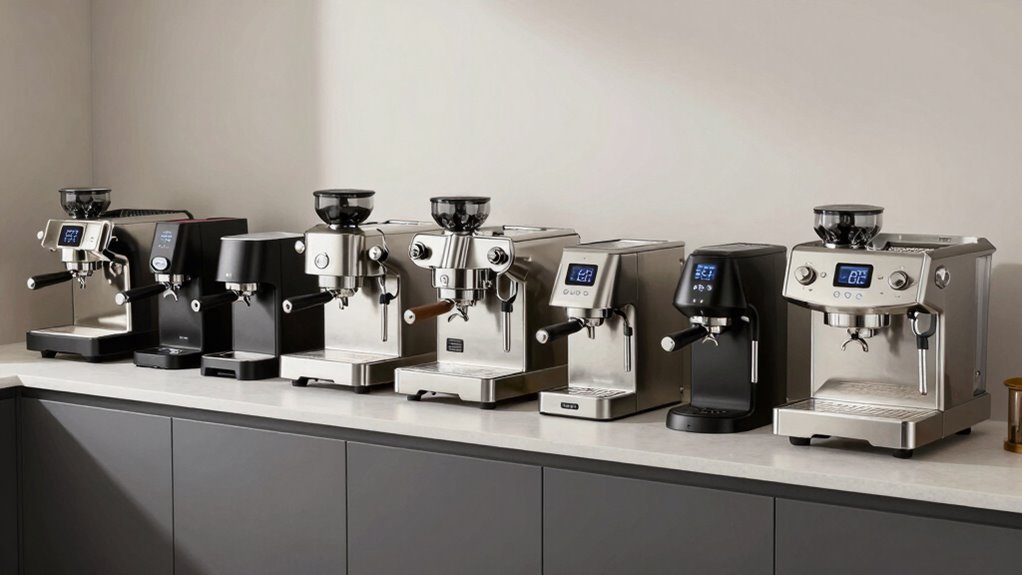

If you’re searching for an espresso machine under 500, you’re likely balancing quality with affordability. The Casabrews 3700 stands out for its powerful 20-Bar Italian pump and compact design, making it ideal for home use. Meanwhile, the Breville Barista Express offers professional-style features, perfect for those wanting more control. For beginners, the Chefman CraftBrew provides straightforward operation with a digital interface. Every option in this category involves tradeoffs: some prioritize simplicity, others focus on brewing power or build quality. Continue reading for a detailed breakdown of these models and what makes each one unique.

Get baking supplies delivered free with Prime
- Fast, free delivery on millions of items
- Prime Video, Amazon Music and more included
- Member-only deals all year
Complete the kit


Key Takeaways
- The top-ranked espresso machine offers a strong balance of quality and value, but some models sacrifice advanced features for simplicity.
- Built-in steam wands vary in power; more robust wands enable better milk frothing but may add complexity or cost.
- Digital controls and LED displays are common in this price range, yet they differ widely in usability and precision.
- Compact designs are prevalent but can limit water capacity or feature set, making size a key consideration.
- Price often correlates with durability and brewing consistency; investing slightly more can yield longer-lasting machines.




| espresso machines under 500 | Power | Material |
|---|---|---|
| CASABREWS 3700 Essential Stain | 1350 Watts | Stainless Steel |
| Breville Barista Express Espre | 1600 Watts | — |
| Breville Bambino Espresso Mach | 1560 Watts | — |
| Chefman CraftBrew Espresso Mac | 1350 Watts | Stainless Steel |
| De’Longhi Classic Signature Es | — | Stainless Steel |
| SHARDOR 20 Bar Espresso Machin | 1350W | Stainless Steel |
| Breville Bambino Plus Espresso | 1560 Watts | — |
| Neretva Espresso Machine 20 Ba | 1350W | Stainless Steel |
| Gaggia RI9380/46 E24 Espresso | — | — |
More Details on Our Top Picks
CASABREWS 3700 Essential Stainless Steel Espresso Machine with Steam Wand | 20-Bar Italian Pump, Powerful Steam Wand, 43.9oz Removable Water Tank, Compact Espresso Maker for Home, Cappuccino & Latte
This model stands out for its combination of professional 20-bar pressure and a compact, stylish stainless steel design, making it ideal for serious coffee lovers who want café-quality drinks at home. Compared with the Breville Bambino Espresso Machine, the CASABREWS offers a more powerful pump and larger water tank, enabling multiple drinks without refilling. However, it’s semi-automatic, so it requires some skill to master milk frothing and extraction, which could challenge beginners. This pick makes the most sense for those who want a durable, high-pressure machine that can produce rich espresso and milk-based drinks with a real barista feel, but are willing to invest time in learning its operation. Pros: 20-bar professional pump, stylish stainless steel build, large 43.9 oz water tank, powerful steam wand for milk art. Cons: Slightly more complex to operate for beginners, manual frothing may require practice, no built-in grinder. Verdict: Perfect for experienced home baristas who want a durable, high-pressure machine with versatile milk frothing capabilities.
Pros:- 20-bar professional pump for optimal extraction
- Stylish, durable stainless steel exterior
- Large, removable 43.9 oz water tank for multiple drinks
Cons:- Requires some skill to operate effectively
- Manual milk frothing may be challenging for beginners
Best for: Coffee enthusiasts who appreciate manual control and high-quality espresso making at home
Not ideal for: Beginners or those seeking a fully automatic, easy-to-use espresso machine
- Water Tank Capacity:43.9 oz
- Pump Pressure:20-Bar
- Power:1350 Watts
- Material:Stainless Steel
- Item Dimensions:12.6″D x 5.7″W x 12.5″H
- Item Weight:8.14 Pounds
Our verdict“This machine is ideal for experienced coffee lovers who want control and quality in their espresso and milk drinks.”
Breville Barista Express Espresso Machine BES870XL, Brushed Stainless Steel
The Breville Barista Express makes a compelling choice for those who want fresh grounds and control over every shot, thanks to its integrated grinder and precise temperature control. It’s a more complex machine compared to the CASABREWS, offering manual grind adjustments and shot timing, which appeal to coffee purists. Its 1600-watt power and built-in grinder mean you can go from beans to espresso in under a minute, but this complexity may intimidate beginners or those who prefer plug-and-play options. This machine is better suited for dedicated home baristas who want maximum freshness and customization, but it might be overkill for casual users. Pros: Built-in grinder for fresh grounds, precise temperature and pressure control, manual microfoam wand for latte art, customizable grind settings. Cons: Higher power consumption, steeper learning curve, limited capacity for high-volume use. Verdict: Best for coffee aficionados who prioritize freshness and full control over their espresso process, and are ready for a learning curve.
Pros:- Integrated conical burr grinder for fresh grounds
- Precise temperature control for perfect extraction
- Manual microfoam wand for latte art
Cons:- Complex setup and operation for beginners
- Higher power draw and maintenance needs
Best for: Dedicated home baristas seeking fresh grounds and detailed espresso customization
Not ideal for: Casual coffee drinkers or those wanting a simple, automatic machine
- Capacity:1/2 lb Bean Hopper
- Water Tank:67 oz
- Power:1600 Watts
- Voltage:120 Volts
- Included Accessories:Tamper, Milk Jug, Cleaning Tools
Our verdict“This machine is ideal for experienced users who want control and freshness in their espresso but are prepared for a more involved process.”
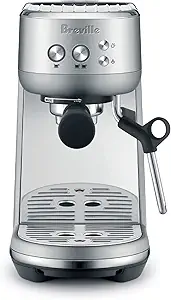
Breville Bambino Espresso Machine BES450BSS, Brushed Stainless Steel
Compared with the more advanced Breville Barista Express, the Bambino offers a faster heat-up time with Thermojet technology—ready in just 3 seconds—making it perfect for quick espresso shots. Its automatic steam wand simplifies milk texturing, ideal for users who want good results without much fuss. However, with its limited to 1- or 2-cup settings and a smaller power capacity, it’s less suitable for frequent large-volume brewing or serious customization. This pick makes sense for beginners or busy mornings when speed and ease are priorities, but it may lack the finesse experienced baristas seek. Pros: Rapid heat-up (3 seconds), automatic steam wand, easy to use, includes free coffee bags on registration. Cons: Limited to small batch sizes, less control over grind and shot timing, shorter warranty period. Verdict: An excellent choice for newcomers or busy households that want a fast, reliable espresso shot with minimal fuss.
Pros:- Thermojet technology for 3-second heat-up
- Automatic milk frothing wand
- User-friendly for beginners
Cons:- Limited to 1-2 cups per brew
- Less adjustable parameters for customization
Best for: Beginners or busy households seeking quick, decent espresso without a learning curve
Not ideal for: Experienced home baristas wanting full control or larger volume capacity
- Power:1560 Watts
- Voltage:110-120 Volts
- Portafilter Size:54mm
- Heat-up Time:3 seconds
- Warranty:1 Year
Our verdict“This machine is perfect for those new to espresso who prioritize speed and simplicity over detailed control.”
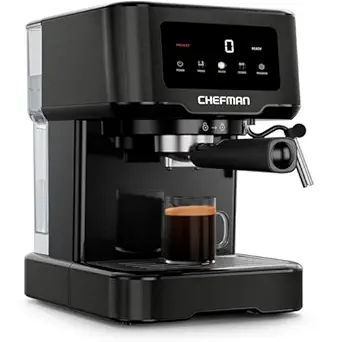
Chefman CraftBrew Espresso Machine, 15-Bar Pump Digital Espresso Maker w/Steam Wand for Latte & Cappuccino, Compact Espresso Coffee Machine w/ 1.5L Removable Water Reservoir – Stainless Black
Compared to the Breville Bambino and Casabrews, the Chefman CraftBrew offers a digital touch control panel, allowing users to customize shot volume and brew strength easily. Its 15-bar pump provides adequate pressure for rich espresso, while its large 1.5-liter water reservoir supports multiple drinks without frequent refills. Although it lacks the high-pressure precision of the Casabrews or the integrated grinder of the Breville, it balances simplicity and customization nicely. The digital controls make it accessible for casual users who want more control than automatic machines offer, but it might lack some of the finesse of high-end models. Pros: Large 1.5L water tank, digital touch controls for easy customization, 15-bar pump for rich extraction, sleek, compact design. Cons: No built-in grinder, fewer manual control options, less suited for latte art due to automatic steam wand. Verdict: Ideal for users who want customizable brewing with digital ease but don’t need professional-level features.
Pros:- Large 1.5-liter removable water reservoir
- Intuitive touch control panel for customization
- Adequate 15-bar pump for good extraction
Cons:- Lacks built-in grinder for fresh grounds
- Less manual control for milk texturing and shot timing
Best for: Casual coffee drinkers who enjoy tweaking their brew via digital controls
Not ideal for: Serious espresso enthusiasts seeking manual control or professional-grade milk texturing
- Water Reservoir:1.5L
- Pump Pressure:15-Bar
- Power:1350 Watts
- Material:Stainless Steel
- Dimensions:Compact
- Included Accessories:Removable Water Reservoir
Our verdict“This machine suits users who want straightforward customization and digital operation in a compact, stylish package.”
De’Longhi Classic Signature Espresso Machine
Compared with the other models, the De’Longhi Classic offers a sleek, space-efficient stainless steel design with a straightforward 15-bar pump that ensures good extraction. Its Thermoblock technology provides fast, stable temperature control, making it reliable for everyday use. The adjustable steam wand offers decent control for milk frothing, but it may require some practice for perfect latte art. This machine shines for those seeking a compact, stylish unit that handles espresso and milk drinks well, though it doesn’t include features like a built-in grinder or extensive customization. It’s a solid choice for users who value aesthetics and straightforward operation but don’t need advanced features. Pros: Space-saving design, stable Thermoblock technology, adjustable steam wand, easy to operate. Cons: No built-in grinder, limited customization options, requires some learning for milk frothing perfection. Verdict: Best for style-conscious users who want reliable espresso and milk frothing in a compact form factor.
Pros:- Sleek, compact stainless steel design
- Thermoblock technology for fast heating
- Adjustable steam wand for milk frothing
Cons:- No built-in grinder
- Limited to basic espresso and milk drinks
Best for: Users seeking a sleek, space-efficient espresso machine for everyday drinks
Not ideal for: Advanced users wanting full manual control or built-in grinding
- Pump Pressure:15-Bar
- Temperature Control:Thermoblock
- Steam Wand:Adjustable
- Design:Sleek Stainless Steel
- Size:Compact
- Material:Stainless Steel
Our verdict“This machine is perfect for style-conscious users who want reliable espresso in a small footprint.”
SHARDOR 20 Bar Espresso Machine with Milk Frother and Touchscreen, Stainless Steel
This semi-automatic model stands out for its powerful 20-bar pump which extracts rich flavors, making it a strong contender against the Gaggia Classic Evo Pro, especially for those who prioritize control over their espresso. The touchscreen interface simplifies operation, allowing for easy adjustments like descaling and coffee strength, though it might be overwhelming for beginners who prefer simplicity. The inclusion of a milk frother enables barista-quality drinks at home, rivaling the Neretva’s steam wand but with more user-friendly controls. However, the machine requires regular descaling and maintenance, and its complexity could deter first-time users. This pick makes the most sense for espresso enthusiasts who want customization and professional features without exceeding the $500 budget.
Pros:- Professional 20-bar pressure system for rich extraction
- Touchscreen interface for easy operation and customization
- Includes milk frother for barista-quality drinks
- Large 45 oz water tank for extended use
Cons:- Requires regular descaling and maintenance
- Can be complex for users unfamiliar with semi-automatic machines
Best for: Home baristas seeking a highly customizable machine with professional capabilities
Not ideal for: Beginners who prefer a straightforward, plug-and-play espresso maker
- Pressure:20 Bar
- Power:1350W
- Water Tank Capacity:45 oz
- Material:Stainless Steel
- Features:Touchscreen, Milk Frother, Adjustable Temperature, Auto Shutoff
- Operation Mode:Semi-Automatic
Our verdict“Ideal for serious home espresso fans who want control and quality, but willing to handle some complexity.”
Breville Bambino Plus Espresso Machine BES500BSS, Brushed Stainless Steel
The Breville Bambino Plus excels in quick heat-up with its ThermoJet system, making it perfect for those who want café-quality espresso in minutes—much faster than the Gaggia Classic Evo Pro. Its automatic microfoam milk texturing simplifies creating latte art, ideal for users new to milk frothing but wanting professional results. While its compact size makes it perfect for small kitchens, this also limits its high-volume capacity, unlike the more robust Gaggia. The precise temperature control with PID enhances flavor consistency, but the 2-year warranty might be a concern for long-term reliability. This machine makes the most sense for beginners or those with limited space who still want premium features.
Pros:- Fast heat-up time with ThermoJet system
- Automatic microfoam milk texturing for latte art
- Precise temperature control with PID
- Compact 7.7-inch width fits small kitchens
Cons:- Limited capacity for high-volume brewing
- Warranty duration may be shorter than some competitors
Best for: New espresso drinkers or small-space owners seeking ease and speed
Not ideal for: High-volume users or experienced baristas needing extensive customization
- Power:1560 Watts
- Voltage:110-120V
- Width:7.7 inches
- Warranty:2 Year Limited
Our verdict“Best suited for beginners looking for quick, easy, and high-quality espresso with minimal fuss.”
Neretva Espresso Machine 20 Bar, Compact Stainless Steel Coffee Maker with LED Display and Steam Wand
The Neretva espresso machine offers a 20-bar pressure system and a sleek LED display, making it a solid choice for those who want a combination of style and functionality. Its powerful steam wand supports milk frothing for lattes, comparable to the Neretva’s features but with more precise temperature control. This machine is slightly more complex than the Breville Bambino Plus, due to its additional features like pre-infusion and LED display, which could be intimidating for some beginners. No details are provided about water capacity, which might be a concern for longer sessions. This pick appeals to users who want a stylish, feature-rich machine that’s still under $500 and capable of professional-quality drinks.
Pros:- 20-bar pressure system for rich espresso
- Precise temperature control with pre-infusion
- Sleek stainless steel design with LED display
- Powerful steam wand for milk frothing
Cons:- May be too complex for first-time users
- No specified water reservoir capacity
Best for: Design-conscious home baristas who value customizable brewing and milk frothing
Not ideal for: Absolute beginners or users seeking ultra-simplicity with minimal setup
- Pressure:20 Bar
- Power:1350W
- Material:Stainless Steel
- Display:LED
Our verdict“This machine is perfect for style-focused users wanting professional features and customization, with a slight learning curve.”
Gaggia RI9380/46 E24 Espresso Machine, Brushed Stainless Steel
The Gaggia Classic Evo Pro brings commercial-grade features into the home with its heavy-duty stainless steel housing and a 58mm portafilter, delivering authentic 9-bar espresso shots comparable to professional cafes. Its powerful steam wand allows for microfoam milk and latte art, rivaling the Neretva’s steam wand but with a more commercial feel. The machine’s solid construction and made-in-Italy quality make it highly durable, though its heavier weight (20 pounds) could be a drawback for portability. Its focus on commercial features may be excessive for casual users, but for those who want durability and cafe-like results, it’s a compelling option. Compared with the Breville Bambino Plus, it offers more professional features at the expense of size and ease of use.
Pros:- Commercial 58mm portafilter for authentic espresso
- Heavy-duty stainless steel construction
- Powerful steam wand for microfoam milk
- Made in Italy with durable components
Cons:- Heavy and less portable
- Complex for beginners unfamiliar with semi-automatic operation
- Limited water capacity data available
Best for: Experienced home baristas desiring durability and authentic cafe-quality espresso
Not ideal for: Casual users or those with limited space who prefer a simple, lightweight machine
- Operation Mode:Semi-Automatic
- Wattage:1200W
- Water Capacity:2.1 liters
- Housing Material:Stainless Steel
- Pressure:9 Bar
- Weight:20 pounds
Our verdict“Best for users who prioritize durability and authenticity over ease of use or portability, especially experienced espresso enthusiasts.”

How We Picked
Our evaluation focused on performance, build quality, user-friendliness, and value for money. We prioritized machines with reliable extraction and consistent results, even during busy mornings. Ease of use was key, especially for beginners, so we favored models with straightforward controls or helpful interfaces. Durability and maintenance requirements also influenced rankings, ensuring each machine offers long-term reliability. Finally, we balanced these factors against customer reviews and overall feature sets to create a lineup that caters to different needs within the under $500 budget.Factors to Consider When Choosing Espresso Machines Under 500
Choosing an espresso machine under 500 involves weighing several practical considerations. While affordability is a priority, other factors like ease of use, build quality, and versatility can significantly impact your satisfaction. Understanding these can help you avoid common pitfalls, such as sacrificing durability for a lower price or choosing complex models that may overwhelm beginner baristas. Here are the main factors to keep in mind:Performance and Brewing Quality
Look for machines with sufficient pressure, typically around 15-20 bars, to ensure rich extraction. A machine with a good pump and stable temperature control will produce better-tasting espresso and crema. Beware of models that skimp on these essentials, as they can lead to inconsistent results or weak coffee. Consider whether the machine allows for manual adjustments if you want to develop barista skills, or if it offers preset options for simplicity.
Ease of Use and Learning Curve
If you’re new to espresso making, a machine with intuitive controls and minimal setup will save frustration. Digital interfaces, push-button operation, or pre-programmed shots can make the experience smoother. Conversely, more manual machines may demand a learning curve but offer greater control for enthusiasts. Decide how much effort you’re willing to invest upfront versus immediate convenience.
Build Quality and Durability
Stainless steel components and sturdy construction tend to last longer, especially with frequent use. Cheaper plastics or fragile parts can break or degrade quickly, leading to additional costs. Read reviews to gauge how well a machine holds up over time, and consider whether spare parts are readily available. A well-built machine might cost slightly more but offers better value over the long run.
Size and Storage
Counter space is often limited, so compact machines are appealing. However, smaller models may have smaller water reservoirs or fewer features. Balance size with your daily brewing needs, especially if you prefer multiple shots in a row or want to avoid frequent refilling. Measure your available space carefully before choosing.
Additional Features and Accessories
Features like milk frothers, steam wands, or integrated grinders can enhance your espresso experience. Some models include these at no extra cost, while others require separate purchases. Think about which extras will genuinely improve your routine and whether they justify a higher price within your budget.
Frequently Asked Questions
Can I get café-quality espresso with a machine under 500?
While machines under 500 can produce good espresso, achieving café-quality shots often depends on the machine’s features and your technique. Models with higher pressure and temperature stability, like those with 15-20 bars of pressure, are better equipped for rich crema and full flavor. However, consistent results also rely on using fresh beans, proper grinding, and correct tamping. Expect some limitations compared to professional machines, but with practice, you can make excellent espresso at home.
Are semi-automatic machines better than fully automatic ones in this price range?
Semi-automatic machines generally offer more control over extraction parameters, appealing to enthusiasts who want to fine-tune their espresso. Fully automatic models, on the other hand, simplify the process with preset shots, which can be ideal for beginners or busy mornings. In this budget range, semi-automatics might require more effort but often deliver better flavor. Deciding depends on whether you prioritize control or convenience.
Do I need a separate grinder for these machines?
Most espresso machines under 500 do not include built-in grinders, so purchasing a quality grinder separately is advisable for the best results. Freshly ground beans significantly improve flavor and crema. Investing in a burr grinder ensures consistent grind size, which is crucial for extraction. While some machines have pressurized baskets that forgive coarser grinds, for true espresso quality, a dedicated grinder is worth considering.
How much maintenance do these machines require?
Maintenance varies by model but generally includes regular descaling, cleaning the brew head, and milk frothing components. Machines with stainless-steel parts and durable construction tend to withstand cleaning better. Using filtered water reduces mineral buildup, extending the lifespan. Reading the manufacturer’s guidelines for descaling and cleaning routines helps maintain optimal performance and avoid costly repairs.
Is it better to buy a machine with a steam wand or a milk frother?
A steam wand provides more control over milk frothing, making it easier to craft lattes and cappuccinos like a professional. Machines with basic frothing features or integrated milk frothers are simpler but may limit your ability to customize foam texture. If you enjoy milk-based drinks regularly, investing in a model with a good steam wand is worthwhile. For occasional use or if simplicity matters more, a machine with an automatic frother might suffice.
Conclusion
For casual coffee drinkers or those new to home espresso, the Chefman CraftBrew offers straightforward operation at a budget-friendly price. Enthusiasts seeking more control and richer flavor should consider the Breville Barista Express, which balances features with ease of use. If size and space are constraints, models like the Neretva Espresso Machine or Gaggia provide compact yet capable options. For those willing to spend a bit more on durability and build quality, the De’Longhi Classic stands out as a reliable choice. Ultimately, your ideal machine depends on your skill level, desired features, and how much you’re willing to invest in long-term reliability.
As an affiliate, we earn on qualifying purchases.Halloween Picks
halloween