For most home bakers, I’d start with the Ninja PrecisionPro Food Processor & Dough Mixer: its dough-focused design and 9-cup bowl make it the most purpose-built pick in this group. The Ninja Professional XL is a stronger fit for larger batches, while the Cuisinart 14-Cup offers generous capacity for cooks who want a versatile food processor beyond dough. The main tradeoff is between a dedicated dough function, enough bowl space for your usual batch, and a machine that also earns its counter space for everyday prep. Smaller or lower-powered models may suit occasional mixing, but can be a compromise for repeated, heavy dough work. Read on for the full comparison and a pick matched to your baking habits.

Get baking supplies delivered free with Prime
- Fast, free delivery on millions of items
- Prime Video, Amazon Music and more included
- Member-only deals all year
Complete the kit


Key Takeaways
- The Ninja PrecisionPro is the most dough-focused option: its dough-mixer positioning separates it from general-purpose processors in the lineup.
- Large batches point toward the Ninja Professional XL or Cuisinart 14-Cup: their larger bowls offer more room than the 7- to 9-cup choices, though capacity alone does not determine dough performance.
- Motor power is not the whole story: bowl size, blade design, and whether the machine has a dough-specific setup all matter when mixing stiff dough.
- Several picks trade dough specialization for versatility: the Ninja Mega Kitchen System, Cuisinart models, and multi-function processors make more sense when chopping, slicing, or blending also matters.
- Compact and budget-oriented models suit lighter routines: options such as the OLIXIS, FOHERE, and BLACK+DECKER may fit smaller kitchens or occasional dough, but are less compelling for frequent large batches.
| Ninja PrecisionPro Food Processor & Dough Mixer, 1000 PW, 9-Cup (BZ601) |  | Best for Preset-Driven Dough Mixing | Motor power: 1000 watts | Bowl capacity: 9 cups | Number of speeds: 3 | VIEW ON AMAZON | See Our Full Breakdown |
| Ninja Mega Kitchen System 1500W 72 oz Pitcher 8 Cup Black BL770 |  | Best for Dough Plus Blender Tasks | Power: 1500 watts | Processor bowl capacity: 8 cups | Pitcher capacity: 72 ounces | VIEW ON AMAZON | See Our Full Breakdown |
| Cuisinart Pro Custom 11-Cup Food Processor with Slicing & Shredding Discs, Stainless Steel, Chrome |  | Best for Large, Hands-On Batches | Bowl capacity: 11 cups | Wattage: 625 watts | Speeds: 1 | VIEW ON AMAZON | See Our Full Breakdown |
| Ninja Professional Plus Food Processor, 1000W, 9-Cup, Grey |  | Best for Simple, Dedicated Dough Programs | Motor power: 1000 peak watts | Capacity: 9 cups | Color: Grey with silver finish | VIEW ON AMAZON | See Our Full Breakdown |
| OLIXIS 6.3-Cup Food Processor & Dough Mixer |  | Best for Compact, Occasional Dough Prep | Wattage: 300 watts | Listed processing bowl capacity: 500 milliliters | Other listed bowl capacity: 1.5 liters | VIEW ON AMAZON | See Our Full Breakdown |
| Ninja Professional XL Food Processor 1200W 12-Cup (NF701) |  | Best High-Power Pick for Dough | Model: NF701 | Motor power: 1200 peak watts | Bowl capacity: 12 cups | VIEW ON AMAZON | See Our Full Breakdown |
| BLACK+DECKER Food Processor and Vegetable Chopper, 8-Cup, 450W |  | Best Simple-Controls Pick | Bowl capacity: 8 cups | Power: 450 watts | Blade: Stainless steel S-blade | VIEW ON AMAZON | See Our Full Breakdown |
| KitchenAid 9-Cup Food Processor KFP0921, Black Matte |  | Best Accessory-Rich Compact Pick | Model: KFP0921BM | Bowl capacity: 9 cups | Wattage: 240 watts | VIEW ON AMAZON | See Our Full Breakdown |
| FOHERE 12-Cup 2-in-1 Food Processor, 500W |  | Best Large-Capacity Value in Features | Bowl capacity: 12 cups | Power: 500 watts | Speeds: 2 speeds plus pulse | VIEW ON AMAZON | See Our Full Breakdown |
| Cuisinart 14-Cup Food Processor, 720-Watt Stainless Steel (DFP-14BCNY) |  | Best for Large Dough Batches | Bowl capacity: 14 cups | Wattage: 720 watts | Speeds: 1 | VIEW ON AMAZON | See Our Full Breakdown |
| Cuisinart 7-Cup Pro Classic Food Processor, 600-Watt Motor, Vegetable Chopper & Blender |  | Best for Smaller Dough Batches | Motor power: 600 watts | Capacity: 7 cups | Dough attachment: Chopping, mixing, and dough blade | VIEW ON AMAZON | See Our Full Breakdown |
| Hamilton Beach Food Processor & Vegetable Chopper with Bowl Scraper, 10 Cup, Stainless Steel (70730) |  | Best for Larger Batches and Easy Scraping | Brand: Hamilton Beach | Model: 70730 | Capacity: 10 cups | VIEW ON AMAZON | See Our Full Breakdown |
| food processors for dough | Bowl capacity |
|---|---|
| Ninja PrecisionPro Food Proces | 9 cups |
| Ninja Mega Kitchen System 1500 | — |
| Cuisinart Pro Custom 11-Cup Fo | 11 cups |
| Ninja Professional Plus Food P | — |
| OLIXIS 6.3-Cup Food Processor | — |
| Ninja Professional XL Food Pro | 12 cups |
| BLACK+DECKER Food Processor an | 8 cups |
| KitchenAid 9-Cup Food Processo | 9 cups |
| FOHERE 12-Cup 2-in-1 Food Proc | 12 cups |
| Cuisinart 14-Cup Food Processo | 14 cups |
| Cuisinart 7-Cup Pro Classic Fo | — |
| Hamilton Beach Food Processor | — |
More Details on Our Top Picks
Ninja PrecisionPro Food Processor & Dough Mixer, 1000 PW, 9-Cup (BZ601)
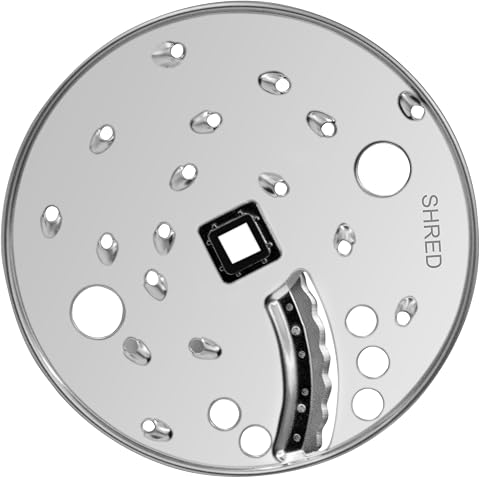
The PrecisionPro’s 1000-watt motor, dough-mixing preset, and 9-cup bowl make it a strong fit for home cooks who want one appliance to handle dough alongside routine prep. Auto-iQ takes some guesswork out of operation, while the large bowl gives you more room for family-sized batches than the OLIXIS 1.5-liter processor bowl. Its reversible disc also adds slicing and shredding utility that a dough-focused buyer can use between baking sessions. The tradeoff is counter space: this is a substantial appliance, and its presets offer less hands-on speed control than the Cuisinart Pro Custom 11-Cup, which has a single speed. I’d choose the PrecisionPro for guided convenience, not for a compact kitchen or highly customized dough processing.
Pros:- 1000-watt motor and dedicated dough-mixing preset support dough preparation alongside tougher food-processing jobs.
- 9-cup bowl offers more batch capacity than the OLIXIS’s 1.5-liter processor bowl.
- Auto-iQ presets simplify common tasks without requiring manual timing.
- BPA-free, dishwasher-safe parts reduce cleanup effort.
Cons:- Large footprint can be difficult to accommodate in a crowded kitchen.
- Preset-led operation gives less manual control over processing than a more adjustable setup.
Best for: Home bakers who make family-sized dough batches and want one-touch programs for everyday food prep.
Not ideal for: Small-kitchen cooks with little counter or storage space, or bakers who want more direct speed control.
- Motor power:1000 watts
- Bowl capacity:9 cups
- Number of speeds:3
- Voltage:120 volts
- Model number:BZ601
- Materials:Stainless steel blades; BPA-free dishwasher-safe parts
Our verdict“Choose the PrecisionPro if you want a roomy, preset-driven processor for dough and everyday prep, and have space to keep it out.”
Ninja Mega Kitchen System 1500W 72 oz Pitcher 8 Cup Black BL770
The Ninja Mega Kitchen System makes the most sense for buyers who want a dough-capable processor and a full-size blender in the same appliance. Its included dough blade is specified for mixing dough up to 2 pounds, and the 1500-watt motor also powers the 72-ounce pitcher and single-serve cups. That makes it more versatile for smoothie-heavy households than the Ninja Professional Plus 9-Cup, which is focused on food processing and dough rather than blending drinks. The compromise is a crowded, multi-part setup: the pitcher, processor bowl, cups, and specialized blades require more storage and handling than a dedicated processor. Its sharp blades also call for careful washing. I’d pick it when the blender functions will see regular use, not for dough alone.
Pros:- Dedicated dough blade is specified for dough batches up to 2 pounds.
- 1500-watt motor supports both processor tasks and blending.
- 72-ounce pitcher and 8-cup processor bowl accommodate large batches.
- Two 16-ounce cups with to-go lids add single-serve blending options.
Cons:- Bulky multi-function system takes more counter and storage space than a dedicated processor.
- Multiple sharp blades require careful handling and cleaning.
- Blender accessories add complexity for buyers who mainly want to make dough.
Best for: Households that regularly make dough, large blender batches, and individual smoothies and can store several attachments.
Not ideal for: Bakers seeking a simple, dough-first processor or anyone with limited cupboard and counter space.
- Power:1500 watts
- Processor bowl capacity:8 cups
- Pitcher capacity:72 ounces
- Included cups:Two 16-ounce Nutri Ninja cups with to-go lids
- Dough blade capacity:Up to 2 pounds of dough
- Model number:BL770
- Color:Black
Our verdict“Buy the Mega Kitchen System if you’ll use its blender and single-serve features as often as its dough blade.”
Cuisinart Pro Custom 11-Cup Food Processor with Slicing & Shredding Discs, Stainless Steel, Chrome
For bakers who value bowl capacity and straightforward operation over preset programs, the Cuisinart Pro Custom’s 11-cup bowl is a practical alternative to the 9-cup Ninja PrecisionPro and Ninja Professional Plus. Its 625-watt motor and steel blade are listed for processing dough, while the large feed tube and included slicing and shredding discs make it useful for meal prep beyond baking. A single speed keeps the controls uncomplicated, but it also means less flexibility for adjusting the processing pace than the PrecisionPro’s three speeds and Auto-iQ programs. This Cuisinart is also heavy at 16.9 pounds, so moving it in and out of storage may be a chore. I’d favor it for larger batches and hands-on users, rather than those seeking guided dough settings.
Pros:- 11-cup bowl offers more capacity than the 9-cup Ninja processors in this group.
- Steel blade and 625-watt motor are specified for everyday processing that includes dough.
- Large feed tube can reduce the need to pre-cut ingredients.
- Included slicing and shredding discs expand its usefulness beyond dough.
Cons:- Single speed offers less processing control than the Ninja PrecisionPro’s three speeds and presets.
- At 16.9 pounds, it is heavy to lift and store.
- Its included attachments emphasize slicing and shredding rather than dedicated dough presets.
Best for: Frequent home cooks who make larger dough batches, want an 11-cup bowl, and will use slicing and shredding attachments.
Not ideal for: Bakers who want one-touch dough programs, multiple speed settings, or a lightweight processor to store away after use.
- Bowl capacity:11 cups
- Wattage:625 watts
- Speeds:1
- Model number:DLC-8SBCYP1
- Dimensions:7 inches deep × 11.25 inches wide × 14.5 inches high
- Weight:16.9 pounds
- Included components:Steel blade, three slicing/shredding discs, spatula
- Care:Dishwasher-safe components
Our verdict“Choose this Cuisinart for a larger, straightforward processor with useful prep attachments, but skip it if dough presets are a priority.”
Ninja Professional Plus Food Processor, 1000W, 9-Cup, Grey
The Ninja Professional Plus keeps its feature set centered on food processing: it pairs a 9-cup bowl and included dough blade with four Auto-iQ programs, including dough making. That gives it a clearer dough-first role than the Ninja Mega Kitchen System, whose large blender pitcher and travel cups add versatility but also bulk and extra parts. The Professional Plus is a good match for bakers who want a guided program and dishwasher-safe components without stepping up to the Cuisinart Pro Custom’s larger 11-cup bowl. Its tradeoffs are a footprint that can crowd a small counter and a 9-cup capacity that may be limiting for especially large batches. The listed description also provides no wattage beyond 1000 peak watts, so I’d compare it on its preset workflow and fit rather than assume motor ratings are directly equivalent.
Pros:- Dedicated dough blade and dough-making preset suit routine home baking.
- 9-cup bowl provides substantial capacity for everyday family cooking.
- Four Auto-iQ programs simplify common processing tasks.
- BPA-free, dishwasher-safe removable parts make cleanup easier.
Cons:- Bulky footprint may be awkward in kitchens with limited counter space.
- 9-cup capacity is smaller than the Cuisinart Pro Custom’s 11-cup bowl.
- Preset-focused controls may not suit bakers who prefer to adjust processing manually.
Best for: Home bakers who want a dough preset, a dedicated dough blade, and enough bowl space for regular family batches.
Not ideal for: People who need an especially large batch capacity, a compact appliance, or a processor with extensive manual speed adjustments.
- Motor power:1000 peak watts
- Capacity:9 cups
- Color:Grey with silver finish
- Blade material:Stainless steel precision blades
- Included accessory:Dough blade
- Programs:Four Auto-iQ presets: chopping, slicing, pureeing, and dough making
- Safety:Built-in safety interlock
- Care:BPA-free, dishwasher-safe removable parts
Our verdict“Pick the Professional Plus for a straightforward 9-cup processor with a dough blade and guided programs, unless you need a larger bowl.”
OLIXIS 6.3-Cup Food Processor & Dough Mixer
The OLIXIS suits buyers who want a smaller, multi-purpose appliance for modest batches rather than a dedicated high-capacity dough machine. It comes with more than eight attachments and a 300-watt motor, plus safety features such as a locking mechanism, non-slip base, and overheat protection. Its listed processor bowl is 500 milliliters, far smaller than the 9-cup Ninja Professional Plus or the 11-cup Cuisinart Pro Custom, so batch size is the main dividing line. The product data also lists a 1.5-liter bowl capacity and two 1.5-liter cups, making the vessel descriptions less clear than those of the larger processors. I’d consider it for occasional, small-scale mixing and varied kitchen tasks, but not for frequent or large dough batches where capacity and motor power matter more.
Pros:- More than eight interchangeable attachments cover multiple kitchen tasks.
- Three speeds offer more settings than the Cuisinart Pro Custom’s single speed.
- Locking, non-slip, and overheat protection features add operating safeguards.
- Removable parts are dishwasher-safe.
Cons:- The listed 500-milliliter processor bowl is much smaller than the 9- and 11-cup alternatives.
- 300-watt motor is a modest choice for demanding or frequent dough preparation.
- Product data lists both a 500-milliliter processing bowl and 1.5-liter bowl capacity, leaving the vessel capacity unclear.
Best for: Apartment cooks and occasional bakers who need a multi-attachment appliance for small batches and varied everyday tasks.
Not ideal for: Frequent bread bakers or families preparing large dough batches; the listed 500-milliliter processor bowl is much smaller than the Ninja and Cuisinart bowls.
- Wattage:300 watts
- Listed processing bowl capacity:500 milliliters
- Other listed bowl capacity:1.5 liters
- Number of speeds:3
- Dimensions:7.87 inches deep × 14.57 inches wide × 13.19 inches high
- Weight:8.7 pounds
- Included components:1.5-liter ABS cup and 1.5-liter glass cup
- Safety features:Built-in lock, non-slip base, and overheat protection
Our verdict“Choose the OLIXIS for occasional small-batch dough and a wide range of attachments, not for regular large-batch baking.”
Ninja Professional XL Food Processor 1200W 12-Cup (NF701)
The Ninja NF701 is my pick for cooks who want substantial capacity and a motor with more headroom for dough mixing. Its 1200-peak-watt motor and dedicated dough blade make it a stronger fit for frequent, larger batches than the 240-watt KitchenAid KFP0921, though the listed peak wattage alone does not promise a particular dough texture or batch size. Four Auto-iQ programs add guided operation for mixing and other prep, while the XL feed chute cuts down on trimming ingredients before processing.
The tradeoff is its bulky footprint; it is less appealing for kitchens with limited counter or cupboard space. Compared with the 14-cup Cuisinart DFP-14BCNY, it has less bowl capacity but offers preset programs and a dough blade in the listed components. I’d choose it for dough-focused versatility, not for a compact setup.
Pros:- 1200-peak-watt motor and dedicated dough blade suit dough mixing alongside other prep tasks.
- Four Auto-iQ programs offer preset operation for dough mixing and other food-processing jobs.
- 12-cup bowl and XL feed chute accommodate larger batches and reduce ingredient prep.
- Dishwasher-safe accessories simplify cleanup after sticky dough.
Cons:- Bulky size can be difficult to store in a small kitchen.
- Its 12-cup capacity is smaller than the 14-cup Cuisinart DFP-14BCNY.
- Peak wattage does not specify a recommended dough quantity or guarantee results for every recipe.
Best for: Home cooks who regularly mix bread or pizza dough and also want a large-capacity processor for general prep.
Not ideal for: People with limited counter or storage space, or buyers who need a bowl larger than 12 cups.
- Model:NF701
- Motor power:1200 peak watts
- Bowl capacity:12 cups
- Auto-iQ programs:4
- Dough accessory:Dough blade
- Feed chute:XL, with 3-part pusher
- Dishwasher-safe accessories:Yes
- Warranty:1-year limited
Our verdict“Choose the Ninja NF701 if you want a powerful, preset-equipped processor with a dough blade and have room for its large footprint.”
BLACK+DECKER Food Processor and Vegetable Chopper, 8-Cup, 450W
The BLACK+DECKER 8-cup processor is the straightforward choice in this group for buyers who value easy assembly and familiar controls more than dough-specific features. Its 450-watt motor, low/high settings, and pulse function cover everyday chopping and mixing, but the supplied description does not list a dedicated dough blade or a dough program. That makes it a less targeted dough pick than the Ninja NF701, which explicitly includes a dough blade and preset dough mixing.
The lid-locking bowl design may appeal to cooks who prefer a clear assembly routine, and its reversible disc adds slicing and shredding utility beyond dough. The tradeoff is an 8-cup capacity, which limits batch size beside the 12-cup FOHERE. I’d choose this for occasional smaller dough tasks and general prep, not repeated large bread batches.
Pros:- Lid-locking assembly gives new users a simple bowl-and-lid setup.
- Low, high, and pulse touchpad controls provide basic control over processing.
- Reversible metal disc supports slicing and shredding as well as general prep.
- 8-cup bowl is more manageable than the 12- and 14-cup options for smaller households.
Cons:- No dedicated dough blade or dough program is listed, unlike the Ninja NF701.
- 8-cup capacity is limiting for larger dough batches.
- 450-watt motor specification offers less stated power than the Ninja NF701’s 1200 peak watts.
Best for: Beginners and small households who want simple touchpad controls for everyday prep and occasional small dough batches.
Not ideal for: Bakers who regularly make large batches or want a dedicated dough blade and dough-focused preset.
- Bowl capacity:8 cups
- Power:450 watts
- Blade:Stainless steel S-blade
- Slice/shred disc:Reversible metal disc
- Controls:Touchpad
- Settings:Low, high, and pulse
Our verdict“Pick the BLACK+DECKER for simple controls and modest dough needs, but choose the Ninja NF701 for more dough-focused features and larger batches.”
KitchenAid 9-Cup Food Processor KFP0921, Black Matte
The KitchenAid KFP0921 suits bakers who want a dough blade without dedicating counter space to a large appliance. Its 9-cup bowl is smaller than the Ninja NF701’s 12 cups and the Cuisinart DFP-14BCNY’s 14, so it is better matched to modest batches than bulk baking. A dough blade is included, and the whisk accessory gives it a useful baking range beyond kneading, from whipping cream to making butter.
KitchenAid also includes in-bowl accessory storage and a refrigerator lid, which help keep parts and prepared ingredients organized. The main compromise is the listed 240-watt rating, well below the Ninja’s 1200 peak watts; I’d favor the Ninja for larger or more demanding dough workloads. The plastic body may also feel less substantial than the Cuisinart’s stainless-steel finish.
Pros:- Includes a dedicated dough blade for bread and pizza crusts.
- Whisk accessory expands its usefulness for other baking tasks.
- 9-cup capacity and listed dimensions suit smaller kitchens better than the 12-cup Ninja NF701.
- All-in-one accessory storage and refrigerator lid help keep parts and prepared food organized.
Cons:- 240-watt rating is much lower than the Ninja NF701’s stated 1200 peak watts.
- 9-cup capacity may be restrictive for large families or bulk dough preparation.
- Plastic body may feel less substantial than the stainless-steel Cuisinart DFP-14BCNY.
Best for: Apartment bakers and small households who make modest dough batches and value included baking accessories and compact dimensions.
Not ideal for: Frequent batch bakers who need a large bowl or want a higher stated wattage for demanding dough work.
- Model:KFP0921BM
- Bowl capacity:9 cups
- Wattage:240 watts
- Speeds:3
- Dough accessory:Dough blade
- Other included accessory:Whisk
- Dimensions:7.87 in D x 9.65 in W x 15.35 in H
- Weight:6.6 lb
- Warranty:1 year
Our verdict“Choose the KitchenAid KFP0921 for modest dough batches and useful baking accessories in a relatively compact package.”
FOHERE 12-Cup 2-in-1 Food Processor, 500W
The FOHERE 12-cup processor stands out for pairing a large bowl with a listed kneading function and a plastic dough blade. That makes it a more explicitly dough-oriented option than the BLACK+DECKER 8-cup model, whose supplied details do not list a dough attachment. Its 500-watt motor, two speeds, and pulse setting offer basic operating choices, while the extra-wide feed chute helps when processing larger ingredients.
For batch size, it holds less than the 14-cup Cuisinart DFP-14BCNY but matches the Ninja NF701’s 12-cup capacity. The tradeoff is the plastic S-blade, which may be less durable than a metal blade, plus assembly that requires precise alignment for the safety lock. I’d shortlist it for occasional dough mixing and broad food-prep use, while frequent bakers may prefer the Ninja’s dedicated dough blade and higher stated peak wattage.
Pros:- 12-cup bowl handles larger batches than the BLACK+DECKER 8-cup processor.
- Listed kneading function and included plastic blade make dough use explicit.
- Two speeds plus pulse provide more settings than the Cuisinart DFP-14BCNY’s single speed.
- Dishwasher-safe parts and anti-slip feet support easier cleanup and steadier placement.
Cons:- Plastic S-blade may be less durable than a stainless-steel blade.
- Safety-lock assembly requires specific alignment.
- 500-watt rating is lower than the Ninja NF701’s stated 1200 peak watts.
Best for: Budget-conscious home cooks who want a 12-cup bowl and listed kneading function for occasional dough and general batch prep.
Not ideal for: Frequent bread bakers seeking a metal dough blade, or anyone frustrated by alignment-sensitive assembly.
- Bowl capacity:12 cups
- Power:500 watts
- Speeds:2 speeds plus pulse
- Functions:Chopping, slicing, grating, pureeing, and kneading
- Materials:Stainless steel and BPA-free plastic
- Safety features:Dual-locking mechanism and overheating protection
- Stability:Anti-slip feet
- Dishwasher-safe parts:Yes
Our verdict“Choose the FOHERE if you want a roomy bowl and listed kneading function for occasional dough work, accepting plastic blade construction and precise assembly.”
Cuisinart 14-Cup Food Processor, 720-Watt Stainless Steel (DFP-14BCNY)
The Cuisinart DFP-14BCNY earns its place for bakers who prioritize bowl capacity: its 14-cup work bowl is the largest among these five products, making it a better fit for substantial batches than the 9-cup KitchenAid KFP0921. The 720-watt motor and dough-kneading function give it the basics for mixing, while the extra-large feed tube and dishwasher-safe accessories support general prep and cleanup around baking.
Its simpler control scheme is the clearest compromise: there is one speed, with no variable-speed control, and the slicing and shredding blades are not adjustable. Compared with the Ninja NF701, it has a larger bowl but fewer listed preset programs. I’d pick it when capacity matters more than tailored controls; for smaller batches and accessory storage, the KitchenAid is more convenient.
Pros:- 14-cup capacity is larger than the Ninja NF701’s 12-cup bowl and KitchenAid KFP0921’s 9-cup bowl.
- 720-watt motor and dough-kneading function support a broad range of kitchen tasks.
- Extra-large feed tube reduces the need to cut ingredients before processing.
- Dishwasher-safe accessories simplify cleanup after food prep.
Cons:- Single-speed operation provides no variable-speed control.
- Slicing and shredding blades are not adjustable.
- Larger bowl may be more appliance than small households need for occasional dough.
Best for: Families and batch bakers who want a large bowl for dough and other food prep, with a straightforward control setup.
Not ideal for: Cooks who need variable speed, adjustable slicing thickness, or a smaller appliance for occasional dough making.
- Bowl capacity:14 cups
- Wattage:720 watts
- Speeds:1
- Power source:Corded electric
- Voltage:120 volts
- Material:Stainless steel
- Blade material:Stainless steel
- Dishwasher-safe accessories:Yes
- Warranty:3 years on unit; 5 years on motor
Our verdict“Choose the Cuisinart DFP-14BCNY when a 14-cup bowl matters more than variable controls or preset dough programs.”
Cuisinart 7-Cup Pro Classic Food Processor, 600-Watt Motor, Vegetable Chopper & Blender
The Cuisinart 7-Cup Pro Classic is a sensible pick for home cooks who want a dough-kneading function without moving to a large-capacity processor. Its 600-watt motor and dedicated dough blade give it more stated power than the Hamilton Beach 70730, while the seven-cup bowl suits modest batches rather than big family-sized mixing. The extra-large feed tube and included slicing and shredding discs also make it more versatile for everyday prep between dough jobs. The tradeoff is capacity: the Hamilton Beach’s 10-cup bowl leaves more room for larger quantities, though its motor is rated at 450 watts. This Cuisinart may take up more counter or cupboard space than a compact chopper, and its discs can take longer to clean. Choose it for frequent small-to-medium batches, not oversized dough recipes.
Pros:- 600-watt motor provides more rated power than the Hamilton Beach 70730
- Dedicated chopping, mixing, and dough blade supports dough preparation
- Seven-cup bowl balances dough work with everyday family meal prep
- Extra-large feed tube and included slicing and shredding discs add versatility
Cons:- Seven-cup capacity is less suited to large dough batches than the Hamilton Beach’s 10-cup bowl
- Bulky footprint can be awkward in small kitchens
- Discs may take extra time to clean
Best for: Home bakers making small-to-medium dough batches who also want slicing, shredding, and chopping attachments for regular meal prep
Not ideal for: Bakers who routinely make large batches or have very limited storage space; its seven-cup capacity and bulky footprint may be limiting
- Motor power:600 watts
- Capacity:7 cups
- Dough attachment:Chopping, mixing, and dough blade
- Slicing disc:Medium, 4 mm
- Other included discs:Shredding disc
- Feed tube:Extra-large with small insert
- Motor warranty:5 years
- Overall warranty:3-year limited
Our verdict“Choose this Cuisinart for a well-equipped processor with a dough blade and stronger stated motor than the Hamilton Beach, provided seven cups is enough for your batches.”
Hamilton Beach Food Processor & Vegetable Chopper with Bowl Scraper, 10 Cup, Stainless Steel (70730)
The Hamilton Beach 70730 earns its place for bakers who value extra bowl capacity and less manual scraping more than a dough-focused feature set. Its 10-cup bowl is larger than the Cuisinart 7-Cup Pro Classic’s, giving ingredients more room during general prep and making it the more practical choice when batch size is the priority. The built-in bowl scraper can keep ingredients moving toward the blades without stopping to reach in with a spatula, though the listed functions do not include a dedicated dough blade. Its 450-watt motor is also rated below the Cuisinart’s 600 watts, so I would favor the Cuisinart for buyers focused on kneading dough. Dishwasher-safe removable parts simplify cleanup, but the plastic construction may feel less substantial, and high-speed operation can be loud. Pick this model for broad prep tasks and larger bowls, not dough as its main job.
Pros:- 10-cup bowl offers more capacity than the Cuisinart 7-Cup Pro Classic
- Built-in bowl scraper can move ingredients toward the blades while processing
- Two speeds plus pulse provide basic control across listed prep functions
- Removable parts are dishwasher safe
Cons:- 450-watt motor is rated below the Cuisinart 7-Cup Pro Classic’s 600 watts
- No dedicated dough blade is listed
- Plastic construction may feel less durable, and high-speed operation can be loud
Best for: Cooks who prepare larger quantities of ingredients and want a bowl scraper and dishwasher-safe parts for routine food prep
Not ideal for: Bakers whose main priority is kneading dough or who want a listed dough blade; the Cuisinart 7-Cup Pro Classic is the more dough-oriented choice
- Brand:Hamilton Beach
- Model:70730
- Capacity:10 cups
- Motor power:450 watts
- Speeds:2 speeds plus pulse
- Functions:Slice, shred, chop, mix, and puree
- Materials:Stainless steel blades and BPA-free bowl
- Dishwasher safe:Removable parts
- Warranty:1-year limited
Our verdict“Choose the Hamilton Beach for larger-capacity everyday prep and easier scraping, but pick the Cuisinart if dough kneading is your main reason for buying a processor.”

How We Picked
I ranked these processors around how well their stated design and specifications fit dough-making, rather than treating every food processor as an equal mixer. I weighed the presence of a dough-focused function or attachment, motor power, bowl capacity, and the likely fit for small, regular, or larger batches. I also considered whether each machine offers useful everyday functions beyond dough, since versatility can justify its footprint for a home cook.
The top spot goes to the Ninja PrecisionPro because dough is central to its stated purpose, while the Ninja Professional XL and Cuisinart 14-Cup stand out for buyers who need more room or broader food-prep use. Models with less power or smaller bowls rank lower for demanding dough routines, even if they may work well for lighter tasks. I also factored in practical tradeoffs such as countertop footprint, cleaning complexity, and the risk of buying a versatile machine that is not especially suited to repeated dough mixing.
Factors to Consider When Choosing Food Processors For Dough
Choosing a food processor for dough is less about chasing the biggest number and more about matching the machine to your recipes and routine. I’d start with batch size and dough type, then decide how much you value a dedicated dough setup versus a processor that handles many other jobs.
Match Bowl Capacity to Your Usual Batch
A larger bowl gives dough more room to move, but its stated capacity does not tell you how much flour the machine can process comfortably. Dough can climb the blade or pack into the bowl when a batch is too large, even if the ingredients appear to fit. Think about the biggest recipe you make regularly, not an occasional holiday batch. If you mostly make one small loaf or pastry crust, a compact bowl can be easier to store and clean. For family-sized batches, a 12- or 14-cup model may reduce the need to split ingredients. I’d still check the manufacturer’s dough guidance before treating bowl volume as a mixing limit.
Read Motor Power Alongside Dough Design
Wattage can help distinguish models, but it does not predict dough results on its own. A processor’s blade shape, speed control, bowl geometry, and dough-specific settings all affect how ingredients come together. Stiff bread dough puts more strain on a machine than pie dough, so frequent bread baking calls for more caution than occasional pastry mixing. A high-powered general-purpose processor may be versatile, yet still lack a dough-specific approach. Avoid assuming that a larger motor makes every batch suitable; follow the maker’s limits and pause if the machine strains or heats up. For repeated heavy dough work, a stand mixer may be a better tool than any food processor.
Choose for the Dough You Actually Make
Different doughs place different demands on a processor. Pie and biscuit dough benefit from brief pulses that cut fat into flour without developing too much gluten, while bread dough needs enough mixing to form a cohesive mass. If you bake both, look for straightforward pulse control and a dough blade or setting designed for the job. A machine aimed at chopping and pureeing may still handle pastry, but its usefulness for bread dough can be more limited. Buyers who mostly prepare crusts should not pay extra for capacity they rarely use. Buyers who make yeast dough often should prioritize the maker’s dough instructions over a long list of unrelated attachments.
Weigh Versatility Against Counter Space
A food processor earns its place more easily when it also handles vegetables, shredding, sauces, or other regular kitchen tasks. That is where multi-function models can make more sense than a dough-specialist pick, especially in a small kitchen with limited storage. The tradeoff is that added accessories and larger assemblies can take longer to wash and put away. Before choosing a larger system, consider where the bowl, lid, blades, and discs will live between uses. If dough is the only job you need, a simpler machine may be easier to maintain. If you cook broadly, extra functions can matter more than a dedicated dough feature.
Plan for Cleaning and Safe Operation
Dough can cling around blades, under the center post, and along the bowl’s corners, so easy access matters after mixing. Check which parts are dishwasher-safe and whether the blade can be removed without handling it near sticky dough. A bowl scraper or simple bowl shape may save cleanup time, but it does not replace scraping down safely with the machine switched off. Never push dough toward a moving blade or exceed the maker’s batch guidance. If you bake often, cleanup friction can determine whether you keep using the processor or reach for another tool. A slightly less powerful model may be the more practical choice if it is easier to assemble, clean, and store.
Know When a Stand Mixer Is the Better Buy
Food processors are particularly useful for quick pastry mixing and for cooks who want one appliance to perform several prep tasks. They are not automatic replacements for stand mixers, especially when recipes call for long kneading or repeated large batches of elastic bread dough. A processor’s short mixing action can be convenient, but the bowl and motor may not suit extended heavy work. If bread is a weekly staple, compare the processor’s stated dough limits with your recipe before buying. If you mainly make pie crusts, scones, or occasional pizza dough, a capable processor may offer more day-to-day range. Paying for a dough-focused processor makes most sense when its other functions will also see regular use.
Frequently Asked Questions
Can a food processor replace a stand mixer for bread dough?
Sometimes, but I would not treat every food processor as a stand-mixer substitute. A processor can suit short mixing tasks and some dough recipes, particularly when the maker provides a dough blade or clear dough guidance. Long kneading and frequent large bread batches can put more strain on a processor than pastry or occasional pizza dough. Check the permitted batch size and mixing instructions for the specific model before relying on it for bread. If bread baking is your main use, a stand mixer may be the safer fit.
Is a dough blade necessary for making dough in a food processor?
A dough blade can make a processor more suited to mixing dough, but its presence does not guarantee that every recipe will work well. Blade design and bowl shape vary, and some manufacturers give instructions for using a standard blade instead. Follow the guidance for the exact model rather than substituting accessories based on appearance. If dough is a frequent task, a machine designed and described for that use is a clearer choice than one marketed mainly for chopping. For occasional pastry, a dedicated dough blade may matter less than reliable pulse control.
Should I choose a higher-wattage processor for stiff dough?
Higher wattage can be one useful signal, but it is not enough to judge a processor’s suitability for stiff dough. The drive system, blade, bowl design, and maker’s batch limits also shape how the machine handles resistance. A powerful general-purpose processor may still be a poor fit for repeated heavy kneading if its instructions do not support that task. Compare the intended dough use and capacity alongside the motor specification. If your recipes are especially stiff or large, consider whether a stand mixer is a better match.
Is a 12- or 14-cup food processor too large for small dough batches?
Not necessarily, but a large bowl can be less convenient when you only prepare small quantities. A small batch may not gather or mix as efficiently in a roomy bowl, depending on the blade and bowl geometry. Larger processors also take more storage space and can mean more parts to wash. If you often cook for a group or make full-size recipes, the extra room can be useful. For occasional single-crust pastry or small batches, a more compact model may feel easier to handle.
Which matters more for dough: bowl capacity or a dough-focused design?
Neither factor should be judged alone. Capacity helps determine whether your usual batch has room to move, while a dough-focused blade or setting can make mixing more appropriate for the task. A large bowl does not automatically make a processor capable of handling stiff dough, and a dedicated dough feature does not make a small bowl suitable for oversized recipes. Start with the type and size of dough you make most often, then check the model’s guidance for that batch. For this lineup, the Ninja PrecisionPro stands out for dough-focused design, while larger models suit buyers who need more working room.
Conclusion
For the broadest dough-first recommendation, I’d choose the Ninja PrecisionPro as best overall because its stated dough-mixer design gives it a clearer purpose than a general processor. The OLIXIS 6.3-Cup is the best value-style fit for smaller kitchens and occasional batches, while buyers seeking a more substantial all-purpose machine should compare the Ninja Professional XL with the Cuisinart 14-Cup as premium, large-capacity choices. Beginners may find the Ninja Professional Plus a more approachable general-purpose option, though it is less explicitly dough-focused than the PrecisionPro. For broad kitchen versatility, the Ninja Mega Kitchen System adds blending alongside food processing; for straightforward prep functions, the Cuisinart and Hamilton Beach options are worth comparing. Choose by your most common dough and batch size: small pastry routines favor compact simplicity, frequent larger batches call for room and clear dough guidance, and regular heavy bread kneading may warrant a stand mixer instead.