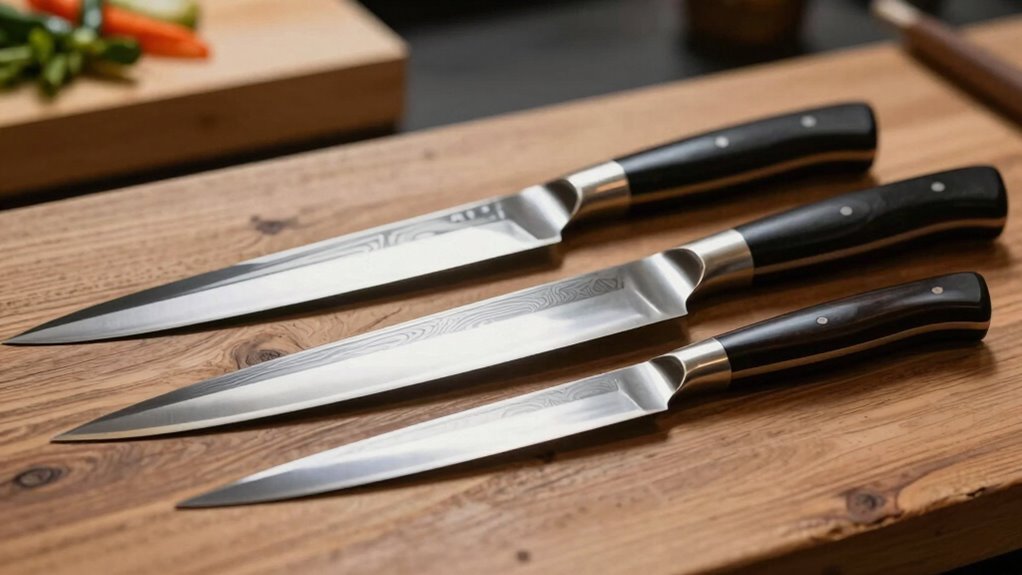

For shoppers comparing Japanese knife brands, my best overall pick is the MIYABI Kaizen 8-Inch Chef’s Knife, which balances a familiar chef-knife shape with Japanese blade character. The Tojiro Japan Professional VG10 stands out for buyers seeking a practical, work-focused option, while the Shun Premier 7-Inch Santoku suits cooks who want a shorter blade for controlled chopping. The main tradeoffs are blade length and shape, the care demands of harder steels, and whether a premium finish is worth more to you than straightforward utility. Brand reputation can help narrow the field, but steel, handle fit, and upkeep matter just as much. Read on for how all 15 options differ and which type of cook each one best serves.

Get baking supplies delivered free with Prime
- Fast, free delivery on millions of items
- Prime Video, Amazon Music and more included
- Member-only deals all year
Complete the kit


Key Takeaways
- MIYABI Kaizen earns the best-overall position for pairing an accessible 8-inch chef-knife format with a refined Japanese-style profile; buyers should still match its maintenance needs to their habits.
- Tojiro Japan Professional VG10 puts function ahead of decorative finishes, making it the strongest value-minded choice among the named brand options.
- The two Shun Premier knives serve different jobs: the 7-inch Santoku favors compact chopping, while the 8-inch chef’s knife offers more reach for general prep.
- Masamoto VG and Yoshihiro VG10 make the most sense for buyers who value established Japanese knife identities and traditional gyuto details over a budget-first approach.
- Several Damascus-style options use different steel descriptions and constructions, so a patterned blade alone does not establish cutting performance, durability, or ease of care.
| HOSHANHO 8-Inch Japanese High-Carbon Steel Chef’s Knife |  | Best Value-Style Entry to Japanese Steel | Brand: HOSHANHO | Blade length: 8 inches | Blade material: 10Cr15CoMoV Japanese high-carbon steel | VIEW ON AMAZON | See Our Full Breakdown |
| Japanese Chef Knife 8 Inch, Handcrafted Damascus VG10 Steel |  | Best for a Damascus Look with VG-10 | Blade length: 8 inches | Core material: VG-10 steel | Hardness: 62 HRC | VIEW ON AMAZON | See Our Full Breakdown |
| MIYABI Kaizen 8-Inch Chef’s Knife |  | Best Premium Japanese-Made Pick | Blade length: 8 inches | Blade material: VG10 stainless steel | Blade construction: Forged, 64-layer flower Damascus pattern | VIEW ON AMAZON | See Our Full Breakdown |
| Kimura 8-Inch Japanese Gyuto Chef Knife |  | Best for a Sturdy, Familiar Grip | Knife type: Gyuto chef knife | Blade length: 8 inches | Blade material: High-carbon chrome-molybdenum stainless steel | VIEW ON AMAZON | See Our Full Breakdown |
| 8 Inch Damascus Chef Knife with VG10 Steel |  | Best for a Very Acute Edge and Storage Sheath | Blade length: 8 inches | Blade material: 67-layer Damascus steel with VG10 core | Hardness: 60±2 HRC | VIEW ON AMAZON | See Our Full Breakdown |
| Masamoto VG Japanese Chef Knife 8.3″ (210mm) Gyuto |  | Best for Traditional Everyday Use | Model: VG-210 | Blade length: 210 mm (8.3 in) | Blade material: Hyper Molybdenum Vanadium stainless steel | VIEW ON AMAZON | See Our Full Breakdown |
| Yoshihiro VG10 46-Layer Hammered Damascus Gyuto Chef Knife, 8.25-Inch (210 mm), Octagonal Ambrosia Handle |  | Best for Damascus Craftsmanship | Knife style: Gyuto chef knife | Blade length: 210 mm (8.25 in) | Blade material: VG10 stainless steel core with 46-layer Damascus steel | VIEW ON AMAZON | See Our Full Breakdown |
| MITSUMOTO SAKARI 8-Inch Japanese Gyuto Chef Knife, 3-Layer 9Cr18MoV |  | Best for Textured Hand-Forged Styling | Blade length: 8 in | Blade material: 9Cr18MoV high-carbon stainless steel | Construction: Three-layer San-Mai | VIEW ON AMAZON | See Our Full Breakdown |
| KAWAHIRO 8.27-Inch Japanese Chef Knife with VG10 Steel Core |  | Best for Precise, Lightweight Cutting | Blade length: 210 mm (8.27 in) | Steel core: VG10 | Construction: Three-layer | VIEW ON AMAZON | See Our Full Breakdown |
| Shun Premier 7-Inch Santoku Knife |  | Best Compact Santoku | Knife style: Santoku | Blade length: 7 in | Blade material: VG-MAX steel with Damascus cladding | VIEW ON AMAZON | See Our Full Breakdown |
| Miyabi Kaizen II 8-Inch Chef’s Knife |  | Best for Traditional Seki Craftsmanship | Blade length: 8 inches | Blade material: FC61 steel core with 48 layers of stainless steel | Hardness: 61 HRC | VIEW ON AMAZON | See Our Full Breakdown |
| Sunnecko 8 Inch Japanese Damascus Chef Knife – VG10 Steel, Ultra Sharp |  | Best Value Damascus-Style Pick | Blade length: 8 inches | Steel: VG10 Damascus steel | Layer count: 67 layers | VIEW ON AMAZON | See Our Full Breakdown |
| Tojiro Japan Professional Chef Knife – 8.2″ (21cm) – Hand Made, VG10 Steel |  | Best Professional Workhorse | Blade length: 8.2 inches (21 cm) | Steel: VG10 | Origin: Japan | VIEW ON AMAZON | See Our Full Breakdown |
| Shun Premier 8″ Chef’s Knife |  | Best Premium Hammered Finish | Blade length: 8 inches | Steel: VG-MAX | Damascus cladding: 68 layers | VIEW ON AMAZON | See Our Full Breakdown |
| Shun Classic Blonde 8-Inch Chef’s Knife |  | Best for a Familiar Japanese Knife Profile | Blade length: 8 inches | Blade material: VG-MAX steel with 68 layers of Damascus cladding | Edge angle: 16 degrees | VIEW ON AMAZON | See Our Full Breakdown |
| japanese knife brand | Blade length | Blade material | Hardness | Handle |
|---|---|---|---|---|
| HOSHANHO 8-Inch Japanese High- | 8 inches | 10Cr15CoMoV Japanese high-carbon steel | Up to 60 HRC | — |
| Japanese Chef Knife 8 Inch | 8 inches | — | 62 HRC | — |
| MIYABI Kaizen 8-Inch Chef’s Kn | 8 inches | VG10 stainless steel | Rockwell 60 | D-shaped Micarta |
| Kimura 8-Inch Japanese Gyuto C | 8 inches | High-carbon chrome-molybdenum stainless steel | 57 HRC | — |
| 8 Inch Damascus Chef Knife wit | 8 inches | 67-layer Damascus steel with VG10 core | 60±2 HRC | — |
| Masamoto VG Japanese Chef Knif | 210 mm (8.3 in) | Hyper Molybdenum Vanadium stainless steel | HRC 58–59 | Duracon POM (polyacetal resin) |
| Yoshihiro VG10 46-Layer Hammer | 210 mm (8.25 in) | VG10 stainless steel core with 46-layer Damascus steel | HRC 60 | Octagonal ambrosia wood |
| MITSUMOTO SAKARI 8-Inch Japane | 8 in | 9Cr18MoV high-carbon stainless steel | HRC 60±2 | Rosewood |
| KAWAHIRO 8.27-Inch Japanese Ch | 210 mm (8.27 in) | — | 60+ HRC | Octagonal Wa handle made with ebony, turquoise, and ruby wood |
| Shun Premier 7-Inch Santoku Kn | 7 in | VG-MAX steel with Damascus cladding | — | Pakkawood |
| Miyabi Kaizen II 8-Inch Chef’s | 8 inches | FC61 steel core with 48 layers of stainless steel | 61 HRC | Black pakkawood, D-shaped |
| Sunnecko 8 Inch Japanese Damas | 8 inches | — | — | — |
| Tojiro Japan Professional Chef | 8.2 inches (21 cm) | — | — | — |
| Shun Premier 8" Chef’s Knife | 8 inches | — | — | Contoured pakkawood |
| Shun Classic Blonde 8-Inch Che | 8 inches | VG-MAX steel with 68 layers of Damascus cladding | — | — |
More Details on Our Top Picks
HOSHANHO 8-Inch Japanese High-Carbon Steel Chef’s Knife
The HOSHANHO stands out for pairing an 8-inch, high-carbon steel blade with a 13-degree-per-side edge and a handle shaped for a pinch grip. That narrow edge angle points toward confident slicing and fine prep, while the sloped bolster gives fingers room to settle near the blade. Compared with the Kimura 8-Inch Gyuto, it favors a harder, more acute edge over Kimura’s 57 HRC steel and 15-degree sharpening angle; that can suit buyers who prioritize cutting feel, but it may call for more attentive edge care. The wood handle and matte finish give it a distinct look, though the supplied details do not specify care instructions or sharpening guidance. I’d choose it for everyday prep when the buyer is comfortable learning how to maintain high-carbon steel.
Pros:- 10Cr15CoMoV high-carbon steel with stated hardness up to 60 HRC
- Hand-sharpened 13-degree-per-side edge favors precise slicing
- Sloped bolster supports a pinch grip
- Versatile 8-inch profile for chopping, slicing, and dicing
Cons:- Care and sharpening requirements are not specified in the supplied product details
- The acute edge may require more careful upkeep than the Kimura’s 15-degree edge
Best for: Home cooks who want a fine-edged 8-inch knife for regular vegetable, meat, and fish prep and are willing to check the maker’s care guidance.
Not ideal for: Buyers who want clearly documented care and sharpening instructions or prefer a more forgiving, less acute edge like the Kimura’s.
- Brand:HOSHANHO
- Blade length:8 inches
- Blade material:10Cr15CoMoV Japanese high-carbon steel
- Hardness:Up to 60 HRC
- Edge angle:13 degrees per side
- Handle material:Wood
- Finish:Matte
Our verdict“Choose the HOSHANHO for a fine-edged everyday knife if you are prepared to seek out clear care guidance for its high-carbon steel.”
Japanese Chef Knife 8 Inch, Handcrafted Damascus VG10 Steel
This 8-inch knife brings together a VG-10 core, 67-layer Damascus cladding, and a stabilized wood-and-resin handle. Its 62 HRC rating and stated edge retention make it the harder, more edge-focused choice beside the Kimura 8-Inch Gyuto, which uses 57 HRC chrome-molybdenum stainless steel and a 15-degree edge. The added hardness can appeal to cooks seeking sustained sharpness, while the slip-resistant handle is described as supporting control during longer prep sessions. The tradeoff is that the product details give no edge angle, care guidance, or specific warranty information, making upkeep less clear than with the MIYABI Kaizen, whose Honbazuke edge and Japanese origin are specified. I’d shortlist this for someone who values the Damascus-and-VG-10 combination, but not someone who needs detailed ownership guidance.
Pros:- VG-10 steel core with stated hardness of 62 HRC
- 67-layer Damascus cladding gives the blade a distinctive layered finish
- Stabilized wood-and-resin handle is described as slip-resistant
- Balanced design is intended to support precise control
Cons:- The supplied details do not state an edge angle or sharpening method
- Care requirements and warranty information are not provided
Best for: Home cooks who specifically want a VG-10-core Damascus knife and a stabilized, slip-resistant handle for extended prep.
Not ideal for: Buyers who need clearly stated sharpening geometry, care instructions, or warranty details before choosing a harder Japanese knife.
- Blade length:8 inches
- Core material:VG-10 steel
- Hardness:62 HRC
- Cladding:67-layer Damascus
- Handle material:Stabilized wood and resin
- Origin:Japan
Our verdict“Pick this model if VG-10, Damascus cladding, and a grippy composite handle matter more to you than detailed care and edge specifications.”
MIYABI Kaizen 8-Inch Chef’s Knife
The MIYABI Kaizen earns its premium-minded role through a defined Japanese-made build: a VG10 blade, ice hardening, a hand-honed Honbazuke edge, and a 64-layer flower Damascus pattern. The listed edge angle of 9.5 to 12 degrees is more acute than the Kimura Gyuto’s 15 degrees, favoring fine, low-resistance cuts but asking for more careful handling and maintenance. Its D-shaped Micarta handle offers a textured grip, though that shape can feel less natural for left-handed cooks or anyone who prefers a symmetrical handle. Compared with the other Damascus VG-10 options here, this model provides more specific details about origin, edge, construction, and warranty. That clarity helps justify its place, but its fine edge and handle shape make it less universal than the sturdier-feeling Kimura.
Pros:- Made in Seki, Japan, with a VG10 stainless-steel blade
- Hand-honed Honbazuke edge with a listed 9.5-to-12-degree angle
- Ice hardening and 64-layer flower Damascus construction
- Textured Micarta handle and lifetime warranty against manufacturer defects
Cons:- The fine edge calls for careful maintenance
- D-shaped handle may not suit every hand or grip preference
Best for: Cooks seeking a Japanese-made VG10 knife with a finely honed edge, documented construction, and a textured Micarta handle.
Not ideal for: Left-handed cooks or users who prefer a symmetrical handle, and anyone unwilling to maintain a fine, acute edge carefully.
- Blade length:8 inches
- Blade material:VG10 stainless steel
- Blade construction:Forged, 64-layer flower Damascus pattern
- Edge angle:9.5 to 12 degrees
- Hardness:Rockwell 60
- Handle:D-shaped Micarta
- Origin:Seki, Japan
- Warranty:Lifetime warranty against manufacturer defects
Our verdict“Choose the MIYABI if Japanese origin and a refined, acute VG10 edge matter more than low-maintenance handling or a universally shaped grip.”
Kimura 8-Inch Japanese Gyuto Chef Knife
The Kimura Gyuto takes a more straightforward route than the Damascus-heavy knives in this lineup: its 57 HRC chrome-molybdenum stainless blade is hand-sharpened to 15 degrees, and its full-tang build pairs a full bolster with a triple-riveted POM handle. That combination suits cooks who want a conventional, supported grip and a versatile Japanese-made profile rather than the finer edge geometry of the MIYABI Kaizen or HOSHANHO. The listed steel hardness and edge angle point to a less acute setup, a sensible match for everyday mixed prep, though buyers seeking the harder VG-10 edge feel of the MIYABI or Damascus VG-10 models may prefer those alternatives. Made in Seki and backed by a lifetime warranty, it has useful provenance and support; the tradeoff is a less specialized materials story.
Pros:- Made in Seki, Japan
- High-carbon chrome-molybdenum stainless steel heat-treated to 57 HRC
- Full-tang, triple-riveted construction with a full bolster
- Non-slip POM resin handle and lifetime warranty
Cons:- Its 15-degree edge is less acute than the listed MIYABI Kaizen edge
- Does not offer the VG-10 core or Damascus construction found on several alternatives
Best for: Everyday home cooks who want a Seki-made gyuto with a familiar riveted handle, full bolster, and stated warranty.
Not ideal for: Cooks prioritizing a very acute edge, VG-10 steel, or layered Damascus construction over a more conventional stainless-steel setup.
- Knife type:Gyuto chef knife
- Blade length:8 inches
- Blade material:High-carbon chrome-molybdenum stainless steel
- Hardness:57 HRC
- Sharpening angle:15 degrees
- Handle material:POM resin
- Construction:Full tang, triple riveted, full bolster
- Made in:Seki, Japan
- Warranty:Lifetime
Our verdict“Choose the Kimura for a practical, Japanese-made everyday gyuto with a familiar handle and warranty rather than a harder, finer-edged Damascus blade.”
8 Inch Damascus Chef Knife with VG10 Steel
This Damascus VG10 knife is the lineup’s most explicitly acute option: its 10-degree edge, 67-layer blade, and ash wood sheath make it a distinctive choice for precise slicing and protected storage. The stated 60±2 HRC hardness sits below the 62 HRC Damascus VG-10 knife elsewhere in the group, while the exact edge angle is more narrowly specified here. That combination may appeal to cooks who want a fine cutting profile without selecting the hardest-listed option. The Pakkawood handle is described as balanced, but the product details warn it may become slippery when wet; that is a more direct grip caveat than the MIYABI’s D-shaped handle concern. Care to prevent staining is also called out, so this is better for attentive owners than anyone seeking a carefree workhorse.
Pros:- 67-layer Damascus blade with a VG10 core
- Specified 10-degree edge for precise slicing
- Pakkawood handle is described as balanced for control
- Self-standing ash wood sheath offers a dedicated storage option
Cons:- Pakkawood handle may be slippery when wet
- Care is needed to prevent staining
- The 10-degree edge may demand more attentive handling than the Kimura’s 15-degree edge
Best for: Careful home cooks who value a very acute slicing edge, a Pakkawood handle, and a dedicated wood sheath for storage.
Not ideal for: Busy cooks who often handle a knife with wet hands or prefer simple, low-attention care and a more forgiving edge.
- Blade length:8 inches
- Blade material:67-layer Damascus steel with VG10 core
- Hardness:60±2 HRC
- Blade edge:10 degrees
- Handle material:Pakkawood
- Sheath:Self-standing ash wood
Our verdict“Pick this knife for an acute slicing edge and included sheath if you can keep the handle dry and maintain the blade carefully.”
Masamoto VG Japanese Chef Knife 8.3″ (210mm) Gyuto
The Masamoto VG-210 is the lineup’s straightforward, work-focused gyuto: forged stainless steel, a familiar chef’s-knife shape, and a curved Duracon handle suited to both rocking and push cuts. Its 210 mm blade gives it a little more reach than the Shun Premier 7-Inch Santoku, making it a better fit for larger vegetables and general prep. At HRC 58–59, it is less hard than the Yoshihiro VG10 gyuto, a difference that favors a more forgiving everyday edge over maximum hardness. The tradeoff is that its understated build lacks the hammered finish and included saya of the Yoshihiro. Edge care still matters, but this is the most conventional choice here for cooks who want a Japanese-made gyuto without a highly specialized handle or showpiece finish.
Pros:- 210 mm gyuto shape handles meat, fish, and vegetables
- Duracon handle and stainless bolster offer a durable, familiar grip
- Forged full-tang construction
- HRC 58–59 offers a less hard edge than the Yoshihiro VG10 option
Cons:- Needs appropriate care and sharpening to preserve its edge
- Lacks the hammered finish and saya supplied with the Yoshihiro
- Its traditional gyuto profile is less compact than the Shun Premier santoku
Best for: Home cooks seeking a Japanese-made 210 mm gyuto with a familiar curved handle for mixed daily prep.
Not ideal for: Buyers who want a hammered decorative finish, a protective saya, or a compact santoku shape.
- Model:VG-210
- Blade length:210 mm (8.3 in)
- Blade material:Hyper Molybdenum Vanadium stainless steel
- Hardness:HRC 58–59
- Construction:Forged, full tang
- Handle:Duracon POM (polyacetal resin)
- Origin:Japan
- Weight:7.04 oz
Our verdict“Choose the Masamoto if you want a traditional Japanese-made gyuto with a familiar handle for everyday cutting.”
Yoshihiro VG10 46-Layer Hammered Damascus Gyuto Chef Knife, 8.25-Inch (210 mm), Octagonal Ambrosia Handle
The Yoshihiro VG10 gyuto puts its layered, hammered construction at the center of the experience. Its 210 mm double-edged blade is a versatile size for slicing and chopping, while the hammered Damascus finish is designed to help food release rather than cling. The octagonal ambrosia handle gives it a distinctly Japanese grip profile, unlike the Masamoto VG’s more familiar curved Duracon handle. A natural magnolia saya is included, adding a practical way to cover the edge between uses. At HRC 60, this blade is harder than the Masamoto, but that comes with more care demands: wash by hand, dry promptly, and sharpen with water whetstones. Skip it for bones, frozen food, or cooks who want low-maintenance sharpening.
Pros:- Versatile 210 mm double-edged gyuto profile
- Hammered finish is designed to reduce food sticking
- Octagonal ambrosia handle offers a distinct Japanese-style grip
- Natural magnolia saya is included
Cons:- Requires hand washing and prompt drying
- Water whetstones are specified for sharpening
- Not suitable for bones, nutshells, or frozen foods
Best for: Cooks who want a Japanese gyuto with a hammered Damascus finish, octagonal handle, and included blade cover.
Not ideal for: Anyone who cuts bones or frozen food, or prefers a knife that needs less careful cleaning and sharpening.
- Knife style:Gyuto chef knife
- Blade length:210 mm (8.25 in)
- Blade material:VG10 stainless steel core with 46-layer Damascus steel
- Edge:Double-edged
- Hardness:HRC 60
- Handle:Octagonal ambrosia wood
- Cover:Natural magnolia wood saya
- Care:Hand wash and dry immediately; sharpen with water whetstones
- Origin:Japan
Our verdict“Choose the Yoshihiro if finish, a Japanese-style handle, and an included saya matter more than simpler care.”
MITSUMOTO SAKARI 8-Inch Japanese Gyuto Chef Knife, 3-Layer 9Cr18MoV
The MITSUMOTO SAKARI gyuto is for buyers drawn to a visibly textured, hand-forged look as much as a general-purpose Japanese blade. Its 8-inch three-layer San-Mai construction and 9Cr18MoV steel suit everyday slicing across meat, fish, and vegetables; the hammered tsuchime and kurouchi black finish give it a different character from the Yoshihiro’s layered Damascus appearance. The rosewood octagonal handle and sandalwood storage box add to its presentation, while deep-cryo treatment and an HRC 60±2 rating describe a comparatively hard edge. That hardness and the stated need for careful maintenance call for attentive handling rather than casual sink-side storage. The handle may also feel slippery to some cooks. Compared with the Masamoto’s Duracon grip, this is the more decorative, less conventional pick.
Pros:- 8-inch gyuto profile suits varied kitchen prep
- Three-layer San-Mai construction with 9Cr18MoV steel
- Hammered tsuchime and kurouchi finish create a distinctive appearance
- Rosewood handle and sandalwood storage box are included
Cons:- Rosewood handle may feel slippery to some users
- Requires careful maintenance to reduce rust risk
- Hard edge and maintenance needs may not suit casual, low-care use
Best for: Home cooks who want an 8-inch gyuto with a hand-forged appearance, rosewood handle, and supplied storage box.
Not ideal for: Casual cooks seeking a low-care knife or anyone who needs a handle that feels secure without checking its grip.
- Blade length:8 in
- Blade material:9Cr18MoV high-carbon stainless steel
- Construction:Three-layer San-Mai
- Blade finish:Tsuchime hammered, kurouchi black
- Hardness:HRC 60±2
- Handle:Rosewood
- Handle shape:Octagonal
- Included storage:Sandalwood storage box
Our verdict“Pick the MITSUMOTO SAKARI if you want a textured, presentation-minded gyuto and are prepared to care for it carefully.”
KAWAHIRO 8.27-Inch Japanese Chef Knife with VG10 Steel Core
The KAWAHIRO 210 mm gyuto is the precision-focused pick in this group. Its VG10 core, hand-sharpened edge, and pronounced taper—from 3.55 mm at the spine to 0.09 mm near the tip—are aimed at low-resistance cuts and fine control. At 6.7 oz, it is lighter than the 7.04-ounce Masamoto, which may appeal to cooks who prefer a less weighty feel during detailed prep. Its octagonal handle uses ebony, turquoise, and ruby wood, giving it a more distinctive look than the Yoshihiro’s ambrosia handle. The tradeoff is a narrower margin for rough work: the maker advises avoiding bones, frozen food, and other hard materials. It also needs immediate drying, and the included gift box does not replace a practical saya for routine edge protection.
Pros:- Tapered blade geometry and hand-sharpened edge are designed for precise, low-resistance cuts
- VG10 core and 60+ HRC hardness support edge retention
- 6.7 oz weight and octagonal handle suit controlled handling
- Wooden gift box with red velvet lining is included
Cons:- Requires hand washing and immediate drying
- Not suitable for bones, frozen food, or other hard materials
- Gift box is not a saya for routine blade coverage
Best for: Experienced home cooks who prioritize a light, tapered gyuto for careful slicing and detailed vegetable or protein prep.
Not ideal for: Cooks who regularly cut through bones, frozen foods, or other hard ingredients, or want a low-maintenance knife.
- Blade length:210 mm (8.27 in)
- Steel core:VG10
- Construction:Three-layer
- Hardness:60+ HRC
- Weight:6.7 oz
- Handle:Octagonal Wa handle made with ebony, turquoise, and ruby wood
- Blade taper:3.55 mm at spine to 0.09 mm near tip
- Care:Hand wash and dry immediately; avoid bones, frozen foods, and hard materials
Our verdict“Choose the KAWAHIRO for light, precise prep if you can avoid hard ingredients and keep up with careful cleaning.”
Shun Premier 7-Inch Santoku Knife
The Shun Premier Santoku is the clear alternative to the longer gyutos in this group: its 7-inch blade is more compact, with a profile suited to everyday slicing and chopping of vegetables, proteins, and fruit. That shorter format can feel easier to manage at a crowded board, while the hammered tsuchime finish is designed to reduce sticking. VG-MAX steel with Damascus cladding and a 16-degree edge angle give it a different specification from the Masamoto’s 210 mm Hyper Molybdenum Vanadium gyuto. The tradeoff is reach: cooks tackling large ingredients or wanting a longer blade for broad prep may prefer the Masamoto or Yoshihiro. Its Pakkawood handle adds a comfortable, secure grip, but buyers seeking a full-size gyuto should choose one of those longer options instead.
Pros:- Compact 7-inch santoku profile suits everyday board work
- Hammered tsuchime finish is designed to reduce food sticking
- VG-MAX steel blade with Damascus cladding
- Pakkawood handle and 16-degree edge angle
Cons:- Shorter blade offers less reach than the Masamoto and Yoshihiro gyutos
- Santoku profile may not suit buyers specifically seeking a full-size gyuto
- Handcrafted Japanese production may limit availability
Best for: Home cooks with limited board space who want a compact Japanese santoku for routine vegetable, fruit, and protein prep.
Not ideal for: Cooks who prefer an 8-inch-plus gyuto for large ingredients or longer slicing strokes.
- Knife style:Santoku
- Blade length:7 in
- Blade material:VG-MAX steel with Damascus cladding
- Finish:Hammered tsuchime
- Handle:Pakkawood
- Edge angle:16 degrees
- Origin:Handcrafted in Japan
Our verdict“Choose the Shun Premier if you want a compact santoku for everyday prep rather than the reach of a full-size gyuto.”
Miyabi Kaizen II 8-Inch Chef’s Knife
The Miyabi Kaizen II pairs a hard FC61 core with 48-layer stainless cladding, giving it a layered Damascus look while keeping the cutting edge thin and sharp. Its 8-inch blade is hand-honed using the Honbazuke method and double ice-hardened, a combination suited to cooks who value edge performance and Japanese finishing. Compared with the Tojiro Professional, this Miyabi puts more emphasis on decorative layered construction and a shaped D-handle than on a straightforward workhorse design. The D-shaped pakkawood handle can feel secure, but its asymmetry may not suit every grip. At 61 HRC, the blade can hold an edge well, yet it calls for careful use and sharpening; it is a poor match for twisting cuts, bones, or rough handling.
Pros:- FC61 core with 48-layer stainless cladding
- Hand-honed edge and double ice-hardening support sharpness and edge retention
- D-shaped pakkawood handle offers a distinct, secure grip
- Handcrafted in Seki, Japan
Cons:- Hard, thin blade needs careful handling and sharpening
- D-shaped handle may feel less natural to left-handed cooks or users who prefer a symmetrical grip
Best for: Home cooks seeking a handcrafted Seki knife with a hard, thin edge and a traditional D-shaped handle.
Not ideal for: Cooks who want a forgiving knife for rough prep, frequent twisting, or casual sharpening.
- Blade length:8 inches
- Blade material:FC61 steel core with 48 layers of stainless steel
- Hardness:61 HRC
- Edge:Plain; hand-honed to 9.5–12 degrees
- Construction:Forged
- Handle:Black pakkawood, D-shaped
- Weight:7.04 ounces
- Country of manufacture:Japan
Our verdict“Choose the Miyabi Kaizen II if you want a finely finished Seki-made knife and are prepared to treat its hard edge carefully.”
Sunnecko 8 Inch Japanese Damascus Chef Knife – VG10 Steel, Ultra Sharp
The Sunnecko 8-inch chef knife offers a VG10 core, 67-layer Damascus construction, and a full tang, making it a feature-rich option for cooks drawn to Japanese-style knives. Its stated 10–12-degree edge suggests an emphasis on fine slicing, while the ABS handle is a practical alternative to the pakkawood handles on the Miyabi Kaizen II and Shun Premier. That difference favors straightforward upkeep over the refined handle materials and established Japanese craft identity of those brands. The full tang may appeal to buyers who want a familiar, balanced feel, but the available details do not specify country of manufacture, hardness, or sharpening support. VG10 and a keen edge also call for careful maintenance, so this is less suited to cooks who want a low-attention, all-purpose beater.
Pros:- VG10 core with 67-layer Damascus construction
- Full tang supports a balanced, stable feel
- ABS handle is a practical synthetic option
- Designed for slicing, dicing, and meat carving
Cons:- High-performance steel and a fine edge require careful maintenance
- Country of manufacture and blade hardness are not specified in the provided details
- ABS handle lacks the wood character found on the Miyabi and Shun options
Best for: Budget-conscious home cooks who want a VG10 Damascus-style blade, a full tang, and an easy-care synthetic handle.
Not ideal for: Buyers prioritizing documented Japanese manufacture, detailed steel specifications, or a knife for rough use.
- Blade length:8 inches
- Steel:VG10 Damascus steel
- Layer count:67 layers
- Edge angle:10–12 degrees
- Construction:Full tang
- Handle material:ABS
Our verdict“Pick the Sunnecko if Damascus styling and a VG10 edge matter more to you than a clearly documented Japanese maker heritage.”
Tojiro Japan Professional Chef Knife – 8.2″ (21cm) – Hand Made, VG10 Steel
The Tojiro Professional is the practical choice here for cooks who want a Japanese-made VG10 knife without making layered decoration the main attraction. Its 8.2-inch blade is slightly longer than the 8-inch Shun Classic Blonde and Miyabi Kaizen II, giving experienced cooks a little more reach for broad, repeated prep. Tojiro also lists a lifetime warranty, a useful point of distinction among these options, though the provided details do not spell out what the warranty covers. Its straightforward presentation suits a working kitchen better than the hammered finish of the Shun Premier, but it gives buyers less information about handle material, edge angle, or construction. VG10 can offer useful edge retention, yet a hard, sharp knife still needs appropriate sharpening and careful handling.
Pros:- VG10 steel is suited to sharp, durable kitchen use
- Made in Japan
- 8.2-inch blade offers slightly more reach than the 8-inch options
- Lifetime warranty is stated in the product details
Cons:- Handle material and blade construction are not specified in the provided details
- Handmade blade calls for careful maintenance
- Less decorative detailing than the Miyabi or Shun Damascus options
Best for: Frequent home cooks and working chefs who want a Japan-made VG10 chef knife with a stated lifetime warranty.
Not ideal for: Buyers who want detailed handle and construction specifications, ornate Damascus finishing, or a knife that tolerates careless handling.
- Blade length:8.2 inches (21 cm)
- Steel:VG10
- Origin:Japan
- Craft:Handmade
- Warranty:Lifetime
Our verdict“Choose the Tojiro if you want a Japanese-made VG10 work knife and value its stated warranty more than detailed finish or handle specifications.”
Shun Premier 8″ Chef’s Knife
The Shun Premier earns its place through a combination of VG-MAX steel, a 68-layer Damascus build, and a hammered tsuchime finish. That textured surface is intended to reduce drag and help food release, giving it a different cutting feel from the smoother-looking Shun Classic Blonde. Its 16-degree edge is less acute than the 10–12-degree edge listed for the Sunnecko, a distinction that may suit cooks who prefer a fine but less extreme geometry. The contoured pakkawood handle is described as ambidextrous, so it avoids the handed-grip concern of the Miyabi’s D-shaped handle. This is a polished premium choice, but the provided details do not list hardness, and its narrow edge still deserves careful treatment. Casual cooks may find its specialized finish and upkeep more than they need.
Pros:- VG-MAX core with 68 layers of Damascus cladding
- Hammered tsuchime finish is designed to reduce drag and food sticking
- Ambidextrous contoured pakkawood handle
- Free sharpening and honing are listed as included services
Cons:- Fine edge calls for careful handling and maintenance
- Hardness is not specified in the provided details
- Premium construction may be unnecessary for occasional cooking
Best for: Dedicated home cooks who value a Japanese-made knife with a hammered finish, contoured grip, and fine edge.
Not ideal for: Occasional cooks seeking a low-maintenance utility knife or buyers who prefer a more forgiving blade for rough prep.
- Blade length:8 inches
- Steel:VG-MAX
- Damascus cladding:68 layers
- Finish:Hammered tsuchime
- Edge angle:16 degrees
- Handle:Contoured pakkawood
- Handedness:Ambidextrous
- Country of origin:Japan
Our verdict“Choose the Shun Premier if you want a Japanese chef knife with a distinctive hammered finish and a comfortable grip for either hand.”
Shun Classic Blonde 8-Inch Chef’s Knife
The Shun Classic Blonde combines a Japanese-made, handcrafted build with VG-MAX steel and 68 layers of Damascus cladding. Its 8-inch length and 16-degree edge give it a familiar chef-knife format, making it an approachable pick for cooks moving from a Western-style knife to Japanese steel. The blonde pakkawood handle sets it apart visually from the dark handle on the Shun Premier, while the Premier adds a hammered finish intended to reduce drag and food sticking. The Classic Blonde is the simpler choice if that texture is not a priority. Its sharp edge still benefits from careful cutting and maintenance, and the supplied details do not state hardness or handle shape. Free sharpening and honing support is listed, but buyers should check the service terms before relying on it.
Pros:- VG-MAX steel with 68 layers of Damascus cladding
- Handcrafted in Japan
- 16-degree edge supports precise cutting
- Free sharpening and honing are listed as included services
Cons:- Fine edge requires attentive handling and maintenance
- Handle shape and blade hardness are not specified in the provided details
- Lacks the hammered tsuchime finish offered by the Shun Premier
Best for: Home cooks who want a handcrafted Japanese chef knife with a familiar 8-inch profile and a light-toned pakkawood handle.
Not ideal for: Cooks who need a knife for rough treatment or specifically want the food-release texture of the Shun Premier’s hammered finish.
- Blade length:8 inches
- Blade material:VG-MAX steel with 68 layers of Damascus cladding
- Edge angle:16 degrees
- Handle material:Pakkawood
- Craft:Handcrafted
- Country of manufacture:Japan
- Sharpening support:Free sharpening and honing listed
Our verdict“Choose the Shun Classic Blonde if you want Shun’s Japanese-made VG-MAX construction in a straightforward 8-inch chef-knife format.”

How We Picked
I compared the 15 listed knives by the factors that change daily use: blade shape and length, stated steel and construction, handle format, likely maintenance demands, versatility, and how clearly each option fits a buyer type. I gave more weight to practical distinctions than to decorative details; a Damascus pattern can affect appearance, but it does not by itself tell a buyer how a knife cuts or holds an edge. I also considered whether the product name and stated materials give enough information to make a grounded comparison, rather than treating every Japanese-style label as evidence of the same origin or performance.
The ranking favors recognizable, clearly differentiated options that cover different needs, not a claim that one knife is best for every kitchen. MIYABI Kaizen leads as a balanced all-rounder, while Tojiro ranks highly for utility and Shun’s Santoku earns a distinct compact-prep role. Masamoto and Yoshihiro appeal to shoppers prioritizing brand identity and gyuto details; the less-established or less-specific listings sit behind them when their names and stated construction offer fewer reliable points of comparison. Since individual fit and care habits vary, I frame each pick by its strengths and drawbacks rather than presenting a single winner as universally suitable.
Factors to Consider When Choosing Japanese Knife Brands
Brand recognition is a useful starting point, but it should not make the decision for you. I would begin with the tasks you do most, then check whether the knife’s shape, care requirements, and handle suit your kitchen. These broader factors help separate useful differences from marketing details.
Match the Blade Shape to Your Prep
A gyuto is the closest Japanese counterpart to a Western chef’s knife, so it is a sensible choice if you want one blade for slicing, chopping, and rocking cuts. A santoku is shorter and has a flatter edge profile, which many cooks find easier to control for push-cutting and compact board work. Neither shape is inherently better; the wrong choice is buying by blade length alone without thinking about your cutting motion. If you often prep large vegetables or proteins, extra blade length can reduce repeated cuts. For smaller boards or tighter spaces, a shorter blade may feel more manageable. Choose the profile that fits your usual movements rather than trying to change your technique around a prestigious name.
Read Steel Claims Beyond the Label
Steel names and layer counts describe different things, and neither is a complete performance guarantee. A VG10 core, for example, identifies a stated core material, while a Damascus or layered finish describes the blade’s layered construction or appearance. Buyers can mistakenly treat more layers as proof of sharper cutting or longer edge life. Instead, look for clear material descriptions and think about whether you can maintain a harder, finer-edged knife with suitable tools and careful technique. A knife used on hard squash, frozen food, or bones faces a different risk profile from one used for vegetables and boneless proteins. When a listing provides limited construction details, treat that uncertainty as a reason to compare carefully, not as a hidden advantage.
Be Realistic About Care and Sharpening
Japanese-style knives often reward careful handling, but they are not maintenance-free. Hand washing and prompt drying help protect the blade and handle, while a suitable cutting board reduces unnecessary edge wear. Avoid using a fine-edged kitchen knife on frozen ingredients, bones, or hard surfaces, regardless of the brand. Before paying extra for a harder or more refined blade, check whether you have access to sharpening equipment or a capable sharpening service. Honing rods made for softer Western knives may not suit every Japanese blade, so do not assume your current routine transfers unchanged. If low-effort care is your priority, pick a knife you will maintain consistently rather than one whose materials sound impressive.
Choose Handle Fit, Not Just Handle Style
Handle design influences balance, grip, and comfort over a full prep session. Japanese wa handles are often lighter and may have an octagonal or rounded shape, while many Western-style handles feel fuller in the palm. A handle that suits one hand size or grip may feel awkward to someone else, so treat shape as a personal fit question rather than a marker of quality. If you cannot handle a knife before buying, pay attention to the handle material, outline, and whether the listing identifies the balance or construction clearly. A secure, comfortable grip matters more than an ornate finish when your hands are wet or you are making repetitive cuts. Buyers with wrist fatigue should also think about total balance, not simply choosing the lightest blade.
Pay for Performance Features You Will Notice
A premium finish, layered pattern, or established brand name can be appealing, but those features do not replace a blade profile that suits your kitchen. Paying more makes sense when the knife offers a distinct shape, materials, fit, or construction you value and can care for properly. It makes less sense to spend extra solely because a listing uses words such as handcrafted or Damascus without giving specific, verifiable details. For a first Japanese knife, a clear, versatile chef’s knife can teach you more about your preferences than a highly specialized piece. Experienced cooks may place greater value on a particular gyuto profile, handle, or maker tradition. Compare the complete knife and its upkeep needs, not one headline feature.
Check What the Brand Name Actually Tells You
The phrase Japanese knife brands can refer to makers, labels, or knives styled after Japanese designs, and those are not interchangeable claims. A Japanese-sounding product name or a Japanese-style blade does not alone confirm where the knife was made. Look for specific information about manufacturing origin, steel, heat treatment, and warranty when those details matter to your decision. Established names such as Shun, MIYABI, Masamoto, Yoshihiro, and Tojiro give buyers clearer brand identities within this roundup, but the right model still depends on use and fit. For less familiar labels, compare stated materials and construction with extra care and avoid inferring quality from presentation alone. This approach helps keep brand recognition in perspective without dismissing less-known options automatically.
Frequently Asked Questions
Is a Japanese knife a good choice for my first chef’s knife?
It can be, especially if you choose a versatile gyuto and are comfortable washing and drying it by hand. A Japanese-style knife is not automatically fragile, but a thinner or harder edge may be less forgiving of twisting, bones, and hard surfaces than many general-purpose Western knives. If you want one knife for varied home cooking, prioritize a familiar chef-knife profile and a handle you can grip securely. The MIYABI Kaizen and Tojiro options offer different approaches within this roundup: one leans toward an all-round, refined feel, while the other emphasizes practical utility. Your care habits matter as much as your experience level.
Should I choose an 8-inch gyuto or a 7-inch santoku?
Choose based on your board space and cutting style, not on a belief that one length is more professional. An 8-inch gyuto gives more reach for larger ingredients and supports a wider range of motions, including rocking cuts. A 7-inch santoku is more compact and its flatter profile can suit controlled push-cutting and everyday vegetable prep. In this roundup, the Shun Premier versions illustrate that difference particularly clearly. If possible, compare the blade length with your cutting board and hand position before deciding. A knife that feels easy to control is more useful than extra length you rarely need.
Does a Damascus blade cut better than a plain-finish blade?
Not by appearance alone. Damascus describes a layered construction or visible pattern, while cutting behavior depends on factors such as blade geometry, edge finish, steel, and sharpening. A patterned blade may be a worthwhile aesthetic preference, but a higher layer count is not a reliable shortcut to better performance. Check whether the listing names the core steel and explains the construction rather than relying on the pattern in product images. If two knives otherwise fit your needs equally well, appearance can be a reasonable tie-breaker. It should not outweigh handle comfort or maintenance requirements.
Are Japanese knives harder to maintain than Western chef’s knives?
They can demand more care, depending on the steel and edge geometry, but the difference is manageable for many home cooks. Hand washing, drying promptly, using an appropriate board, and avoiding bones or frozen food reduce common sources of damage. Sharpening may also call for different tools or technique than a softer Western knife, so check what your current setup can handle. Buyers who want to put a knife in the dishwasher or use it for every kitchen task should choose accordingly. A well-matched knife is one you can maintain as part of your normal routine.
How can I tell whether a Japanese-style knife is actually made in Japan?
Look for an explicit manufacturing-origin statement, not just a Japanese brand name, product title, or design description. Product listings can describe Japanese-style construction or aesthetics without establishing where a particular knife was made. If origin is a deciding factor, check the maker’s own product information and packaging details, and ask the seller when the listing remains unclear. Also separate origin from material claims: a named steel does not prove where the blade was manufactured. This roundup includes recognizable Japanese knife brands alongside less-specific labels, so the level of available brand and construction detail varies.
Conclusion
For the best overall, I recommend the MIYABI Kaizen 8-Inch Chef’s Knife for shoppers who want a versatile chef-knife format with a refined Japanese-style profile. The best value-minded pick is the Tojiro Japan Professional VG10, especially for cooks who favor practical function over decorative detailing. Beginners should start with an accessible, full-size gyuto and weigh the MIYABI against Tojiro based on handle fit and care habits; neither needs to be treated as a one-size-fits-all answer. For a premium brand-focused choice, compare the Masamoto VG and Yoshihiro VG10, while recognizing that their appeal depends on the specific gyuto details you value. If your main need is compact prep, choose the Shun Premier 7-Inch Santoku; if you want a familiar all-purpose shape, the Shun Premier 8-Inch Chef’s Knife or Shun Classic Blonde offers that format. Match the knife to your work, grip, and maintenance routine before choosing by name alone.
Halloween Picks
halloween
As an affiliate, we earn on qualifying purchases.