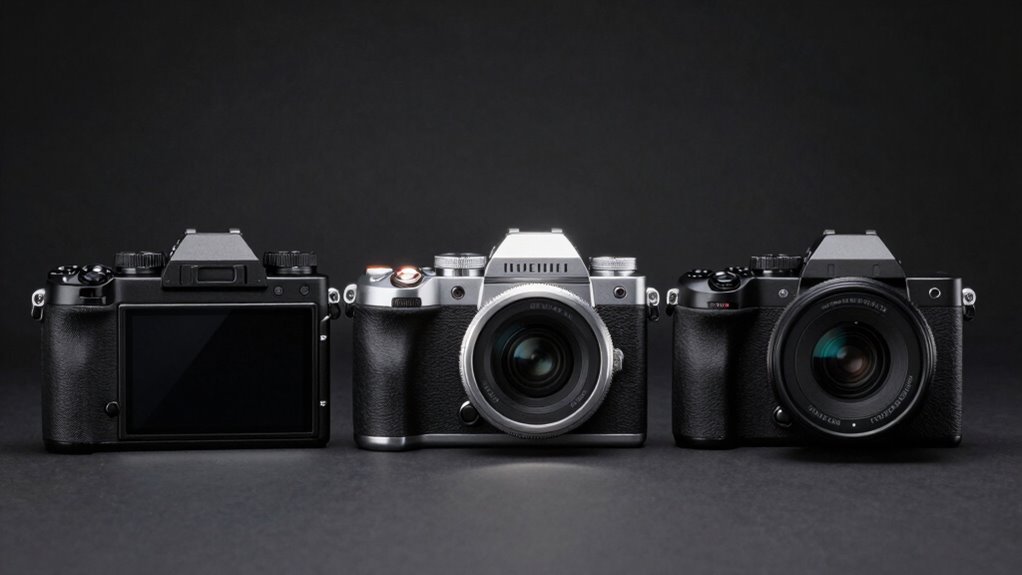
If you’re looking for the top medium format cameras in 2026, I recommend checking out the Fujifilm GFX100RF in both silver and black, along with the GFX100S II body. These models offer incredible high-res images, portability, and versatile lens options suitable for professional work. They also feature advanced autofocus and excellent workflow features. Keep exploring these options, and you’ll find the perfect fit for your creative needs.
Key Takeaways
- Look for cameras with high-resolution sensors (around 100MP+) for detailed, large-format images suitable for professional use.
- Prioritize models with advanced autofocus, stabilization, and versatile lens options for both studio and outdoor shooting.
- Consider portability and size to ensure the camera fits your shooting style, whether travel, landscape, or studio.
- Check for robust video features, including 4K/30p recording and high-quality color grading formats like F-Log.
- Evaluate system compatibility with wide lens selections, digital teleconverters, and third-party accessories for creative flexibility.
| Fujifilm GFX100RF Medium Format Camera – Silver |  | Compact Elite | Resolution: 102-megapixels | Sensor Type: Medium format CMOS | Size & Weight: Compact, portable body (weight not specified) | VIEW LATEST PRICE | See Our Full Breakdown |
| Fujifilm GFX100RF Medium Format Camera – Black | 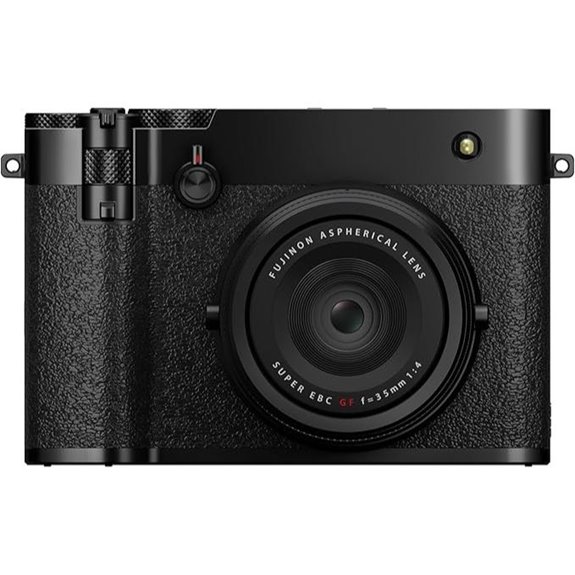 | Versatile Performer | Resolution: 102-megapixels | Sensor Type: Medium format CMOS II | Size & Weight: Compact, lightweight (unknown weight) | VIEW LATEST PRICE | See Our Full Breakdown |
| Fujifilm GFX100S II Body Mirrorless Medium Format Camera Body | 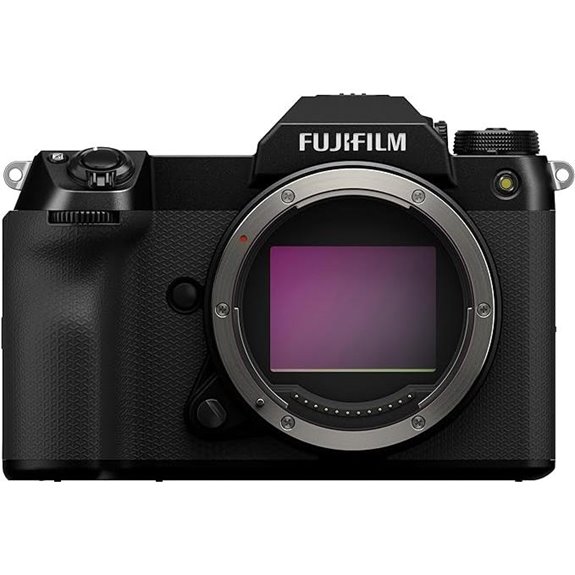 | Professional Power | Resolution: 102-megapixels | Sensor Type: Medium format CMOS II | Size & Weight: 883g (lightweight mirrorless body) | VIEW LATEST PRICE | See Our Full Breakdown |
More Details on Our Top Picks
Fujifilm GFX100RF Medium Format Camera – Silver
If you’re looking for a camera that combines high-resolution image quality with portability, the Fujifilm GFX100RF in Silver is an excellent choice. Its compact, rangefinder-style design makes it easy to carry without sacrificing handling or feel. The 102-megapixel sensor delivers stunning, detailed images, perfect for professional work or large prints. With 20 Film Simulation modes, I can easily achieve film-inspired looks straight from the camera. The fixed 35mm lens offers outstanding optical quality, and the digital teleconverter adds versatility. Plus, the new Aspect Ratio dial gives me quick access to different formats, streamlining composition and workflow.
- Resolution:102-megapixels
- Sensor Type:Medium format CMOS
- Size & Weight:Compact, portable body (weight not specified)
- Lens Compatibility:Fixed 35mm lens
- Video Capability:Not specified
- Focus System:Not specified
- Additional Feature:Classic rangefinder handling
- Additional Feature:Film Simulation modes
- Additional Feature:Aspect Ratio dial
Fujifilm GFX100RF Medium Format Camera – Black
Looking for a medium format camera that combines stunning image quality with portable handling? The Fujifilm GFX100RF in black offers just that. Its compact, rangefinder-style design makes it easy to carry and operate, while an outstanding fixed 35mm lens delivers sharp, detailed images. The digital teleconverter adds versatile zoom options, expanding creative possibilities. With a 102-megapixel sensor and 20 Film Simulation modes, it produces incredibly rich, film-inspired looks. The new aspect ratio dial provides quick access to different formats, making it a flexible tool for professionals and enthusiasts alike. This camera perfectly balances high resolution with user-friendly features in a stylish, portable package.
- Resolution:102-megapixels
- Sensor Type:Medium format CMOS II
- Size & Weight:Compact, lightweight (unknown weight)
- Lens Compatibility:Fixed 35mm lens
- Video Capability:Not specified
- Focus System:Not specified
- Additional Feature:Versatile image formats
- Additional Feature:Compact, portable design
- Additional Feature:Includes digital teleconverter
Fujifilm GFX100S II Body Mirrorless Medium Format Camera Body
The Fujifilm GFX100S II Body is an ideal choice for photographers who demand exceptional image quality without sacrificing portability. Weighing just 883 grams, it combines a compact, lightweight design with a 102-megapixel CMOS II sensor and X-Processor 5, ensuring stunning detail and fast performance. Its high-resolution EVF and tilting touchscreen make composing shots effortless. Advanced autofocus with face and eye detection, plus up to 8 stops of in-body stabilization, deliver sharp images even handheld. It also supports 4K/30p video with professional-grade color options. Perfect for studio, landscape, or street work, this camera offers versatile features in a portable package.
- Resolution:102-megapixels
- Sensor Type:Medium format CMOS II
- Size & Weight:883g (lightweight mirrorless body)
- Lens Compatibility:Supports G-mount lenses
- Video Capability:Supports 4K/30p, 10-bit recording, RAW options
- Focus System:Autofocus with face, eye, subject detection
- Additional Feature:High-resolution EVF
- Additional Feature:8.0 stops IBIS
- Additional Feature:4K/30p video recording
Factors to Consider When Choosing Medium Format Cameras
When selecting a medium format camera, I focus on how image quality and resolution meet my needs, along with how portable and manageable the camera is for my shoots. I also consider lens options for versatility and how well the autofocus and stability features perform in different situations. Ultimately, I evaluate video capabilities and workflow features that can streamline my editing process and enhance overall efficiency.
Image Quality Resolution
Choosing a medium format camera often hinges on its image resolution, which directly influences the level of detail and image quality you can achieve. Higher resolution sensors, typically ranging from 50MP to over 100MP, produce incredibly detailed images perfect for large prints or extensive cropping. This increased resolution results in larger file sizes, so you’ll need high-capacity memory cards and powerful processing hardware to handle your workflow smoothly. The extra megapixels also give you more flexibility in post-processing—cropping, enlarging, and retouching without losing significant detail. Additionally, higher resolution sensors often deliver better color accuracy and dynamic range, capturing subtle tonal variations and fine details even in challenging lighting or high-contrast scenes. This makes resolution a key factor in selecting the right medium format camera for your needs.
Camera Portability and Size
While high-resolution sensors are essential for capturing fine detail, their size and weight can considerably impact how practical a medium format camera is for your needs. Larger bodies tend to be heavier and less convenient for handheld shooting or travel, which can be a challenge if mobility is a priority. On the other hand, compact, rangefinder-style designs often offer better portability without sacrificing image quality, making them ideal for on-the-go photography. Features like tilting LCD screens and integrated handles also influence the overall size and usability, especially during extended shoots. To determine if a camera fits your lifestyle, I recommend carefully evaluating its dimensions and weight, considering how you’ll carry and use it in different scenarios.
Lens Versatility Options
Lens versatility is a key factor when selecting a medium format camera because it directly influences your creative options. Digital teleconverters can extend focal lengths without swapping lenses, giving you more flexibility. Fixed lenses with wide apertures, like 35mm f/1.4, offer sharpness and adaptability for different scenes. Interchangeable lens systems enable you to choose from wide-angle, standard, or telephoto options, expanding your creative potential. Some cameras support advanced features like digital aspect ratio adjustments, which work best with versatile lenses. Additionally, the availability of diverse lens mounts and compatibility with third-party lenses can greatly enhance your system’s flexibility. Ultimately, choosing a camera with a broad range of lens options guarantees you’re prepared for any shooting scenario.
Autofocus and Stability
Have you ever struggled with blurry images because your camera’s autofocus couldn’t keep up? Medium format cameras now offer advanced autofocus systems, from contrast-detection to hybrid phase-detection, boosting speed and accuracy. Features like face, eye, and subject detection help keep moving subjects sharp, even in challenging conditions. In addition, image stabilization—whether in-body (IBIS) or lens-based—plays a critical role in capturing crisp handheld shots. Higher-end models often include AI-assisted autofocus, which adapts to complex scenes and improves tracking. Stability isn’t just about autofocus; a solid build quality and vibration reduction technologies help maintain sharpness in tough environments. When choosing a medium format camera, consider these autofocus and stability features—they’re essential for achieving consistently sharp, high-quality images.
Video and Workflow Features
Choosing a medium format camera that excels in autofocus and stability is just the beginning—video and workflow features can make or break a professional shoot. I look for 4K/30p recording capabilities and support for high-quality color grading formats like F-Log and F-Log2 to guarantee flexibility in post-production. External recording options, such as 12-bit ProRes RAW, are crucial for capturing maximum detail. Seamless integration with video editing software and features like HDMI outputs and Camera to Cloud support streamline my workflow. Fast data transfer using SDHC/SDXC UHS U3 V90 cards is indispensable for handling high-resolution footage. Additionally, customizable exposure controls and advanced autofocus with face and subject detection help me achieve perfect shots efficiently in dynamic shooting environments.
Frequently Asked Questions
How Do Medium Format Cameras Compare to Full-Frame Models?
Medium format cameras generally offer higher image quality, larger sensors, and better detail than full-frame models. I find they excel in studio and landscape photography, providing richer tones and greater dynamic range. However, they tend to be bulkier, more expensive, and slower to operate. Full-frame cameras are more versatile and portable, making them perfect for everyday use. It really depends on your specific needs and shooting style.
What Are the Best Lenses for Medium Format Photography in 2026?
Did you know that the average lens lineup for medium format cameras has grown by 25% in the past two years? I’d recommend investing in versatile lenses like a 35-70mm zoom for landscapes and portraits, and a dedicated macro lens for close-up details. Fuji’s GF series and Hasselblad’s HC lenses are top choices, offering sharpness and color rendition that really make your images pop.
Are Medium Format Cameras Suitable for Video Production?
Yes, medium format cameras are suitable for video production, especially if you prioritize image quality and detail. I’ve used them for high-end commercial projects because they deliver stunning resolution and dynamic range. However, they can be bulkier and pricier than traditional video cameras, so I recommend them for professionals who need exceptional image quality and are prepared for the larger setup. They’re a fantastic choice when quality takes precedence over portability.
How Important Is Sensor Resolution Versus Lens Quality?
Think of sensor resolution as the canvas size and lens quality as the paint’s vibrancy. I believe lens quality often matters more because a great lens ensures sharpness, contrast, and color accuracy, no matter the resolution. Higher resolution sensors are impressive but can’t compensate for a poor lens. So, I prioritize investing in top-quality lenses first, knowing they’ll bring out the best in any sensor.
What Are the Typical Battery Life Durations for Medium Format Cameras?
Battery life for medium format cameras usually ranges from around 300 to 900 shots per charge, depending on the model and usage. I’ve found that higher-end models with advanced features tend to offer shorter battery life, so carrying extra batteries is a smart move. If you’re shooting all day, plan for midday recharges or replacements to keep your workflow smooth and uninterrupted.
Conclusion
Choosing the right medium format camera is like selecting a trusted steed for a grand adventure. Each of these models offers its own unique strengths, ready to elevate your photography to new heights. Whether you prefer the sleek elegance of the Fujifilm GFX100RF or the versatile power of the GFX100S II, you’re investing in more than a camera—you’re beginning a creative journey. So, saddle up and let your vision lead the way!