Choosing the right powdered food coloring set can determine whether your baked goods look vibrant or muddy. After analyzing the market, the Chefmaster Liqua-Gel Food Coloring stands out as the best overall option for its intense pigmentation and ease of blending, despite being a gel-powder hybrid. For those prioritizing clean ingredients, the Plant-Based Natural Food Coloring Powder offers a compelling dye-free alternative, though it requires more product to achieve similar saturation. The main tradeoff lies between color intensity and ingredient purity; synthetic dyes deliver bold hues with less product, while natural powders offer health-conscious profiles but may taste earthy or fade during baking. Continue reading to see how these options compare in performance, usability, and value.

Get baking supplies delivered free with Prime
- Fast, free delivery on millions of items
- Prime Video, Amazon Music and more included
- Member-only deals all year
Complete the kit


Key Takeaways
- Synthetic powders and gels deliver significantly higher color saturation than natural plant-based powders, often requiring half the amount of product to achieve the same visual impact.
- Natural food coloring sets frequently suffer from color shifting during baking, with reds and blues turning brown or gray at high temperatures unless specific heat-stable brands are chosen.
- Jar size matters more than color count for long-term usability; 2-gram bottles are often insufficient for serious bakers who need to mix custom shades, whereas 5-gram jars allow for experimentation.
- Flavor neutrality is not guaranteed in natural sets; many plant-based powders, particularly those derived from spirulina or beetroot, introduce subtle vegetal or sweet notes that can alter delicate frostings.
- Hybrid gel-powder formats like Chefmaster Liqua-Gel offer the best compromise for beginners, providing the potency of a powder with the easy-drip control of a liquid, reducing the risk of over-coloring.
| Chefmaster Liqua-Gel Food Coloring – 12 Pack, Fade-Resistant, Vibrant Colors |  | Best Gel Alternative | Format: Gel | Quantity: 12-pack | Color description: Vibrant, fade-resistant colors | VIEW ON AMAZON | See Our Full Breakdown |
| Plant-Based Natural Food Coloring Powder, 4 Colors, 5 g per Bottle |  | Best for Plant-Based Basics | Form: Fine powder | Number of colors: 4 | Colors: Yellow, blue, dark green, red | VIEW ON AMAZON | See Our Full Breakdown |
| Food Coloring Powder – 24 Vibrant Colors, Flavorless High-Concentration Dye, 2 g Bottles |  | Best for Maximum Shade Variety | Form: Powder | Number of colors: 24 | Bottle size: 2 g per bottle | VIEW ON AMAZON | See Our Full Breakdown |
| Food Coloring Powder – 12 Vibrant Colors, Food-Grade High-Concentration Dye for Baking, Cake Decorating, Icing, Cookies, Candy, Slime (5 g per bottle) |  | Best for Larger Portions per Shade | Form: Powder | Number of colors: 12 | Bottle size: 5 g per bottle | VIEW ON AMAZON | See Our Full Breakdown |
| Natural Food Coloring Powder, 10 Plant-Based Colors |  | Best Plant-Based Palette for Blending | Form: Plant-based powder | Number of colors: 10 | Color selection: Includes three pink-toned pigments | VIEW ON AMAZON | See Our Full Breakdown |
| Natural Food Coloring Powder – 10 Colors Plant-Based, Dye-Free for Baking & Decorating |  | Best for All-Natural Baking | Number of Colors: 10 | Dye Type: Plant-based, dye-free | Application: Baking, cake decorating, DIY projects | VIEW ON AMAZON | See Our Full Breakdown |
| Chefmaster Liqua-Gel Food Coloring – 12 Color Set C – Fade Resistant, Vibrant Colors, Easy-To-Blend – 12 Pack |  | Best Professional-Grade Gel | Number of Colors: 12 | Color Set: C | Fade Resistant: Yes | VIEW ON AMAZON | See Our Full Breakdown |
| Natural Food Coloring Powder Set, 6 Colors |  | Best for Dry Mix Applications | Colors: Red, orange, yellow, pink, blue, green | Form: Concentrated powder | Dietary: Gluten free | VIEW ON AMAZON | See Our Full Breakdown |
| Natural Food Coloring Powder Set, 6 Colors, 3 g per Jar |  | Best for Convenient Dispensing | Colors: Yellow, green, orange, red, purple, pink | Quantity: 6 jars | Amount per jar: 3 g | VIEW ON AMAZON | See Our Full Breakdown |
| 16-Color Concentrated Food Coloring Powder Set, 5 g per Bottle |  | Best for Maximum Color Variety | Colors: 16 | Amount per bottle: 5 g | Included accessories: 2 scoops | VIEW ON AMAZON | See Our Full Breakdown |
| Natural Food Coloring Powder, 12 Plant-Based Colors |  | Best Overall for Clean Label Baking | Color Count: 12 | Form: Powder | Primary Ingredients: Plant and fruit extracts | VIEW ON AMAZON | See Our Full Breakdown |
| Pixie Dust Natural Food Coloring Powder, Red, Yellow, Blue & Green Dye Free |  | Best Compact Starter for Basic Projects | Color Count: 4 | Specific Colors: Red, Yellow, Blue, Green | Net Weight per Jar: 0.17 oz (5 grams) | VIEW ON AMAZON | See Our Full Breakdown |
| ERCorArt Food Coloring Powder, 10 Colors, 5 g per Bottle |  | Best for Precision and Vibrancy | Brand: ERCorArt | Color Count: 10 | Weight per Bottle: 5 g | VIEW ON AMAZON | See Our Full Breakdown |
| Natural Food Coloring Powder Set, 8 Colors, 5 g per Bottle |  | Best Balanced Natural Palette | Color Count: 8 | Specific Colors: Yellow, blue, dark green, coffee brown, orange, red, black, purple | Weight per Bottle: 5 g | VIEW ON AMAZON | See Our Full Breakdown |
| Food Coloring Set – 12 Vibrant Edible Liquid Food Dyes for Baking and Crafts |  | Best for Ease of Use and Craft Versatility | Color Count: 12 | Form: Liquid | Volume per Bottle: 0.35 fl. oz (10 ml) | VIEW ON AMAZON | See Our Full Breakdown |
| powdered foodcoloring set | Form |
|---|---|
| Chefmaster Liqua-Gel Food Colo | — |
| Plant-Based Natural Food Color | Fine powder |
| Food Coloring Powder | Powder |
| Food Coloring Powder | Powder |
| Natural Food Coloring Powder | Plant-based powder |
| Natural Food Coloring Powder | — |
| Chefmaster Liqua-Gel Food Colo | Gel |
| Natural Food Coloring Powder S | Concentrated powder |
| Natural Food Coloring Powder S | — |
| 16-Color Concentrated Food Col | Powder |
| Natural Food Coloring Powder | Powder |
| Pixie Dust Natural Food Colori | — |
| ERCorArt Food Coloring Powder | — |
| Natural Food Coloring Powder S | Fine Powder |
| Food Coloring Set | Liquid |
More Details on Our Top Picks
Chefmaster Liqua-Gel Food Coloring – 12 Pack, Fade-Resistant, Vibrant Colors
This is a gel set, not a powdered food coloring set, so I rank it as a useful alternative for bakers who prefer ready-to-blend color over measuring powder. Its 12 vibrant, fade-resistant shades suit decorating projects where a dependable, vivid result matters, and the gel formula is described as easy to blend without affecting taste or texture. Compared with the powdered Food Coloring Powder – 24 Vibrant Colors, Chefmaster offers a different format and fewer listed color options, while avoiding the powder’s small-bottle measuring routine. The tradeoff is that buyers specifically seeking dry color—or plant-based ingredients—won’t find that here; the supplied details identify GRAS ingredients but do not describe it as plant-based. Choose it for convenience, not as a powder substitute.
Pros:- Twelve vibrant, fade-resistant colors for a range of decorating needs
- Easy-to-blend gel formula
- Described as food safe with GRAS ingredients
- Designed to add color without affecting taste or texture
Cons:- Gel rather than powder, so it does not meet a strict powdered-color preference
- Limited to 12 colors, fewer than the 24-color powder set
- Plant-based ingredients are not specified
Best for: Bakers who want a ready-to-blend gel set for vivid dessert decorating and are open to a non-powder format
Not ideal for: Shoppers specifically seeking powdered color, plant-based pigments, or more than 12 shades in one set
- Format:Gel
- Quantity:12-pack
- Color description:Vibrant, fade-resistant colors
- Formula:Easy-to-blend
- Safety:Food safe
- Ingredients:GRAS ingredients
Our verdict“Choose this set if you value convenient, fade-resistant gel color more than a powdered format or an expanded shade range.”
Plant-Based Natural Food Coloring Powder, 4 Colors, 5 g per Bottle
For buyers prioritizing plant-based ingredients over a large palette, this four-color powder set keeps the selection focused: yellow, blue, dark green, and red. Each bottle holds 5 g of fine powder, and a small measuring spoon is included, making it a more straightforward starting point than the 24-color powder set if you only need core shades. The formula is described as having no FD&C dyes or artificial colors, a distinction the broader Food Coloring Powder – 24 Vibrant Colors does not make in its supplied details. The compromise is limited color variety, and this set calls for sealed, cool, dark storage and use soon after opening. I’d skip it for projects that need many ready-made shades or infrequent use across a long period.
Pros:- Plant-based formula with no FD&C dyes or artificial colors
- Four core colors, including yellow, blue, dark green, and red
- Fine powder is designed to mix quickly and resist clumping
- Includes a small measuring spoon
Cons:- Four colors provide less variety than the 24-color powder set
- Needs sealed storage in a cool, dark place
- Instructions recommend using soon after opening
Best for: Home bakers seeking a small, plant-based powder palette for frosting, cakes, macarons, fondant, and cookies
Not ideal for: Decorators who need many shades at once or who may leave opened powders unused for extended periods
- Form:Fine powder
- Number of colors:4
- Colors:Yellow, blue, dark green, red
- Bottle weight:5 g per bottle
- Ingredients:Plant-based; no FD&C dyes or artificial colors
- Included accessory:Small measuring spoon
- Storage:Keep sealed in a cool, dark place
- Recommended use after opening:Use soon after opening
Our verdict“Pick this set for a compact, plant-based selection of core baking colors, but choose a larger palette if you need more shade options.”
Food Coloring Powder – 24 Vibrant Colors, Flavorless High-Concentration Dye, 2 g Bottles
When breadth matters more than bottle size, this 24-color set offers the widest stated palette among the products in this batch. Its high-concentration powder is intended to deliver vivid color in small amounts without clumping or changing the texture of icing and cream, while the flavorless, vegan, non-GMO, and gluten-free formula adds useful ingredient information. Compared with the 12-color, 5 g powder set, this one doubles the listed shade count but provides only 2 g per bottle, so heavy users may work through individual colors faster. It is also explicitly not recommended for chocolate, and the final shade may differ from its label. I’d choose it for varied decorating experiments, not for chocolate work or frequent large-batch production.
Pros:- Twenty-four colors offer more shade variety than the 12-color powder set
- High concentration means only a small amount is intended to produce vivid color
- Flavorless formula is described as not changing icing or cream texture
- Non-GMO, gluten-free, and vegan
Cons:- Each bottle contains only 2 g, which may not suit heavy use
- Not recommended for coloring chocolate
- Finished colors may differ from the labeled shades
Best for: Cake decorators and hobby bakers who want many shades for small-batch icing, cream, and creative projects
Not ideal for: Chocolate makers or high-volume bakers who need larger quantities of each color
- Form:Powder
- Number of colors:24
- Bottle size:2 g per bottle
- Concentration:Higher concentration than liquid food coloring
- Flavor:Flavorless
- Dietary attributes:Non-GMO, gluten-free, vegan
- Texture claim:Designed not to clump or alter icing and cream texture
- Stated limitation:Not recommended for chocolate
Our verdict“Choose this set for a broad shade range in small projects, but not for chocolate or sustained high-volume baking.”
Food Coloring Powder – 12 Vibrant Colors, Food-Grade High-Concentration Dye for Baking, Cake Decorating, Icing, Cookies, Candy, Slime (5 g per bottle)
This 12-color set balances a useful palette with 5 g bottles, making it a more practical pick for repeated use of a few shades than the 24-color set’s 2 g bottles. The fine powder is described as dissolving easily in water and resisting clumps, while its high concentration means small amounts can produce vivid color. Compared with the plant-based four-color set, it provides three times as many colors and lists uses that include candy and DIY projects; however, its ingredients are described as food-grade and tasteless, not specifically plant-based. Dispensing from the tall bottle opening is intended to reduce leaks, but the product can stain skin, so gloves are recommended. I’d favor it for general-purpose powder coloring, while large projects may still use up these bottles quickly.
Pros:- Twelve colors provide more variety than the four-color plant-based set
- 5 g per bottle offers more of each shade than the 2 g bottles in the 24-color set
- Fine powder is described as easy to dissolve and resistant to clumping
- Tall bottle opening is designed for easier dispensing and fewer leaks
Cons:- Can stain skin on contact; gloves are recommended
- Small bottles may run short during large projects
- Plant-based ingredients are not specified
Best for: Bakers who want a mid-sized powder palette with more product per color for icing, cookies, candy, and decorating
Not ideal for: Shoppers who require explicitly plant-based pigments or need large quantities for production-scale projects
- Form:Powder
- Number of colors:12
- Bottle size:5 g per bottle
- Food-grade:Yes
- Concentration:High-concentration dye
- Solubility:Dissolves easily in water
- Texture:Fine; described as non-clumping
- Stated uses:Baking, cake decorating, icing, cookies, candy, and slime
Our verdict“Choose this set for a balanced 12-shade powder palette with 5 g per color, unless plant-based sourcing or bulk quantities are priorities.”
Natural Food Coloring Powder, 10 Plant-Based Colors
This set is aimed at plant-based coloring with room to blend: it includes 10 shades, among them three pink-toned pigments that can be combined to create additional hues. That gives it a different emphasis from the four-color Plant-Based Natural Food Coloring Powder, which focuses on core shades rather than a broader selection. The powder is described as odorless, easy to dissolve, and suitable for baking, icing, beverages, and DIY projects; three folding spoons give you measuring tools without needing a separate scoop. The pink-heavy selection may be a plus for pastel and rosy palettes, but it leaves less balance across color families than a set with more distinct primary shades. It also needs stirring into recipes, so this is less convenient than a ready-to-use gel.
Pros:- Ten plant-based powder colors offer a broader selection than the four-color plant-based set
- Three pink-toned pigments can be blended to create different hues
- Odorless and described as not altering recipe taste
- Includes three folding spoons for measuring
Cons:- Three shades are pink-toned, limiting the balance of the palette
- Requires stirring into recipes
- Powder may be less convenient than the ready-to-blend Chefmaster gel
Best for: Plant-based bakers and drink makers who want several blendable shades, especially pinks, with measuring spoons included
Not ideal for: Buyers seeking a balanced set of distinct primary colors or a ready-to-use coloring format without stirring
- Form:Plant-based powder
- Number of colors:10
- Color selection:Includes three pink-toned pigments
- Odor:Odorless
- Included accessories:Three folding spoons
- Stated uses:Baking, icing decoration, beverages, and DIY projects
- Mixing:Requires stirring into recipes
- Taste:Described as not altering recipe taste
Our verdict“Pick this plant-based set if you want a blendable, pink-leaning palette for baking and drinks and are comfortable stirring powder into recipes.”
Natural Food Coloring Powder – 10 Colors Plant-Based, Dye-Free for Baking & Decorating
This set stands out for its commitment to plant-based integrity. Unlike the synthetic options in this roundup, it avoids FD&C dyes entirely, appealing to buyers who prioritize clean labels. The inclusion of 3 portable folding spoons is a thoughtful touch that solves the common problem of measuring tiny amounts of powder cleanly. Compared to the Natural Food Coloring Powder Set, 6 Colors, this kit offers double the color range, allowing for more complex palettes without mixing. However, natural pigments are inherently less vibrant than synthetic gels like Chefmaster Liqua-Gel. You must stir gently to avoid clumping, which can be frustrating for beginners. It is the ideal choice for health-conscious bakers who accept slightly muted tones in exchange for ingredient transparency.
Pros:- Completely plant-based and dye-free formula
- Includes portable spoons for hygienic measuring
- Odorless and does not alter food taste
- Resists clumping when mixed correctly
Cons:- Colors are less vibrant than synthetic alternatives
- Requires careful stirring to prevent texture issues
Best for: Health-conscious bakers who strictly avoid synthetic dyes and need a wide color range.
Not ideal for: Those seeking ultra-vibrant, electric colors or those who dislike manual stirring.
- Number of Colors:10
- Dye Type:Plant-based, dye-free
- Application:Baking, cake decorating, DIY projects
- Includes:3 portable folding spoons
- Odor:Odorless
- Taste Impact:None
Our verdict“Choose this kit if you prioritize natural ingredients and need a broad palette for gentle coloring.”
Chefmaster Liqua-Gel Food Coloring – 12 Color Set C – Fade Resistant, Vibrant Colors, Easy-To-Blend – 12 Pack
This product represents the professional standard for color intensity. While the other entries in this list are powders, this Liqua-Gel formula offers a different utility: it is fade-resistant and blends effortlessly into frostings without changing consistency. Compared to the 16-Color Concentrated Food Coloring Powder Set, the gel format eliminates the risk of dry, chalky patches in icing. The easy-to-squeeze bottles provide precise control, which is critical for detailed decorating. However, this is not a powder set, so it adds liquid to your mix. It is less suitable for dry mixes or powder-based applications where moisture control is paramount. This pick makes the most sense for decorators who value vivid, stable color over dry-form convenience.
Pros:- Highly vibrant and fade-resistant colors
- Gel formula blends smoothly without altering texture
- Convenient squeeze bottles for precise application
- Made in the USA
Cons:- Gel consistency adds liquid to recipes
- Limited to 12 colors in this specific set
Best for: Professional decorators who need fade-resistant, highly vibrant colors for buttercreams and fondants.
Not ideal for: Users who need dry coloring for powder-based recipes or want to avoid adding liquid.
- Number of Colors:12
- Color Set:C
- Fade Resistant:Yes
- Made in:USA
- Form:Gel
- Packaging:Squeeze bottles
Our verdict“This is the go-to choice for decorators who prioritize color stability and ease of blending over dry-form applications.”
Natural Food Coloring Powder Set, 6 Colors
Designed for simplicity, this 6-color set excels in dry applications where adding liquid is undesirable. The concentrated powder blends into frostings and batters without introducing moisture, a key advantage over the Chefmaster Liqua-Gel. It is gluten-free and free from FD&C dyes, making it safe for restricted diets. Compared to the Natural Food Coloring Powder Set, 6 Colors, 3 g per Jar, this option offers similar utility but lacks the shaker lid convenience, requiring a spoon or tool for dispensing. You must adjust quantities carefully to achieve desired intensity, as the concentration is high. This model is better suited to bakers who need a basic, natural palette for dry mixes and prefer a straightforward, no-frills packaging style.
Pros:- Adds color without extra liquid
- Gluten-free and free from artificial dyes
- Fine powder blends well into various recipes
Cons:- Requires careful quantity adjustment for intensity
- Must be kept tightly sealed to prevent moisture damage
Best for: Bakers who need a small, natural palette for dry mixes and want to avoid added liquid.
Not ideal for: Those who want easy dispensing mechanisms or a wider color range.
- Colors:Red, orange, yellow, pink, blue, green
- Form:Concentrated powder
- Dietary:Gluten free
- Dyes:Free from FD&C dyes and artificial colors
- Uses:Frosting, buttercream, royal icing, fondant, cake batter, beverages, smoothies, and desserts
- Storage:Keep tightly sealed in a cool, dry place away from moisture, heat, and direct sunlight
Our verdict“A solid choice for minimalists who need a reliable, natural powder for dry baking applications.”
Natural Food Coloring Powder Set, 6 Colors, 3 g per Jar
This set distinguishes itself with reusable glass jars and shaker lids, offering a significant usability upgrade over standard tubs or bottles. The ability to shake color directly into batters reduces waste and mess. Compared to the Natural Food Coloring Powder Set, 6 Colors, which requires manual scooping, this format is far more efficient for frequent users. However, a critical tradeoff is that red, purple, and pink contain cochineal, making them unsuitable for vegetarians. The 3 g per jar quantity is quite small, intended for occasional use rather than heavy production. This pick makes the most sense for home bakers who value convenience and are not strictly vegan, appreciating the tactile ease of shaker dispensing.
Pros:- Shaker lids allow for easy, precise dispensing
- Reusable glass jars are eco-friendly and durable
- Mixes well with dry ingredients or water
Cons:- Red, purple, and pink contain cochineal (not vegetarian)
- Small 3 g quantity per jar limits usage
Best for: Home bakers who want convenient shaker dispensing and do not require vegan certification.
Not ideal for: Vegetarians, vegans, or users needing large quantities of color.
- Colors:Yellow, green, orange, red, purple, pink
- Quantity:6 jars
- Amount per jar:3 g
- Packaging:Reusable glass jars with shaker lids
- Vegan-friendly colors:Yellow, green, orange
- Contains cochineal:Red, purple, pink
- Use:Mix with dry ingredients, water, or ready-made buttercream
Our verdict“Ideal for those who prioritize dispensing convenience over vegan compliance and large volume.”
16-Color Concentrated Food Coloring Powder Set, 5 g per Bottle
With 16 distinct colors, this set offers the widest palette in this specific lineup of natural-leaning options. It is designed for users who need specific shades without mixing, such as matching corporate logos or intricate character designs. Compared to the Natural Food Coloring Powder Set, 6 Colors, this kit provides significantly more versatility. The pressure-sensitive seals are a practical feature that prevents leaks during storage, addressing a common complaint with powder containers. However, the powders appear brownish before dissolving, which can be confusing for beginners expecting vibrant dry colors. This model is better suited to experienced decorators who understand how concentrated powders activate and need a broad spectrum of hues for diverse projects.
Pros:- Extensive 16-color range for diverse projects
- Pressure-sensitive seals prevent leaks and spills
- Concentrated formula requires very little product
- Includes two scoops for easy dispensing
Cons:- Powders look brownish/dull until dissolved
- Final color may vary from the bottle label
Best for: Decorators who need a wide range of specific colors and understand powder activation.
Not ideal for: Beginners who might be confused by the dull dry appearance of the powders.
- Colors:16
- Amount per bottle:5 g
- Included accessories:2 scoops
- Form:Powder
- Uses:Baking, cake decorating, icing, frosting, fondant, cookies, and crafts
- Packaging:Pressure-sensitive seals
Our verdict“The best choice for those who need variety and are comfortable managing concentrated powder characteristics.”
Natural Food Coloring Powder, 12 Plant-Based Colors
This set stands out as Best Overall because it offers a complete spectrum of 12 plant-based hues without relying on synthetic FD&C dyes. Unlike the Food Coloring Set – 12 Vibrant Edible Liquid Food Dyes, which uses liquid bases that can alter batter consistency, this powder form is highly concentrated and flavor-neutral, allowing you to achieve deep, vibrant tones without adding excess moisture to delicate recipes like macarons or royal icing. The fine texture is designed for smooth dissolution in both water and oil-based mixtures, reducing the risk of clumping that often plagues lesser powders. However, the tradeoff is the lack of specific color identification in the product description, which may frustrate bakers who need precise shade matching. While it excels in clean ingredient profiles, it requires more careful measurement than liquid alternatives.
Pros:- Free from synthetic FD&C dyes and artificial additives
- Concentrated formula requires minimal powder for strong color
- Flavor-neutral design preserves the taste of delicate baked goods
- Fine powder dissolves smoothly in both water and oil-based mediums
Cons:- Individual color names and container sizes are not specified in the listing
- Powder format requires precise measuring and mixing compared to liquids
Best for: Health-conscious bakers and parents who prioritize clean, plant-based ingredients and need a versatile color palette for complex baking projects.
Not ideal for: Professional decorators who require exact color matching to Pantone or specific brand shades, as the individual hues are not explicitly named.
- Color Count:12
- Form:Powder
- Primary Ingredients:Plant and fruit extracts
- Dye-Free Status:Free from synthetic FD&C dyes
- Flavor Profile:Neutral
- Primary Uses:Baking, icing, dough, fondant, meringue, egg decorating
Our verdict“Choose this if you want a safe, versatile, and high-performance natural coloring kit for everyday baking.”
Pixie Dust Natural Food Coloring Powder, Red, Yellow, Blue & Green Dye Free
This four-color kit is the Best Compact Starter for those who only need primary shades for occasional projects. Compared to the 12-color Natural Food Coloring Powder, 12 Plant-Based Colors, this set is significantly more affordable and less overwhelming for beginners who don’t need a full rainbow. The pigments are derived from recognizable sources like turmeric and spirulina, offering a clean label option in small, resealable jars that prevent waste. However, the limited range means you cannot create secondary colors like purple or orange without mixing, which can be inconsistent. Additionally, the natural pigments are not heat-stable for high-temperature baking, meaning colors may fade or change hue in the oven, unlike the more robust synthetic or gel options in this roundup.
Pros:- Resealable jars maintain freshness and prevent spillage
- Clean ingredient list using turmeric, spirulina, and vegetable juice
- Kosher, vegan, and gluten-free certifications for dietary flexibility
- Ideal for no-bake applications like frosting and beverages
Cons:- Not suitable for high-heat baking due to pigment instability
- Small 5g jars may run out quickly during large-scale projects
- Limited to four primary colors, restricting creative range
Best for: Occasional bakers and crafters who need basic primary colors for frosting, drinks, or no-bake treats and want to minimize waste.
Not ideal for: Bakers who frequently bake cakes or cookies at high temperatures, as natural pigments here are not suitable for high-heat applications.
- Color Count:4
- Specific Colors:Red, Yellow, Blue, Green
- Net Weight per Jar:0.17 oz (5 grams)
- Key Ingredients:Turmeric, spirulina, paprika, vegetable juice
- Certifications:Kosher, Vegan, Gluten-Free, Non-GMO
- Container Type:Resealable jars
- Heat Stability:Not suitable for high heat
Our verdict“This is the smart choice for beginners or those with limited storage who only need red, yellow, blue, and green for simple tasks.”
ERCorArt Food Coloring Powder, 10 Colors, 5 g per Bottle
The ERCorArt Food Coloring Powder earns the title of Best for Precision due to its inclusion of two measuring spoons and distinct, vivid hues. Unlike the Pixie Dust Natural Food Coloring, which lacks precision tools, this set allows for consistent dosing, critical when working with small batches like macarons or chocolate. The powders are formulated to retain their intensity after baking, offering a heat stability advantage over many purely natural plant-based kits. However, users should note that powder color often differs from the final mixed result, requiring a bit of experimentation to achieve the desired shade. While it is versatile enough for crafts like soap making, the lack of detailed ingredient sourcing information might deter those who demand strict ‘clean label’ transparency found in other natural options.
Pros:- Includes two measuring spoons for accurate powder dispensing
- Colors are designed to remain vivid after exposure to heat
- Flavorless formula ensures no impact on food texture or taste
- Versatile enough for both culinary and non-food craft applications
Cons:- Dry powder color may not match the final mixed product color
- Color intensity varies significantly based on the amount used
Best for: Detail-oriented decorators and crafters who need consistent, vibrant results and appreciate included measuring tools for accuracy.
Not ideal for: Strict clean-eating advocates who require fully disclosed ingredient sourcing, as this set focuses on performance over natural certification transparency.
- Brand:ERCorArt
- Color Count:10
- Weight per Bottle:5 g
- Included Accessories:2 measuring spoons
- Seal Type:Aluminum foil seal
- Dietary Attributes:Non-GMO, Gluten-Free, Vegetarian-suitable
- Flavor Profile:Flavorless
- Specific Colors:Black, violet, navy blue, green, orange, red, brown, lemon yellow, teal, sky blue
Our verdict“Pick this if you value consistent, high-impact color and need the convenience of built-in measuring aids.”
Natural Food Coloring Powder Set, 8 Colors, 5 g per Bottle
This 8-color set occupies the Best Balanced Natural Palette role, offering a middle ground between the limited 4-color kits and the overwhelming 12+ color arrays. It includes essential earth tones like coffee brown and dark green, which are often missing in basic primary sets like the Pixie Dust kit. The inclusion of a measuring spoon is a practical touch that aids in portion control, a feature also seen in the ERCorArt set. However, the 5g capacity per bottle is quite small for frequent bakers, meaning a large batch of frosting could deplete a single color quickly. While it avoids artificial dyes, the color vibrancy may not match the intensity of synthetic powders, requiring more product usage to achieve deep shades.
Pros:- Includes useful earth tones like coffee brown and dark green
- Comes with a measuring spoon for easier portioning
- Free from artificial colors, FD&C dyes, and gluten
- Fine powder texture blends easily into batters and icings
Cons:- Small 5g bottle size limits usability for large batches
- Color intensity may be lower than synthetic alternatives
Best for: Home bakers who want a natural, dye-free option with a useful mix of primary and earth tones without the bulk of a 12-color set.
Not ideal for: High-volume bakers or event decorators, as the small 5g bottles will be exhausted rapidly during large projects.
- Color Count:8
- Specific Colors:Yellow, blue, dark green, coffee brown, orange, red, black, purple
- Weight per Bottle:5 g
- Included Accessory:Measuring spoon
- Dietary Attributes:Plant-based, No Artificial Colors, No FD&C Dyes, Gluten-Free, Non-GMO
- Suggested Uses:Cakes, frosting, fondant, donuts, cookies, macarons, beverages
- Form:Fine Powder
Our verdict“This is the ideal compromise for natural food coloring users who need a bit more variety than primary colors but not a full rainbow.”
Food Coloring Set – 12 Vibrant Edible Liquid Food Dyes for Baking and Crafts
Although this is a liquid set, it competes strongly as the Best for Ease of Use because it eliminates the measuring and dissolving steps required by powder sets like the Natural Food Coloring Powder, 12 Plant-Based Colors. The squeeze bottles allow for immediate, drop-by-drop control, making it superior for quick adjustments in icing or for non-food crafts like slime and soap making. The colors are stable under both heat and freezing, a significant advantage over the Pixie Dust natural powders which fade in the oven. However, the liquid form adds moisture to your mixture, which can be problematic for stiff doughs or delicate cookies. It is also not a ‘clean label’ option, relying on synthetic dyes rather than plant extracts.
Pros:- Squeeze bottles allow for precise, drop-by-drop color control
- Stable colors that withstand both heating and freezing
- Odorless and tasteless formula does not alter food flavor
- No measuring or dissolving required, unlike powder alternatives
Cons:- Liquid form adds moisture, which can disrupt stiff doughs
- Contains synthetic dyes rather than plant-based natural ingredients
Best for: Crafters, beginners, and decorators who prioritize convenience and color stability over ingredient purity, and who work with moisture-tolerant recipes.
Not ideal for: Bakers working with low-moisture recipes like macarons or stiff royal icing, as the liquid can alter the structural integrity of the batter.
- Color Count:12
- Form:Liquid
- Volume per Bottle:0.35 fl. oz (10 ml)
- Dietary Attributes:Dairy-Free, Nut-Free, Gluten-Free
- Flavor Profile:Odorless, Tasteless
- Stability:Stable under heat and freezing
- Container Type:Squeeze bottles
- Primary Uses:Cake decorating, frosting, icing, fondant, batter, cookies, Easter eggs, slime, soap, bath bombs
Our verdict“Select this liquid set if you want maximum convenience and heat stability for both baking and diverse craft projects.”
How We Picked
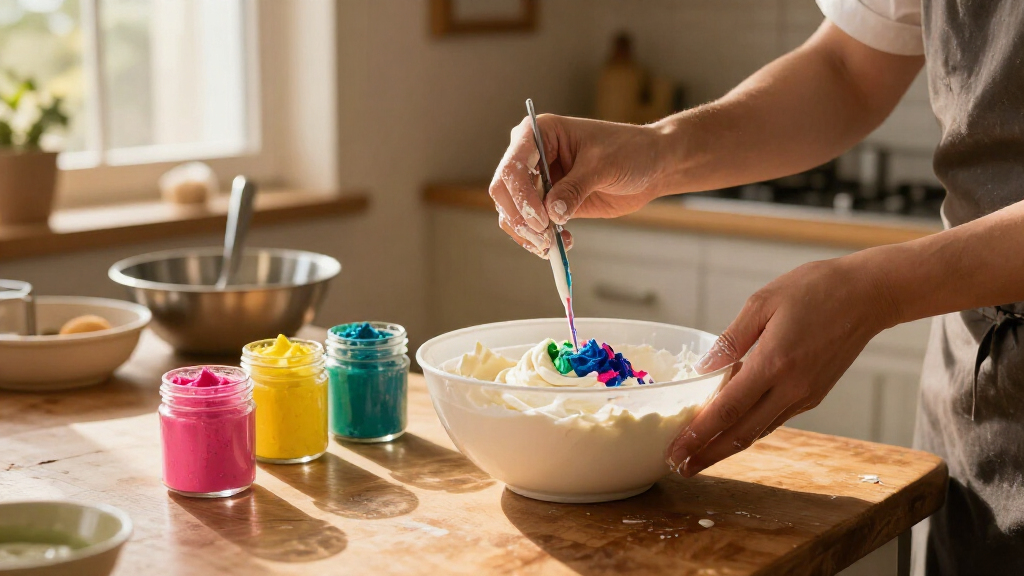
I evaluated each powdered food coloring set based on pigment concentration, ingredient sourcing, and practical application in various baking mediums. My primary focus was on how well the colors held up in high-moisture environments like buttercream and fondant, as well as their stability under heat. I prioritized sets that offered clear labeling on ingredients, distinguishing between artificial dyes and plant-based extracts, because this dictates both the final taste and the dietary suitability of the baked goods. I also looked at packaging functionality, favoring bottles with sifting mechanisms or wide mouths that prevent clumping, a common frustration with fine powders.
The ranking logic favors versatility and reliability. Products that could produce a wide range of shades without altering the texture or taste of the base were ranked higher. I penalized sets where the natural ingredients introduced significant flavor changes or where the powder consistency led to uneven mixing. This approach ensures that the recommendations serve both professional decorators who need precise, bold colors and home bakers who prioritize clean labels and ease of use.
| powdered foodcoloring set | Form |
|---|---|
| Chefmaster Liqua-Gel Food Colo | — |
| Plant-Based Natural Food Color | Fine powder |
| Food Coloring Powder | Powder |
| Food Coloring Powder | Powder |
| Natural Food Coloring Powder | Plant-based powder |
| Natural Food Coloring Powder | — |
| Chefmaster Liqua-Gel Food Colo | Gel |
| Natural Food Coloring Powder S | Concentrated powder |
| Natural Food Coloring Powder S | — |
| 16-Color Concentrated Food Col | Powder |
| Natural Food Coloring Powder | Powder |
| Pixie Dust Natural Food Colori | — |
| ERCorArt Food Coloring Powder | — |
| Natural Food Coloring Powder S | Fine Powder |
| Food Coloring Set | Liquid |
Factors to Consider When Choosing Powdered Foodcoloring Set
Selecting the right coloring set involves balancing aesthetic goals with ingredient preferences and practical constraints.Synthetic Versus Natural Pigmentation
The most significant decision is whether to use synthetic dyes or natural plant-based powders. Synthetic options like the Chefmaster sets provide vibrant, neon-like hues that remain stable through baking and freezing. They are highly concentrated, meaning a tiny amount goes a long way. In contrast, natural powders derived from fruits, vegetables, and algae offer cleaner labels but often produce muted, pastel tones. If you need deep blacks, bright reds, or electric blues, natural options will struggle to deliver without excessive amounts that compromise texture. Understand that natural colors may also shift hue depending on the pH of your batter or frosting.
Impact of Form Factor on Mixing
Powdered colors behave differently than liquids or gels. Finely milled powders integrate seamlessly into dry ingredients like sugar or flour, preventing speckling in the final product. However, if you add them directly to water-heavy frostings, they can clump. I recommend dissolving powders in a small amount of alcohol or extract before adding them to your mixture for even distribution. Some sets, like the ERCorArt options, are designed for airbrushing or dusting, requiring a different application technique than standard mixing. Always check if the powder is intended for dry or wet applications to avoid grainy textures.
Flavor Profiles and Ingredient Integrity
Not all colorants are flavorless. Artificial dyes are generally neutral in taste, allowing the flavor of your cake to shine. Natural colorants, however, carry the taste of their source. Beetroot powder adds a subtle earthy sweetness, while turmeric can impart a spicy note that clashes with vanilla or chocolate. Spirulina can taste vegetal if used in high quantities. If you are decorating delicate flavors like almond or lemon, choose a set explicitly labeled as flavor-neutral or opt for synthetic dyes. For robust flavors like chocolate or spice cakes, natural options are less likely to cause conflict.
Heat Stability and Color Retention
Baking temperatures can degrade certain pigments. Natural reds from berry sources often turn brown or gray when exposed to high heat, while natural blues from spirulina may turn green. If you plan to color cake batter before baking, you need heat-stable options, which are more common in synthetic sets. For frostings and ganaches, which are not baked, natural colors hold up better. Always test a small batch before committing to a full recipe, especially when using plant-based dyes. Look for sets that specify ‘fade-resistant’ properties if your creations will be exposed to light for extended periods.
Packaging and Shelf Life Considerations
Moisture is the enemy of powdered food coloring. Airtight packaging is critical to prevent clumping and loss of potency. I favor sets with screw-top jars over squeeze bottles, as they allow for better control when sprinkling small amounts. Larger containers, such as 5-gram jars, offer better value for frequent bakers, but they may degrade faster if not sealed properly. Check the expiration dates and storage recommendations. Natural powders tend to have a shorter shelf life than synthetic ones, losing vibrancy over time. Store your set in a cool, dark place to maximize longevity and maintain color intensity.
Frequently Asked Questions
How do I prevent natural powdered food coloring from clumping in my frosting?
Clumping is a common issue with natural powders because they are not always as finely milled as synthetic dyes. To prevent this, dissolve the powder in a small amount of clear vanilla extract, vodka, or lemon juice before adding it to your frosting. This creates a paste that blends smoothly into the fat-based mixture. Alternatively, sift the powder directly into the dry ingredients if you are making cake batter. Always stir thoroughly and allow the color to develop for a few minutes, as natural pigments often deepen after resting.
Can I use powdered food coloring for chocolate and candy making?
Yes, but you must be careful about moisture. Water-based liquids will cause chocolate to seize, so you should never mix powdered colors with water before adding them to melted chocolate. Instead, use a clear alcohol like vodka or a chocolate-specific coloring oil. Some powdered sets are formulated to be oil-soluble, which is ideal for candy melts and chocolate. Check the product description to ensure the powder is compatible with fat-based mediums, as standard water-soluble powders will create a gritty texture in chocolate.
Why do my natural red colors turn brown or gray in the oven?
This is due to the chemical instability of plant-based pigments like anthocyanins found in berries and beets. High heat and alkaline environments (like baking soda) break down these molecules, causing them to shift toward gray, brown, or blue tones. To mitigate this, use acidic ingredients like cream of tartar or lemon juice in your recipe to stabilize the red hue. Alternatively, choose a natural red derived from paprika or annatto, which are more heat-stable, though they may introduce orange undertones. For consistent bright reds in baked goods, synthetic dyes are the more reliable choice.
Are powdered food coloring sets better than gel colors for fondant?
Powdered colors are generally superior for fondant because they do not add moisture, which can make the sugar paste sticky or difficult to roll. Gel colors, while potent, introduce liquid that can alter the consistency of the fondant. Powders allow you to dust the surface for a matte finish or knead them directly into the dough for uniform color without affecting texture. However, powders can be harder to mix evenly in large batches of fondant without speckling, so dissolve them in a tiny bit of alcohol first for the best results.
How long do powdered food coloring sets last once opened?
Synthetic powdered colors can last for several years if stored properly in a cool, dry place, as they are chemically stable. Natural plant-based powders have a shorter shelf life, typically lasting 6 to 12 months once opened, because the organic pigments degrade over time. Signs of expiration include clumping, a change in smell, or a loss of vibrancy when mixed. Always keep the lids sealed tightly to prevent moisture absorption, which accelerates spoilage and clumping. If the color appears dull or smells off, it is best to discard it and replace the set.
Conclusion
The ideal powdered food coloring set depends on your specific baking needs and ingredient preferences. For most home bakers seeking reliable, vibrant results without fuss, the Chefmaster Liqua-Gel Food Coloring is the best overall choice, offering a perfect balance of intensity and ease of use. If you prioritize clean, natural ingredients and are willing to accept muted tones and potential flavor nuances, the Plant-Based Natural Food Coloring Powder is the best premium option for health-conscious consumers. For beginners or those on a budget, the Food Coloring Powder – 24 Vibrant Colors provides excellent value with a wide range of hues. If you are working primarily with fondant or dry mixes, the ERCorArt Food Coloring Powder stands out for its fine texture and dusting capabilities. Choose based on whether you value color pop or ingredient purity, and always test small batches to master the behavior of your chosen set.