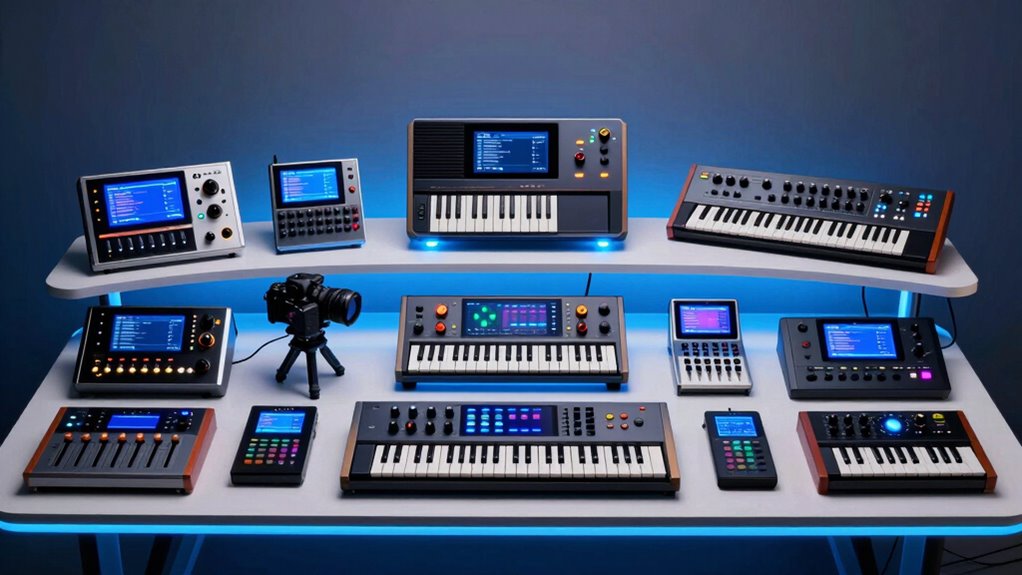

For anyone exploring the world of sound creation, synthesizers offer a versatile gateway into music production and sound design. The best models balance power, usability, and build quality, but choices can be daunting—especially with so many options catering to different needs. The MOOG Messenger stands out as the top overall pick for its classic analog sound, while the Yamaha MODX M8 offers extensive features for serious musicians. On the other hand, compact options like the Stylophone Pocket Synth excel for portability and fun. Continue reading for a detailed breakdown of each model, helping you find the perfect synth for your needs.

Get baking supplies delivered free with Prime
- Fast, free delivery on millions of items
- Prime Video, Amazon Music and more included
- Member-only deals all year
Complete the kit


Key Takeaways
- The top synthesizers combine versatility with intuitive interfaces, making them suitable for both beginners and pros.
- Analog-sounding models like the MOOG Messenger remain highly valued, despite their higher price point.
- Portability is a key factor, with smaller models offering battery power and built-in speakers for on-the-go use.
- Advanced features such as multiple operators and effects are crucial for experienced users seeking complex sound design capabilities.
- Price range varies widely; budget options tend to prioritize simplicity and portability, while premium models offer extensive customization.
| MOOG Messenger Monophonic Analog Synthesizer |  | Best Overall – Classic Moog Sound with Modern Versatility | Oscillators: Two wavefolding VCOs with sync and FM | Filter: Next-gen ladder filter with resonance and bass compensation | Keys: 32 semi-weighted keys with velocity and aftertouch | VIEW ON AMAZON | See Our Full Breakdown |
| Akai Professional MPK Mini Plus 37-Key USB MIDI Keyboard Controller |  | Best for Performance and Production Flexibility | Number of Keys: 37 | Connectivity: USB, CV/Gate, MIDI I/O | Built-in Sequencer: 64-step with 1 drum and 1 melodic track | VIEW ON AMAZON | See Our Full Breakdown |
| Synthesizer for Absolute Beginners: From Zero to Your First Synth Sounds in 10 Minutes a Day – No Music Reading, No Frustration |  | Best for Beginners – Easy and Frustration-Free Learning | VIEW ON AMAZON | See Our Full Breakdown | |||
| Stylophone The Original Pocket Electronic Synthesizer |  | Best for Retro Sound and Portability | Octaves: 3 | Power: 3 x AA batteries | Size: Less than 12cm wide | VIEW ON AMAZON | See Our Full Breakdown |
| Wireless Portable FM Synthesizer with Built-in Speaker and Battery |  | Best for Creative Sound Design On-the-Go | Number of Operators: 6 | Algorithms: 32 | Preset Sounds: 128 | VIEW ON AMAZON | See Our Full Breakdown |
| Yamaha 88-Key Music Synthesizer MODX M8 |  | Best for Piano Players Who Need Versatility and Authentic Feel | Number of Keys: 88 | Action: Graded Hammer | Sound Engines: 3 (analog, FM, realistic instruments) | VIEW ON AMAZON | See Our Full Breakdown |
| Wireless Portable FM Synthesizer with Built-in Speaker and Battery, 6 Operators, 32 Algorithms, 128 Preset Sounds, TFT Display Screen, 6 Effects, Arpeggiator, 16-Step Sequencer |  | Best for Mobile Creators Who Value Portability and Wide Sound Options | Number of Operators: 6 | Algorithms: 32 | Preset Sounds: 128 | VIEW ON AMAZON | See Our Full Breakdown |
| Bowie Stylophone – Limited Edition Synthesizer |  | Best for Collectors and Fans of Iconic Sound Design | Design: White with embossed Bowie logo | Power: Battery-powered | Modes: 3 modes for synth and bass sounds | VIEW ON AMAZON | See Our Full Breakdown |
More Details on Our Top Picks
MOOG Messenger Monophonic Analog Synthesizer
The MOOG Messenger stands out for its rich, classic analog sound combined with modern features like extensive modulation options and a powerful sequencer. Compared to the Akai MPK Mini Plus, which is more focused on MIDI control, the Messenger delivers true sound synthesis, making it ideal for sound design purists. Its dual wavefolding oscillators and ladder filter provide a warm, organic tone, but this complexity can overwhelm beginners. While the full-sized keys and extensive CV options make it versatile for studio and performance setups, it comes with a higher price tag and a steeper learning curve. This synth is best suited for experienced musicians seeking authentic analog sounds and detailed control.
Pros:- Rich, warm, authentic analog sound with modern enhancements
- Extensive modulation, sequencing, and arpeggiation features
- Full-size keys with expressive controls for nuanced playing
Cons:- Steep learning curve for beginners due to its extensive options
- Requires additional equipment for full setup, increasing complexity and cost
Best for: Professional or semi-professional sound designers and synthesizer enthusiasts who want authentic analog voices and deep modulation capabilities
Not ideal for: Beginners or those seeking portable, simple hardware for quick sound creation, as the setup and features can be intimidating
- Oscillators:Two wavefolding VCOs with sync and FM
- Filter:Next-gen ladder filter with resonance and bass compensation
- Keys:32 semi-weighted keys with velocity and aftertouch
- Sequencer:64-step with generative features
- Connectivity:6 CV patch points, external audio in, MIDI I/O, USB-C
- Envelopes:Two ADSR with velocity responsiveness
Our verdict“This synth is perfect for experienced users craving authentic analog tones and deep, customizable modulation.”
Akai Professional MPK Mini Plus 37-Key USB MIDI Keyboard Controller
The Akai MPK Mini Plus excels as a versatile MIDI controller with a full 37-key range and advanced connectivity, making it a strong choice for producers who want hands-on control. Unlike the Stylophone, which is more about simple sound generation, the MPK Plus integrates seamlessly with DAWs and sound libraries, allowing for complex arrangements. Its 8 RGB MPC pads and 8 assignable knobs enable dynamic performance and sound shaping, while the built-in 64-step sequencer offers immediate music creation without a computer. Despite these strengths, its extensive feature set can be daunting for beginners unfamiliar with MIDI hardware, and some advanced features might require additional software. This pick makes the most sense for intermediate to advanced musicians and producers needing portable, all-in-one control.
Pros:- Full octave range suitable for melodic and harmonic playing
- Multiple connectivity options including USB, CV/Gate, and MIDI I/O
- Integrated pads and knobs for expressive control and performance
- Built-in sequencer for quick music sketching
Cons:- Setup can be complex for users new to MIDI hardware
- Premium features may need additional software for full use
Best for: Musicians and producers seeking a portable, feature-rich MIDI controller for studio or live use
Not ideal for: Absolute beginners or those needing a dedicated standalone synthesizer with built-in sound engine
- Number of Keys:37
- Connectivity:USB, CV/Gate, MIDI I/O
- Built-in Sequencer:64-step with 1 drum and 1 melodic track
- Pads:8 RGB MPC pads
- Rotary Knobs:8 assignable
- Compatibility:Native Kontrol Standard (NKS), works with DAWs
Our verdict“This controller strikes a balance between portability and performance, ideal for experienced producers needing flexible control.”
Synthesizer for Absolute Beginners: From Zero to Your First Synth Sounds in 10 Minutes a Day – No Music Reading, No Frustration
This guide makes creating your first synth sounds straightforward, even if you have no music reading skills. It’s designed to be accessible, offering quick results in just 10 minutes a day, making it perfect for complete newcomers. However, it does not specify hardware details or features, which limits understanding of the actual instrument or software involved. If you’re seeking detailed sound design options or advanced features, this approach might feel too basic. This is a great starting point for those who want to grasp the basics without feeling overwhelmed.
Pros:- Simple, step-by-step approach ideal for complete novices
- Quickly demonstrates how to produce basic synth sounds
- No prior music reading required, making it accessible
Cons:- Lacks detailed specifications or hardware info
- Not suitable for users wanting advanced synthesis features
Best for: Absolute beginners eager to produce synth sounds without prior musical knowledge
Not ideal for: Intermediate or advanced users seeking detailed control or specific hardware features
Our verdict“This guide provides an approachable entry point for absolute beginners eager to start making synth sounds fast.”
Stylophone The Original Pocket Electronic Synthesizer
The Stylophone is iconic for its simple, vintage sound and pocketable design. Its 3-octave range offers limited versatility but delivers a distinctive, retro tone used by famous musicians. The touch-sensitive metal surface makes it easy to play with a stylus, and its compact size allows for on-the-go sound creation. However, the limited octaves restrict performance complexity, and it relies on batteries, which can be inconvenient. The sound may be too basic for advanced musicians, but its simplicity and charm make it a favorite for quick fun or vintage sound experiments. This device is best suited for hobbyists, beginners, or fans of nostalgic electronic sounds.
Pros:- Iconic retro sound used by well-known artists
- Ultra-compact, pocket-sized design
- Easy to play with a stylus and touch surface
- Built-in speaker and headphone jack
Cons:- Limited to only three octaves, restricting range
- Requires batteries, which can run out unexpectedly
- Sound may be too simple for complex compositions
Best for: Casual musicians, hobbyists, or those interested in vintage sound effects in a portable format
Not ideal for: Advanced performers needing a wide range of sounds or detailed editing capabilities
- Octaves:3
- Power:3 x AA batteries
- Size:Less than 12cm wide
- Connectivity:3.5mm stereo input
Our verdict“This synthesizer offers nostalgic charm and portability, perfect for casual play or vintage sound experiments.”
Wireless Portable FM Synthesizer with Built-in Speaker and Battery
The Wireless Portable FM Synthesizer offers a wealth of sound design options in a compact, battery-powered package. Its 6 operators and 128 preset sounds provide a wide palette, while the 32 algorithms and multiple effects enable complex, evolving textures. The built-in speaker and wireless MIDI connectivity make it ideal for spontaneous music creation anywhere, whether on a hike or at a jam session. However, its small 27-key silicone keyboard limits performance complexity, and the TFT display may be too small for detailed editing. Compared with larger, more traditional synths, it sacrifices some performance scope but excels in portability and versatility for quick sound tweaking. This device is best suited for mobile sound explorers and electronic musicians wanting instant access to FM synthesis.
Pros:- Highly portable and battery-powered for outdoor use
- Rich sound options with 128 presets and multiple effects
- Wireless MIDI and USB for seamless integration
- User-friendly with a simple, intuitive interface
Cons:- Limited to 27 silicone keys, restricting complex performance
- Small display can make detailed editing challenging
- Built-in speaker may not satisfy professional audio needs
Best for: Electronic musicians and sound designers seeking a portable, feature-rich FM synth with MIDI connectivity
Not ideal for: Players needing a full-sized keyboard for complex live performances or detailed editing
- Number of Operators:6
- Algorithms:32
- Preset Sounds:128
- Built-in Effects:6 (Filter, Reverb, Delay, Distortion, Chorus, Phaser)
- Keys:27 silicone keys
- Display:TFT screen
Our verdict“This FM synthesizer delivers versatile sound design in a portable package, ideal for electronic musicians on the move.”
Yamaha 88-Key Music Synthesizer MODX M8
The Yamaha MODX M8 stands out as the best choice for pianists seeking a synthesizer that closely mimics a real piano while offering diverse sound creation options. Its graded-hammer key action delivers an authentic playing experience, essential for those transitioning from acoustic instruments. Compared with the lightweight, portable Wireless Portable FM Synthesizer, this model sacrifices portability for a more expressive, weighted key feel suited to serious performance and studio work. The multiple sound engines—analog, FM, and realistic instruments—provide a wide palette but come with a steep learning curve due to its extensive features. Its touch screen and physical controls streamline workflow, but beginners might find the interface overwhelming. The premium price reflects its professional-grade features, making it less ideal for entry-level users.
Pros:- Authentic graded-hammer action for realistic piano feel
- Versatile sound engines including analog and FM synthesis
- Intuitive controls with a color touch screen and physical faders
- Lightweight design for portability
Cons:- Complex feature set may require time to learn
- Premium price could be prohibitive for beginners
Best for: Pianists and keyboard players who want a high-quality, expressive instrument for both live performance and studio production.
Not ideal for: Beginners or casual musicians who prefer simple, plug-and-play synthesizers at a lower price point.
- Number of Keys:88
- Action:Graded Hammer
- Sound Engines:3 (analog, FM, realistic instruments)
- Display:Color touch screen
- Performance Controls:8 faders, Super Knob
- Additional Features:Softsynth Plugin (ESP), lightweight design
Our verdict“This synthesizer is ideal for serious players prioritizing expressive, piano-like performance with versatile sound shaping.”
Wireless Portable FM Synthesizer with Built-in Speaker and Battery, 6 Operators, 32 Algorithms, 128 Preset Sounds, TFT Display Screen, 6 Effects, Arpeggiator, 16-Step Sequencer
This portable FM synthesizer offers a compelling blend of mobility and sound versatility, making it a strong choice for musicians who need a compact, all-in-one device. Its built-in speaker and battery operation mean you can perform or experiment anywhere without extra gear, unlike the Yamaha MODX M8, which requires external power and setup. With 128 preset sounds and six effects, it covers a broad sonic spectrum, though the limited 27 keys restricts complex or layered performances. The interface, featuring a TFT display and multiple controls, is designed for quick learning but may challenge complete beginners. Its MIDI connectivity ensures integration into larger setups, but the small keyboard layout may not suit those wanting full-range keyboard playing.
Pros:- Built-in speaker and battery for true portability
- 128 preset sounds with multiple effects for diverse sound design
- Compact, lightweight design with a standard piano layout
- Flexible connectivity including Bluetooth and USB MIDI
Cons:- Limited number of keys restricts performance complexity
- Battery life details are not specified, which could impact usage planning
- Interface might be overwhelming for absolute beginners
Best for: Musicians on the move who want an easy-to-use, portable synth with rich sound options for live or creative jamming.
Not ideal for: Advanced performers requiring full-range keys or complex performance control, as the limited keys and performance features may feel restrictive.
- Number of Operators:6
- Algorithms:32
- Preset Sounds:128
- Built-in Effects:6
- Display:TFT Screen
- Keys:27 silicone keys
Our verdict“This synthesizer excels for mobile musicians seeking a versatile, portable FM synth with simple controls and good sound variety.”
Bowie Stylophone – Limited Edition Synthesizer
The Bowie Stylophone offers a unique, collectible take on synthesizers, inspired by David Bowie’s legendary style. Its compact, battery-powered design makes it ideal for quick jams or display, but it doesn’t match the depth of features found in larger synths like the MODX M8. The three modes for synth and bass sounds are suitable for creating classic analog tones, though they lack the expansive sound engines of more advanced models. Its limited feature set, combined with its special edition status, makes it less practical for serious sound design, but perfect for fans and casual players wanting a distinctive piece. The limited availability could also pose challenges for those wanting to incorporate it into more complex setups.
Pros:- Unique, limited-edition Bowie-inspired design
- Portable and battery-powered for convenience
- Multiple modes for versatile sound creation
- Compact stylus interface for quick control
Cons:- Limited edition status may make it hard to find later
- Basic feature set might not satisfy advanced users
- Limited sonic variety compared to larger synths
Best for: Bowie fans, collectors, and casual musicians looking for a stylish, portable synth with iconic design and simple sound modes.
Not ideal for: Professional musicians or producers needing advanced editing or multiple sound layers, as the basic features won’t satisfy complex workflows.
- Design:White with embossed Bowie logo
- Power:Battery-powered
- Modes:3 modes for synth and bass sounds
- Features:Compact, stylus design
Our verdict“This synth is perfect for Bowie enthusiasts and collectors wanting a stylish, portable piece with simple, iconic sounds.”

How We Picked
Our evaluation focused on performance, build quality, usability, and value. We considered whether each synthesizer offers a distinct sound or features that serve different skill levels and musical goals. Portability, connectivity options, and expandability also played a role, especially for those seeking versatile tools. To rank these options, we balanced technical specifications against user experience, aiming to highlight models that deliver real value and inspire creativity across various budgets and expertise levels.Factors to Consider When Choosing Synthesizers
Choosing the right synthesizer depends on multiple factors that go beyond just features. Understanding your specific needs—whether it’s studio production, live performance, or beginner experimentation—will help narrow your options. Consider how much control and complexity you want, as well as portability and connectivity. Being aware of common pitfalls, like overpaying for unnecessary features or choosing models that don’t match your skill level, can save you time and money. The following sections highlight key considerations to guide your decision-making process.Sound Quality and Tone
Sound quality is at the heart of any synthesizer. Analog models like the MOOG Messenger deliver warm, lush tones that appeal to purists, while digital options can offer a wider palette of sounds and easier editing. Consider whether you prefer classic analog warmth or the flexibility of digital synthesis. Think about the types of sounds you want to create—lead, bass, pads—and choose accordingly. Models with more expressive controls generally produce more dynamic and nuanced tones, making them suitable for professional use.
Ease of Use and Interface
For beginners, an intuitive interface can make all the difference. Look for models with clearly labeled controls, straightforward menus, and minimal setup. Advanced users might prioritize deep editing features and multiple modulation options, but that can come at the cost of complexity. Some synthesizers include built-in tutorials or preset banks that help jumpstart your creativity. Remember, a complicated interface can hinder progress if you’re new to synthesis, so balance features with usability.
Portability and Size
If mobility matters, compact and battery-powered models like the Stylophone or portable FM synths are ideal. These are perfect for live jams, travel, or quick sketching. Larger, keyboard-based synths like the Yamaha MODX provide a more traditional playing experience but are less convenient to carry around. Consider where and how often you’ll use the synthesizer—buying a bulky, studio-only model for mobile use can be frustrating. Conversely, small models may lack extensive controls or sound depth but excel in portability.
Connectivity and Compatibility
Check for features like MIDI, USB, and audio outputs to ensure your synth integrates smoothly with other gear. If you plan to connect to DAWs or external effects, models with comprehensive connectivity options are preferable. Some portable synths include Bluetooth or wireless features, adding convenience for live setups. Compatibility with software and hardware ecosystems can enhance your workflow, making it easier to layer sounds or record directly into your preferred platforms.
Price and Value
Prices range from budget-friendly pocket devices to high-end, feature-rich workstations. Assess what features you genuinely need versus what’s optional—paying extra for complex modulation options might not be worthwhile if you’re just starting out. Look for models that offer a good balance of features and build quality within your budget. Sometimes, spending a bit more yields significantly better sound quality or durability, which can be worth the investment in the long run.
Frequently Asked Questions
Can I use a synthesizer without any music production experience?
Absolutely. Many synthesizers, especially beginner-friendly models, come with preset sounds and simple controls that make it easy to start creating music right away. Devices like the Stylophone or basic digital synths are designed for quick exploration, even if you have no prior experience. As you grow more comfortable, you can gradually explore more advanced features, but initial use can be straightforward and fun without a steep learning curve.
Are analog synthesizers better than digital ones?
This depends on your priorities. Analog synths, like the MOOG Messenger, are prized for their warm, organic sounds and hands-on control, making them favorites for sound designers and purists. Digital synthesizers often provide a broader range of sounds, more complex modulation, and easier access to presets, which appeals to producers seeking versatility. Your choice should align with whether you value authentic vintage tones or a wide sonic palette for experimentation.
Is portability a good reason to choose a smaller synthesizer?
Yes, portability allows you to bring your music setup anywhere, whether for live performances, travel, or spontaneous jam sessions. Compact models like the Stylophone or portable FM synths can run on batteries and fit in a bag, offering convenience without sacrificing too much sound quality. However, smaller devices may lack some advanced controls or sound depth, so consider whether you need portability versus a richer feature set.
What features should I prioritize if I want to perform live?
For live performance, prioritize a synthesizer with robust connectivity, easy-to-access controls, and reliable build quality. Features like an arpeggiator, sequencer, and real-time modulation controls can help you craft dynamic performances. Portability is also key if you plan to move between venues. Additionally, consider models that allow quick sound changes and have battery options if you need to perform unplugged or on the move.
Should I buy a synthesizer with built-in effects?
Built-in effects can add depth and character to your sounds without the need for external gear, which is convenient for both studio and live use. However, they can also increase complexity and cost. If effects are a priority, choose a model that offers high-quality, easily accessible options. For more advanced sound shaping, you might prefer to use external effects or software, but for quick adjustments and added richness, built-in effects can be a valuable feature.
Conclusion
For newcomers seeking an easy entry point, the Synthesizer for Absolute Beginners makes creating sounds straightforward. Serious musicians and sound designers should consider the MOOG Messenger for authentic analog tones or the Yamaha MODX M8 for extensive features. Portable users will appreciate compact models like the Stylophone Pocket Synth or wireless FM options for quick jams. Budget-conscious buyers should look for models offering the best balance of features and affordability, while professionals aiming for maximum control might prefer premium units with advanced modulation and connectivity. Your ideal choice depends on your experience level, performance needs, and budget.
As an affiliate, we earn on qualifying purchases.Halloween Picks
halloween