
When comparing die-cast versus stamped plates, you’ll notice that die-cast offers highly precise and intricate designs thanks to its manufacturing process, resulting in smoother surfaces and better durability. Stamped plates, on the other hand, are quicker and cheaper to produce but may show variations and less durability over time. To truly understand which build quality suits your needs, explore the details behind each method’s strengths and weaknesses further.
Key Takeaways
- Die-cast plates offer higher manufacturing precision, resulting in tighter tolerances and intricate detailing.
- The dense, durable metals used in die-casting provide superior strength and resistance to deformation.
- Surface finishes on die-cast plates are smoother with fewer imperfections compared to stamped alternatives.
- Stamped plates are more cost-effective but often have less consistent quality and thinner material integrity.
- Die-cast plates generally have better long-term reliability under stress and harsh conditions.
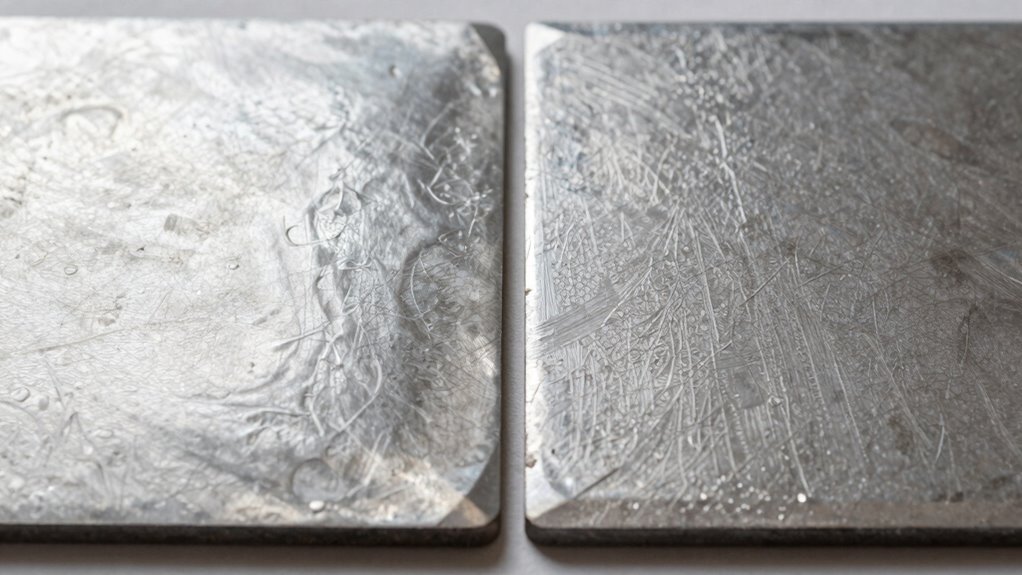
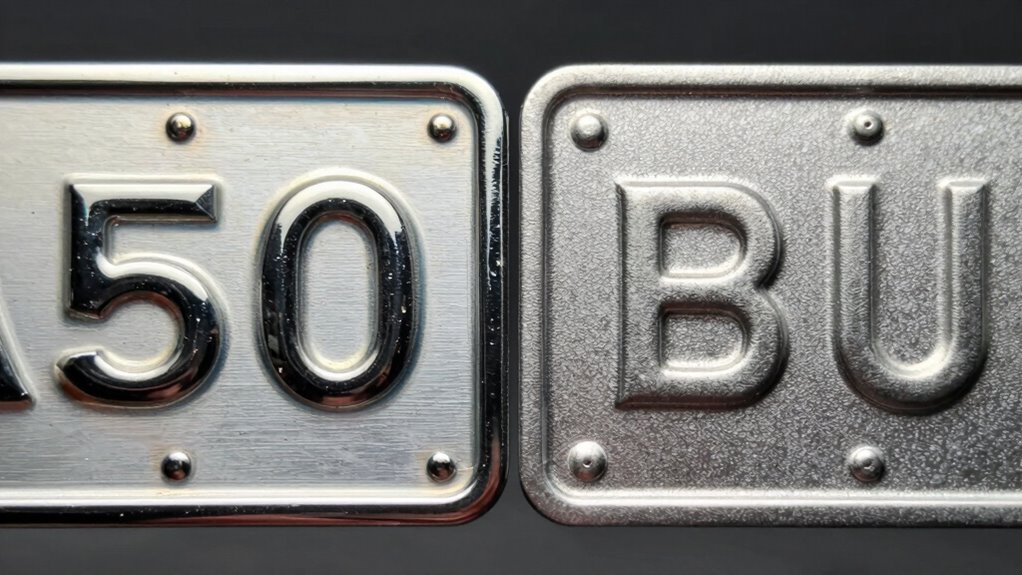
When choosing between die-cast and stamped plates, understanding their build quality is essential because it directly impacts durability, performance, and overall value. The core difference lies in manufacturing precision and material durability. Die-cast plates are produced through a process where molten metal is poured into a high-precision mold, resulting in parts with complex shapes and tight tolerances. This manufacturing precision ensures that each die-cast plate maintains consistent quality, with minimal variations that could compromise strength or fit. Because of this, die-cast plates often have smoother surfaces and more intricate detailing, which can be beneficial for applications requiring precise dimensions and aesthetics.
Material durability also plays a significant role. The metals used in die-casting, such as zinc, aluminum, or magnesium alloys, are selected for their strength and resistance to corrosion. This makes die-cast plates highly durable, especially in environments where they face mechanical stress or exposure to elements. The casting process creates dense, solid parts with fewer weak points, providing a longer lifespan and better performance under load. Additionally, the design flexibility of die-casting allows engineers to optimize the structure for strength, reducing the risk of breakage or deformation over time. Furthermore, the manufacturing precision of die-cast plates often results in better surface finish and more detailed features, enhancing both functionality and appearance.
In contrast, stamped plates are made by cutting or pressing sheet metal into specific shapes using dies and presses. This process is generally less precise than die-casting, often resulting in slight variations in thickness and edges. While stamping is quicker and more cost-effective for large quantities, the manufacturing precision it offers is limited compared to die-cast methods. The material durability of stamped plates depends heavily on the type of sheet metal used. Thinner or softer metals may be more prone to bending, cracking, or wearing down over time, especially if subjected to repeated stress or harsh conditions. However, stamped plates can be reinforced or coated to enhance their durability, though this adds to manufacturing complexity and cost.
Frequently Asked Questions
How Does Corrosion Resistance Vary Between Die-Cast and Stamped Plates?
You’ll find that die-cast plates generally offer better corrosion resistance because they often use coating techniques like anodizing or powder coating, which protect against rust. Stamped plates, however, depend heavily on material compatibility; if made from corrosion-prone metals, they’ll corrode faster. Proper coating application and selecting compatible materials are key to ensuring both types resist corrosion effectively over time.
What Environmental Factors Impact the Durability of Each Plate Type?
Imagine your plates exposed to rain, humidity, or salty air—these environmental factors can weaken their durability. Die-cast plates, with their smoother surfaces, often require more coating to prevent corrosion, while stamped plates may face installation challenges due to uneven edges. Both types need proper protection and handling to withstand environmental stressors, ensuring long-lasting performance despite the varying conditions they face daily.
Are There Specific Industries Better Suited for Die-Cast or Stamped Plates?
You’ll find die-cast plates excel in automotive applications because of their complex shapes and consistent quality, making them ideal for intricate parts. Stamped plates suit aerospace components better, especially where lightweight, high-strength materials are needed. Their quick, cost-effective production benefits industries requiring large quantities. So, choose die-cast for detailed, durable parts in cars, and stamped for large-scale aerospace parts where speed and weight reduction matter most.
How Does Manufacturing Precision Influence Overall Build Quality?
Imagine the smooth glide of a finely tuned machine—manufacturing precision directly shapes your product’s durability and appearance. When manufacturing consistency soars, the finished plates boast flawless finishing quality, fitting perfectly and resisting wear. Precise manufacturing reduces imperfections, ensuring each piece meets strict standards. You’ll notice the difference in longevity and aesthetic appeal, making high-precision processes essential for top-tier build quality in die-cast or stamped plates.
Can Repair or Reconditioning Extend the Lifespan of Either Plate Type?
Yes, repair or reconditioning can extend the lifespan of both die-cast and stamped plates. You should focus on coating enhancements to prevent corrosion and incorporate design improvements that strengthen weak points. Regular maintenance helps catch issues early, ensuring your plates stay functional longer. By applying these strategies, you maximize durability, reduce replacement costs, and maintain peak performance over time for both types of plates.
Conclusion
When choosing between die-cast and stamped plates, remember that build quality matters more than appearance. Die-cast offers durability and strength, stamped plates provide flexibility and lightness. Both have their strengths, but your decision should focus on what you value most—strength or flexibility. Consider your needs carefully, weigh your options wisely, and choose confidently. Because in the end, quality builds trust, durability ensures longevity, and the right choice makes all the difference.