To prevent accidents, choosing the right cord length and placing outlets thoughtfully is essential. Short cords can limit appliance placement and cause stretching, increasing the risk of pulling plugs or damage. On the other hand, overly long cords can create clutter or tripping hazards if not managed properly. Ensuring outlets are near high-use areas and using organizers can help keep your space safe and efficient. Discover more tips to enhance your kitchen’s safety and layout next.
Key Takeaways
- Proper outlet placement near key work areas minimizes cord stretching and reduces tripping hazards.
- Choosing appropriate cord lengths prevents outlet crowding and keeps counters tidy.
- Using cord organizers or clips maintains excess length safely, avoiding tangles and damage.
- Ensuring cords are not stretched tight or hanging loosely reduces electrical and trip risks.
- Balancing cord length with appliance placement enhances safety and improves overall kitchen organization.
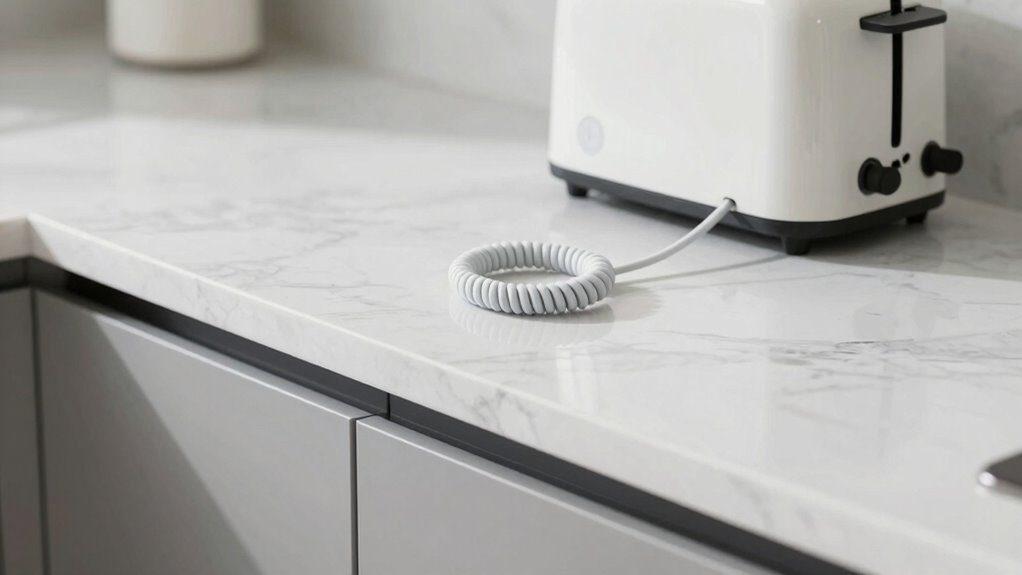
Have you ever wondered how cord length influences your kitchen’s counter layout? It’s a small detail that can make a big difference in both convenience and safety. The length of your appliance cords affects where you place your devices and how you arrange your workspace. If cords are too short, you might find yourself stretching or crowding outlets, which can lead to accidents or damage to appliances. Conversely, overly long cords can create clutter, increase tripping hazards, and make your kitchen look untidy. Striking the right balance is key to creating a functional and safe environment.
One of the most critical factors to consider is power outlet placement. Proper outlet positioning allows you to plug in appliances without stretching cords across busy walkways or over counters. Ideally, outlets should be situated near the areas where you use your appliances most often—near the sink, stove, or prep stations. This minimizes the need for long cords, reducing strain on the outlets and preventing cords from dangling dangerously. When outlets are thoughtfully placed, you can maintain a clean, organized counter layout that’s both practical and safe.
Proper outlet placement keeps cords short, safe, and your kitchen organized.
Appliance safety hinges on managing cord length effectively. Short cords might limit your appliance placement options, forcing you to position devices close to outlets that aren’t ideally located. This can lead to overextension, which stresses the cord and increases the risk of electrical faults or short circuits. On the other hand, excessively long cords can tangle or drape over edges, creating tripping hazards or accidental pulls that might cause appliances to fall or break. To prevent these issues, use cord organizers or clips to keep excess length tucked away neatly, and avoid looping cords tightly, which can damage the wiring over time.
Another aspect to consider is the type of appliances you use. High-powered kitchen gadgets, like blenders or mixers, often require stable, close-to-outlet connections to ensure safety and efficiency. For these devices, using cords of appropriate length helps prevent accidental disconnection or overloads. For smaller or portable appliances, longer cords might be acceptable, but always ensure they aren’t stretched tight or hanging loosely where they could be caught or tripped over.
In essence, paying attention to cord length and its relationship with power outlet placement directly impacts your kitchen’s safety and functionality. By thoughtfully arranging outlets and managing cords, you reduce the risk of accidents, protect your appliances, and create a more organized space. Additionally, incorporating modern kitchen technology solutions such as built-in electrical outlets or retractable cords can further enhance safety and convenience. Remember, the goal isn’t just aesthetic; it’s about making your kitchen a safe, efficient environment where you can cook and prep with confidence.
Frequently Asked Questions
How Do I Measure the Correct Cord Length for My Appliances?
To gauge the correct cord length for your appliances, first determine where you want the appliance to sit. Keep in mind proper cord management to avoid clutter and hazards. Measure from the outlet to the appliance’s plug, adding a little extra for flexibility. This ensures proper appliance placement without overstretching cords, reducing the risk of accidents. Always choose a cord length that allows safe movement and easy access for daily use.
What Are the Best Counter Layouts for Preventing Cord Accidents?
Imagine placing your appliances along one wall, leaving enough space behind for cord management. To prevent accidents, prioritize layouts that keep cords away from walkways and hot surfaces, and follow safety protocols like securing cords with clips or ties. This setup minimizes tripping hazards and reduces strain on cords, creating a safer environment. Always plan your counter layout with safety in mind to prevent potential accidents before they happen.
Can Adjustable Cords Enhance Kitchen Safety?
Yes, adjustable cords can enhance kitchen safety by improving cord management. They let you tailor the cord length to keep appliances close to outlets, reducing tripping hazards and the risk of accidents. When you use adjustable cords, you maintain better appliance safety, preventing cords from tangling or pulling appliances off counters. This small adjustment makes a significant difference in creating a safer, more organized kitchen environment where accidents are less likely to happen.
Are There Specific Regulations for Cord Lengths in Commercial Kitchens?
You should know that commercial kitchens follow strict cord regulations and safety standards to keep everyone safe. These guidelines specify appropriate cord lengths to prevent accidents and ensure efficient workspaces. Staying compliant with these regulations guarantees risks and promotes a safer environment. It’s essential to regularly review and adhere to local codes and industry standards, so your kitchen operates smoothly without unnecessary hazards.
How Often Should I Inspect Appliance Cords for Safety?
You should inspect appliance cords weekly for safety. Check the cord material for signs of wear, fraying, or damage, and confirm it matches the appliance’s compatibility requirements. Look for cracks, exposed wires, or loose connections. Regular inspections help prevent electrical hazards and accidents. If you notice any issues, replace the cord immediately or have a professional evaluate it, ensuring your kitchen remains safe and compliant with safety standards.
Conclusion
To prevent potential problems, pay precise attention to cord length and counter layout. Keep cords close, counters clear, and cuts carefully considered. By balancing and benchmarking these small, simple strategies, you create a safer space and smooth surroundings. Remember, minimizing mess and maximizing mindfulness makes managing cords manageable. Mastering these minor, mindful modifications transforms your space into a safer, smarter sanctuary—saving you from slips, spills, and serious setbacks. Small steps make significant safety strides.