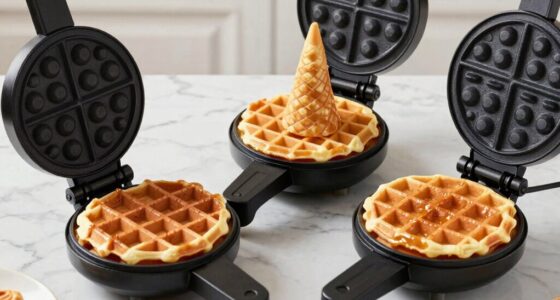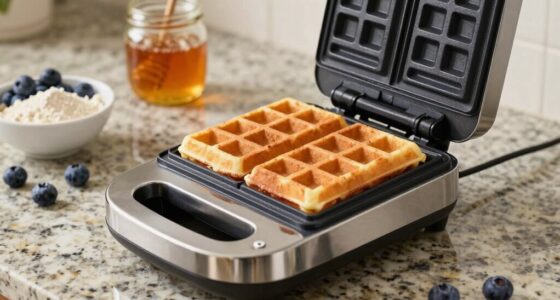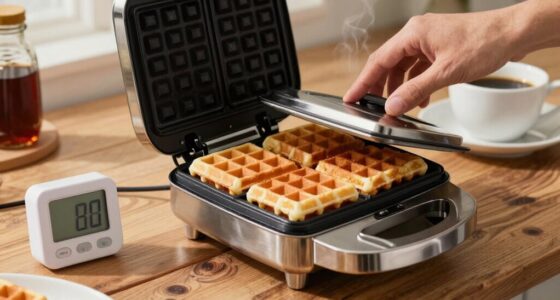
Your plate’s material impacts how your food browns, releases, and cleans up. Ceramic or stoneware distributes heat evenly for better browning, while metal heats quickly but can cause uneven cooking if not monitored. Non-stick coatings make release and cleanup easier, but porous materials may stain and require more effort. Oven-safe ceramics withstand high temperatures, unlike plastics or coated metals. Understanding these strengths and limitations helps you cook better and clean faster—discover more tips as you explore these details further.

Get baking supplies delivered free with Prime
- Fast, free delivery on millions of items
- Prime Video, Amazon Music and more included
- Member-only deals all year
Key Takeaways
- Ceramic and stoneware plates promote even heat distribution, resulting in consistent browning during cooking.
- Non-stick coatings facilitate easy food release and simplify cleanup after cooking.
- Metal plates like aluminum heat quickly, enabling rapid browning but may cause uneven results without careful monitoring.
- Porous materials, such as unglazed ceramic, can stain and absorb odors, making cleaning more challenging.
- Oven-safe materials like certain ceramics and glass ensure safe baking and roasting without warping or damaging.

Have you ever wondered how the material of your plate influences your cooking results? The choice of plate material plays a vital role in how your food browns, releases, and cleans up afterward. When it comes to browning, some materials promote better heat transfer than others. For example, ceramic or stoneware plates tend to distribute heat evenly, helping your food develop a beautiful, consistent crust. On the other hand, metal plates—like aluminum or stainless steel—can heat up quickly and transfer heat efficiently, resulting in more rapid browning. However, this rapid heat transfer can sometimes lead to uneven cooking if not monitored carefully.
The material of your plate also impacts release—how easily food comes off after cooking. Non-stick surfaces, often made from coated metals or silicone, excel at releasing food effortlessly, reducing the need for extra oil or butter. These plates make cleanup a breeze, especially when dealing with sticky or delicate items. Conversely, unglazed ceramic or stoneware plates may require a bit more effort to release food, especially if not properly seasoned or if food sticks due to insufficient greasing. Proper seasoning techniques can improve food release and reduce cleanup time. Additionally, choosing the right surface coating can further enhance ease of release and longevity of your plates. The choice of plate material influences not just the ease of release but also how well your food retains its shape and presentation.
Oven safety is another key consideration tied to your plate material. Some materials, like glass or certain ceramics, are designed to withstand high oven temperatures, making them suitable for baking or roasting. Others, such as plastic or certain coated metals, may not be oven-safe and could warp, melt, or release harmful chemicals if exposed to heat. When selecting plates for oven use, always check the manufacturer’s guidelines to verify material durability and safety. Using oven-safe plates prevents accidents, hot spots, and potential damage to your cookware, ensuring you cook safely and effectively.
Cleanup is another factor heavily influenced by what your plate is made of. Porous materials, like unglazed ceramic, can stain or absorb odors over time, making cleaning more challenging. Non-porous materials, such as glazed ceramics or metals, resist stains and are easier to sanitize. Non-stick surfaces also simplify cleanup, because food residue often slides right off. If you’re dealing with baked-on messes, choosing a durable, non-porous, and oven-safe plate can save you time and effort in the long run. Additionally, understanding the porosity of your plate material can help you select the best cleaning method to maintain its condition over time. Regular maintenance and appropriate cleaning techniques will extend the lifespan of your plates and keep them looking their best.
Ultimately, your choice of plate material affects your cooking results from browning and release to safety and cleanup. By understanding the strengths and limitations of each material, you can select the right plates for your culinary needs, making every meal better and safer to prepare.
As an affiliate, we earn on qualifying purchases.
Frequently Asked Questions
How Do Different Plate Materials Impact Heat Distribution?
Different plate materials impact heat distribution based on their heat conductivity. For example, cast iron offers excellent heat retention and even distribution, ensuring consistent cooking. Aluminum heats quickly and spreads heat evenly, making it great for precise control. Copper provides superior heat conductivity but requires more maintenance. Your choice influences how evenly your food cooks, how long the plate lasts, and how easy it is to clean afterward, depending on the material’s longevity.
Are Certain Materials More Durable Over Time?
Certain materials, like cast iron and stainless steel, tend to be more durable over time. You’ll find that non-stick coatings on these materials often wear down faster, especially with frequent use. Good heat conduction enhances longevity, but it’s essential to care for your cookware properly. So, if you want a resilient, long-lasting piece, choose durable materials with strong heat conduction, and handle them gently to prevent damage to non-stick coatings.
What Are the Safety Considerations for Various Plate Types?
You should prioritize safety considerations based on your plate type. Non-stick coatings can emit fumes if overheated, so avoid heating empty pans excessively. Materials with high thermal conductivity, like aluminum, heat quickly but require careful handling to prevent burns. Confirm your plates are free from harmful chemicals, and always follow manufacturer instructions for safe use and cleaning. Proper care minimizes risks and keeps your cooking process safe and enjoyable.
How Do Cleaning Methods Vary Between Materials?
You should choose cleaning agents based on your plate material to avoid damage. For non-stick or coated surfaces, use gentle cleaners and soft cloths to prevent scratching. For stubborn stains on metal plates, stronger cleaners or scrubbing may be necessary, but be cautious to prevent surface damage. Always follow manufacturer instructions, and avoid abrasive tools that could harm the plate, making cleanup safer and more effective.
Can Plate Material Affect Food Flavor?
You might find it funny, but your plate material can indeed influence food flavor. While you expect flavor retention, some materials leach tiny amounts of substances, subtly altering taste. Iron or aluminum pans, for instance, can impart a metallic flavor, especially with acidic foods. So, ironically, the very material designed to cook or serve can compromise flavor, reminding you to choose your dishes wisely to avoid unwanted taste surprises.
Conclusion
Choosing the right plate material can considerably influence your cooking results, affecting browning, food release, and cleanup ease. For instance, non-stick surfaces reduce sticking by up to 90%, making cleanup effortless and ensuring even browning. Understanding these differences helps you select the perfect plate for your dishes, saving time and effort. Next time you cook, consider how your plate material can elevate your meal, and enjoy the benefits of ideal cooking performance and less hassle afterward.
Halloween Picks
halloween
As an affiliate, we earn on qualifying purchases.