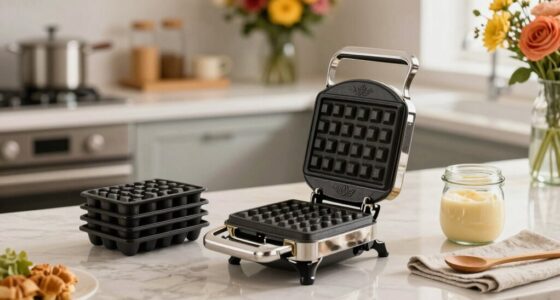
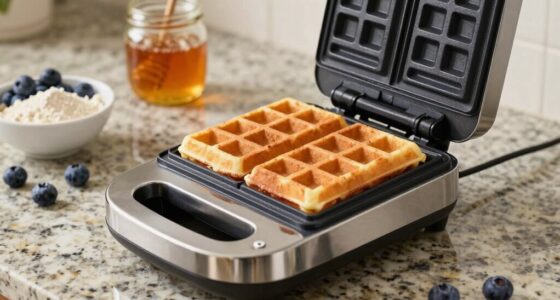
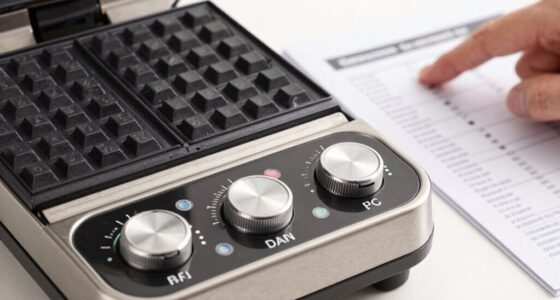
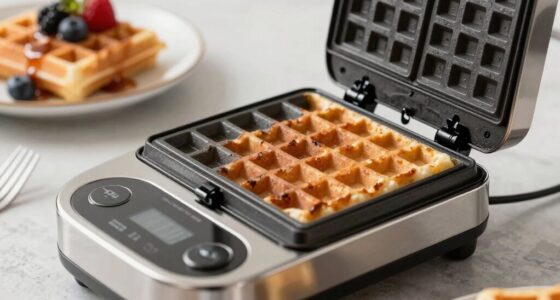
Having a high wattage waffle iron may seem like it guarantees perfect waffles, but that’s not always true. Faster heating doesn’t mean better results if the machine lacks proper heat regulation. In fact, rapid heat swings can cause uneven cooking and burnt spots. Focus on models that offer consistent temperature control and even heat distribution for the best texture and crispness. Keep going to discover how choosing the right features can help you make better waffles every time.

Get baking supplies delivered free — and shop member deals
- Fast, free delivery on millions of items
- Access to Prime Big Deal Days deals on October 6–7
- Prime Video, Amazon Music and more included
Key Takeaways
- Higher wattage heats up faster but doesn’t ensure even cooking or better waffle quality.
- Consistent temperature control is more crucial than wattage for achieving perfect texture.
- Good heat regulation prevents temperature fluctuations, resulting in crisp exterior and fluffy interior.
- Material quality and heat distribution technology impact performance more than wattage alone.
- Moderate wattage with efficient heat regulation often yields better, more consistent waffles.

Many people assume that a waffle iron with a higher wattage will produce better, more evenly cooked waffles, but that’s not always the case. While higher wattage can mean faster heating times, it doesn’t automatically translate to superior waffle texture or overall quality. In fact, focusing solely on wattage can lead you to overlook other critical factors that influence your waffle-making experience. For example, a waffle iron’s ability to maintain a consistent temperature throughout the cooking process is far more important than just having a high wattage. Inconsistent heat can cause waffles to be unevenly cooked—some parts overdone, others undercooked—regardless of how powerful the heating element is.
High wattage doesn’t guarantee perfect waffles; consistent temperature control is key for even cooking and better texture.
When it comes to waffle texture, you want a device that provides stable, even heat to achieve a crisp exterior and a fluffy interior. A high-wattage iron might heat up quickly but can also lead to rapid temperature fluctuations if it isn’t well-designed or if it lacks good temperature regulation. This inconsistency affects the waffle’s texture, making it either too dry or too soggy. Conversely, a waffle iron with moderate wattage, combined with excellent temperature control, can produce waffles with a more desirable texture because it cooks the batter evenly over time, preventing burning or undercooking. Additionally, understanding how heat distribution works in your waffle iron can help you choose a model that delivers consistent results every time. Proper temperature regulation is crucial for achieving the perfect waffle, regardless of wattage.
Another factor to consider is the importance of material quality in a waffle iron, as it impacts heat retention and durability, ultimately influencing cooking performance. Proper energy efficiency is another important aspect to think about. High wattage doesn’t necessarily mean your waffle iron is more energy-efficient. In fact, a higher wattage device can consume more power without offering proportional benefits in cooking performance. This can lead to higher electricity bills and unnecessary energy waste. A well-designed waffle iron that uses moderate wattage effectively can heat up quickly and maintain consistent cooking temperatures while consuming less energy. Such models are better for the environment and your wallet, especially if you enjoy making waffles frequently.
Ultimately, the key isn’t just how much power a waffle iron uses but how well it uses that power. Look for a model that offers precise temperature regulation and even heat distribution rather than simply opting for the highest wattage. When selecting a waffle iron, considering heat regulation technologies can greatly improve your cooking results. This approach ensures you get the waffle texture you desire—crisp on the outside and tender inside—without wasting energy or risking uneven cooking. Remember, a smarter, more balanced choice will serve you better than one that’s just focused on wattage.
best waffle iron with temperature control
As an affiliate, we earn on qualifying purchases.
As an affiliate, we earn on qualifying purchases.
Frequently Asked Questions
Can a Lower Wattage Waffle Maker Still Produce Perfect Waffles?
A lower wattage waffle maker can still produce perfect waffles if you pay attention to the right factors. You need to guarantee your waffle batter is well-mixed and not too thick, which helps it cook evenly. Also, give the waffle maker enough time to heat up properly. With patience and proper technique, you can achieve a desirable waffle texture, even with a less powerful appliance.
How Does Waffle Thickness Affect Cooking Performance?
Think of waffle thickness as a story’s plot—thicker waffles need more time to reveal their delicious layers. When your waffles are dense, you must adjust batter consistency and cooking time to avoid undercooking or burning. Thinner waffles crisp up quickly, but thicker ones require patience. So, by controlling waffle density, you guarantee even cooking, letting your batter’s true character shine through while achieving perfect, fluffy interiors and crispy exteriors.
Does Non-Stick Coating Influence Waffle Crispiness?
Yes, a non-stick coating can influence waffle crispiness, but it depends on its durability and how well you maintain it. A high-quality non-stick surface promotes even heat distribution, helping achieve crispiness, but if the coating wears out or gets damaged, it can stick and prevent proper crisping. Proper coating upkeep, like gentle cleaning and avoiding metal tools, ensures your waffle maker stays effective, resulting in crisp, delicious waffles.
Are There Specific Waffle Recipes Better Suited for Certain Wattages?
Yes, certain waffle recipes work better with specific wattages. For example, recipes with a thicker batter and richer flavors benefit from higher wattages, which guarantee even cooking and crispiness. If your waffle flavor includes mix-ins like fruits or nuts, a lower wattage might prevent burning and preserve texture. Adjust your batter consistency accordingly, balancing moisture and density, to optimize results with your waffle maker’s wattage.
How Important Is Temperature Control Over Wattage?
Temperature control is more important than wattage because it affects your waffle’s quality. You want consistent heat distribution and energy efficiency, which guarantee evenly cooked waffles without burning. Wattage alone doesn’t assure precise temperature management. A waffle iron with good temperature control lets you fine-tune heat levels, resulting in better texture and taste. So, prioritize models that offer accurate temperature settings for ideal waffles every time.
Conclusion
So, next time you’re choosing a waffle maker, remember that higher wattage isn’t the only thing that matters. Sometimes, it’s the subtle details—like your batter’s consistency or the evenness of the heat—that truly make a difference. It’s funny how, in life and waffles, the most obvious choices aren’t always the best. Trust your instincts and pay attention to the little things; often, they lead to the most satisfying results—just like a perfect, golden waffle.
Fall Picks
fall essentials
As an affiliate, we earn on qualifying purchases.