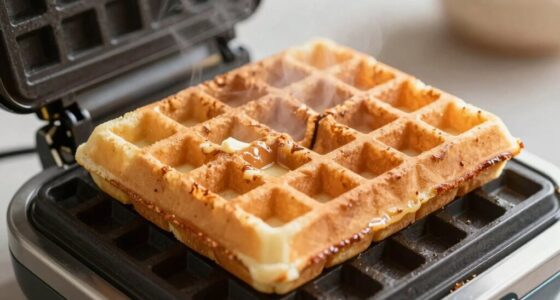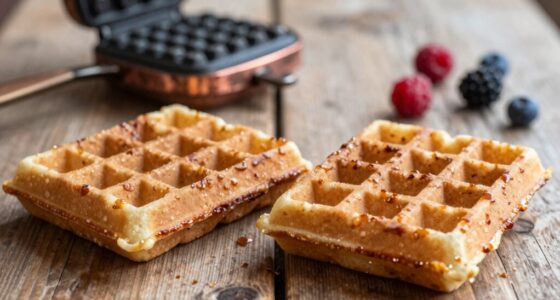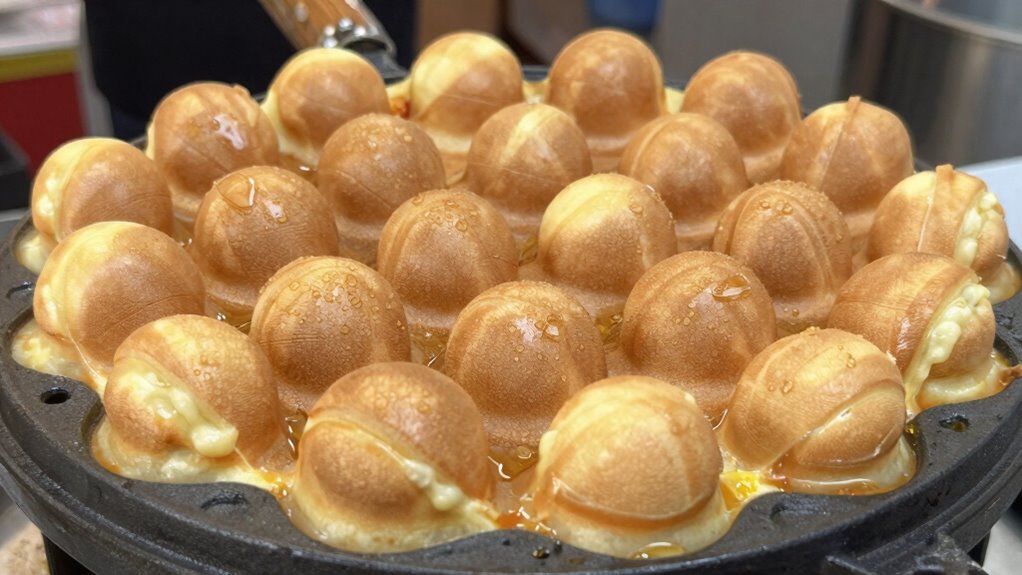

To help bubble waffles release cleanly, focus on applying a thin, even layer of oil or butter to all the bubble crevices and edges before pouring batter. Use a brush or paper towel to target those tricky spots, ensuring a proper greasing pattern. Avoid over-greasing, which can cause uneven browning. Perfecting this technique, along with batter consistency and temperature control, makes peeling effortless—continue to explore these tips for the best results.

Get baking supplies delivered free with Prime
- Fast, free delivery on millions of items
- Prime Video, Amazon Music and more included
- Member-only deals all year
Key Takeaways
- Apply a light, even coat of oil or butter to all bubble cavities and edges before pouring batter.
- Focus on greasing the crevices and corners to prevent batter from sticking during cooking.
- Use a brush or paper towel to distribute the greasing evenly for consistent non-stick results.
- Avoid over-greasing, which can cause uneven browning and greasiness, making removal harder.
- Reapply a thin layer of grease between batches to maintain a smooth, non-stick surface for clean releases.

Bubble waffles are a popular treat, but peeling them off the waffle iron can often be a messy hassle. If you want clean releases every time, paying attention to your waffle batter consistency and pan temperature control is essential. When your batter is too runny or too thick, it can cause sticking or uneven cooking, making it harder to peel the waffle away smoothly. Aim for a batter that’s slightly thicker than pancake batter but still pourable—this helps it spread evenly and fill the bubble molds without overflowing or leaving gaps. Consistent batter texture ensures the bubbles cook uniformly, reducing the risk of sticking when you lift the waffle off the iron.
Pan temperature control plays a key role in achieving a clean release. If the waffle iron is too hot, the batter will cook too quickly on the outside, forming a crust that sticks to the plates. On the other hand, if it’s too cool, the batter won’t set properly, and the waffle can become sticky or undercooked, making removal difficult. Ideally, you want to preheat your waffle iron to the right temperature—usually medium heat—so the batter cooks evenly, creating a non-stick surface. Many modern waffle makers have adjustable temperature controls; use these to find the sweet spot for your specific appliance.
A key trick to facilitate easy removal is to apply a consistent, light greasing pattern. Instead of randomly smearing oil or butter, use a brush or a paper towel to coat the waffle iron’s surface evenly, focusing on the edges and in the bubbles’ crevices. This pattern of light, even greasing creates a barrier that prevents the batter from sticking excessively, helping the waffle release cleanly once it’s cooked. Be sure not to over-grease, as excess oil can lead to uneven browning or a greasy waffle.
When you pour the batter, do so carefully, filling each bubble cavity about three-quarters full. This prevents overflow and ensures the batter reaches all the nooks without spilling over the edges, which can cause sticking and mess. As the waffle cooks, avoid opening the lid too early; wait until the bubbles are crisp and golden. This wait ensures the waffle has properly set and is less likely to stick when you lift it.
Mastering these techniques—maintaining the right waffle batter consistency, controlling pan temperature, and applying a strategic greasing pattern—will dramatically improve your waffle release experience. With practice, peeling off your bubble waffles will become a quick, clean process, letting you enjoy your delicious creation without the frustration of sticking or mess. Additionally, using a non-stick coating on your waffle iron can further enhance the ease of release and reduce cleanup time.
non-stick waffle iron greasing brush
As an affiliate, we earn on qualifying purchases.
As an affiliate, we earn on qualifying purchases.
Frequently Asked Questions
Can I Reuse the Greasing Pattern for Different Waffle Recipes?
Yes, you can reuse the greasing pattern for different waffle recipes, but keep in mind that the greasing consistency may need adjustment. Different recipes might require a slightly altered pattern to prevent sticking or excess residue. Experiment with pattern customization based on the batter’s texture and oil type. Regularly check and tweak your greasing approach to guarantee each waffle releases cleanly, regardless of the recipe variations.
What Type of Oil or Fat Is Best for Greasing?
Imagine you’re in a 1920s speakeasy, but instead of jazz, you’re perfecting waffle tricks. The best oil selection depends on your waffle recipe and cooking method. For high heat, choose fats like butter, coconut oil, or vegetable oil—they’re stable and create a non-stick surface. Use a light coating to prevent sticking without excess greasing. Remember, the right fat type guarantees easy release and crispy waffles every time.
How Long Should I Let the Waffle Cool Before Removing?
You should let your waffle cool for about 2 to 3 minutes before removing it. This cooling time allows the waffle to firm up, making waffle removal easier and preventing tearing. Rushing to remove it too early can cause sticking or breakage. Use a gentle, steady motion to lift the waffle once the cooling time has passed, ensuring clean release and perfect texture.
Does the Greasing Pattern Affect the Waffle’s Texture?
Yes, the greasing technique directly influences the waffle’s texture. Properly applying the right pattern guarantees the batter releases easily, preventing sticking and tearing. If you use too much grease, your waffle might become greasy and lose crispness; too little, and it could stick or break apart. Experiment with your greasing pattern to find the perfect balance, resulting in waffles that are crispy on the outside and tender inside.
Can This Greasing Technique Prevent Sticking With Gluten-Free Batter?
This greasing technique is your ultimate weapon against gluten-free adhesion! If you follow the pattern carefully, it creates a barrier that prevents sticking, even with tricky batter consistency. Gluten-free batters tend to stick more, but a well-executed greasing pattern guarantees your waffles release perfectly every time. So, yes, this method can totally prevent sticking, making your gluten-free waffle game smoother than ever!
Conclusion
Next time you make bubble waffles, remember the secret trick of the greasing pattern. It’s funny how a simple step can turn a sticky mess into a clean release—almost like it was meant to be. With just the right amount of grease in the perfect spots, your waffles will come out flawless every time. It’s one of those small details that unexpectedly makes all the difference—you might even find it becomes your favorite part of the process.
Halloween Picks
halloween
As an affiliate, we earn on qualifying purchases.