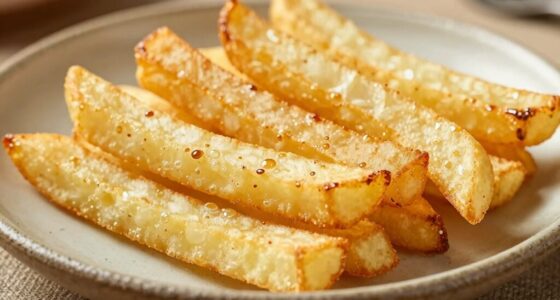

To keep your food crispy, it’s crucial to release leftover steam promptly after cooking. For about five minutes, transfer the food to a wire rack or open the container to air it out, allowing steam to escape and preventing recondensation. This quick ‘steam dump’ stops moisture from soaking back in, helping your dish stay crunchy longer. Mastering this step is key—continue for more tips to maximize lasting crispness.
Key Takeaways
- Immediately removing food from heat and exposing it to cooler air promotes rapid steam escape, preserving crispness.
- Using a wire rack allows airflow around the food, facilitating effective moisture release during the 5-minute ‘steam dump’.
- Opening vented containers or lightly patting the surface helps prevent recondensation, keeping food crispy longer.
- Allowing around five minutes for cooling balances moisture release without overcooling, maintaining optimal texture.
- Proper ‘steam dump’ prevents sogginess, ensures even cooling, and extends the crunch and crispness of cooked foods.
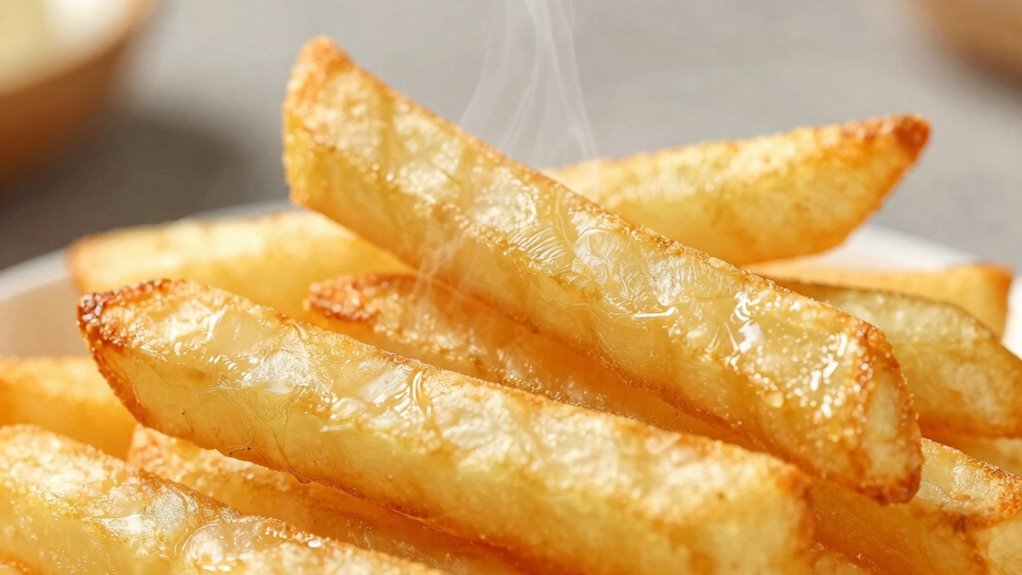
Achieving that perfect crispness after cooking can be a challenge, but understanding how heat, moisture, and cooling methods interact makes it easier. One of the most effective techniques to preserve crispness is the 5-minute ‘steam dump’ step, which revolves around managing moisture and controlling steam reabsorption. When you finish cooking, the residual heat inside your food continues to generate steam, which can settle back into the surface, making it soggy. To prevent this, you need to rapidly release that built-up steam and cool the food quickly, so moisture doesn’t reabsorb into the outer layer.
Releasing steam quickly after cooking helps keep crispy foods from becoming soggy.
The key here is to understand steam reabsorption. When hot food is left to sit covered or in a warm environment, the trapped steam doesn’t escape. Instead, it recondenses and gets absorbed back into the food, leading to a softer, less desirable texture. By implementing a quick cooling step, you interrupt this process. The ‘steam dump’ involves removing the cooked item from heat and exposing it to cooler air, often by placing it on a wire rack or opening a vented container. This allows excess steam to escape rapidly, reducing the chances of moisture reabsorption and helping to lock in that crisp exterior.
Moisture control plays an essential role during this step. If you don’t manage moisture properly, you risk ending up with limp, greasy, or soggy food. To optimize moisture control, you can lightly pat the surface dry with a paper towel after the initial steam escape, removing surface moisture that could turn into steam later. Using a wire rack instead of a flat plate promotes airflow around the entire surface, facilitating even cooling and preventing moisture from settling back onto the food. This technique is especially effective for fried foods, roasted vegetables, or crispy chicken, where crispness is a priority.
Timing is important, but so is technique. You want to give the food enough time to cool and steam to escape—around five minutes usually does the trick—without letting it sit so long that it cools completely and loses its texture. During this brief window, the rapid release of steam and controlled moisture loss ensure the outer layer remains crispy. Remember, the goal is to stop the cooking process quickly while preventing moisture reabsorption. When you master this step, you’ll find your dishes stay crisp longer, and every bite retains that satisfying crunch you’re after.

Decymis Cooling Rack and Baking Rack with Stainless Steel, 2 – Pack 10 x 15 Inches Heavy Duty Cooling Racks for Cooking and Baking, Sturdy Cookie Cooling Rack, Easy to Clean Oven & Dishwasher Safe
𝟏,【𝐏𝐑𝐄𝐌𝐈𝐔𝐌 𝐐𝐔𝐀𝐋𝐈𝐓𝐘】The cooling rack is composed entirely of stainless steel without any harmful coatings. To meet your baking…
As an affiliate, we earn on qualifying purchases.
As an affiliate, we earn on qualifying purchases.
Frequently Asked Questions
Can the Steam Dump Method Be Used for All Types of Foods?
No, the steam dump method isn’t suitable for all food types. It works best for foods where you want to preserve crispness and texture, like vegetables or fried items. For softer or more delicate foods, it might make them soggy or overcooked. Always consider the food type and desired texture preservation before using this technique to achieve the best results.
Does the Steam Dump Technique Work for Both Oven and Stovetop Cooking?
They say, “A chain is only as strong as its weakest link,” and that’s true for the steam dump technique. It works well for stovetop cooking, where you can quickly release steam and crisp up foods. However, with oven versatility, it’s less straightforward, making the stovetop more applicable for this method. You’ll find it easier to control and get crispy results using your stovetop, especially after baking or frying.
How Does the Steam Dump Affect the Overall Cooking Time?
The steam dump slightly increases overall cooking time, but it boosts cooking efficiency by quickening the crisping process. You’ll save time later by avoiding overcooking or uneven textures. The extra five minutes helps lock in crispness and moisture, making your dish more consistent. So, while it adds a small step, the time savings in achieving perfect texture make it worth it, keeping your cooking streamlined and effective.
Is There a Risk of Over-Steaming and Losing Crispness?
Think of the steam dump as a gentle guardian, but over-steaming risks turning your crispness into soggy regret. If you leave it too long, you risk losing that satisfying crunch, like a delicate leaf overexposed to rain. To preserve crispness, keep the steam dump brief—just five minutes—and monitor carefully. This way, you safeguard your dish’s texture, ensuring each bite remains irresistibly crisp and satisfying.
Can This Method Be Combined With Other Crisping Techniques?
Yes, you can combine this method with other crisping techniques to create fusion cooking and enhance flavor. After the steam dump, try broiling, frying, or using a hot pan for extra crispness. This blend preserves the initial crispness while adding new textures and flavors, making your dishes more exciting. Just be mindful not to overcook, and experiment to find the perfect balance for your taste and fusion ideas.

Rubbermaid 16-Piece BPA-Free Plastic Food Storage Set, Red Vented Lids – Microwave, Dishwasher Safe: Perfect for Meal Prep, Leftovers, and Kitchen Organization
Easy Find Vented Lids: Snap onto the container base and same-sized lids, keeping cabinets organized
As an affiliate, we earn on qualifying purchases.
As an affiliate, we earn on qualifying purchases.
Conclusion
Once you’ve finished the ‘steam dump’ step, imagine a gentle breeze sweeping away excess moisture, leaving your food with a satisfying crunch. The crispness you crave stays intact, like the crackling sound of fresh chips or perfectly roasted veggies. It’s a simple trick that transforms your dish from soggy to sensational in just five minutes. Give it a try, and enjoy that irresistible, mouthwatering texture that makes every bite even better.

Scott Paper Towels, Choose-A-Sheet, 6 Double Rolls = 12 Regular Rolls (108 Sheets Per Roll)
WHAT’S INCLUDED — 6 Double Rolls of Scott Paper Towels, 108 sheets per roll (6 double rolls =…
As an affiliate, we earn on qualifying purchases.
As an affiliate, we earn on qualifying purchases.

Spring Chef 10 x 15 Inch Stainless Steel Cooling Rack for Cooking & Baking – Heavy Duty Cookie Cooling Rack for Kitchen – Oven Safe – Fits Jelly Roll Pan – Dishwasher Safe
100% Solid 304 (18/8) Stainless Steel Construction – No metal platings or coatings that can chip or scratch…
As an affiliate, we earn on qualifying purchases.
As an affiliate, we earn on qualifying purchases.