
If you’re comparing waffle food trucks to brick-and-mortar shops, you’ll find that trucks generally have lower overhead costs. You avoid hefty rent, utility bills, and long-term leases with a mobile setup. This means your expenses are more predictable and flexible, especially when it comes to location and seasonal changes. Want to discover how each option impacts your budget and growth? Keep exploring to learn more about making the right choice for your business.
Key Takeaways
- Waffle food trucks typically have lower initial investment and ongoing costs than brick-and-mortar shops.
- Mobile trucks avoid fixed expenses like rent, property taxes, and utilities associated with storefronts.
- Fixed locations incur higher overhead due to rent, utilities, staffing, and long-term lease commitments.
- Mobile vending offers greater flexibility to adapt locations, reducing costs linked to underperforming sites.
- Overall, waffle food trucks generally have lower overhead costs compared to traditional brick-and-mortar businesses.
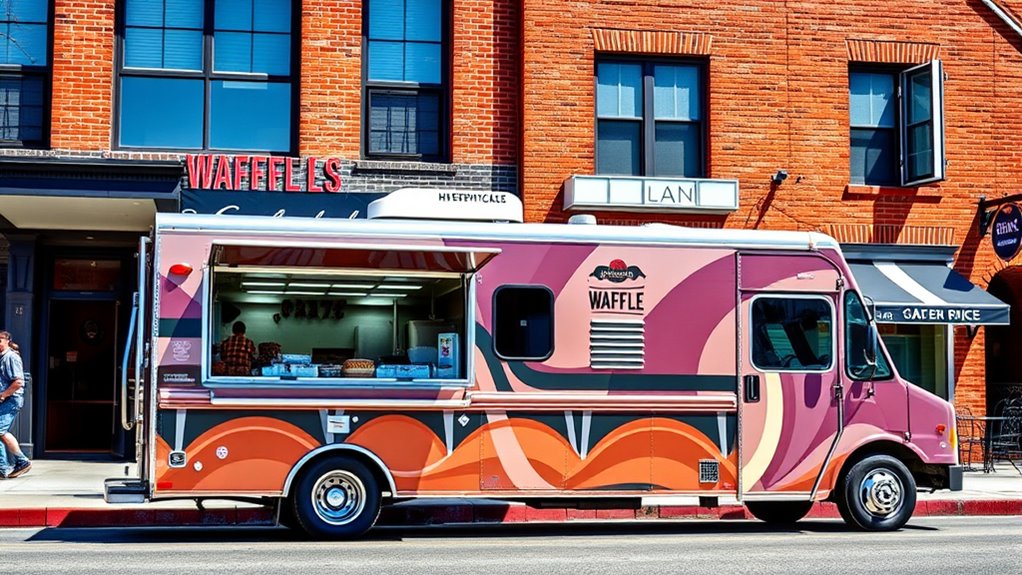
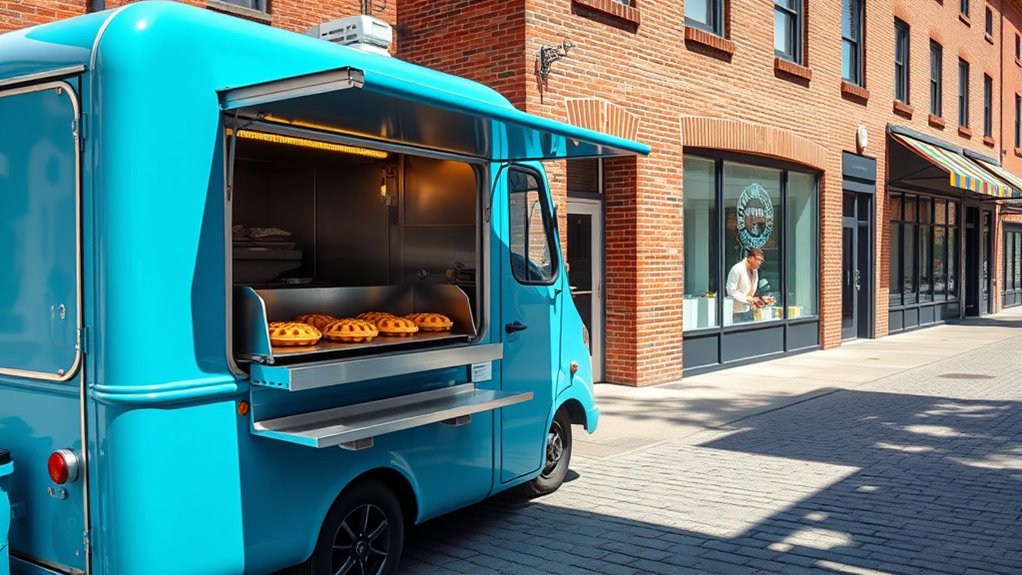
When choosing between waffle food trucks and brick-and-mortar shops, it’s important to contemplate how each option impacts your business and customer experience. One of the key factors to consider is overhead costs, which vary considerably depending on your setup. Mobile vending, such as waffle food trucks, generally comes with lower initial investment and ongoing expenses compared to a fixed location storefront. With a mobile vending setup, you avoid hefty rent, property taxes, and utility bills that come with a traditional brick-and-mortar shop. Instead, you pay for a truck, equipment, permits, and maintenance, which tend to be more manageable and predictable. This flexibility allows you to test different locations, attend events, and target high-foot-traffic areas without the commitment of long-term lease agreements.
On the other hand, a fixed location offers its own set of advantages but usually involves higher overhead. Rent for a storefront can be substantial, especially in popular areas, and utility costs like water, electricity, and internet also add to your expenses. These costs can quickly add up, requiring a steady stream of sales just to cover your fixed costs before turning a profit. Additionally, brick-and-mortar shops often need more staff, which increases payroll expenses and complicates staffing logistics. While a permanent location can attract regular customers and create brand recognition, the financial risk is higher if sales fluctuate or if foot traffic declines.
Mobile vending provides the benefit of adaptability. You can relocate your waffle truck to different neighborhoods, festivals, or busy street corners, optimizing your chances to generate sales without the burden of fixed overhead. If a particular area isn’t performing well, you can pivot without losing a lease or being tied to a specific location. This flexibility can be especially advantageous during economic downturns or seasonal fluctuations, as you can scale your operations up or down more easily. Conversely, a brick-and-mortar shop requires a commitment to one location, making it less responsive to market changes. Although it might bring in consistent foot traffic and establish a local presence, it also means you’re locked into that space regardless of how sales fare. Additionally, understanding regional cultural activities can help you tailor your offerings and marketing strategies to better attract local customers and boost sales.
Ultimately, your choice depends on your business goals, budget, and risk tolerance. Mobile vending offers lower overhead and greater flexibility, making it attractive for entrepreneurs just starting out or testing different markets. Fixed locations can provide stability and a loyal customer base but come with higher financial commitments. Weigh these factors carefully to determine which setup aligns best with your vision for your waffle business.

POPFOODEX Belgian Waffle Maker, 110V Industrial Waffle Maker w/Non-Stick Coating and Adjustable Temperature (122-572°F), 1200W Rotary Commercial Waffle Machine w/Timer, Restaurants and Food Trucks
Easy Release & Quick Cleanu: This flip Waffle Maker is coated with a double-layer of Teflon, ensuring that…
As an affiliate, we earn on qualifying purchases.
As an affiliate, we earn on qualifying purchases.
Frequently Asked Questions
How Do Location Costs Differ Between Trucks and Brick-And-Mortar Shops?
You’ll find that mobile setups like food trucks generally have lower location costs because they don’t require fixed rent, offering you rent flexibility to move to high-traffic areas. Brick-and-mortar shops face higher, often fixed rent costs regardless of sales, making location expenses more predictable but more expensive. With a truck, you can adapt your location based on demand and event schedules, reducing costs and increasing potential profits.
What Are the Staffing Differences in Operational Expenses?
They say “less is more,” and in this case, staffing efficiency makes a difference. Waffle food trucks typically require fewer employees, which lowers employee wages and operational expenses. Brick-and-mortar shops often need a larger team, increasing wages and overhead. You can save by streamlining staffing, focusing on trained, multitasking employees, and avoiding the high costs associated with maintaining a bigger workforce.
How Does Seasonal Variability Impact Overhead Costs?
Seasonal sales and weather impact profoundly influence your overhead costs. During busy seasons, you might see increased sales, helping offset expenses, but in off-peak times, revenue drops and costs like rent or vehicle maintenance still persist. Poor weather can reduce customer traffic, lowering income and straining your budget. Planning for seasonal fluctuations and weather impact helps manage overhead better, ensuring you stay profitable year-round.
What Permits and Licensing Fees Are Unique to Each Setup?
Did you know that mobile vending requires different permits than brick-and-mortar setups? For waffles in trucks, you need specific mobile vending permits and health regulations, which can vary by city. Brick-and-mortar locations often face zoning and building permits. Mobile vendors might also need special licenses for public streets, while brick businesses handle health inspections on-site. Knowing these unique permits helps you plan costs and stay compliant.
How Do Maintenance Costs Compare Over Time?
Maintenance costs for a food truck tend to be lower over time compared to bricks because you mainly handle fleet maintenance and prevent costly repairs through regular upkeep. Vehicle depreciation affects your truck’s resale value but doesn’t substantially add to ongoing costs. With proper care, trucks can last several years, keeping maintenance expenses predictable. In contrast, bricks often have higher long-term costs due to building upkeep, property taxes, and utilities.

Food Truck Mogul: A Business Guide to Your Food Truck Startup
As an affiliate, we earn on qualifying purchases.
As an affiliate, we earn on qualifying purchases.
Conclusion
So, which option truly offers lower overhead? The answer isn’t as clear-cut as it seems. While food trucks might save you initial costs, their unpredictable maintenance and limited space could surprise you later. Bricks, on the other hand, come with steady expenses but stability. The real question is: are you ready to weigh the risks and rewards? Because sometimes, what seems cheaper upfront might hide a bigger cost in disguise. The choice is yours—but only time will tell which path leads to true success.

VEVOR Commercial Waffle Maker, Dual-Head Round Waffle Baker Machine, 2460W Non-Stick Stainless Steel Belgian Waffle Iron with Temp and Time Control, Handle, for Restaurant Bakery Snack Bar Family
Quickly Make Delicious Waffles: Our 2460W high-power round waffle maker can easily produce a 1-inch thick waffle in…
As an affiliate, we earn on qualifying purchases.
As an affiliate, we earn on qualifying purchases.

DNKMOR Dining Cart Table with Three Shelf, Movable Outdoor BBQ Grill Pizza Oven Stand with Three Hooks, Kitchen Cart Island Multifunctional Food Prep Table for Inside and Outside (Black)
【Outdoor Dining Cart】DNKMOR big storage cabinet outdoor dinning cart is made of durable metal. Perfect for placing a…
As an affiliate, we earn on qualifying purchases.
As an affiliate, we earn on qualifying purchases.