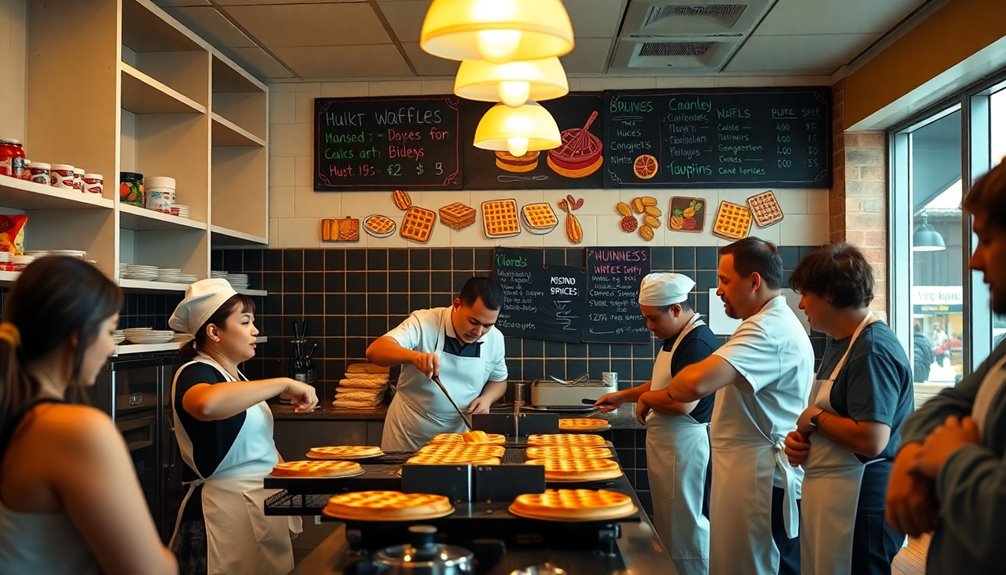

As waffle shops grapple with rising costs, many are feeling the pinch of significant price hikes and supply chain challenges. You might’ve noticed that Waffle House has increased its prices by a staggering 96% since 2019, far exceeding typical inflation rates. This is part of a broader trend across the casual dining sector, where prices are projected to rise by 42% between 2020 and 2025.

Get baking supplies delivered free with Prime
- Fast, free delivery on millions of items
- Prime Video, Amazon Music and more included
- Member-only deals all year
Waffle shops are facing a 96% price increase since 2019, reflecting broader trends in casual dining costs.
With a temporary surcharge of $0.50 per egg hitting menus as of February 2025, it’s clear that these changes directly impact your wallet. As you consider your breakfast options, it’s essential to recognize how these rising prices can affect your purchasing power. You may find yourself reevaluating how often you dine out, especially if prices keep climbing. Increased competition from other breakfast chains could become a factor, as they might offer more enticing deals to lure you in.
On top of that, ingredient shortages are a growing concern for waffle shops. Disruptions in the supply chain due to global events and logistics challenges mean that you mightn’t always find your favorite menu items available. The rising costs of essential ingredients like eggs and flour are squeezing profit margins, pushing shops to look for alternative suppliers. This challenge is compounded by the increasing demand for diverse waffle products, which puts additional pressure on sourcing and inventory.
Effective inventory management is crucial now, as it helps navigate these supply chain disruptions and keeps your dining experience as seamless as possible. Operational costs are also on the rise. Labor costs, energy expenses, marketing efforts, and insurance all contribute to the financial strain that waffle shops face.
As these costs increase, you might see shifts in menu offerings. Waffle shops are likely to adjust their menus to balance profitability with your demand. They might reduce portion sizes or introduce tiered pricing strategies to keep you coming back. Value meals and limited-time offers could be part of their strategy to retain your interest.
Your dining choices might also be influenced by your growing price sensitivity. As costs rise, you might gravitate towards brands you trust, relying on loyalty programs and promotions to save a few bucks. Ultimately, it’s a challenging landscape for waffle shops, but they’re adapting.
As an affiliate, we earn on qualifying purchases.
Fall Picks
fall essentials
As an affiliate, we earn on qualifying purchases.