The World’s Fair helped popularize waffles in America by showcasing new recipes, toppings, and waffle-making technology that captured visitors’ imaginations. As you explore the exhibits, you see waffles transformed from European treats into symbols of culinary progress and experimentation. Chefs and vendors demonstrate innovative styles, inspiring Americans to enjoy waffles for any meal. This exposure made waffles a lasting part of American cuisine. If you continue, you’ll discover how these fairs shaped the way we enjoy waffles today.

Get baking supplies delivered free — and shop member deals
- Fast, free delivery on millions of items
- Access to Prime Big Deal Days deals on October 6–7
- Prime Video, Amazon Music and more included
Key Takeaways
- International exhibitions showcased innovative waffle recipes, making waffles a symbol of culinary progress and cultural exchange.
- Fairs popularized visual displays and diverse styles, sparking American experimentation with toppings and flavors.
- Technological advancements presented at fairs made waffle irons more accessible, encouraging home preparation.
- Exhibitions elevated waffles from traditional treats to versatile dishes suitable for breakfast, lunch, and dessert.
- The fairs fostered a blend of European tradition and American innovation, embedding waffles into American culinary culture.
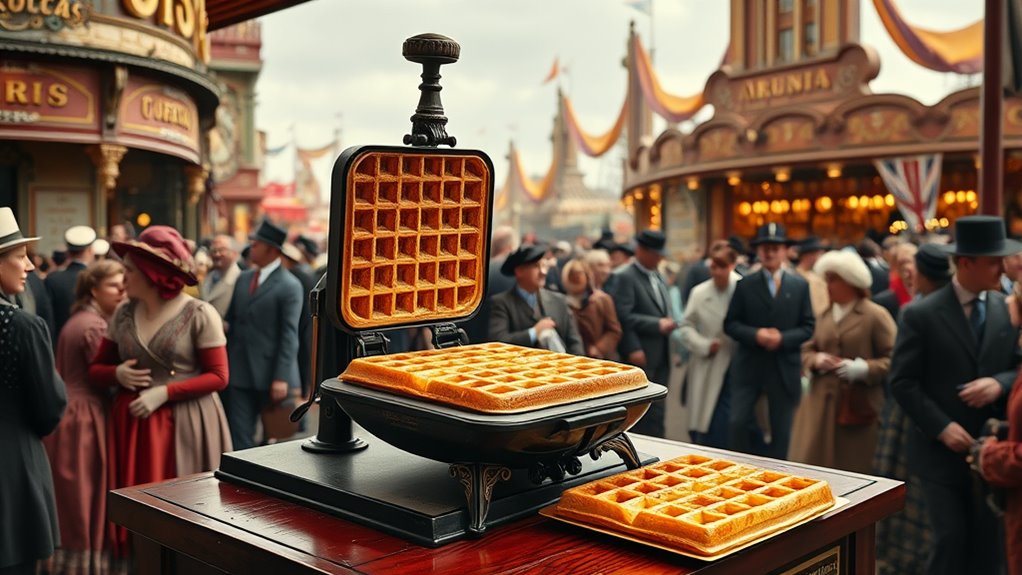
During the 19th and early 20th centuries, the World’s Fair became a showcase for innovation, culture, and culinary delights, with waffles playing a surprisingly prominent role. As you explore these grand exhibitions, you’ll notice how they served as platforms for introducing new foods and culinary ideas to a global audience. Waffles, already popular in Europe, gained new cultural significance through these events, especially as American visitors encountered them for the first time or saw new ways to enjoy them. The fairs acted as catalysts for cultural influence, spreading culinary traditions across borders and shaping Americans’ tastes in the process.
World’s Fairs transformed waffles from European treats into American culinary icons.
At these fairs, chefs and food vendors experimented with culinary innovation, transforming traditional recipes into new, exciting dishes. Waffles, with their versatile batter and distinctive grid pattern, became a canvas for creativity. You’d see vendors offering waffle variations topped with fruits, syrups, whipped cream, and even savory ingredients, pushing the boundaries of the traditional Belgian or European waffle. This experimentation inspired many Americans to see waffles not just as a breakfast item but as a versatile food suitable for any meal or occasion. The fairs showcased how culinary innovation could elevate simple ingredients into culinary art, and waffles became a perfect example of this trend.
You might also notice how the visual appeal of waffles contributed to their popularity. The intricate grid of a waffle made it an eye-catching food item, perfect for photographs and displays at the fairs. As you walk through these exhibitions, you’d see images and models demonstrating how waffles could be shaped, flavored, and served in numerous ways, sparking curiosity and culinary experimentation back home. The fairs didn’t just introduce waffles—they elevated them to a symbol of modern dining and culinary progress. They played a role in popularizing waffle irons and recipes across America, making waffles more accessible and diverse than ever before.
Additionally, the influence of the fairs extended beyond the event itself, leading to the widespread adoption of waffle-making equipment and recipes in homes across the country. This process was supported by the technological advancements showcased at these exhibitions, which helped make waffle irons more affordable and efficient for everyday use.
Furthermore, the cultural influence of the World’s Fair helped embed waffles into American cuisine. As you enjoy waffles today, remember that their widespread popularity owes much to these international showcases. The fairs fostered an environment where traditional European flavors melded with American ingenuity, leading to innovations like the waffle cone for ice cream or the Belgian waffle’s prominence at breakfast counters. In this way, the World’s Fair didn’t just introduce you to a new dish; it transformed waffles into an enduring culinary icon, blending tradition with innovation and cultural exchange.
As an affiliate, we earn on qualifying purchases.
Frequently Asked Questions
When Did Waffles First Appear at the World’S Fair?
You might wonder when waffles first appeared at the World’s Fair. It was in 1964 at the New York World’s Fair, where culinary innovations showcased global tastes. Historical recipes of waffles gained popularity as they delighted visitors exploring new flavors. The fair helped introduce waffles to a wider American audience, making them a beloved breakfast staple. This event marked a significant moment in how waffles became part of American culinary culture.
Which Country Originated the Modern Waffle Design?
You might think the modern waffle design came from America, but think again. Its roots trace back to European origins, where culinary innovation flourished in the kitchens of Belgium and France. These countries perfected the waffle’s distinctive grid pattern, transforming it into the beloved breakfast staple we enjoy today. So, the next time you savor a waffle, remember it’s a product of rich European tradition, not just American ingenuity.
How Did the Waffle Iron Evolve Over the Years?
You’re curious about the waffle iron history and its technological innovations. Over the years, the design evolved from simple cast iron molds to electric appliances, making waffle-making easier and more efficient. Advances include non-stick surfaces, adjustable browning controls, and removable plates. These innovations allowed you to enjoy perfectly crisp waffles at home, transforming the waffle iron from a basic tool into a versatile kitchen appliance, shaping how waffles became a breakfast staple.
Were Waffles Popular in America Before the Fair?
You might think waffles were already popular in America before the Fair, but early breakfast trends and regional preferences varied widely. Waffles gained popularity mainly after the Fair showcased them as a delicious, convenient breakfast option. Before that, many regions favored simpler foods. The Fair helped introduce waffles to a broader audience, making them a staple in American breakfast culture and influencing regional tastes nationwide.
What Other Foods Gained Fame at the World’S Fair?
You’ll be amazed to learn that at the World’s Fair, global cuisine and culinary innovations took center stage, transforming American tastes forever. Think giant ice cream cones, exotic spices, and towering desserts that seemed to reach the sky! Foods like hot dogs, ice cream, and even the first hamburgers gained fame, turning the fair into a culinary wonderland. It’s like a flavor explosion that changed America’s food scene forever!
Conclusion
So, you see, the World’s Fair truly put waffles on the map in America. It was a game-changer that turned a simple breakfast into a beloved tradition. You might say it opened the door for waffles to become a household staple. Just goes to show, sometimes a single event can make all the difference. Now, whenever you enjoy a waffle, you’re tasting a piece of history that’s been around the block.
Halloween Picks
halloween
As an affiliate, we earn on qualifying purchases.