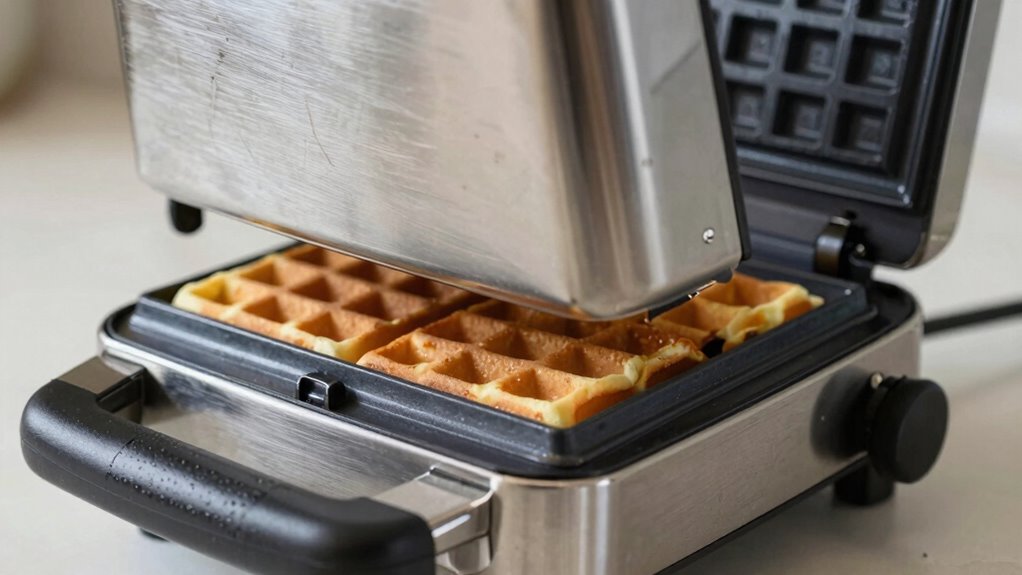
A plastic smell from your waffle maker during initial use is usually normal and caused by manufacturing residues or protective coatings that burn off over a few uses. To reduce it, run the appliance empty on medium heat and wipe down the plates beforehand. Keep your space well-ventilated and clean the appliance regularly. If the odor persists or worsens, it might indicate a problem, and you can find more tips below to help you address it effectively.
Key Takeaways
- A plastic smell during initial use is common due to manufacturing residues or protective coatings.
- The odor usually dissipates after a few cycles or thorough cleaning and running the waffle maker empty at medium heat.
- Proper ventilation during initial uses can help speed up odor removal and prevent lingering smells.
- Regular cleaning of plates and internal components prevents buildup that could worsen odors over time.
- Persistent or worsening plastic smell may indicate a defect, warranting professional inspection or contacting the manufacturer.
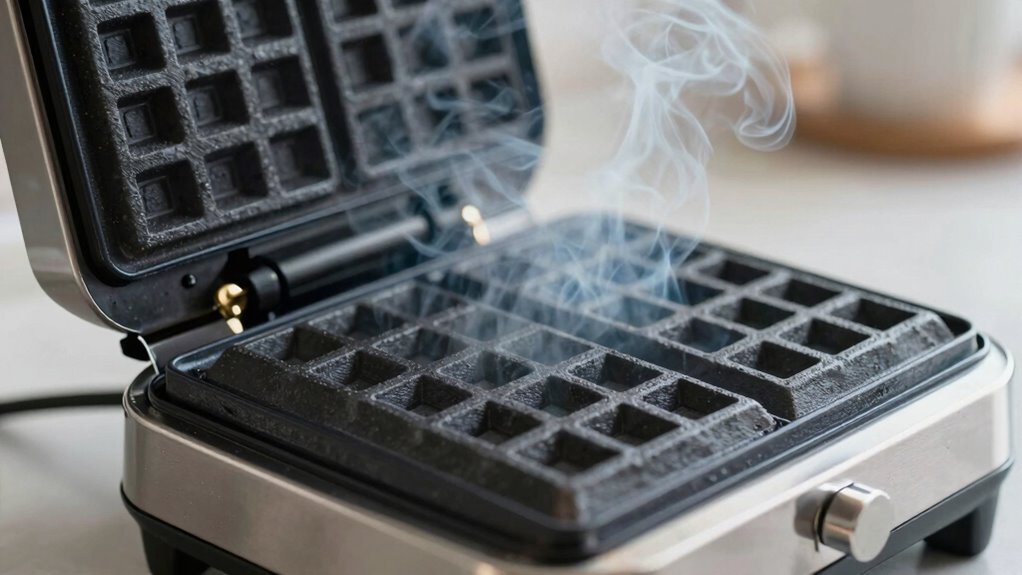
If your waffle maker smells like plastic when you first use it, you’re not alone. Many new appliances emit a strange odor during their initial use, often due to manufacturing residues or protective coatings. While this smell can be unsettling, it’s usually normal and will fade after a few uses. However, if the smell persists or worsens, it might be a sign of a problem. To help reduce or eliminate the odor, you can try some simple cleaning tips and odor removal methods. Wiping down the plates with a damp cloth before the first use can remove any leftover manufacturing debris. Also, running the waffle maker empty for a few minutes at a medium temperature can help burn off any residual chemicals. Keep an eye on the smell during this process; if it diminishes, you’re likely on the right track.
Sometimes, the plastic smell is caused by the materials used in the appliance, especially if it’s made with cheaper plastics. In such cases, the odor may linger longer, but it’s still usually safe once the initial smell dissipates. Still, it’s good practice to ensure proper ventilation by opening windows or turning on a fan during the first few uses. This helps with odor removal and keeps your kitchen fresh. If the smell persists even after several uses, check the manufacturer’s instructions or contact customer service to confirm if it’s normal for your model. Sometimes, a thorough cleaning with a mixture of baking soda and water can help absorb and neutralize lingering odors. Just make sure to wipe off any residue before using the waffle maker again.
In addition to cleaning tips, maintaining your waffle maker regularly can prevent future odor issues. Always clean the plates after each use to keep grease and crumbs from building up, which can cause unwanted smells. Avoid using harsh chemicals or abrasive scrubbers that might damage the non-stick surface. If you notice a plastic smell during cooking, it might be related to the internal wiring or insulation, which could indicate a defect. In that case, it’s best to stop using the appliance and seek professional advice or a replacement. Proper appliance maintenance and a well-ventilated environment are key to preventing lingering odors. Remember, a little patience and proper cleaning go a long way toward odor removal. With consistent care, your waffle maker should soon smell neutral and function perfectly, allowing you to enjoy delicious waffles without any unpleasant plastic notes lingering in the air.
Frequently Asked Questions
How Long Does the Plastic Smell Typically Last?
The plastic odor typically lasts for a few uses, usually around 1-3 weeks, depending on your waffle maker. To speed up the plastic odor dissipation, keep the appliance in a well-ventilated area, run it empty a few times, and wipe it with a damp cloth. Avoid using harsh cleaners, as they can worsen the smell. With patience, the odor should gradually fade away.
Can I Use My Waffle Maker Immediately After Unboxing?
Think of your new waffle maker as a blank canvas, ready for creation. You shouldn’t use it immediately after unboxing, as it often needs a thorough cleaning and a burn-in cycle to eliminate manufacturing residues. Rely on user reviews and brand reputation to guide you. Waiting a little guarantees safety and preserves the appliance’s longevity, letting you enjoy perfect waffles without lingering plastic odors or worries about quality.
Is It Safe to Eat Waffles if My Maker Smells Like Plastic?
If your waffle maker smells like plastic, it’s best not to eat waffles made with it right away. A plastic odor can indicate safety concerns, as fumes might contain harmful chemicals. Before using it, run the appliance empty for a few minutes to air out and see if the smell diminishes. If the odor persists, consider contacting the manufacturer or replacing the unit to guarantee your safety.
What Cleaning Methods Prevent Plastic Odors From Developing?
To keep plastic odors at bay, you should adopt effective cleaning techniques that focus on odor prevention. Start by wiping down your waffle maker with a damp cloth after each use, ensuring you remove any residual batter or grease. Regularly clean the plates with a mild soap and avoid harsh chemicals. Keep the device dry and well-ventilated when not in use, which helps prevent lingering smells and maintains a fresh, pleasant aroma.
Are There Specific Brands More Prone to Plastic Smells?
Some brands with lower manufacturing quality and weaker reputation tend to be more prone to plastic smells. You should look for reputable brands known for strict quality control, as they typically use safer, higher-quality materials that minimize odors. Research customer reviews and brand reputation before buying, and opt for trusted manufacturers to reduce the risk of plastic smells developing in your waffle maker. Higher-quality brands usually prioritize odor-free products.
Conclusion
If your waffle maker smells like plastic, don’t panic—you’re not alone. A slight odor during the first few uses is normal and usually harmless, but a persistent or overwhelming smell could be a sign of trouble. Trust your instincts; if it smells like a plastic monster is taking over, it’s time to check or replace it. Remember, your kitchen’s safety is more important than a fleeting scent—protect your loved ones from a potential disaster!