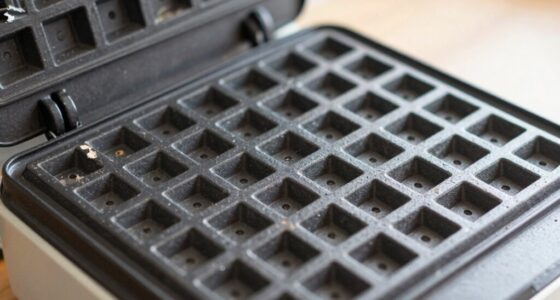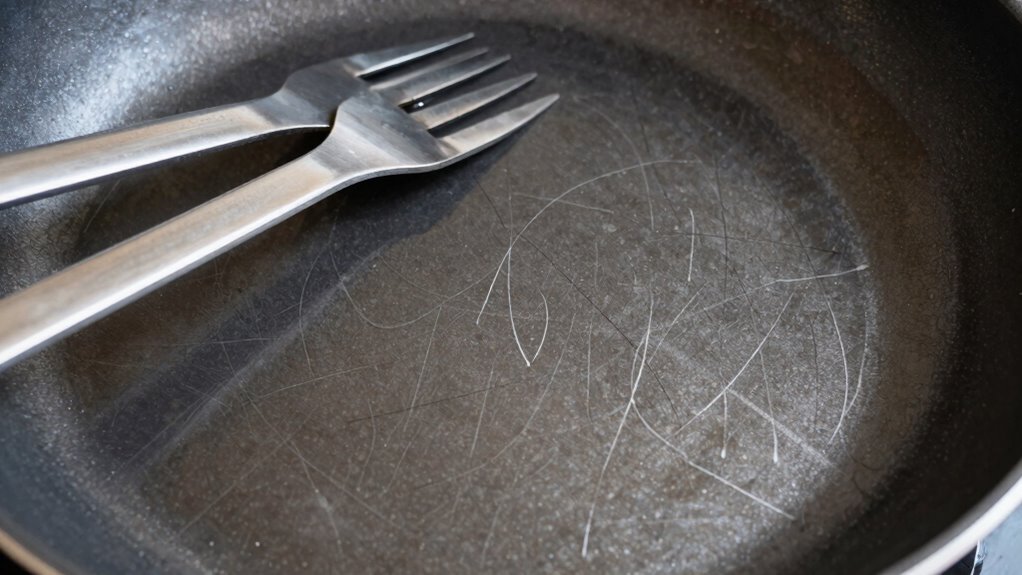

Using metal tools on nonstick cookware can cause microscopic scratches that you might not see right away. These unseen scratches weaken the coating, eventually leading to peeling, flaking, or food sticking more easily. Over time, this damage shortens the pot’s lifespan and may pose health risks from ingesting coating particles. To protect your cookware and guarantee safe cooking, it’s best to stick with non-abrasive utensils—keep going to discover more about preventing hidden damage.
Key Takeaways
- Metal tools can cause hidden scratches in nonstick coatings, leading to unseen damage that shortens cookware lifespan.
- Damage from metal tools often isn’t visible immediately but diminishes nonstick effectiveness over time.
- Using non-abrasive utensils like silicone or wood helps prevent unseen scratches and preserves nonstick coatings.
- Metal tools are suitable for durable cookware like stainless steel but pose risks to nonstick surfaces.
- Proper utensil choice and regular inspection are essential to avoid undetected damage and ensure safe, long-lasting cookware.
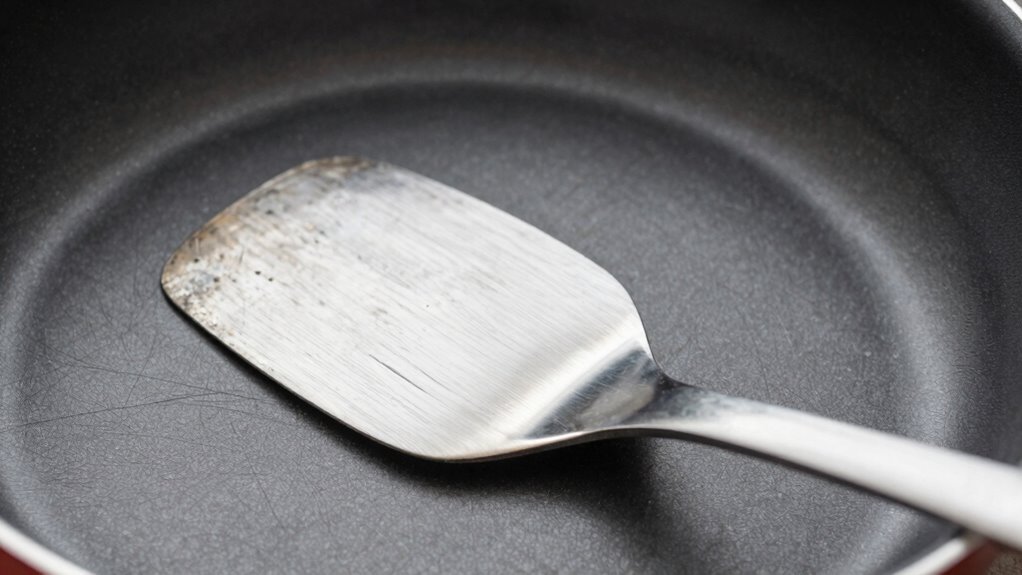
When choosing between metal tools and nonstick cookware, your decision can considerably impact your cooking experience and the longevity of your pots and pans. Metal tools, such as spatulas and spoons, are durable and versatile, but they come with risks that can affect your cookware’s longevity and your safety. Nonstick cookware offers easy food release and quick cleanup, but it’s more susceptible to scratches that aren’t always visible at first glance. Understanding how each affects your cookware’s durability and your cooking safety is key to making the right choice.
Using metal tools on nonstick surfaces can cause significant damage that isn’t immediately apparent. While the scratches might seem minor, they compromise the integrity of the nonstick coating, leading to premature deterioration. Over time, these scratches can deepen, exposing the base material and causing the coating to peel or flake off. This not only shortens the lifespan of your cookware but also raises concerns about potential ingestion of coating particles, which poses health risks. Additionally, damaged nonstick surfaces tend to stick more, making cooking less predictable and requiring more oil or butter, which defeats the purpose of nonstick cookware.
On the other hand, opting for metal tools with durable cookware—like stainless steel or cast iron—often enhances cooking safety. These materials can withstand high heat and vigorous stirring without risk of damage. They don’t chip or peel like nonstick coatings, so you can push your cooking limits without worrying about losing the integrity of your pots and pans. However, it’s still wise to use appropriate tools to avoid scratching the surface, especially with softer metals or delicate finishes. This approach ensures that your cookware remains safe to use over time and maintains its cooking performance.
Nonstick cookware is best paired with utensils made of silicone, wood, or plastic. Using these materials preserves the coating and extends its lifespan, which is essential for maintaining both cooking safety and cookware durability. When a nonstick surface gets scratched, it becomes less effective and potentially unsafe, as tiny particles may mix with your food. Regularly inspecting your cookware for visible damage and avoiding metal tools can save you money and prevent health issues down the line.
Ultimately, your choice of utensils influences how long your cookware lasts and how safe it remains during cooking. Metal tools are ideal for durable, heavy-duty cookware, but they’re risky for nonstick surfaces. Conversely, using non-abrasive tools on nonstick pans protects both your health and your investment. Recognizing the importance of proper utensil use helps you cook smarter and safer, ensuring your cookware remains in good shape and your meals stay safe to eat. Proper utensil selection also aligns with broader sustainable cookware practices, helping reduce waste and extend the life of your pots and pans.

Kikcoin 43Pcs Large Kitchen Utensils Set – Silicone Cooking Utensils Set, Dishwasher Safe Spatula Set for Non-stick Cookware, 446°F Heat Resistant Kitchen Utensils Set with Holder BPA Free, Grey
【INNOVATION DESIGN】We designed a golden triangle support on the back of the handle, calculated to achieve the optimal…
As an affiliate, we earn on qualifying purchases.
As an affiliate, we earn on qualifying purchases.
Frequently Asked Questions
How Can I Repair Scratches on a Nonstick Pan?
To repair scratches on your nonstick pan, start by cleaning it thoroughly. While scratches can’t be fully repaired, you can improve utensil durability by using gentle cleaning tools. For minor scratches, consider applying a coating renewal product designed for nonstick surfaces, which can help restore some nonstick properties. Avoid metal utensils to prevent further damage, and always follow manufacturer instructions to prolong your pan’s lifespan.
Are All Metal Tools Equally Likely to Cause Damage?
Not all metal tools are equally likely to cause damage. Your metal utensil durability and the nonstick coating quality matter. Softer metals like silicone or nylon are gentler and less likely to scratch, while harder metals like stainless steel can easily damage the coating. Always choose utensils suited for nonstick pans, and check their durability to prevent hidden scratches that compromise your pan’s performance over time.
How Long Does a Nonstick Coating Typically Last?
A nonstick coating is like a delicate butterfly, fragile yet beautiful. Typically, its longevity ranges from 1 to 5 years, depending on use and care. Proper handling and avoiding metal tools help preserve coating durability, ensuring it stays smooth and effective longer. Over time, even with gentle use, the nonstick surface can wear down, so it’s essential to monitor its condition and replace cookware when the coating begins to deteriorate.
Can Ceramic or Silicone Utensils Prevent Scratches?
Using ceramic or silicone utensils can help prevent scratches on your nonstick cookware. These utensils are gentler on the surface compared to metal tools, reducing the risk of damage. Silicone utensils are flexible and heat-resistant, making them ideal for delicate coatings. Ceramic utensils also tend to be softer and less abrasive. By switching to these materials, you protect your cookware‘s nonstick coating and extend its lifespan, keeping your kitchen in top shape.
What Signs Indicate a Nonstick Pan Needs Replacement?
You should replace your nonstick pan when you notice signs of coating deterioration, such as peeling, flaking, or loss of nonstick performance. These signs indicate the pan’s tool compatibility has diminished, risking food sticking and potential health concerns. If the surface is scratched or damaged despite careful utensil use, it’s time for a new pan to guarantee effective cooking and safety. Don’t wait until it’s too late to switch.

2Pcs Wooden Spatula, Acacia Solid & Slotted Turner Spatula Set, Long Handle Flat Frying Spatulas, Ideal Kitchen Gift for Mother and Grandma, Kitchen Utensils Set for Cooking, Frying, Baking
【Eco-Friendly Acacia Wooden Spatula】 Our spatula set is made of natural acacia wood, known for its dense grain…
As an affiliate, we earn on qualifying purchases.
As an affiliate, we earn on qualifying purchases.
Conclusion
So, next time you cook, think twice before reaching for that metal tool. What subtle scratches are forming out of sight, slowly ruining your nonstick surface? You might not see the damage now, but it’s lurking beneath, waiting to reveal itself when you least expect it. Will you risk the silent toll on your cookware’s lifespan? Or will you choose wisely—protecting your investment and avoiding the surprise you won’t see until it’s too late? The choice is yours.

Umite Chef Kitchen Cooking Utensils Set, 33 pcs Non-Stick Silicone Cooking Kitchen Utensils Spatula Set with Holder, Wooden Handle Silicone Kitchen Gadgets Utensil Set (Khaki)
FOOD GRADE SILICONE: Made of food-grade silicone, BPA-free, can use in any type of food. And it will…
As an affiliate, we earn on qualifying purchases.
As an affiliate, we earn on qualifying purchases.

Glass Cooktop Repair Kit, Car Glass Scratch Removal Kit, Windshield Polishing Kit, Ceric Dioxide Abrasive Discs Polish Pad Felt
Ceric dioxide is the best polishing powder to glass scratch because the chemical and physical
As an affiliate, we earn on qualifying purchases.
As an affiliate, we earn on qualifying purchases.