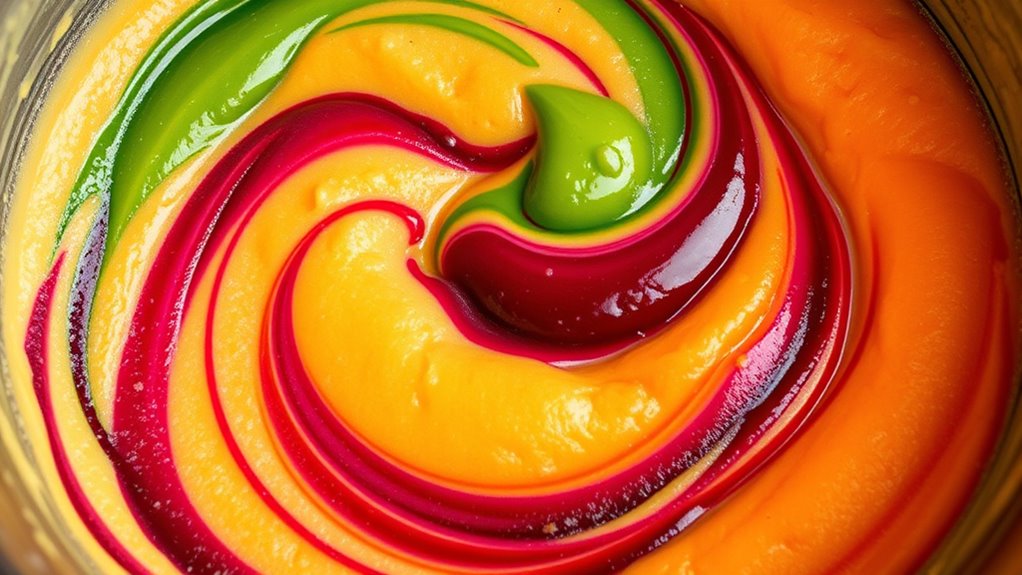

Adding spinach, beet, and carrot purees to your batter is a smart way to boost your baked goods with essential micronutrients. These purees provide iron, vitamin K, beta-carotene, and nitrates that support your immune system, eye health, and energy levels. They also improve texture and flavor while making it easier for your body to absorb nutrients. If you’re curious about maximizing health benefits, there’s more to discover beyond this quick tip.
Key Takeaways
- Incorporating purees enhances nutrient bioavailability, ensuring better absorption of micronutrients like iron, beta-carotene, and nitrates.
- Adding vegetable purees improves batter moisture and tenderness, contributing to more flavorful and nutritious baked goods.
- Purees seamlessly blend into recipes, increasing vegetable intake without altering taste or texture significantly.
- Using purees preserves heat-sensitive vitamins and antioxidants, maximizing health benefits in cooked treats.
- Regularly including spinach, beet, and carrot purees supports immune health, energy, and overall wellness through enhanced micronutrient intake.
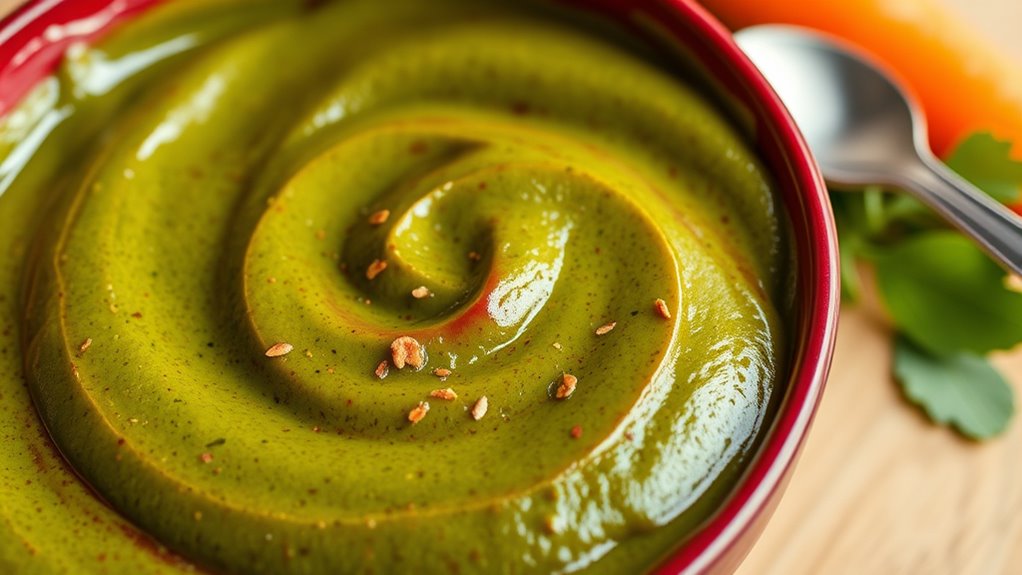
Micronutrient boosters are indispensable tools for enhancing your health and boosting your immune system. When you add ingredients like spinach, beet, and carrot purees to your batter, you’re not just improving flavor — you’re enriching your meals with superfood benefits that can elevate your well-being. These vegetables are packed with essential vitamins, minerals, and antioxidants that support immune function, energy levels, and overall health. Incorporating them into your cooking is a simple yet powerful way to guarantee you’re getting necessary nutrients regularly.
One of the key advantages of adding these purees to your batter is improved nutrient absorption. When you blend spinach, beet, and carrots into smooth purees, you break down their cell walls, making it easier for your body to access and absorb the nutrients they contain. This process helps maximize the superfood benefits, ensuring you get the most out of each ingredient. For example, spinach is rich in iron, magnesium, and vitamin K, which are essential for blood health and bone strength. Beets provide nitrates that can improve blood flow and stamina, while carrots supply beta-carotene, which supports eye health and immune response. When incorporated into your batter, these nutrients become more bioavailable, meaning your body can utilize them more effectively.
Blending vegetable purees enhances nutrient absorption, making superfoods like spinach, beet, and carrots more bioavailable for your health.
Using purees in your recipes also allows for seamless integration into various dishes, especially baked goods. Whether you’re making muffins, pancakes, or bread, blending these vegetables into your batter adds a subtle earthy flavor and vibrant color without overpowering the dish. This approach encourages you to eat more vegetables in a natural, enjoyable way. Plus, pureeing helps preserve the nutrients during cooking, preventing them from breaking down under high heat, so you retain maximum superfood benefits in the finished product.
Furthermore, the addition of these vegetable purees can enhance the texture of your batter, making it more moist and tender. This not only improves the sensory experience but also helps you incorporate more nutrient-dense ingredients into your diet without sacrificing taste or quality. Over time, regularly including spinach, beet, and carrot purees can support your immune system, boost energy, and contribute to healthier skin and hair.

JTEDZI Pumpkin Powder for Baking, Natural Dried Powdered Pumpkin for Pumpkin Spice Lattes, Drinks, Smoothies, Porridge, Puree, No Additives & No Sugar (7.1 ounces)
Only 1 ingredient: Real pumpkin, nothing more. Our pumpkin powder is natural, with no added sugar, no preservatives,…
As an affiliate, we earn on qualifying purchases.
As an affiliate, we earn on qualifying purchases.
Frequently Asked Questions
Can I Substitute Other Leafy Greens for Spinach?
You can substitute other leafy greens for spinach, but keep in mind the nutritional differences. Kale, arugula, or Swiss chard are good alternatives, offering varying vitamins and minerals. Each adds a unique flavor and texture, so choose based on your taste and nutritional needs. Just be aware that some greens may have stronger flavors or different moisture content, which could slightly alter your batter’s consistency and nutrient profile.
How Do Beet and Carrot Purees Affect Batter Color?
When you add beet and carrot purees, they naturally color your batter, enhancing its visual appeal with vibrant red and orange hues. These purees serve as natural coloring agents, giving your baked goods a more attractive look without artificial dyes. Be aware that beet puree can produce a deep red or pink tint, while carrot puree adds a warm orange tone, making your treats more visually appealing and colorful.
Are There Any Allergens Associated With These Purees?
Ever wondered if your favorite purees hide allergens? You should know that beet and carrot purees are generally low allergen risks, but allergen cross reactivity can occur, especially if you have food sensitivities. Hidden allergens might be present if processed in facilities handling nuts or gluten. Always check ingredient labels and consider potential cross contact to keep your dishes safe and allergy-free.
What Is the Best Way to Prepare Purees for Mixing?
For the best purees, use blending techniques that create smooth, uniform textures. You should prepare your purees fresh, but if storing, keep them in airtight containers in the fridge for up to 48 hours to maintain freshness. When ready to mix, guarantee the purees are at room temperature to prevent clumping and achieve even distribution. Proper puree storage and blending techniques help you incorporate these micronutrient-rich options seamlessly into your batter.
Do These Boosters Change the Taste Significantly?
Think of your batter as a canvas; adding purees is like introducing subtle watercolor shades. These boosters can change the flavor, but with careful balance, flavor enhancement is gentle and pleasant. They also modify texture, making it richer and more tender. While the taste slightly shifts, it’s usually a delightful upgrade, blending nutrient boosts without overpowering your original recipe. Adjust your seasonings accordingly to keep the harmony perfect.

Gerber Stage 2 Baby Food, Pea Carrot Spinach Puree Tubs, Baby Puree, 16PK
ON THE GO BABY FOOD: Gerber Stage 2 Baby Food Puree Pea Carrot Spinach Tubs are designed for…
As an affiliate, we earn on qualifying purchases.
As an affiliate, we earn on qualifying purchases.
Conclusion
By adding spinach, beet, and carrot purees to your batter, you boost your dish’s nutritional value effortlessly. Imagine Sarah, a busy mom, sneaking these purees into her kids’ pancakes, and seeing them finish their breakfast happily, unaware of the hidden nutrients. Small changes like these can make a big difference in your family’s health. So, next time you bake, try these colorful boosters—you might just inspire healthier habits around your table.

Pride of India – Sweet Holy Basil Leaf – Indian Tulsi Leaf Cut & Sifted – Gourmet Herb – Rich in Nutrients – Ocimum sanctum – GMO Free – Easy to Use – 0.5 oz. Small Dual Sifter Bottle
PREMIUM QUALITY: Our cut and sifted holy basil leaf is an easy way to add this nutrient-rich herb…
As an affiliate, we earn on qualifying purchases.
As an affiliate, we earn on qualifying purchases.

Z Natural Foods Organic Pumpkin Powder – Pure Powdered Pumpkin for Delicious Pumpkin Spice Latte, Baking, Smoothies, Juice, Puree – Dried Sweet Vegan Pumpkin Powder, Gluten Free, Kosher, 1 lb
𝗣𝘂𝗿𝗲 𝗣𝘂𝗺𝗽𝗸𝗶𝗻 𝗦𝘂𝗽𝗲𝗿𝗳𝗼𝗼𝗱: Z Natural Foods' Pure Pumpkin Powder comes from fresh, ripe, and sweet pumpkins, delivering a…
As an affiliate, we earn on qualifying purchases.
As an affiliate, we earn on qualifying purchases.