
If you want crisper edges in your baked goods, using oil instead of butter is your best bet. Oil’s liquid consistency helps it spread evenly, creating a lighter, crunchier crust, while butter’s solids add moisture and a tender crumb. Oil also has a neutral flavor, allowing other ingredients to shine. To understand how each affects texture and taste even more, keep exploring the differences and techniques behind your favorite baked treats.
Key Takeaways
- Oil’s liquid state at room temperature helps create a crisper, more even crust in baked goods.
- Oil produces lighter crumbs and crisper edges due to its ease of distribution and moisture content.
- Butter’s water content generates steam during baking, leading to softer, less crispy textures.
- Oil’s neutrality allows for a drier, crisper finish without adding moisture that softens edges.
- Butter’s milk solids promote browning and a tender crumb, reducing the crispness of edges.
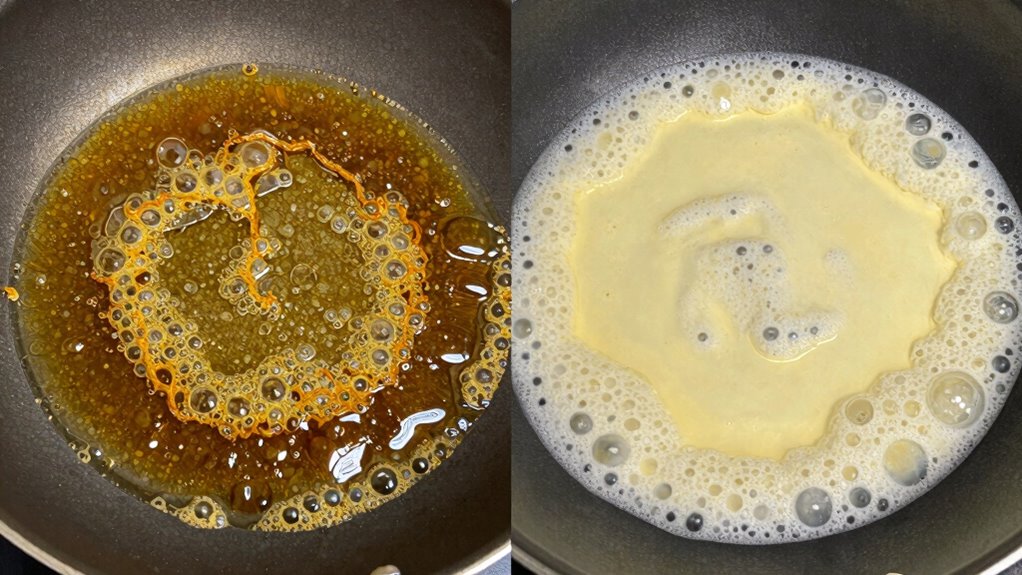
Have you ever wondered whether oil or butter is the better choice for cooking and baking? The answer depends on what you’re aiming for and how each ingredient interacts with your recipes. When it comes to baking techniques, understanding how oil and butter influence your final product can help you achieve the perfect texture and flavor. Oil tends to produce crisper edges and a lighter crumb because it’s 100% fat that remains liquid at room temperature, which allows for even distribution in batters and doughs. Butter, on the other hand, contains water and milk solids that, when heated, create steam and contribute to a richer, more tender crumb. Its unique flavor profile adds a depth that’s hard to replicate with oil, making it a preferred choice for pastries and cookies where taste is paramount.
Oil creates crisper edges and lighter crumbs, while butter adds rich flavor and tender texture.
In baking, oil’s versatility shines through because it can be incorporated into a wide range of recipes without altering the structure too much. It’s especially beneficial in recipes like quick breads, muffins, and cakes that benefit from a moist, tender crumb. The way oil interacts with flour and other ingredients often results in a lighter, crisper crust, which is ideal for cookies and certain bread types. Oil’s neutral flavor allows other ingredients—like spices, vanilla, or cocoa—to stand out more prominently, giving you flexibility in flavor profiles. Plus, because it remains liquid at room temperature, it helps produce a uniform batter that bakes evenly, contributing to those desirable crispy edges.
Butter, however, lends a rich, creamy flavor that’s difficult to match. Its natural flavor profile enhances baked goods, providing a satisfying depth that elevates everything from croissants to cookies. When you use butter, the baking techniques often involve creaming it with sugar, which creates air pockets that help your baked goods rise and develop an appealing texture. The milk solids in butter also promote browning, resulting in that attractive, golden crust and crisp edges you love. This makes butter particularly suitable for recipes where flavor and appearance matter, like pie crusts, shortbread, or flaky pastries. The combination of water and fat in butter produces steam during baking, contributing to a tender interior with a satisfying, crispy exterior.
Additionally, the choice between oil and butter can influence texture development, affecting both the structure and overall mouthfeel of your baked goods. Ultimately, whether you choose oil or butter depends on your desired outcome. If you want crisper edges and a lighter texture, oil might be your best bet. If flavor and richness are your priorities, butter offers unmatched depth. By understanding how each affects baking techniques and flavor profiles, you can select the right ingredient to elevate your baked creations.

Viva Naturals Refined Coconut Oil, 16 fl oz – Expeller-Pressed, USDA Organic, Neutral Flavor & Aroma, Ideal for Cooking, Baking, Hair & Skin Moisturizer
✔️ REFINED COCONUT OIL FOR COOKING AND BAKING – Our organic coconut oil is expeller-pressed from fresh, organic…
As an affiliate, we earn on qualifying purchases.
As an affiliate, we earn on qualifying purchases.
Frequently Asked Questions
How Does Oil Affect Baking Time Compared to Butter?
When you use oil instead of butter, your baking duration might stay the same or slightly decrease because oil heats faster and promotes even cooking. Oil also affects moisture retention, keeping baked goods moist longer, which can influence baking time. Butter, with its water content, may cause slightly longer baking times due to initial moisture evaporation. So, switching to oil can subtly alter how long your baked item needs in the oven.
Can Oil Prevent Sogginess in Baked Goods?
Yes, oil can help prevent sogginess in baked goods by reducing moisture retention and promoting crispness. Its ability to create a barrier slows moisture absorption, keeping the crust or top layer crisp and flavorful. Plus, oil enhances flavor without adding water content, making it ideal for maintaining texture and taste. So, using oil strategically can guarantee your baked treats stay delightfully crisp and flavorful longer.
Is There a Health Difference Between Oil and Butter?
You might notice health benefits differ between oil and butter. Oils, especially plant-based ones, often contain healthier fats like omega-3s and are lower in saturated fat, which can be better for your heart. Butter has more saturated fat and calories, so it’s denser in energy. Comparing calories, oil generally has fewer, making it a lighter choice. Your choice depends on your health goals and dietary needs.
How Does Temperature Influence Oil Versus Butter Performance?
Temperature considerably impacts how oil and butter perform in cooking. When you heat oil, it reaches its smoke point quickly, allowing for high-temperature cooking without burning, which enhances crispness and preserves its neutral flavor profile. Butter, with a lower smoke point, smokes sooner, risking burnt flavors and soggy edges. For crisper results, use oils suitable for high heat, but keep butter at moderate temperatures to avoid burning and maintain its rich flavor.
Can I Substitute Oil for Butter in All Recipes?
You can substitute oil for butter in many recipes, but consider the flavor profile and shelf stability. Oil offers a neutral taste and longer shelf life, making it great for baking and frying. However, it lacks the richness butter provides, which can affect flavor, especially in baked goods. Always adjust quantities and be aware that the texture and flavor might change, so test small batches first.

GoodCook 15” x 10.5” Nonstick Carbon Steel Baking Pan & Raised Wire Rack – Pizza Crisper, Crispy Bacon, Multipurpose Cooking Sheet Pan, Cooling Rack, Kitchen Cookware Set, Dishwasher Safe
CRISPY BAKING SHEET SET: Ensure crisp results every time in the oven. This 15” x 10.5” nonstick baking…
As an affiliate, we earn on qualifying purchases.
As an affiliate, we earn on qualifying purchases.
Conclusion
So, next time you’re craving those perfectly crisp edges, just remember—oil’s your shiny new best friend, making your food golden and crispy while butter’s busy softening your dreams. Who knew that a little liquid could outshine the humble dairy? It’s almost like choosing between a sleek sports car and a cozy sedan. So, go ahead—embrace the oil, and watch your edges turn into the crispy, golden masterpiece you secretly crave. Happy cooking!

Lorann Oils Butter Bakery Emulsion: True Butter Flavor, Ideal for Enhancing Rich Dairy Notes in Baked Goods, Gluten-Free, Keto-Friendly, Butter Flavoring Essential for Your Kitchen
BAKING ESSENTIAL: Our 4 ounce Butter Bakery Emulsion is a vital butter extract for baking alternative among baking…
As an affiliate, we earn on qualifying purchases.
As an affiliate, we earn on qualifying purchases.

Wade Ceramics Sheep Ceramic Pie Flute – Decorative Pie Bird Steam Vent for Golden, Crisp Pie Crusts (Sheep)
Prevents Soggy Pie Crusts – This ceramic pie flute vents steam from the center of your pie during…
As an affiliate, we earn on qualifying purchases.
As an affiliate, we earn on qualifying purchases.