
TL;DR

Get baking supplies delivered free with Prime
- Fast, free delivery on millions of items
- Prime Video, Amazon Music and more included
- Member-only deals all year
A new obsession has emerged around a luck-only horse-racing board game that has been re-released under various names since the early 2000s. Its simple mechanics and mystery origins have captivated players, with no skill involved.
A luck-based horse-racing board game, with no skill involved and multiple re-releases under different titles, has recently gained significant popularity among players.
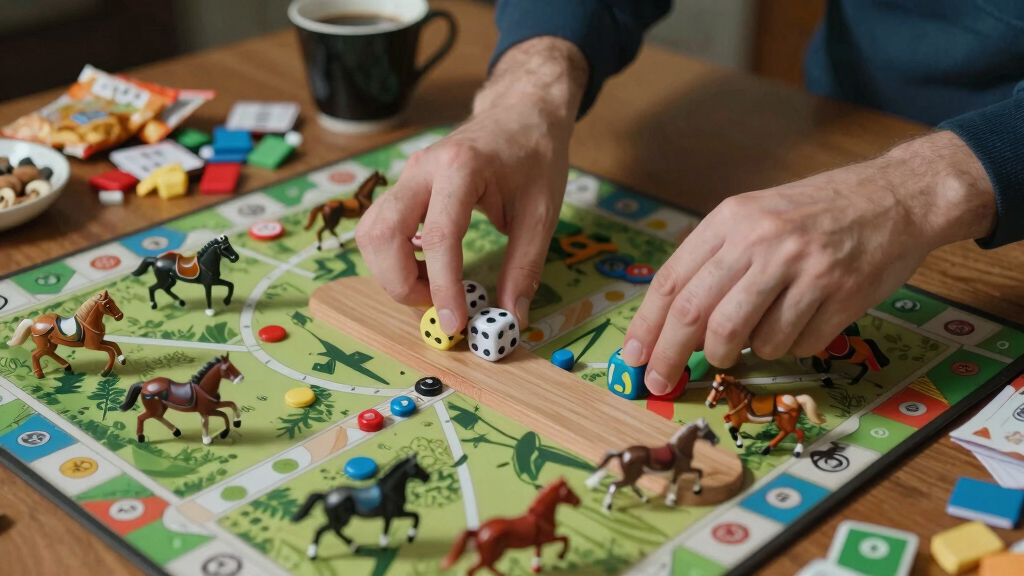
The game involves 2 to 12 players racing horses on a track, with the outcome determined solely by dice rolls and card draws, not player skill. It has been released multiple times since 1991 under various names, including Dubble Kross, Horse Race, and others, with no clear origin or original publisher identified. The game features a simple setup: a track with starting gates, scratch zones, and finish lines, with horses advancing based on dice and card mechanics. Players do not control the horses directly; instead, the game proceeds through a series of dice rolls and card discards that influence horse placement. The game’s appeal lies in its randomness and the mystery surrounding its origins, as well as its multiple versions and house rules that add minor variations.
Why It Matters
This game’s rising popularity highlights a trend toward simple, luck-based entertainment that requires no skill, appealing to casual players and those interested in gambling-like experiences. Its mysterious origins and multiple re-releases also reflect a cultural fascination with folk or public domain games that persist over decades without clear provenance.
luck-based horse racing board game
As an affiliate, we earn on qualifying purchases.
As an affiliate, we earn on qualifying purchases.
Background
The game has been around since at least 1991, with various editions and names over the years. Its mechanics resemble a casino-style gambling machine, relying entirely on chance. The game’s simplicity and the lack of a known creator contribute to its enigmatic status. Recent interest appears driven by online discussions and the game’s re-emergence in hobby circles, with some players considering coding their own variants.
“It’s strange, and entertaining, and I love it. I might code my own variation someday.”
— Hacker News user
“The multiple re-releases and the mystery around its origins make it a fascinating piece of game history.”
— Game enthusiast
What Remains Unclear
It is not yet clear who originally created the game or why it has been repeatedly re-released under different names. The exact origins and whether it remains in public domain or is owned by a specific publisher are unknown. Details about its popularity trajectory and current player base are still emerging.
What’s Next
Interest in the game is likely to continue, with some players attempting to develop their own versions or rules. Further research into its origins and official licensing status may clarify its history. Additionally, its presence in hobby and casual gaming circles could influence future re-releases or adaptations.
Key Questions
What are the basic rules of this horse-racing game?
The game involves dice rolls to determine which horses are scratched and advanced, with players discarding cards and contributing chips based on the outcomes. Horses move along a track, and the goal is to have the most chips after several rounds.
Why is this game considered purely luck-based?
All decisions are made through dice rolls and card draws, with no strategic input from players regarding horse movement, making the outcome entirely dependent on chance.
Are there different versions of this game?
Yes, it has been released multiple times under various names, with minor rule variations and added house rules, but the core mechanics remain luck-based.
Is the game in the public domain?
It is unclear whether the game is in the public domain or owned by a publisher, as its origins are not well documented.
How popular is this game currently?
Interest appears to be growing, especially online, but precise data on its current player base or sales are not available.
Source: Hacker News
Fall Picks
fall essentials
As an affiliate, we earn on qualifying purchases.