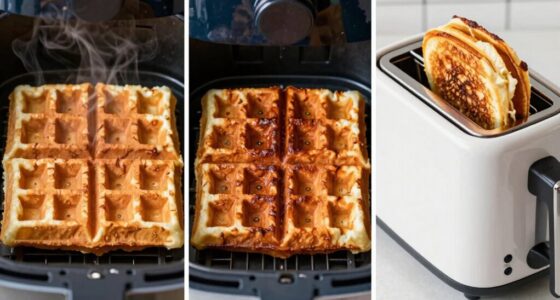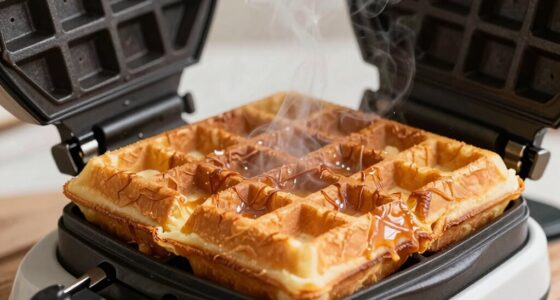
When you make waffles, starch gelatinization happens as heat causes the starch granules in the batter to absorb water and swell. This process creates a flexible, gel-like network that traps moisture and gives the waffles their structure. Once the starch fully gelatinizes, the batter transforms from raw mixture into a tender, cohesive treat. If you’re curious about how this process seals the moment your waffles become perfectly cooked, keep exploring the details behind starch gelatinization.
Key Takeaways
- Gelatinization occurs when waffle batter heats above 60°C, causing starch granules to swell and break down.
- This process transforms batter into a firm, structured waffle, ending the liquid, batter-like state.
- As starch gelatinizes, the batter thickens, losing its pourable consistency and becoming more solid.
- Proper temperature control ensures batter reaches gelatinization without overcooking or collapsing.
- The moment waffles stop being batter is marked by starch gelatinization creating a stable, edible structure.

Have you ever wondered what happens to starch when it’s heated in water? When you cook pasta or prepare a sauce, you’re witnessing starch gelatinization in action. As you bring water to a boil and add pasta, the starch granules inside the noodles absorb water and swell. This process transforms the pasta from a firm, raw texture into a tender, edible form. The heat causes the starch molecules within the pasta to gelatinize, breaking down the granules and releasing their contents into the surrounding water. This is what gives cooked pasta its soft, cohesive structure and helps it hold onto sauces effectively.
In the case of sauce thickening, starch plays an essential role. When you stir starch into a simmering liquid—such as a gravy or béchamel—the heat triggers gelatinization, causing the starch granules to swell further and absorb more water. As they do, the viscosity of the sauce increases dramatically, giving it that smooth, velvety consistency we associate with well-made sauces. This thickening effect is vital for creating the right texture and consistency in many dishes. Without starch gelatinization, sauces would remain thin and runny, failing to cling to the ingredients or provide the desired mouthfeel.
During the heating process, the temperature of the water rises, and at a specific point—usually around 60 to 70°C (140 to 160°F)—the starch granules begin to swell more rapidly. As the temperature increases further, the granules rupture, releasing amylose and amylopectin molecules into the liquid. These molecules then form a network that traps water, thickening the mixture. This transformation is both precise and reversible up to a point; if you overheat or cook the mixture for too long, the starch can break down or synerese, which causes the sauce to thin or become watery again.
Starch granules swell, rupture, and form a water-trapping network during heating, thickening sauces and dishes.
Understanding starch gelatinization is crucial for culinary mastery, as it allows cooks to control the texture and consistency of their dishes effectively. Whether you’re cooking pasta to the perfect al dente or creating a glossy sauce that coats every piece of chicken or vegetables, recognizing how heat transforms starch helps you control texture and consistency. It’s the magic behind turning a simple batter into a fluffy waffle or transforming a thin gravy into a rich, cohesive sauce. So next time you’re stirring a pot or watching your food cook, remember that you’re witnessing a fascinating chemical process—starch gelatinization—working behind the scenes to deliver the textures and flavors you love.

Waffles Batter Dispenser n Waffle Tongs Combo Set,Get Perfectly Fluffy Waffles Every Time! Batter Measuring Separator for Pancakes, Cupcake, Muffin Quick Filling Cookie Batter
Effortless Waffle Making: Our Waffles Batter Dispenser and Waffle Tongs combo is the ultimate tool set for achieving…
As an affiliate, we earn on qualifying purchases.
As an affiliate, we earn on qualifying purchases.
Frequently Asked Questions
How Does Starch Gelatinization Affect Waffle Texture?
Starch gelatinization directly impacts your waffle’s texture by enhancing puffiness and developing crispiness. When the starches absorb water and heat up, they swell, creating a light, airy interior. This process also helps form a firm crust, boosting crispiness. As gelatinization progresses, your waffles become more structured, with a delightful contrast between the soft inside and crunchy outside, making each bite satisfyingly perfect.
Can Different Types of Starch Alter Gelatinization Temperature?
Yes, different starch varieties can alter gelatinization temperature. You’ll find that cornstarch, potato starch, and tapioca each have unique gelatinization points, affecting how your waffle batter transforms during cooking. By choosing specific starches, you can control the texture and consistency of your waffles. For instance, potato starch gelatinizes at a higher temperature, resulting in a crisper crust, while tapioca creates a chewier interior.
Does Gelatinization Impact Waffle Flavor or Nutritional Value?
Gelatinization influences waffle flavor and nutritional value by affecting starch digestibility. When starch gelatinizes, it becomes easier to digest, which can enhance flavor as more sugars are released during cooking. However, it may also slightly reduce some nutrients. You’ll notice that properly gelatinized starch improves texture and taste, making your waffles more enjoyable, while also slightly boosting digestibility for better nutrient absorption.
How Can I Tell When Starch Has Fully Gelatinized?
Like a story reaching its climax, you’ll know starch has fully gelatinized when the batter becomes clear and thickens. Keep an eye on the temperature; once it hits the gelatinization temperature, starch granules absorb water and swell, creating that gel-like texture. You can also test by stirring—if the mixture stays smooth and no longer feels gritty, the gelatinization process is complete, ensuring perfect waffle consistency.
Are There Alternatives to Traditional Starch for Better Waffles?
Yes, you can try alternatives like almond flour, coconut flour, or oat flour for better waffles. These options are naturally gluten-free and often add unique flavors. For sweetness, incorporate natural sweeteners like honey, maple syrup, or agave nectar. Just keep in mind that these substitutes may require adjustments in liquid or eggs to achieve the right batter consistency, but they can give your waffles a delicious, wholesome twist.
starch gelatinization cooking tools
As an affiliate, we earn on qualifying purchases.
As an affiliate, we earn on qualifying purchases.
Conclusion
Now that you understand starch gelatinization, you can see how it transforms batter into fluffy waffles. When the starch absorbs water and heats up, it swells and creates that perfect, airy texture you love. Did you know that about 70% of the waffle’s structure comes from this process? Next time you enjoy a crispy, golden waffle, remember it’s the magic of gelatinization that makes it all possible—turning simple batter into a delightful treat.

Minimalist Potato Starch, Ideal for Thickening Sauces and Baking (40 Ounce)
Pure & Simple – Ingredients ready for you to enjoy
As an affiliate, we earn on qualifying purchases.
As an affiliate, we earn on qualifying purchases.

Alpha Grillers Meat Thermometer Digital – Instant Read Food Thermometer for Cooking & Grilling – Professional Kitchen Gift for Men, Dad & Mom
Instant Read Food Thermometer | Our instant read thermometer features a temperature probe and advanced, highly accurate technology…
As an affiliate, we earn on qualifying purchases.
As an affiliate, we earn on qualifying purchases.