In vegan waffles, proteins from aquafaba and flaxseed play a key role in providing structure, leavening, and moisture. Aquafaba, whipped until foamy, traps air and mimics egg whites, making your waffles light and fluffy. Flaxseed, when mixed with water, forms a gel that binds ingredients together and adds nutrients. Together, these proteins guarantee your waffles are both tasty and well-structured, and exploring these ingredients further can help you perfect your recipe.
Key Takeaways
- Aquafaba provides plant-based proteins and complex carbs that aid in binding and leavening, contributing to the waffle’s structure.
- Flaxseed is rich in protein, omega-3s, and fiber, helping to bind ingredients and improve nutritional value.
- Both aquafaba and flaxseed serve as vegan alternatives to eggs, offering essential proteins for texture and stability.
- The proteins in aquafaba help trap air, enhancing the lightness and fluffiness of vegan waffles.
- Flaxseed’s protein content adds density and a nuttier flavor, supporting batter cohesion and nutritional profile.
Vegan waffles are a delicious plant-based option that can provide a good source of protein, even without animal products. To achieve the right texture and hold, you need effective plant-based binders that can mimic the role of eggs and dairy. Two popular options are aquafaba and ground flaxseed, both of which serve as reliable vegan protein sources and binding agents. These ingredients not only help hold the batter together but also add nutritional value, making your waffles more satisfying and wholesome.
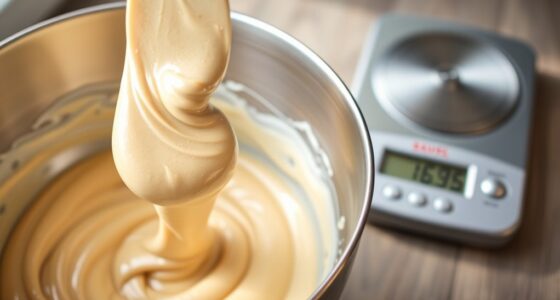
Aquafaba is the liquid from canned chickpeas or other legumes, and it’s become a favorite among vegan bakers for its unique ability to mimic egg whites. When whipped, aquafaba creates a light, airy foam that traps air and gives your waffles a fluffy texture. It contains proteins and complex carbohydrates that contribute to its binding and leavening properties. Using aquafaba as a vegan protein source can help you replace eggs in your waffle recipe without sacrificing structure or moisture. To incorporate it, simply drain the chickpeas, save the liquid, and whip it until it becomes frothy. Adding a few tablespoons to your batter will help improve the batter’s consistency and create the desired rise. Incorporating aquafaba can also enhance the airiness and lightness of your finished waffles, making them more appealing.
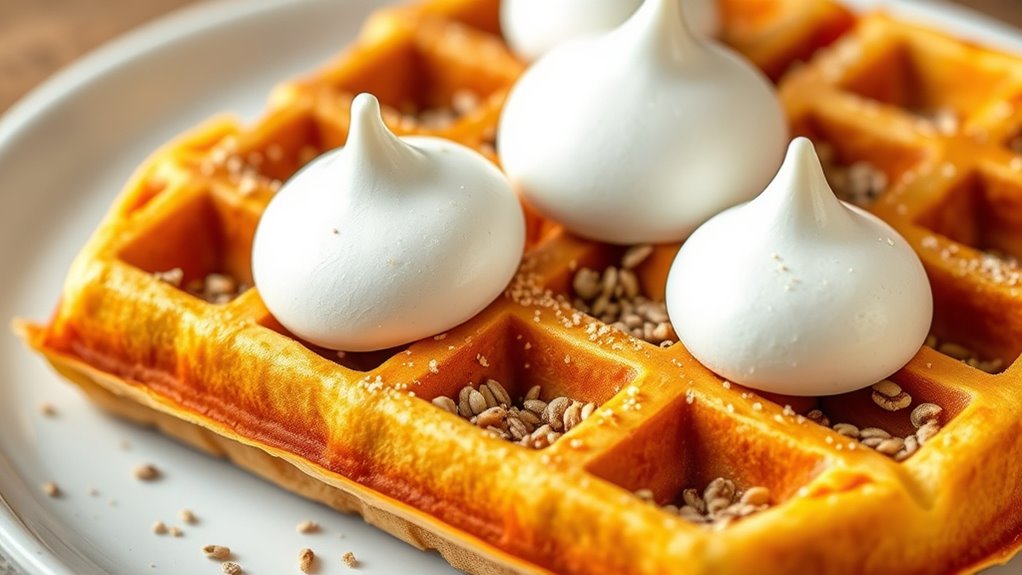
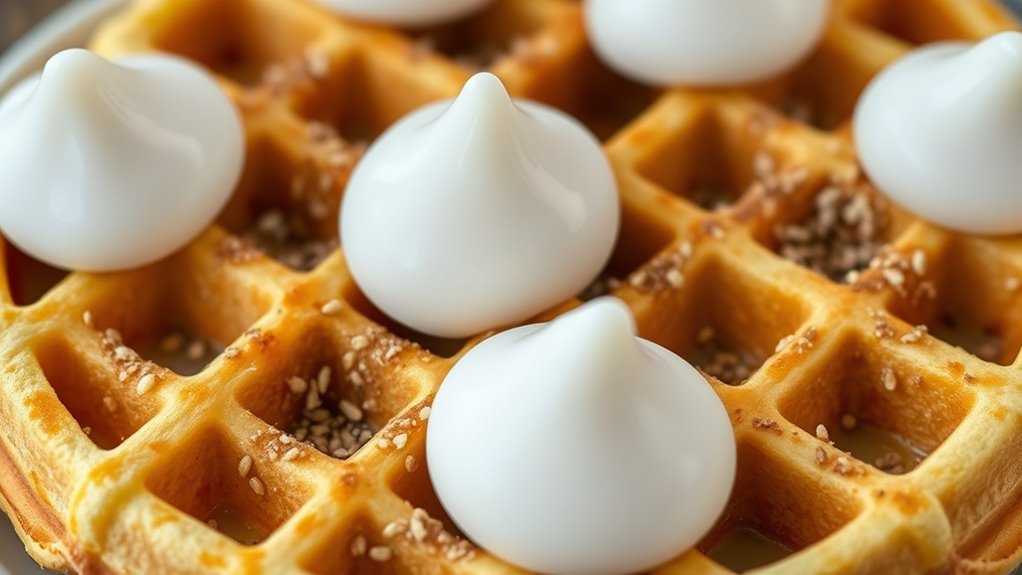
Aquafaba, the liquid from canned legumes, creates fluffy, airy waffles by mimicking egg whites.
Ground flaxseed is another versatile vegan protein source and binder. When mixed with water, it forms a gel-like substance that acts as an egg replacer. To prepare flaxseed “egg,” combine one tablespoon of ground flaxseed with three tablespoons of water, then let it sit for a few minutes until it thickens. This mixture not only binds ingredients together but also adds omega-3 fatty acids and fiber to your waffles, boosting their nutritional profile. Flaxseed is especially popular in gluten-free or allergy-friendly recipes because it’s naturally free of common allergens.
Both aquafaba and flaxseed are easy to incorporate into vegan waffle recipes, and they offer different textures and flavors. You might prefer aquafaba for a lighter, fluffier waffle, while flaxseed provides a slightly nuttier taste and denser structure. Using these plant-based binders also means you’re tapping into vegan protein sources that contribute to your daily intake of essential nutrients. They’re affordable, accessible, and effective, making them essential tools in vegan baking.

HTTSICHI Bubble Waffle Maker - Commercial Egg Waffle Maker w/Two Non-stick Baking Pans, Temperature and Timers, 2800W Professional Bubble Waffle Machine for Double Baking, Hong Kong Egg Waffle Iron
HIGH QUALITY MATERIALS: Our hong kong egg waffle maker is suitable for general home use as well as...
As an affiliate, we earn on qualifying purchases.
Frequently Asked Questions
Can Aquafaba Replace Eggs in All Waffle Recipes?
Yes, aquafaba can replace eggs in most waffle recipes because of its versatility as a binder and leavening agent. It mimics egg whites well, creating a light, fluffy texture. Keep in mind, flaxseed has a different nutritional profile, providing healthy fats and fiber, but it may alter the waffle’s texture slightly. You might need to experiment to get the desired consistency, but aquafaba is a great egg substitute overall.
How Does Flaxseed Protein Compare to Traditional Egg Proteins?
Flaxseed protein isn’t as concentrated as traditional egg proteins, but it’s a solid plant-based alternative. You’ll find it offers good nutritional value, including healthy fats and fiber, though it lacks the same protein density. Compared to eggs, flaxseed provides a different amino acid profile, so for a nutritional comparison, you might need to combine it with other plant-based sources. Overall, it’s a useful option for vegan waffle recipes.
Are There Any Allergens in Aquafaba or Flaxseed?
Allergen concerns for aquafaba and flaxseed are generally low, but some individuals may experience cross reactivity or allergic reactions. Aquafaba, made from chickpeas, can trigger legume allergies, while flaxseed might cause issues for those with seed allergies. If you have known allergies, check ingredient labels carefully and consider testing small amounts first to avoid adverse reactions. Always consult with a healthcare professional if you’re unsure about potential allergens.
How Much Protein Do Vegan Waffles Typically Contain?
Perfectly prepared vegan waffles typically contain about 4 to 6 grams of protein per serving, offering a pleasing protein punch. When comparing, they often pack less protein than traditional waffles but deliver a delightful dietary dose through plant-based ingredients like flaxseed and aquafaba. You can customize your creation to boost the nutritional content, ensuring each bite balances both flavor and a fulfilling protein comparison, perfect for plant-powered eating.
Can Proteins in Aquafaba and Flaxseed Improve Waffle Texture?
Yes, the proteins in aquafaba and flaxseed can improve waffle texture through protein binding and texture enhancement. Aquafaba’s proteins help trap air, making your waffles light and fluffy, while flaxseed’s proteins contribute to better structure and moisture retention. Incorporating these ingredients not only boosts protein content but also enhances overall waffle texture, giving you a more satisfying, well-formed result with each batch.

Hehinton® 110V Pro Commercial Bubble Waffle Maker 1400W | Stabilized Anti-Shake Base | 180° Rotating Egg Puff Iron | Brushed Stainless Steel Body & Non-Stick Coating | Ergonomic Operation Panel
Voltage: 110V; Power: 1400W; Heating Tray Size: Dia 7inch(30cone); 180 degree rotatable; Timer: 1-5Min; Temperature Control: 0-572℉; Accessories:...
As an affiliate, we earn on qualifying purchases.
Conclusion
So, next time you whip up vegan waffles, remember that aquafaba and flaxseed aren’t just ingredients—they’re the secret heroes that give your breakfast both structure and protein. Think of them as the unsung warriors in your kitchen, turning simple batter into fluffy, nourishing goodness. With each bite, you’re not just enjoying a delicious treat, but also celebrating the magic of plant-based proteins. After all, isn’t breakfast smarter when it’s both tasty and kind?

bella Flip-n-Store Waffle Maker with EverGood™ Ceramic Nonstick Coating, Fits-anywhere™ Kitchenware, Power Indicator Light, Cool Touch Handle & Cord Wrap, 7” Wide & 1" Deep Plates, 1000 Watt, Oatmilk
Diner-Style Waffles at Home: Craving those thick, fluffy diner-style waffles? The bella Flip & Store Waffle Maker delivers...
As an affiliate, we earn on qualifying purchases.

Dash Mini Waffle Maker- Compact Electric Iron for Creative Homemade Treats - Nonstick Surface - Easy-to-Clean - Perfect for Kids & Families - Aqua
Mini Waffle Magic: The Dash Mini Waffle Makeris a compact, lightweight device that quickly creates delicious waffles with...
As an affiliate, we earn on qualifying purchases.