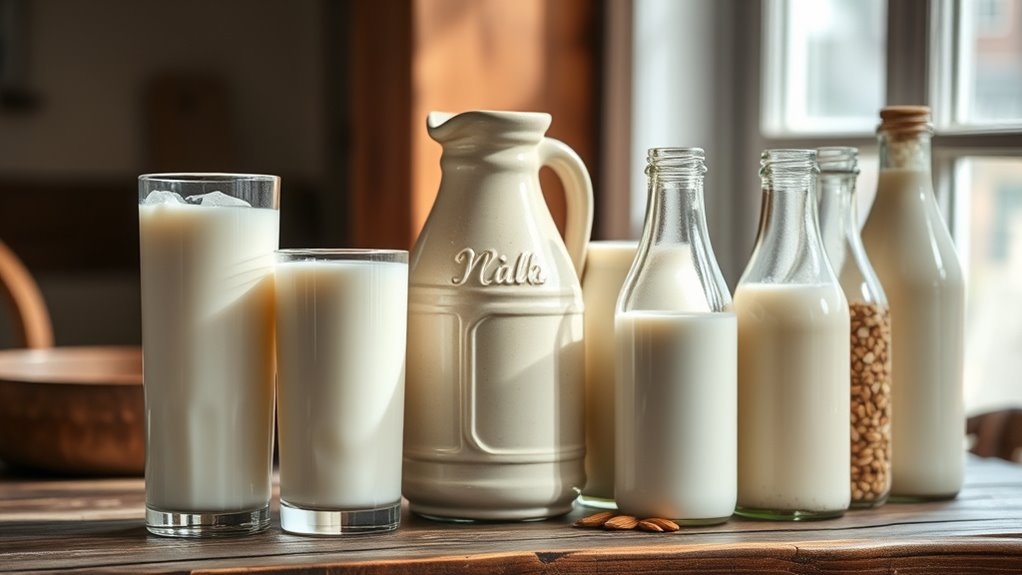

Dairy products like whole milk and buttermilk are nutrient-dense, providing calcium, vitamin D, and healthy fats that support bone and muscle health. However, they have a higher environmental impact, requiring more water and land, and contribute to greenhouse gas emissions. Plant-based milks, especially those fortified, offer a sustainable alternative with lower ecological footprints and often less saturated fat. If you want to understand how these options affect your health and the planet, there’s more to uncover.
Key Takeaways
- Whole milk provides high nutritional value but has a larger environmental footprint due to resource-intensive production.
- Buttermilk offers probiotics and lower fat options, with moderate environmental impact compared to whole milk.
- Plant-based milks generally have a lower environmental impact, using less water, land, and emitting fewer greenhouse gases.
- The environmental footprint of plant milks varies; soy and oat milks are more eco-friendly than almond milk.
- Choosing plant-based milks can reduce overall environmental impact while supporting sustainable consumption.
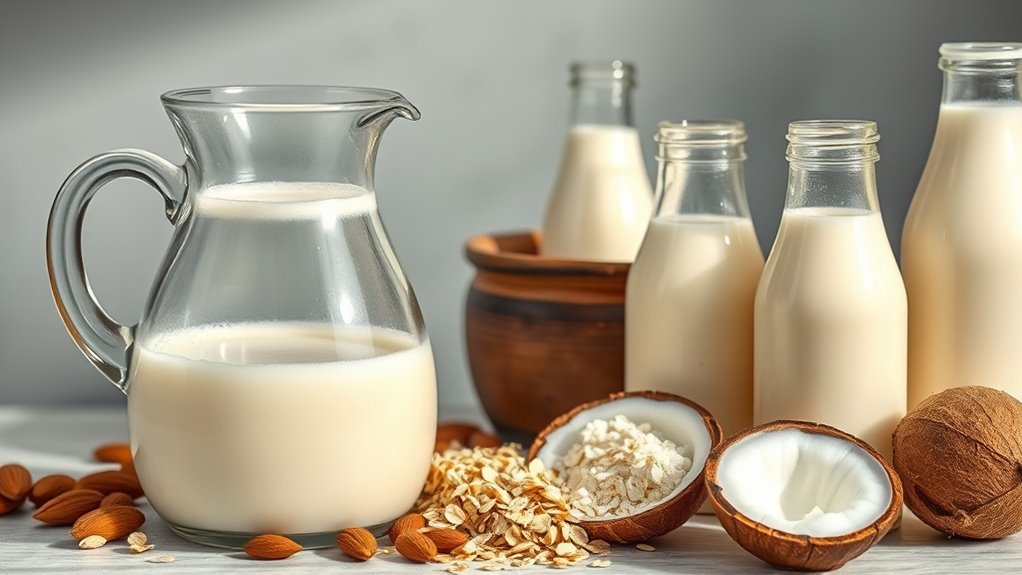
Have you ever wondered about the differences between whole milk, buttermilk, and plant-based milks? Understanding these options can help you make more informed choices about what you include in your diet. When it comes to nutritional benefits, each type offers distinct advantages. Whole milk provides a rich source of calcium, vitamin D, protein, and healthy fats, supporting bone health and muscle function. Buttermilk, on the other hand, is lower in fat and calories but still delivers probiotics, which are beneficial for your gut health. It also contains calcium and vitamin B12, contributing to your overall nutrition. Plant-based milks—like almond, soy, oat, or cashew milk—are often fortified with calcium, vitamin D, and other nutrients, making them a good dairy alternative. However, their nutritional content can vary widely depending on the brand and fortification process. Some plant milks are lower in protein compared to dairy options, but they tend to be lower in saturated fats and cholesterol, which can be advantageous if you’re aiming to reduce these in your diet. Additionally, creativity plays a role in developing innovative plant-based products to meet diverse consumer needs.
Beyond nutritional benefits, environmental impacts play a notably significant role in your choices. Producing whole milk involves considerable resource use—water, land, and energy—plus greenhouse gas emissions that contribute to climate change. Dairy farming often raises concerns about animal welfare and pollution from manure and runoff. In contrast, plant-based milks generally have a lower environmental footprint. They require less water and land and emit fewer greenhouse gases. For example, almond milk production uses a fair amount of water but has a smaller carbon footprint than dairy. Soy and oat milks tend to be even more eco-friendly, with minimal land and water requirements and fewer emissions. Choosing plant-based options can considerably significantly reduce your environmental impact, especially if you consume dairy regularly.
Ultimately, your decision between whole milk, buttermilk, and plant-based milks should consider both nutritional benefits and environmental impacts. Whole milk offers a nutrient-dense option, but if you’re concerned about sustainability or have dietary restrictions, plant-based milks might be a better fit. Be mindful that some plant milks contain added sugars or additives, so reading labels is essential. Balancing your nutritional needs with eco-conscious choices allows you to enjoy a varied diet that supports both your health and the planet. By understanding these differences, you can make choices aligned with your values and dietary goals.

365 by Whole Foods Market, Organic Whole Milk, 128 oz
365 by Whole Foods Market products give you that dance-down-the-aisles feeling, virtual aisles too!
As an affiliate, we earn on qualifying purchases.
As an affiliate, we earn on qualifying purchases.
Frequently Asked Questions
How Does Dairy Consumption Affect Lactose Intolerance Symptoms?
When you consume dairy, lactose digestion can cause symptoms if your body lacks enough lactase enzyme. Dairy excipients, like stabilizers or flavorings, might also trigger symptoms. To reduce issues, try lactose-free dairy or plant milks, which don’t contain lactose. If you choose regular dairy, consider enzyme supplements. Pay attention to how your body reacts and read labels carefully to avoid unwanted symptoms.
Are Plant-Based Milks Nutritionally Comparable to Dairy Milk?
You might think plant-based milks aren’t as nutritious as dairy milk, but they can be quite comparable. Their nutritional content varies by type, yet many are fortified with calcium, vitamin D, and B12 through fortification strategies, making them a good alternative. Always check labels to guarantee you’re getting essential nutrients, especially if you’re avoiding dairy. With the right choices, plant milks can support your nutritional needs effectively.
What Environmental Impacts Are Associated With Dairy Versus Plant Milks?
You’ll find that dairy, especially traditional milk, has a larger environmental footprint compared to plant milks. It consumes more water, land, and produces higher greenhouse gas emissions, impacting agricultural sustainability. Plant-based options like almond, soy, or oat milk generally require fewer resources and cause less environmental harm. Choosing plant milks helps you reduce your ecological impact and supports more sustainable agricultural practices.
Can Dairy or Plant Milks Influence Allergy Development in Children?
You should know that dairy and plant milks can influence allergy risk and immune development in children. Dairy, especially if introduced early, may increase allergy risk for some kids, while plant milks like almond or soy can sometimes trigger allergies or affect immune responses. Your child’s immune development depends on diverse exposures, so it is crucial to monitor for allergic reactions and consult with a healthcare provider before making significant dietary changes.
How Do Dairy and Plant Milks Differ in Their Protein Content?
Did you know that dairy milk contains about 8 grams of protein per cup, while plant milks can range from 1 to 8 grams? You’ll find significant protein variation and differing amino acid profiles between them. Dairy provides complete proteins with all essential amino acids, but many plant milks lack some. So, if you’re relying on plant milks, consider adding other protein sources to meet your nutritional needs.

365 by Whole Foods Market, Organic Chocolate Unsweetened Almond Milk, 32 Fl Oz
32 fl oz of organic unsweetened chocolate almond milk
As an affiliate, we earn on qualifying purchases.
As an affiliate, we earn on qualifying purchases.
Conclusion
Now that you know the scoop on whole milk, buttermilk, and plant milks, it’s clear each offers unique benefits for your health and lifestyle. Whether you prefer the creamy richness of dairy or the plant-based alternative, your choice shapes your diet’s story. Just like a trusty steed, select what best suits your needs and enjoy a well-rounded, modern approach to nutrition—no need to be a caveman when you’ve got options at your fingertips.

PLANTSTRONG MILK Unsweetened Almond – Whole Plant-Based Milk, Fortified with Calcium, B12 & D3, No Gums or Oils, Non-GMO Project Verified, Gluten Free, Vegan (6-Pack (32 Fl Oz Each)) + Recipe Guide
WHOLE-ALMOND, CLEAN FLAVOR: Made using every part of the almond (except the shells) for more of the good…
As an affiliate, we earn on qualifying purchases.
As an affiliate, we earn on qualifying purchases.

Cultures for Health Buttermilk Starter Culture | DIY Buttermilk, Sour Cream, or Butter | Heirloom Starter Cultures at Room Temperature | Gluten-Free, Non-GMO, Rich in Probiotics for Digestive Health
VERSATILE: Includes 2 packets of starter culture. You can culture milk into buttermilk or cream into butter, and…
As an affiliate, we earn on qualifying purchases.
As an affiliate, we earn on qualifying purchases.