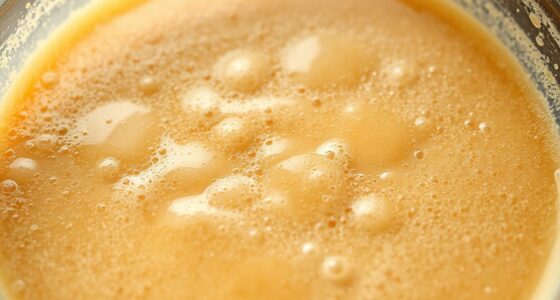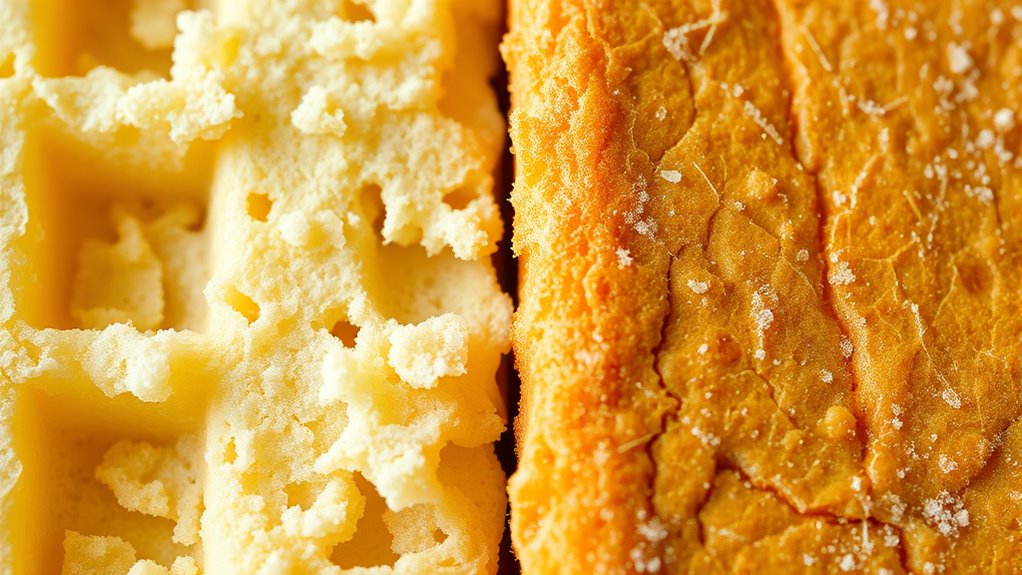

The microstructure of waffles determines if they’re crumbly or crisp by how proteins, sugars, and air pockets interact during baking. A strong gelatin network helps retain moisture, resulting in a tender crumb, while sugar crystallization creates a glassy surface for crispness. Larger, uniform air cells produce a fluffy texture, whereas smaller cells make the waffle denser. Exploring these microstructural features reveals how heat and ingredients shape your perfect waffle’s texture. Keep going to discover how to control these factors for your ideal bite.
Key Takeaways
- Crumb structure depends on cell size and distribution, influencing softness and airiness inside the waffle.
- Crispness is primarily affected by sugar crystallization forming a glassy surface layer.
- Gelatin networks in the batter help retain moisture, resulting in a tender, moist crumb.
- Larger, irregular air pockets create a light, airy texture, while smaller cells produce a denser crumb.
- The microstructure balance between moisture retention and surface crystallization determines whether a waffle feels moist or crispy.
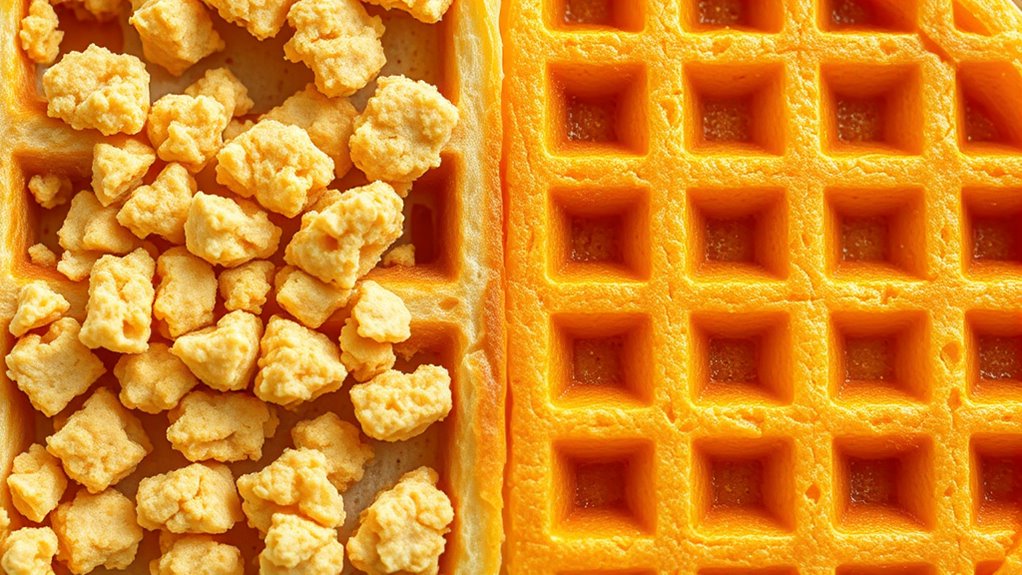
The microstructure of waffles reveals a complex network of cells and layers that give them their distinctive texture. When you bite into a waffle, what you’re truly experiencing is the intricate arrangement of these microscopic features. The crumbly, tender interior and the crisp exterior are direct results of how the ingredients interact during cooking, especially through processes like gelatin networks and carbohydrate crystallization. These processes define whether your waffle feels light and moist or crunchy and firm.
Gelatin networks form from the proteins in eggs and milk, creating a supportive matrix that traps water and air within the batter. As the waffle cooks, heat causes these proteins to denature and reorganize, establishing a flexible yet resilient network. This network helps retain moisture in the crumb, giving you that soft, tender bite. It also influences the overall structure, preventing the waffle from collapsing too quickly and contributing to its stability. The strength and extent of these gelatin networks can be adjusted by ingredient ratios, which is why some waffles turn out more moist and others crisper.
Carbohydrate crystallization plays a *vital* role in developing the texture, especially at the surface. During baking, the sugars in the batter, such as sucrose and glucose, undergo crystallization. This process creates a thin, glassy layer on the surface, which contributes to the characteristic crunch of a well-cooked waffle. As the heat causes the sugars to concentrate and form crystals, they form a barrier that enhances crispness while also influencing moisture loss. The balance between carbohydrate crystallization and moisture retention determines whether your waffle is crispy or tender.
Furthermore, the microstructure of a waffle involves the formation of air pockets and cells, which originate from the leavening agents and the whipping process. These tiny cavities expand as the batter heats up, creating a honeycomb-like structure that contributes to the lightness of the crumb. The size and distribution of these cells impact how the waffle feels when you chew — larger, more uniform cells lead to a fluffy, open crumb, while smaller, denser cells make for a more compact texture. Additionally, controlling the batter consistency and leavening can influence the development of these microscopic features.
In essence, the interplay of gelatin networks and carbohydrate crystallization shapes the waffle’s microstructure, dictating whether it’s crumbly or crisp. By understanding these microscopic processes, you can tweak ingredients and baking conditions to craft waffles tailored to your preferred texture — moist and tender or crisp and crunchy. The key lies in balancing protein interactions with sugar crystallization, ensuring each bite delivers the perfect combination of structure and mouthfeel.

Cuisinart Waffle Maker, 1250W Round Classic Waffle Iron, 5-Setting Adjustable Browning Control, WMR-CANAS, Brushed Stainless
SUPERIOR FUNCTION: This Cuisinart Waffle Maker offers professional quality for home use, making delicious breakfast waffles fast and…
As an affiliate, we earn on qualifying purchases.
As an affiliate, we earn on qualifying purchases.
Frequently Asked Questions
How Does Waffle Batter Composition Affect Microstructure?
Your waffle batter composition directly influences its microstructure. Higher batter viscosity results in a denser crumb, while lower viscosity creates a lighter, crisper texture. Leavening agents play a vital role by producing gas that expands the batter, forming the waffle’s characteristic bubbles. Adjusting these ingredients allows you to control whether your waffle turns out more crumbly or crisp, giving you the perfect balance based on your desired texture.
What Role Does Baking Temperature Play in Waffle Crispness?
Baking temperature is the superhero of waffle crispness development. When you crank up the heat, the Maillard reaction accelerates, creating a golden, irresistibly crispy exterior. Too low, and your waffle turns out soggy—like a pancake’s distant cousin. The right baking temperature guarantees moisture escapes quickly, forming that perfect crunch you crave. So, don’t hold back—set that oven hot and watch your waffle transform into a crispy masterpiece!
Can Ingredients Like Sugar or Fat Alter Crumb Versus Crisp Texture?
Yes, ingredients like sugar and fat can change waffle texture. Sugar crystallization affects crispness by creating a crunchy surface when it dissolves and recrystallizes during baking. Fat migration, on the other hand, can soften the crumb or add to crispness by coating the microstructure, preventing moisture loss. Adjusting these ingredients influences whether your waffle turns out more crumbly or crisp, giving you control over the final texture.
How Does Waffle Thickness Influence Microstructure Development?
You’ll notice that thicker waffles tend to have higher density, which affects their microvoid distribution, making them less airy and more compact. Conversely, thinner waffles develop a more open microstructure with evenly distributed microvoids, resulting in a crispier texture. The waffle’s thickness influences how the microstructure forms during cooking, impacting the overall texture by controlling the balance between density and the distribution of air pockets or microvoids.
What Are Common Methods to Analyze Waffle Microstructure?
You can analyze waffle microstructure using scanning techniques and microscopic imaging. These methods allow you to examine the internal and surface features at high resolution. Techniques like scanning electron microscopy (SEM) provide detailed images of the waffle’s crumb and crisp layers, revealing pore size, cell structure, and surface texture. Using these tools helps you understand how ingredients and processing affect texture, ensuring you create waffles with ideal quality and consistency.

Oster® Nonstick Belgian Waffle Maker, Nonstick Ceramic Waffle Iron
Sleek Stainless Steel Design: Elevates the look of your kitchen.
As an affiliate, we earn on qualifying purchases.
As an affiliate, we earn on qualifying purchases.
Conclusion
Now you see it all—your waffle’s microstructure is like a tiny universe, shaping every bite you take. Whether it’s the airy crumb or the irresistible crisp, each detail can turn an ordinary waffle into a culinary masterpiece or a soggy disappointment. So next time you bite in, remember: you’re tasting a microscopic wonder, a battleground of bubbles and starches that hold the secret to waffle greatness. Truly, your breakfast will never be the same again!

Whiskware Pancake Batter Mixer with BlenderBall Wire Whisk
The fastest, easiest way to make smooth batters for pancakes, waffles, crepes, and more. Simply add ingredients, toss…
As an affiliate, we earn on qualifying purchases.
As an affiliate, we earn on qualifying purchases.

Waffle Cone Pieces | Ice Cream Topping & Dessert Decoration | by Dasher's Spice & Beans | 1 lb.
Approximately 1/4" x 1/4" sized broken pieces of waffle cone
As an affiliate, we earn on qualifying purchases.
As an affiliate, we earn on qualifying purchases.