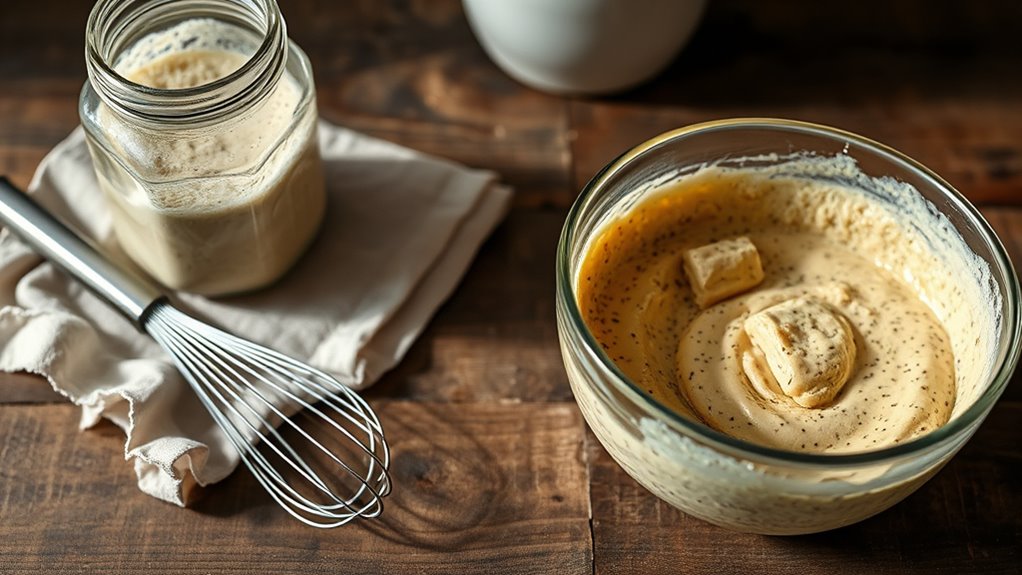

To master gluten-free sourdough waffles, start by creating a lively starter using gluten-free flours like rice or sorghum, and feed it regularly to keep it active. The wild yeast and bacteria in the starter naturally leaven the batter, developing complex flavors and improving texture. Fermentation also breaks down grains, making your waffles easier to digest and creating a crispy exterior with a tender inside. Keep experimenting, and you’ll uncover even more tips for perfecting your sourdough waffles.
Key Takeaways
- Use gluten-free flours like rice, buckwheat, or sorghum to create a healthy, fermentable sourdough starter.
- Regularly feed and maintain your starter in a warm environment to keep wild yeast and bacteria active.
- Allow the starter to develop a bubbly, sour aroma to ensure proper fermentation and leavening power.
- Incorporate the active starter into your waffle batter for natural leavening, flavor, and improved texture.
- Fermentation breaks down complex carbs, enhances flavor, and boosts mineral absorption in your gluten-free waffles.

If you’re craving warm, crispy waffles but need to avoid gluten, these gluten-free sourdough waffles are a perfect solution. The secret to their delightful texture and flavor lies in understanding the fermentation process and how to select the right gluten alternatives. When you make your sourdough starter, you’re fundamentally cultivating beneficial bacteria and wild yeast. This fermentation process not only helps develop complex flavors but also pre-digests some of the grains, making the waffles easier on your digestion. It’s the natural fermentation that gives these waffles their signature tang and improves their overall texture. By harnessing wild yeast and bacteria, you can create a leavening agent that replaces traditional gluten-containing leaveners like wheat flour and baking powder, which often rely on gluten for structure.
Choosing the right gluten alternatives is vital. Instead of wheat, you’ll use gluten-free flours such as rice, buckwheat, sorghum, or millet. These flours, when combined with a nourishing starter, produce a batter that rises well and yields a crispy exterior while remaining tender inside. The fermentation process helps these gluten alternatives develop better flavor and structure, as the wild yeast breaks down complex carbohydrates, releasing gases that create lift. This natural leavening makes your waffles airy and light without the need for commercial gluten-containing additives. Because gluten is responsible for elasticity and stretchiness in traditional batters, fermenting gluten-free grains helps build some of that structure naturally.
To get started, you’ll want to create a robust sourdough starter using your chosen gluten alternatives. Regular feeding and maintaining the right environment—warm and consistent—will encourage healthy fermentation. As your starter matures, it will become more active, bubbling and developing an appealing sour aroma. When ready, incorporate it into your waffle batter, which will then undergo a secondary fermentation. This step enhances flavor depth and improves the batter’s ability to hold gases, resulting in waffles with a crisp crust and soft interior. The fermentation process also reduces phytic acid, increasing mineral absorption, making your breakfast more nutritious.

Gluten Free Sourdough Starter – 100+ Year Old Dehydrated Heirloom Style Sourdough Starter Kit for Sourdough Bread, Pizza, Buns, Pancakes, Muffins | Easy to Use | Beginner Friendly
Mature and Lively Dehydrated Gluten Free Sourdough Starter Culture- Create Delicious and Tangy Sourdough Bread right at home.
As an affiliate, we earn on qualifying purchases.
As an affiliate, we earn on qualifying purchases.
Frequently Asked Questions
Can Gluten-Free Sourdough Waffles Be Stored Long-Term?
Yes, gluten-free sourdough waffles can be stored long-term. For the best shelf life, you should freeze them in airtight containers or freezer bags. Make sure to label and date them to keep track. When you’re ready to enjoy, simply reheat in a toaster or oven. Proper freezer storage preserves their freshness and flavor, allowing you to enjoy homemade waffles days or even weeks later without sacrificing quality.
How Do I Troubleshoot if My Waffles Don’t Rise?
Think of your waffles as a ship needing the right wind—if they don’t rise, you might face overfermentation issues or insufficient leavening. Check if your sourdough starter is active; feed it if needed. Consider alternative leavening methods like baking soda or baking powder to boost rise. Also, make certain your batter isn’t too cold, as temperature impacts the fermentation process. Adjust these factors, and your waffles will sail smoothly.
Are There Specific Gluten-Free Flours Best for Sourdough Waffles?
You should choose gluten free flour like rice, buckwheat, or sorghum for sourdough waffles. These flours give your waffles better structure and flavor, especially when combined with a good starter. Avoid overly dense flours like tapioca or potato, which can make your sourdough waffles heavy. Experiment with different gluten free flours to find the perfect balance of taste and rise, ensuring fluffy, delicious sourdough waffles every time.
What’s the Ideal Fermentation Time for Gluten-Free Sourdough Starter?
Think of your starter as a sunrise—patience reveals its true brilliance. For gluten-free sourdough waffles, aim for a fermentation duration of 8-12 hours at room temperature to achieve starter maturity. During this time, bubbles will rise like morning light, signaling it’s ready. Keep an eye on the aroma, which should be pleasantly sour. Trust this process, and your waffles will rise with the perfect balance of flavor and texture.
Can I Substitute Dairy in the Gluten-Free Sourdough Waffle Recipe?
Yes, you can substitute dairy in your gluten-free sourdough waffle recipe. Use dairy alternatives like almond milk, coconut milk, or soy milk as vegan substitutions. These options work well and won’t affect the texture or flavor greatly. Just make sure you adjust the liquid amounts if needed. With these swaps, your waffles stay delicious and dairy-free, perfect for vegan diets or dairy allergies.

Dash Mini Waffle Maker- Compact Electric Iron for Creative Homemade Treats – Nonstick Surface – Easy-to-Clean – Perfect for Kids & Families – Aqua
Mini Waffle Magic: The Dash Mini Waffle Makeris a compact, lightweight device that quickly creates delicious waffles with…
As an affiliate, we earn on qualifying purchases.
As an affiliate, we earn on qualifying purchases.
Conclusion
Now that you’re armed with expert tips, making gluten-free sourdough waffles is like guiding a gentle boat through calm waters. With patience and care, your starter will flourish, transforming simple ingredients into a delicious masterpiece. Remember, every batch is a new adventure—so don’t be discouraged by a few bumps along the way. Keep experimenting, and soon, your waffles will rise to the occasion, bringing joy to every breakfast table like a warm hug in every bite.

King Arthur Gluten-Free Bread Flour, 1:1 Replacement for Yeasted Recipes, 2 lb (Pack of 1) – Premium GF Flour for Artisan Boules, Bagels, Cinnamon Rolls & Burger Buns – Sorghum & Xanthan Gum
Versatile Replacement: This gluten free flour 1 to 1 substitute for wheat flour can be used in yeasted…
As an affiliate, we earn on qualifying purchases.
As an affiliate, we earn on qualifying purchases.

Mom's Place Gluten-Free Sourdough Start and Flour Blend Combo, 41.5 oz
Complete Sourdough Solution – Start your sourdough journey with this all-in-one combo featuring the Sourdough Start and Pancake/Waffle…
As an affiliate, we earn on qualifying purchases.
As an affiliate, we earn on qualifying purchases.