
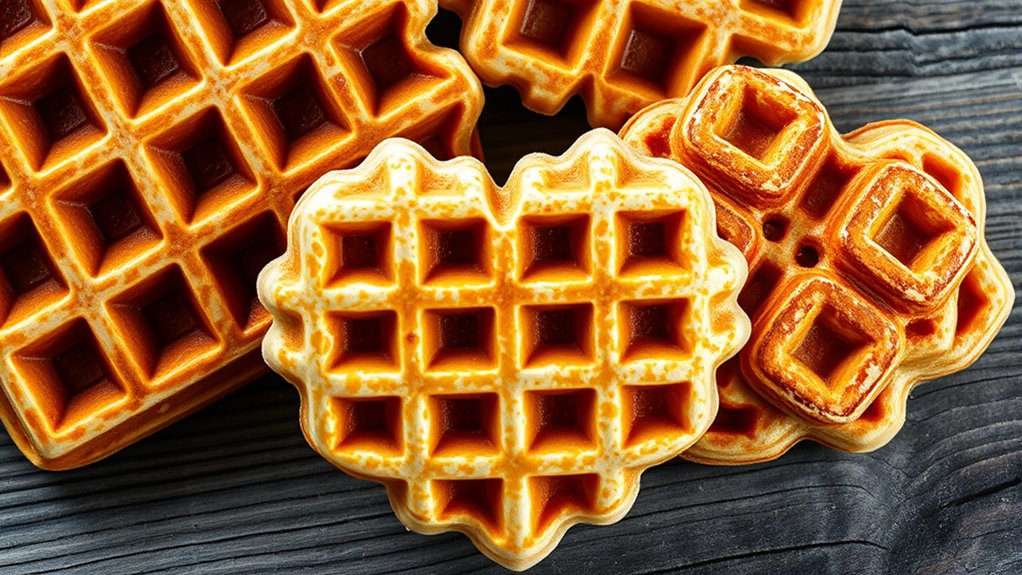
Waffle shapes like Belgian, heart-shaped, and bubble showcase the power of geometry in design and function. Belgian waffles feature repeating grid patterns with translational symmetry, while heart-shaped waffles combine curves and proportions for visual harmony. Bubble waffles highlight curved, tessellated forms that create organic, appealing patterns. These shapes illustrate how symmetry, repetition, and proportion influence both aesthetic appeal and practical use. Exploring further, you’ll discover how geometry shapes more everyday objects than you might expect.
Key Takeaways
- Belgian waffles feature a deep, grid-like pattern with repetitive squares, exemplifying translational symmetry and complex geometric design.
- Heart-shaped waffles combine rounded curves and pointed features, demonstrating proportional geometry and vertical symmetry.
- Bubble waffles consist of interconnected, curved circular shapes forming tessellated, organic patterns that highlight curved geometry.
- All waffle types showcase principles of symmetry, repetition, and proportion, reflecting mathematical concepts used in architecture and design.
- The geometric features of waffles elevate their visual appeal and inspire creative applications in art and pattern design.
Waffles are more than just delicious breakfast treats; their unique shapes are a fascinating example of geometry in everyday life. The patterns they feature reveal an intricate balance of symmetry and repetition, making them an inspiring source of geometric design inspiration. When you look closely at a waffle, you notice the grid-like pattern formed by intersecting lines, creating a series of small, uniform squares or rectangles. This waffle pattern symmetry isn’t accidental—it’s a deliberate design that emphasizes uniformity and balance, often reflecting principles used in architectural or decorative motifs. The symmetry is evident along both vertical and horizontal axes, producing a harmonious and predictable pattern that’s pleasing to the eye. Such symmetry not only enhances the aesthetic appeal but also serves practical purposes, like ensuring even cooking. Additionally, the consistent pattern allows for easy replication and manipulation in design projects, demonstrating how everyday objects can embody complex geometric principles.
Delving into specific waffle shapes, the traditional Belgian waffle exemplifies how geometric principles can be scaled up in design. These waffles usually have deep pockets and a grid structure that extends across their surface, showcasing a perfect example of how repetitive shapes can create a complex, yet cohesive, geometric pattern. The deep pockets are formed by intersecting lines that demonstrate translational symmetry, where the same pattern repeats across the surface. These patterns serve as inspiration for designers, artists, and architects who seek to incorporate repetitive, balanced elements into their work. Belgian waffles, with their consistent, grid-like surface, highlight how symmetry and geometric rhythm can elevate a simple breakfast item into a visual marvel.
Then you have the heart-shaped waffle, which adds a playful twist to the standard pattern. While it might seem less symmetrical at first glance, the shape relies on symmetry along a vertical axis, creating a mirror image that adds visual harmony. The rounded curves and pointed bottom come together to form a shape rooted in geometry, embodying proportional relationships that are both aesthetically and mathematically pleasing. The heart shape also inspires creative design, encouraging you to think about how basic geometric forms—circles, triangles, and curves—combine to create emotionally resonant shapes. It’s a reminder that even in something as simple as a breakfast treat, geometry remains fundamental.
Lastly, the bubble waffle introduces a different kind of geometric pattern—its spherical, puffy appearance is built upon a series of rounded, interconnected bubbles. These resemble a tessellation of circles, showcasing how curved shapes can fit together to form a larger, cohesive pattern. The bubble waffle’s irregular yet organized pattern offers a fresh perspective on how geometry isn’t limited to straight lines but also includes complex arrangements of curves. This shape encourages you to explore organic, natural forms and see how their underlying geometry can be both functional and beautiful. Whether you’re admiring the symmetry of traditional waffles or appreciating the playful complexity of bubble waffles, it’s clear that geometry in waffle shapes highlights the beauty of mathematical principles in everyday life.
Frequently Asked Questions
How Are Waffle Shapes Designed for Optimal Cooking?
You design waffle shapes for ideal cooking by focusing on waffle shape engineering to guarantee even heat distribution effects. You choose shapes with consistent thickness and surface patterns that promote uniform heat flow, preventing hot spots and undercooked areas. By considering how shape influences heat retention and airflow, you create waffles that cook thoroughly and develop the perfect texture, making the baking process efficient and ensuring a delicious, evenly cooked waffle every time.
Do Different Shapes Affect the Taste or Texture of Waffles?
Imagine you’re in the 1800s, discovering the secret of waffle shapes. Different shapes can influence your experience by creating texture variation and affecting taste perception. For instance, deeper Belgian waffles offer more crispy edges, while heart-shaped ones provide a unique visual appeal. While the core ingredients stay the same, the shape can subtly change how you perceive the taste and texture, making each waffle a delightful surprise.
Which Waffle Shape Is Most Popular Worldwide?
You might find that the Belgian waffle is the most popular worldwide, thanks to its classic, appealing shape and waffle aesthetics. Its iconic grid pattern symbolizes tradition and indulgence, making it a favorite for breakfast lovers everywhere. Its shape not only enhances the visual appeal but also influences how toppings stay in place, creating a delightful eating experience. So, when choosing a waffle, consider how shape symbolism adds to its charm and popularity.
Can Shape Influence Waffle Nutritional Content?
They say “you are what you eat,” but shape can also influence nutritional variation and shape and health. While the shape of your waffle doesn’t drastically change its nutritional content, it can affect portion size and surface area, impacting calorie intake and ingredient distribution. For instance, a larger Belgian waffle may provide more calories, while a smaller, heart-shaped waffle might help control portions, making shape a subtle but meaningful factor in health.
Are There Cultural Reasons Behind Specific Waffle Shapes?
Yes, certain waffle shapes reflect cultural symbolism and regional traditions. For example, heart-shaped waffles often symbolize love and are popular on special occasions in many cultures. Belgian waffles, with their unique grid pattern, showcase regional baking styles. Bubble-shaped waffles, common in East Asia, highlight local innovation and street food culture. These shapes aren’t just aesthetic; they carry cultural meanings that connect people to their heritage and traditions.
Conclusion
You might think waffle shapes are just for fun, but they reveal fascinating geometric patterns that influence texture and taste. Whether it’s the classic Belgian grid, a charming heart, or bubbly forms, each shape enhances your eating experience. Don’t overlook the design—these shapes aren’t just aesthetic; they’re crafted to optimize crispiness and flavor. So next time you enjoy a waffle, appreciate the clever geometry that makes every bite both delightful and visually appealing.