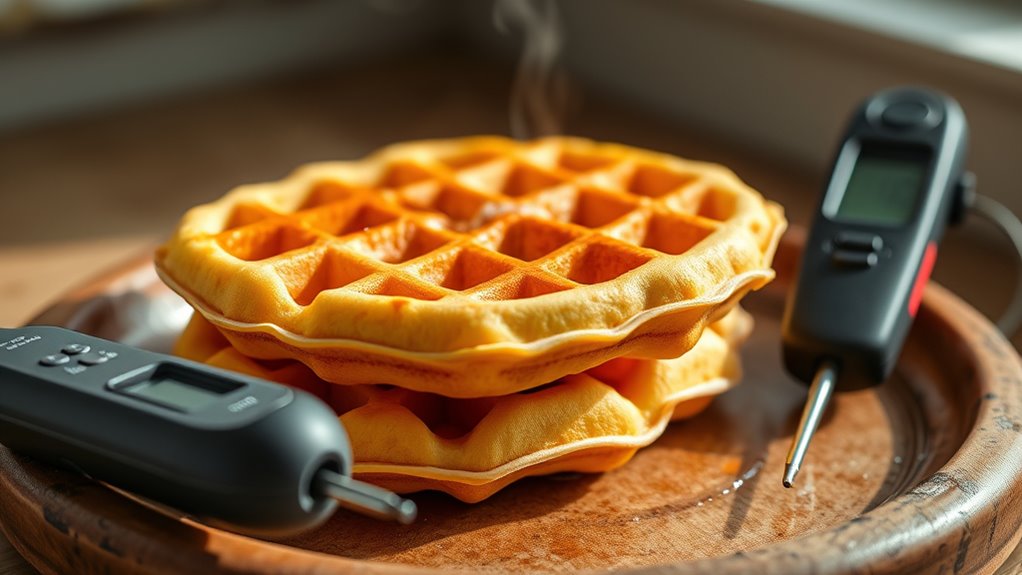

To guarantee your waffles are safe to eat, cook them to an internal temperature of at least 165°F, which kills bacteria like Salmonella and E. coli from raw ingredients. Use a reliable food thermometer to check the temperature before serving. Keep waffle irons set between 375-400°F for ideal cooking, and always verify doneness with a thermometer—not just appearance. Properly cooked waffles help prevent foodborne illness, and if you want to learn more, there’s more important info to take into account.
Key Takeaways
- Waffles should reach an internal temperature of 165°F (74°C) to ensure they are safe to eat.
- Use a digital food thermometer to verify the internal temperature after cooking.
- Set waffle iron controls around 375-400°F to promote thorough cooking.
- Confirm waffles are fully cooked before serving; visual cues alone are insufficient.
- Reheat leftovers to at least 165°F to prevent bacterial growth and ensure safety.
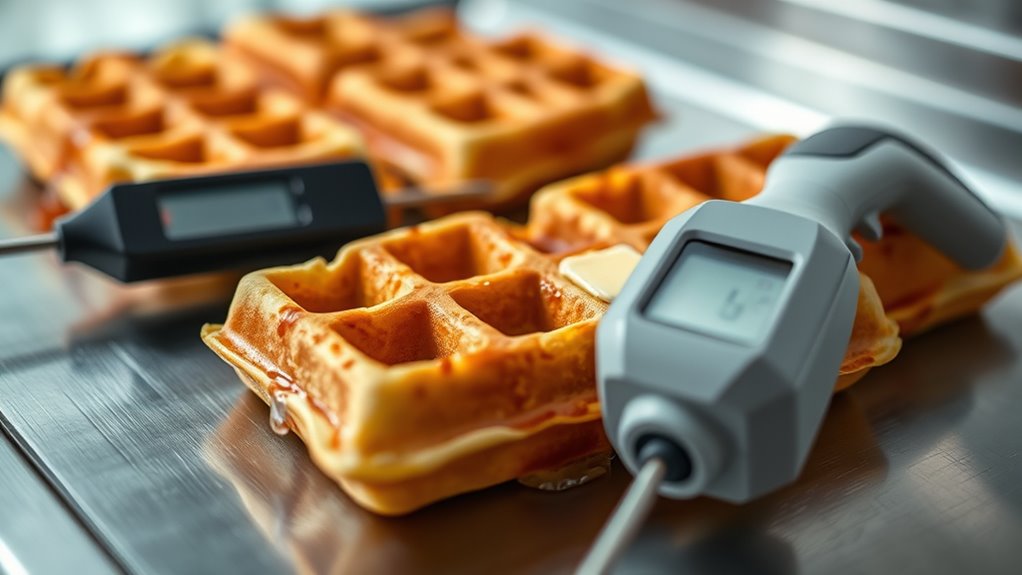
Have you ever wondered if your waffles are safe to eat? Ensuring your waffles are not only delicious but also safe involves understanding proper cooking temperatures and food safety practices. One vital aspect is waffle batter safety. Bacteria like Salmonella and E. coli can contaminate raw ingredients such as eggs, milk, and flour. To prevent any health risks, it’s essential to handle batter carefully, keeping it refrigerated until you’re ready to cook and avoiding leaving it out at room temperature for too long. Always wash your hands thoroughly before preparing the batter, and clean all utensils and surfaces that come into contact with raw ingredients to prevent cross contamination. Using separate cutting boards and utensils for raw ingredients and cooked foods helps minimize the risk of spreading harmful bacteria. When preparing your waffle batter, make sure to follow safe handling practices, such as avoiding taste-testing raw batter with your fingers, which could transfer bacteria. Instead, use a spoon or spatula, and wash everything afterward. Proper temperature control during storage and cooking can also reduce bacterial growth and help ensure food safety.
Once you’ve prepared the batter, the next step is proper cooking temperature. Waffles must reach a minimum internal temperature of 165°F (74°C) to guarantee any bacteria are killed. Using a reliable food thermometer is the best way to confirm this. When the waffle iron is heated properly, it creates an environment that kills bacteria, but only if the temperature is high enough and maintained consistently during cooking. If your waffle iron has temperature controls, set it to the recommended setting, usually around 375-400°F. Don’t just rely on visual cues like golden color or crispness; check the internal temperature with a digital thermometer before serving. This way, you know for sure that your waffles are thoroughly cooked and safe to eat.
Another important tip is to avoid cross contamination during the cooking process. Keep raw batter and cooked waffles separate, and never reuse utensils or plates that have touched raw batter unless they’ve been washed thoroughly. If you’re making multiple batches, clean your waffle iron between uses to prevent bacteria from spreading. When serving, do so promptly, and keep leftovers refrigerated at 40°F (4°C) or below. Reheat any leftover waffles to at least 165°F before eating to guarantee safety. By paying close attention to waffle batter safety, preventing cross contamination, and cooking your waffles to the right temperature, you can enjoy your breakfast without worry. Food safety isn’t complicated, but it does require a little awareness and care to keep you and your loved ones healthy.

Alpha Grillers Meat Thermometer Digital – Instant Read Food Thermometer for Cooking & Grilling – Professional Kitchen Gift for Men, Dad & Mom
Instant Read Food Thermometer | Our instant read thermometer features a temperature probe and advanced, highly accurate technology…
As an affiliate, we earn on qualifying purchases.
As an affiliate, we earn on qualifying purchases.
Frequently Asked Questions
Can Undercooked Waffles Cause Food Poisoning?
Undercooked waffles can cause food poisoning because they may contain raw waffle batter, which isn’t safe to eat. To prevent this, verify you follow waffle batter safety guidelines and cook waffles thoroughly at the right temperature. Regular waffle iron maintenance is essential, too, as a clean, well-maintained iron helps achieve proper cooking. Always check that your waffles are golden brown and cooked evenly before consuming to avoid health risks.
How Do I Check if My Waffle Is Cooked Properly?
Imagine sinking your fork into a perfectly golden waffle, its crispy exterior giving way to a tender, fluffy inside. To verify if your waffle is cooked properly, look for a deep golden-brown color and a firm texture that resists sogginess. Use a toothpick or skewer—if it comes out clean after the recommended cooking time, your waffle is ready. This guarantees the right waffle texture and safe, delicious enjoyment.
Are There Different Safe Temperatures for Different Waffle Recipes?
You don’t need different safe temperatures for various waffle recipes. Focus on reaching an internal temperature of 165°F to guarantee safety, regardless of ingredients. Waffle texture and ingredient variations might change cooking times, but the safe temperature stays the same. Use a food thermometer to check doneness; your waffles should be golden brown and firm, indicating they’re cooked through and safe to eat.
What Are the Risks of Overcooking Waffles?
Overcooking waffles can lead to a dry, tough texture, with studies showing that too long in the waffle iron reduces moisture by up to 30%. When you overcook, your waffle becomes crispy and hard, losing its tender, fluffy interior. Excessive cooking time also risks burning the exterior, creating a bitter taste and potential health hazards from burnt compounds. Keep a close eye on your waffle’s texture and timing to avoid these issues.
Should I Use a Food Thermometer for Waffles?
Yes, you should use a food thermometer for waffles. An instant-read thermometer helps you check if the waffle batter reaches the safe internal temperature, ensuring it’s fully cooked without overdoing it. Insert the thermometer into the thickest part of the waffle to get an accurate reading. This way, you avoid undercooking or overcooking, resulting in crispy, safe waffles every time.

Cuisinart Waffle Maker, 1250W Round Classic Waffle Iron, 5-Setting Adjustable Browning Control, WMR-CANAS, Brushed Stainless
SUPERIOR FUNCTION: This Cuisinart Waffle Maker offers professional quality for home use, making delicious breakfast waffles fast and…
As an affiliate, we earn on qualifying purchases.
As an affiliate, we earn on qualifying purchases.
Conclusion
Remember, achieving the perfect waffle isn’t just about taste—it’s about safety too. When you cook your waffles to the right temperature, you’re not just creating a delicious treat, but also guarding against foodborne illnesses. Think of proper cooking as a shield, safeguarding each bite. So, next time you make waffles, aim for that safe, golden hue. Because a safe waffle is a waffle enjoyed to the fullest—crisp, warm, and worry-free.

Etekcity Infrared Thermometer Laser Temperature Gun 774, Meat Food Candy Oven Thermometer for Griddle Accessories, Heat Gun for Cooking Refrigerator Tools, Adjustable Emissivity & Max Measure, Yellow
𝐕𝐞𝐫𝐬𝐚𝐭𝐢𝐥𝐞 𝐓𝐨𝐨𝐥𝐬: Infrared technology allows you to measure various objects at home and outdoors; Use it for 𝒎𝒆𝒂𝒕,…
As an affiliate, we earn on qualifying purchases.
As an affiliate, we earn on qualifying purchases.
Alpha Grillers Meat Thermometer Digital – Instant Read Food Thermometer for Cooking & Grilling – Professional Kitchen Gift for Men, Dad & Mom
Instant Read Food Thermometer | Our instant read thermometer features a temperature probe and advanced, highly accurate technology…
As an affiliate, we earn on qualifying purchases.
As an affiliate, we earn on qualifying purchases.