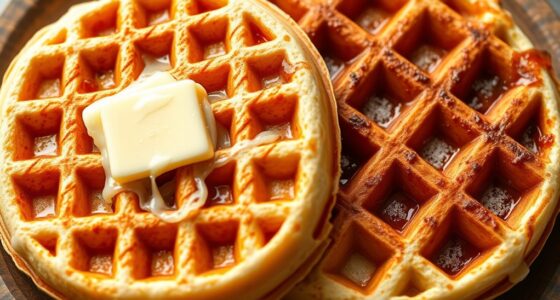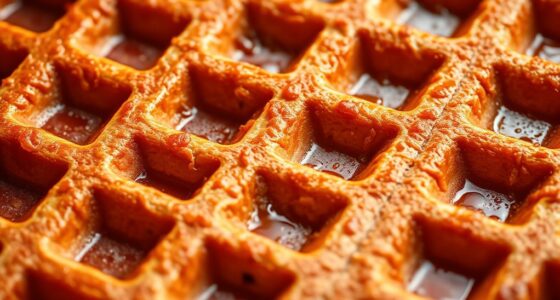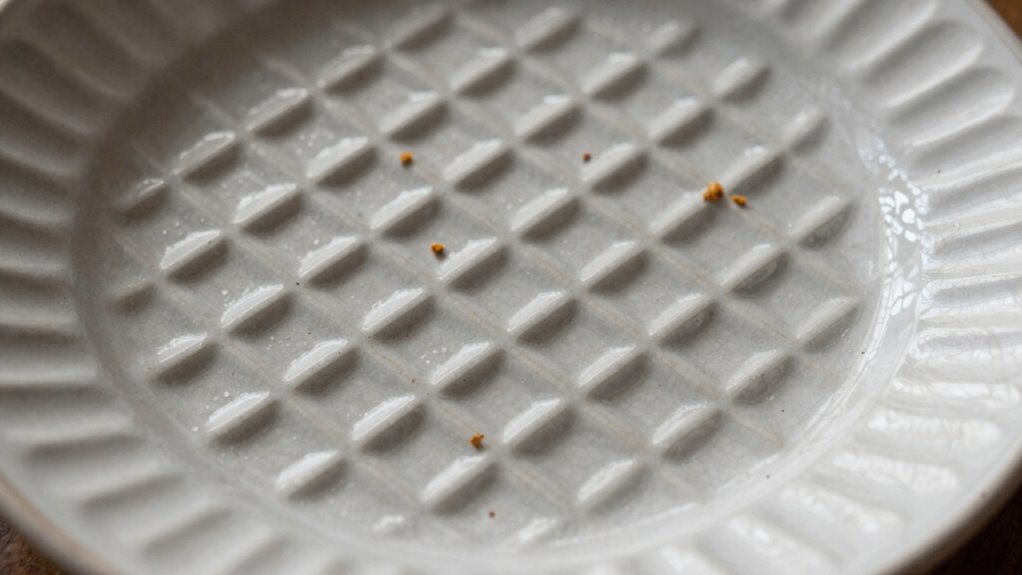

When you use deep grids, they trap heat and moisture better, leading to a gentle, even rise and a moist, tender crumb with a cohesive texture. Shallow plates allow moisture to evaporate faster and heat to penetrate more quickly, resulting in a crisper crust and a more open, airy crumb with larger holes. Understanding how these environments influence your bake will help you achieve your desired texture, and you’ll find more detailed insights if you keep exploring.

Get baking supplies delivered free with Prime
- Fast, free delivery on millions of items
- Prime Video, Amazon Music and more included
- Member-only deals all year
Key Takeaways
- Deep grids provide better heat insulation, promoting even dough rise and a moist, tender crumb.
- Shallow plates allow quicker moisture evaporation, resulting in a crisper crust and open crumb structure.
- Deep grids facilitate uniform heat distribution, supporting stable and cohesive crumb development.
- Shallow plates speed up moisture loss, creating a lighter, more open crumb with larger holes.
- The depth influences heat transfer, moisture retention, and ultimately the crumb’s texture and stability.
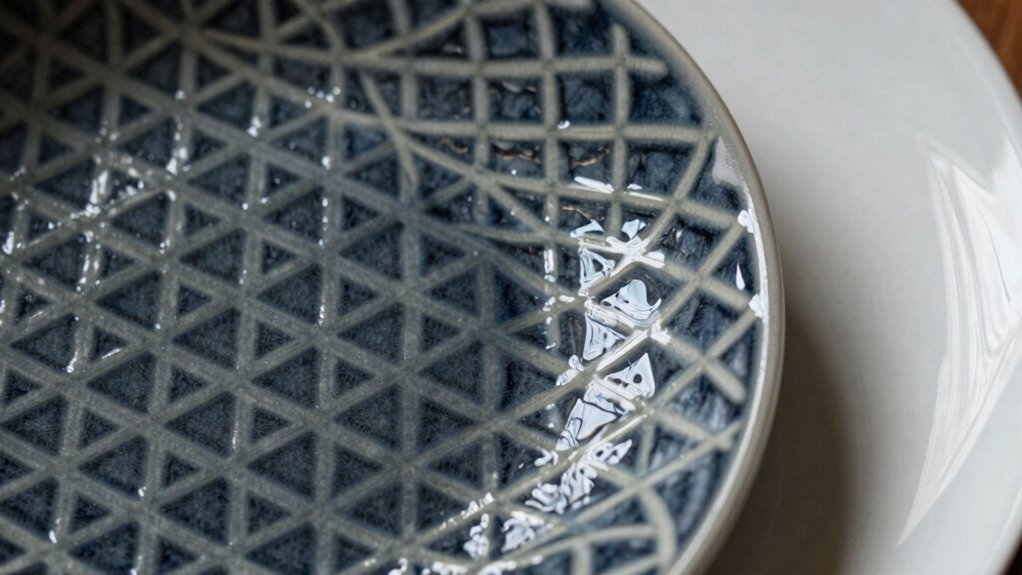
When exploring the world of baking, understanding the differences between deep grids and crumb textures can considerably improve your results. The choice of baking environment, specifically whether you use a deep grid or a shallow plate, directly influences the final crumb structure. Deep grids tend to produce a different crumb than shallow plates because of how they affect heat distribution and moisture escape. This heat transfer plays a crucial role in shaping the final texture of your baked goods. The steam helps to develop a delicate, tender crumb that’s slightly moist, providing a satisfying contrast between the crust and interior. Because of the increased insulation, heat penetrates more slowly, allowing the dough to rise evenly and maintain a stable structure. This stability enhances the structural integrity of the baked product, preventing it from collapsing or becoming overly dense. Additionally, the type of baking vessel used can impact the overall moisture levels and heat retention, further influencing the crumb outcome.
In contrast, shallow plates allow moisture to evaporate more quickly during baking. This faster evaporation leads to a crisper crust and a drier interior, contributing to a different crumb texture. The crumb tends to be airier and more open, with larger holes and less uniformity. While this can be desirable for certain baked goods like artisan breads or baguettes, the overall texture contrast is less smooth, and the crumb may lack the cohesion found in deep grid baking. The structural integrity of baked goods on shallow plates can sometimes be less stable, especially if the dough isn’t properly supported or if the oven temperature is too high.
Your choice between deep grids and shallow plates ultimately influences both the crumb’s texture and the overall strength of your baked creation. Deep grids foster a moist, tender crumb with a fine, uniform texture and a resilient structure. They’re ideal when you want a soft, cohesive interior with a smooth crust. Conversely, shallow plates are suited for achieving a crisper, more open crumb with greater contrast, but they require careful handling to maintain stability. Recognizing the impact of heat distribution and moisture retention can help you refine your technique for better results.
As an affiliate, we earn on qualifying purchases.
Frequently Asked Questions
How Does Grid Depth Affect Baking Time?
When you use a deep grid, baking time increases because the thicker structure affects heat distribution, making it harder for heat to reach the center evenly. This results in less baking uniformity, requiring you to extend the baking time to guarantee complete cooking. Conversely, shallow plates allow heat to penetrate more quickly, reducing baking time and promoting more consistent results. Adjust your timing accordingly based on grid depth to achieve the best bake.
Are Deep Grids More Durable Than Shallow Plates?
Deep grids are generally more durable than shallow plates because their alternative grid shapes provide better structural support. They often have higher surface thermal conductivity, which helps distribute heat evenly, reducing stress on the material. This design makes them resistant to warping or cracking over time. If you want a long-lasting baking surface, choosing deep grids with ideal surface thermal conductivity can be a smarter, more resilient choice.
Do Different Materials Impact Crumb Texture?
Think of baking as painting with different textures. Material properties act like the brush strokes, shaping your crumb variation. You’ll notice that using high-protein flour creates a chewy, dense crumb, while lighter flours produce a delicate, airy texture. Different materials influence moisture retention and gluten development, directly impacting crumb texture. So, yes, the materials you choose are like the palette, transforming your bread’s final character.
Can Deep Grids Be Used for All Types of Baked Goods?
Deep grids aren’t perfect for all baked goods because they’re best suited for items needing even heat distribution, like certain cakes or bread. For alternative baking techniques, shallow plates or different equipment might work better. You should also consider equipment maintenance to keep your tools in top shape, ensuring consistent results. While deep grids can be versatile, evaluate your specific baked goods to choose the right equipment for ideal texture and success.
How Does Grid Size Influence the Final Crumb?
Like choosing the right scroll for your typewriter, grid size influences your final crumb considerably. Smaller grids promote grid uniformity, resulting in a more consistent crumb coloration and texture. Larger grids create bigger holes, leading to a more open, airy crumb with varied coloration. You’ll notice that a well-balanced grid size helps control how evenly heat reaches your baked goods, ultimately shaping the appearance and texture of your final crumb.
Conclusion
So, now you see why deep grids create a totally different crumb than shallow plates. It’s like comparing a tiny pebble to a mountain — the depth dramatically shapes the texture and how crumbs break apart. Next time you bake or serve, remember that depth isn’t just about looks; it’s the secret weapon for a perfect, satisfying crunch that could rival the roar of a lion. Embrace the depth and elevate your baking game to legendary status!
Halloween Picks
halloween
As an affiliate, we earn on qualifying purchases.