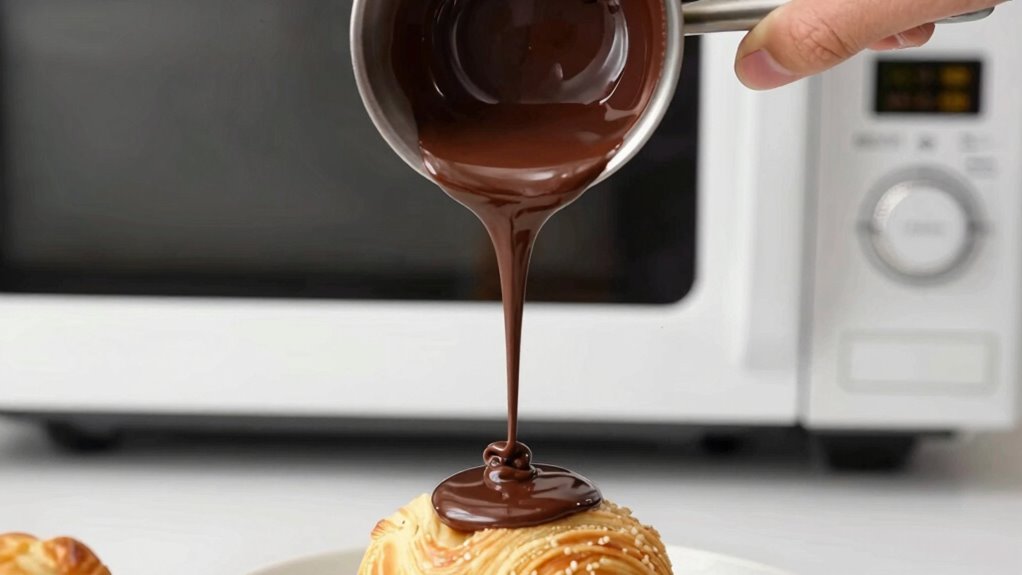
Using a chocolate melter gives you precise temperature control and consistent heat, helping you achieve a smooth, glossy drizzle with less effort. Microwaves can work quickly, but they require careful monitoring, stirring, and short bursts to avoid hot spots and burning. If you’re after effortless results with great finish quality, a melter might be your best bet. Keep going to discover more tips on mastering the perfect drizzle with either method.
Key Takeaways
- Chocolate melters maintain consistent, precise temperatures for smooth, glossy coatings ideal for a professional finish.
- Microwaves require careful short bursts and stirring to prevent overheating and achieve a similar smooth drizzle.
- Melters offer hands-off operation, reducing the risk of seizing, while microwaves demand vigilant monitoring for optimal results.
- Both methods can produce a smooth drizzle, but melters provide better control and consistency for delicate decorations.
- Choice depends on speed and convenience; melters suit detailed work, microwaves are faster but require skillful handling.
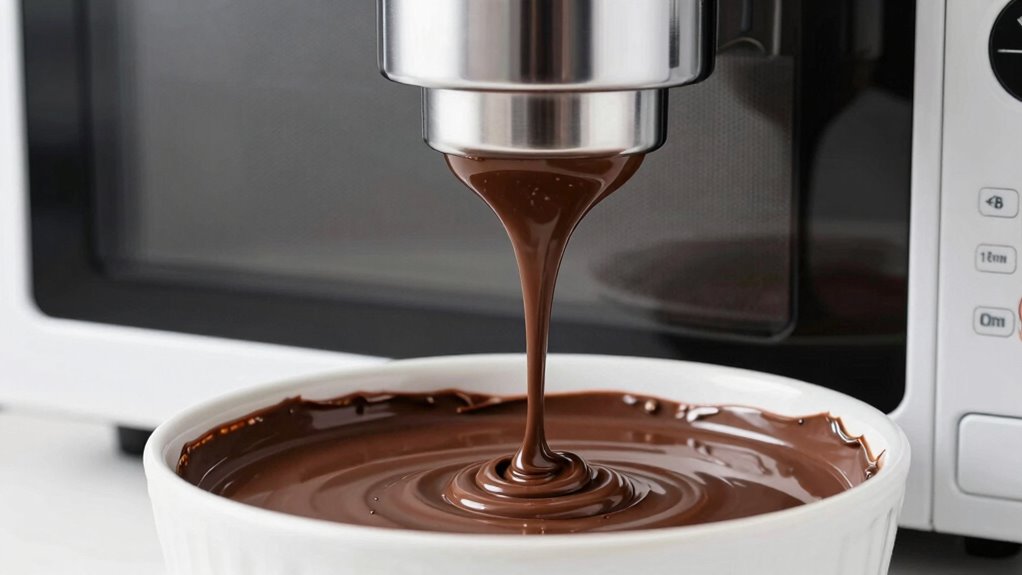
When it comes to melting chocolate, choosing the right method can make a big difference in your results. Whether you’re aiming for a silky drizzle or smooth coating, proper temperaturkontrolle is essential. Using a chocolate melter provides a controlled environment, maintaining a consistent temperature that prevents overheating and seizing. These devices often feature precise temperature settings, ensuring you can set and maintain the ideal heat level throughout the melting process. This control makes temperaturkontrolle much easier compared to a microwave, which can quickly turn your chocolate into a burnt mess if not carefully monitored. With a melter, you can avoid sudden temperature spikes and keep your chocolate at the perfect consistency for dipping, pouring, or drizzling.
A chocolate melter offers precise temperaturkontrolle for perfect, smooth melting every time.
On the other hand, a microwave offers convenience and speed, but it requires careful dosierungstechniken to prevent overheating. When using a microwave, it’s best to melt the chocolate in short bursts—typically 15 to 30 seconds—stirring thoroughly between each interval. This technique helps distribute heat evenly, reducing the risk of hot spots that can scorch the chocolate. It’s also important to use a microwave-safe bowl and to keep an eye on the clock. Without proper dosierungstechniken, you might end up with clumpy or burned chocolate, which is difficult to salvage. Additionally, microwaving demands constant attention and quick adjustments, so it’s less forgiving than a chocolate melter. Understanding temperature control can significantly improve your melting process and final results.
If you prefer a hands-off approach, a melter is your best bet. It allows you to set the desired temperature and forget about it, knowing your chocolate will stay at the right temperaturkontrolle. This consistency is especially valuable when working on delicate decorations or when you need a smooth, glossy finish. Alternatively, if you’re in a hurry and comfortable with a bit of vigilance, the microwave can do the job, provided you follow proper dosierungstechniken. Just remember, patience and attention are key—stir frequently, melt in short bursts, and stay nearby to avoid disaster.
Ultimately, your choice depends on how much control you want and how quickly you need your chocolate ready. A chocolate melter simplifies temperaturkontrolle and ensures a uniform melt, perfect for precision work. The microwave, while faster, demands careful attention with dosierungstechniken to avoid ruining your chocolate. Both methods can produce excellent results, but understanding the nuances of each will help you achieve that smooth, professional-looking drizzle every time.
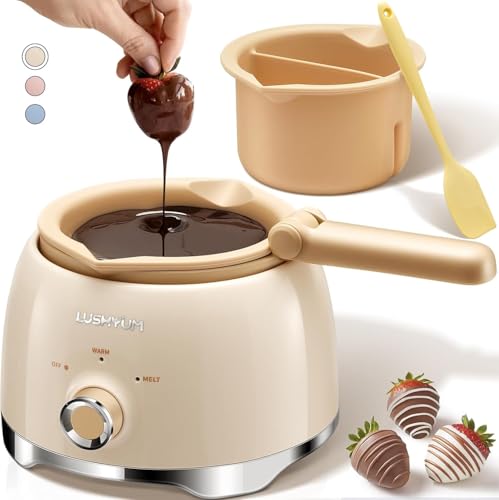
LUSHYUM Chocolate Melting Pot Candy Melts Melter with 2 Insert Pots and Spatula, 4 Cups Capacity Warmer Machine, Ideal Dipping Tool Kitchen Supplies for Making Cake Pop Covered Strawberries Fondue
Keep Your Chocolate Always Smooth: Tired of clumpy chocolate? LUSHYUM Chocolate Melting Pot makes it easy to keep…
As an affiliate, we earn on qualifying purchases.
As an affiliate, we earn on qualifying purchases.
Frequently Asked Questions
Can Chocolate Melters Handle Different Types of Chocolate?
Yes, chocolate melters can handle different types of chocolate, thanks to their precise temperature control. This feature guarantees you melt everything from dark to white chocolate without burning or seizing. Plus, they’re easy to clean, making it simple to switch between types without hassle. Just set the right temperature, melt, and enjoy smooth, perfectly melted chocolate for drizzling or dipping.
How Long Does It Take to Melt Chocolate in a Microwave?
You wonder how long it takes to melt chocolate in a microwave, right? Usually, it’s quick—about 30 seconds to 1 minute—if you keep an eye on the chocolate temperature and stir frequently. For the best melting consistency, you should heat it in short bursts, checking often. This way, you prevent overheating, which can ruin the texture, ensuring your chocolate remains smooth and perfect for drizzling or dipping.
Is There a Risk of Burning Chocolate With a Melter?
Yes, there’s a risk of burning chocolate with a melter if you don’t use proper temperature control. Overheating can cause the chocolate to seize and ruin its melting consistency. To avoid this, set your melter to low or gentle heat, and monitor the temperature carefully. This guarantees smooth, evenly melted chocolate without burning, making your drizzle look professional and taste delicious.
Which Method Preserves the Original Flavor Better?
Using a chocolate melter preserves flavor retention and taste quality better than a microwave. Melters maintain a consistent, gentle heat that prevents overheating and flavor loss, ensuring your chocolate stays true to its original taste. Microwaves can cause uneven heating, risking burnt spots and diminished flavor. For the best flavor retention and ideal taste quality, opt for a chocolate melter, which offers better control and preserves the chocolate’s natural richness.
Are There Safety Concerns With Using Microwave or Melter?
Yes, there are safety concerns with both methods. With a microwave, you should watch for food safety issues like overheating, which can cause burns or uneven heating that leaves hot spots. Electrical hazards are minimal if you follow proper usage instructions. When using a chocolate melter, make sure it’s kept away from water to prevent electrical shocks. Always unplug devices after use and handle hot equipment carefully to stay safe.
LUSHYUM Chocolate Melting Pot Candy Melts Melter with 2 Insert Pots and Spatula, 4 Cups Capacity Warmer Machine, Ideal Dipping Tool Kitchen Supplies for Making Cake Pop Covered Strawberries Fondue
Keep Your Chocolate Always Smooth: Tired of clumpy chocolate? LUSHYUM Chocolate Melting Pot makes it easy to keep…
As an affiliate, we earn on qualifying purchases.
As an affiliate, we earn on qualifying purchases.
Conclusion
So, whether you choose the mighty chocolate melter or the humble microwave, remember, you’re wielding the power to turn molten cocoa into silky perfection. With each method, you’re on the brink of creating drizzles so smooth they could make even the grumpiest dessert critic weep tears of joy. Don’t just settle for ordinary—embrace the smoother drizzle method and elevate your chocolate game to legendary status. Your taste buds will thank you, and your desserts will become unstoppable masterpieces!

Palksky Silicone Chocolate Melting Cup Set with 4 Silicone Measuring Cups (250ml & 350ml) and 4PCS Heat-Resistant Jar Spatulas, Non-Stick Baking Tools for DIY Chocolate, Butter & Cream Mixing
Perfect Chocolate Melting Set – Make chocolate preparation easier than ever with this complete chocolate melting cup and…
As an affiliate, we earn on qualifying purchases.
As an affiliate, we earn on qualifying purchases.

Cyoufine Professional Culinary Precision Drawing Decorating Spoon Set, 2Pcs Stainless Steel Chef Drizzle Spoons,Chocolate Filter Spoons,Plating Spoon for Decorative Plates, Cake, Coffee
【Premium Stainless Steel】made of high quality stainless steel material, non toxic, anti-rust, corrosion-resistant, solid and durable to use.Designed…
As an affiliate, we earn on qualifying purchases.
As an affiliate, we earn on qualifying purchases.