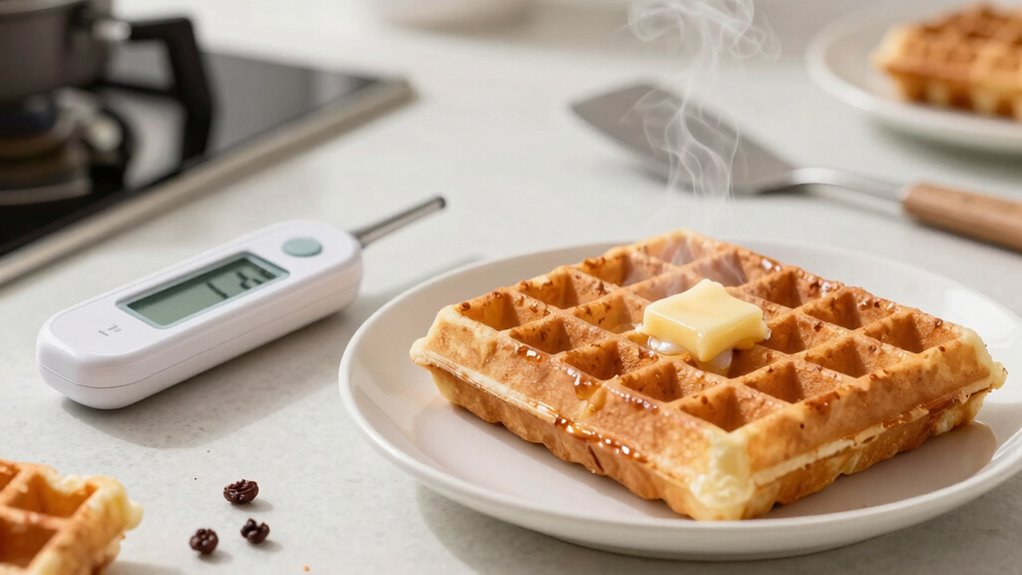

To diagnose waffle problems quickly, start by inspecting your equipment for residue or uneven heating, which can cause sticking or uneven browning. Check your batter’s consistency—if it’s too thick or thin, make small adjustments with flour or liquids. Consider recent ingredient or equipment changes that could affect results. Focus on small tweaks, like adjusting batter moisture or cleaning your waffle maker, before making major changes. Keep exploring to discover even more tips for perfect waffles.

Get baking supplies delivered free — and shop member deals
- Fast, free delivery on millions of items
- Access to Prime Big Deal Days deals on October 6–7
- Prime Video, Amazon Music and more included
Key Takeaways
- Check for recent ingredient changes or substitutions that might affect batter consistency or cooking.
- Inspect and clean the waffle maker thoroughly to prevent residue buildup and uneven heating.
- Adjust batter by adding flour or reducing liquids in small increments to improve texture.
- Verify the equipment’s heating elements and indicator lights for proper functioning.
- Consider batter viscosity and leavening to identify if adjustments are needed for better results.
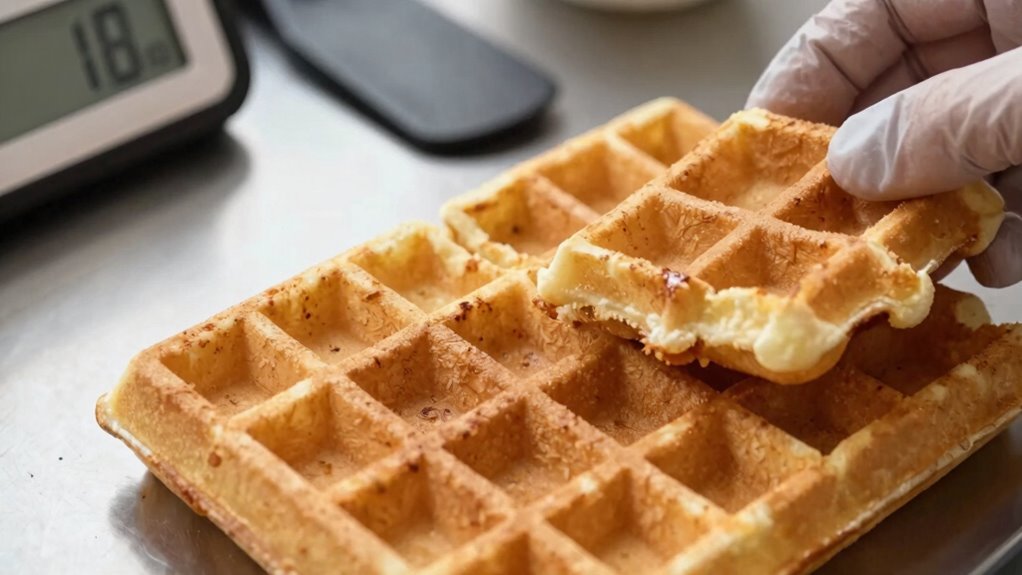
When your waffle isn’t turning out as expected, wasting time starting over isn’t always necessary. Instead, you can quickly diagnose the problem and fix it, saving both time and ingredients. The first step is to identify whether the issue stems from ingredient substitutions or equipment maintenance. Sometimes, swapping ingredients—like using a different type of flour or milk—can affect the batter’s consistency and the final result. If you recently made substitutions, consider whether they might have disrupted the recipe’s balance. For example, using a gluten-free flour instead of regular all-purpose flour can alter texture and browning. In such cases, adjusting the liquid ratio or adding a binding agent like xanthan gum can help compensate without needing to start from scratch.
Adjust for ingredient swaps like gluten-free flour by tweaking liquids or adding binding agents to improve your waffles.
Next, look at your equipment. Waffle makers require regular maintenance to function properly. If your waffles aren’t crisping up or are sticking excessively, the problem might be dirty or unheated plates. Make sure to clean your waffle maker thoroughly, removing any residue from previous batches, as leftover batter or oil can cause uneven cooking. Check the heating elements to ensure they’re working correctly—sometimes, the indicator light may be misleading if the thermostat is malfunctioning. Proper equipment maintenance prevents common issues like uneven browning, sticking, or undercooking, so a quick inspection can often reveal the root cause. Regularly cleaning and inspecting your waffle maker can help prevent many common problems, especially when combined with understanding how ingredient interactions influence cooking outcomes. Additionally, understanding the chemical reactions involved in batter preparation can help you troubleshoot more effectively. Recognizing how baking chemistry affects leavening and browning can provide further insight during troubleshooting.
Once you’ve considered ingredient substitutions and examined your equipment, think about your batter’s consistency. If your waffles are too dense or soggy, it might be due to excess liquid or insufficient leavening. Adjust the batter by adding a little more flour or reducing liquids, but do so gradually, testing small amounts first. Conversely, if your waffles are too dry or crumbly, increasing moisture or shortening the baking time can often remedy the problem. These small tweaks allow you to fix the current batch without discarding ingredients or starting over.
In essence, troubleshooting involves a bit of detective work. Pay attention to recent changes, inspect your equipment, and adjust the batter accordingly. Ingredient substitutions and ongoing equipment maintenance are often the culprits behind waffle issues, and addressing them on the fly keeps your breakfast on track. With a clear understanding of how these factors influence your waffles, you can quickly diagnose the problem and make the necessary adjustments—saving time, ingredients, and frustration.
best waffle maker cleaning brush
As an affiliate, we earn on qualifying purchases.
As an affiliate, we earn on qualifying purchases.
Frequently Asked Questions
Can Temperature Fluctuations Cause Waffle Issues?
Yes, temperature fluctuations can cause waffle issues. When temperatures change, sugar crystallization can occur, leading to uneven batter consistency or burning. Additionally, inconsistent heat causes steam buildup, which can make waffles soggy or too crispy. These fluctuations disrupt the cooking process, resulting in uneven browning or sticking. To avoid this, maintain steady temperature control, ensuring sugar stays dissolved and steam escapes properly for perfect waffles.
How Does Batter Consistency Affect Waffle Quality?
Batter consistency directly impacts your waffle’s texture and crispness. If the batter is too thick, the waffle may be dense and chewy; too thin, and it could be soggy or fall apart. Adjust batter thickness by adding more liquid or flour, and consider ingredient substitutions like milk or yogurt to attain the desired consistency. Proper batter guarantees even cooking and a perfect, golden-brown waffle every time.
What Role Does Waffle Iron Age Play in Problems?
Your waffle iron’s age impacts its performance markedly. Over time, poor waffle iron maintenance can reduce cooking surface durability, leading to uneven heat distribution and sticking issues. As the iron ages, it may develop wear or corrosion, causing problems like inconsistent browning or batter leaks. Regular cleaning and proper care help extend its lifespan, ensuring you get perfect waffles without needing to replace the iron prematurely.
Are Specific Ingredients More Likely to Cause Issues?
Think of your waffle as a symphony, where each ingredient plays a essential note. Some ingredients, like too much baking powder or certain dairy, can cause discord—clumping or uneven cooking—due to ingredient interactions. These may also alter flavor variations, leading to bitter or off-tasting waffles. To keep harmony, use ingredients carefully, balancing moisture and leavening, ensuring your waffle’s melody remains smooth and delicious.
How Can I Prevent Sticking Without Oil?
To prevent sticking without oil, focus on batter moisture and waffle shape. Use a slightly thicker batter, which helps create a natural non-stick surface, and guarantee your waffle shape is properly greased or coated with non-stick spray beforehand. Also, preheat your waffle iron well, so it forms a crisp exterior quickly, reducing the chance of sticking. Properly managing batter moisture and waffle shape makes a big difference in sticking prevention.
Conclusion
When troubleshooting waffle issues, think of it like fixing a car engine—you don’t need to rebuild from scratch, just identify the faulty part and adjust. Picture your batter as the engine, the waffle iron as the mechanic, and the final product as the polished car. By spotting the tiny misfire or misstep, you can correct it swiftly, saving time and effort. So, approach each problem like a skilled mechanic—focused, precise, and ready to fine-tune until everything runs smoothly.
Halloween Picks
halloween
As an affiliate, we earn on qualifying purchases.