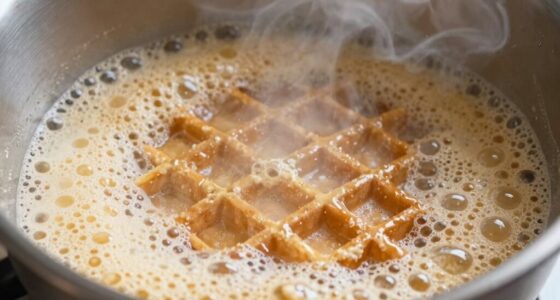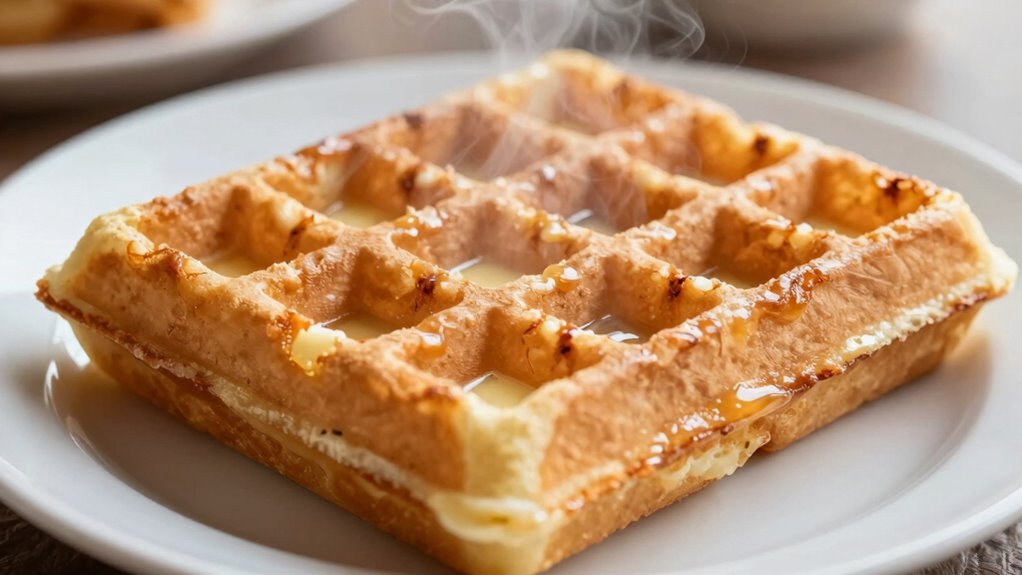

Waffles turn limp quickly mainly because excess moisture from the batter or improper cooling traps steam, softening the exterior. Cooking at too low a temperature prevents crispness, while too high a temperature can burn the outside before the inside cooks, leading to sogginess. Leaving waffles uncovered or stacked traps moisture, speeding up limpness. If you want to keep them crisp longer, understanding how temperature, moisture, and cooling affect texture can make a big difference—keep exploring to learn more.

Get baking supplies delivered free with Prime
- Fast, free delivery on millions of items
- Prime Video, Amazon Music and more included
- Member-only deals all year
Key Takeaways
- Excess moisture in the batter or from improper storage causes waffles to absorb water and become limp quickly.
- Insufficient cooking temperature results in underdeveloped crust, leading to faster sogginess.
- Covering or stacking waffles traps steam, softening the exterior and reducing crispness.
- Cooling waffles on a non-ventilated surface prevents moisture escape, accelerating limpness.
- Reheating without proper drying can restore some crispness but may not fully recover initial texture.

Waffles often turn limp within minutes, especially when they’re not served immediately after cooking. This quick change in texture can be frustrating, but understanding why it happens helps you prevent it. The key factors influencing this are waffle texture and cooking temperature. When you start cooking, you want your waffle batter to reach the right consistency and your waffle iron to be set to the correct temperature. If the cooking temperature is too low, the waffle won’t cook evenly, resulting in a soggy interior that loses crunch quickly as it cools. Conversely, if the temperature is too high, the outside might burn before the inside is fully cooked, but that’s a different issue. For a crispy waffle with a good waffle texture, the iron needs to be hot enough to instantly sear the batter, creating a barrier that traps moisture inside while allowing the exterior to crisp up.
Once cooked, your waffle’s initial crispness depends heavily on the balance of moisture and heat. If the waffle is cooked at the right temperature, it’ll develop that desirable golden-brown exterior and a fluffy, well-structured interior. However, once you remove it from the iron, the waffle starts to cool and lose moisture. This is natural, but the rate at which it turns limp depends on how well it was cooked and how quickly it cools. If it was undercooked or the temperature was off, the waffle might not have formed a proper crust, making it more prone to becoming soggy rapidly. Also, if the batter contains too much liquid or isn’t thick enough, the waffle won’t hold its crispness for long because excess moisture makes the waffle texture more susceptible to sogginess. Proper batter consistency is essential for maintaining crispness. Additionally, the initial cooking process plays a vital role in setting the structure and moisture content of the waffle. Using a proper storage method immediately after cooking can also help preserve the crispness for longer.
Proper cooking temperature and batter consistency are key to maintaining waffle crispness after removal.
Another factor that contributes to limp waffles is how you handle them after cooking. Leaving them uncovered or stacking them without proper ventilation traps steam and moisture, which softens the crisp exterior and results in a limp texture. To keep waffles crisp longer, you should transfer them to a wire rack immediately after cooking, allowing excess moisture to escape. Reheating can also help restore some crispness if stored properly, but you’ll never fully regain the original waffle texture if it’s gone soft. Proper ventilation during cooling is crucial for maintaining crispness.
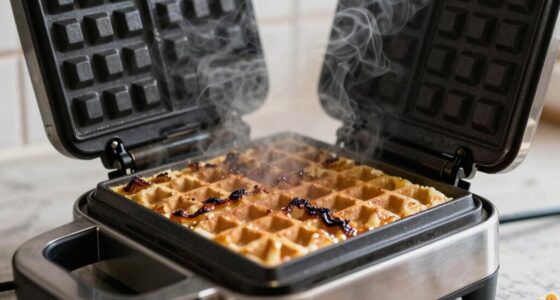
waffle iron with adjustable temperature control
As an affiliate, we earn on qualifying purchases.
As an affiliate, we earn on qualifying purchases.
Frequently Asked Questions
Can the Type of Waffle Iron Affect How Quickly Waffles Become Limp?
Yes, the type of waffle iron can affect how quickly waffles turn limp. Waffle material, like cast iron or non-stick, influences heat retention and distribution, impacting crispness. Iron temperature also plays a role; if it’s too low, waffles won’t crisp properly and turn limp faster. Using a high-quality waffle iron with adjustable temperature settings helps you achieve crispy waffles that stay fresh longer.
Does Altitude Influence How Fast Waffles Lose Their Crispiness?
Altitude effects can markedly influence how quickly your waffles lose their crispiness. Higher altitudes often cause moisture to escape faster, leading to quicker crispy degradation. You might notice your waffles soften sooner than expected. To combat this, try adjusting your batter or cooking time, and keep waffles warm in an oven. This way, you can enjoy that satisfying crunch longer, regardless of altitude’s subtle interference.
Are Certain Toppings or Syrups Contributing to Waffle Sogginess?
Yes, certain toppings or syrups can make your waffles soggy quickly. Buttery toppings melt into the waffle, adding moisture that softens its crispness. Fruit syrups, especially thick or juicy ones, seep into the waffle’s surface, causing it to lose its crunch. To keep your waffles crisp, add toppings just before serving, and opt for thicker syrups or serve fruit toppings separately to prevent sogginess.
How Does Storing Waffles Improperly Impact Their Texture Over Time?
Storing waffles improperly can make them turn limp quickly. If you don’t use proper freezing techniques and packaging materials, moisture gets trapped, causing sogginess. To keep them crisp, store waffles in an airtight container or wrap them tightly with plastic wrap or foil. Avoid leaving them exposed to air or humidity, as these factors make waffles absorb moisture, losing their crunch and turning limp over time.
Can Using Different Flour Types Change How Quickly Waffles Turn Limp?
Yes, using different flour types can change how quickly waffles turn limp. Flours with higher gluten development, like bread flour, create a firmer structure that resists moisture absorption, keeping waffles crisp longer. Conversely, softer flours, such as cake flour, absorb more moisture and lead to quicker limpness. So, choosing your flour carefully impacts the waffle’s texture and how fast it loses its crispness after cooking.
Conclusion
So, next time your waffles turn limp faster than you can enjoy them, remember—it’s all about moisture, storage, or the way you cook them. But what if there’s an unexpected culprit lurking behind the scenes? Don’t let a simple mistake ruin your breakfast. Stay curious and keep experimenting. The secret to perfectly crispy waffles might be closer than you think—ready to surprise you when you least expect it. Are you prepared to uncover it?
Halloween Picks
halloween
As an affiliate, we earn on qualifying purchases.