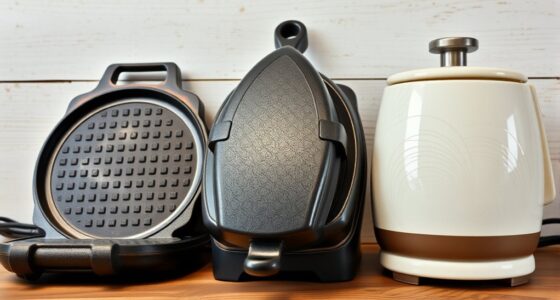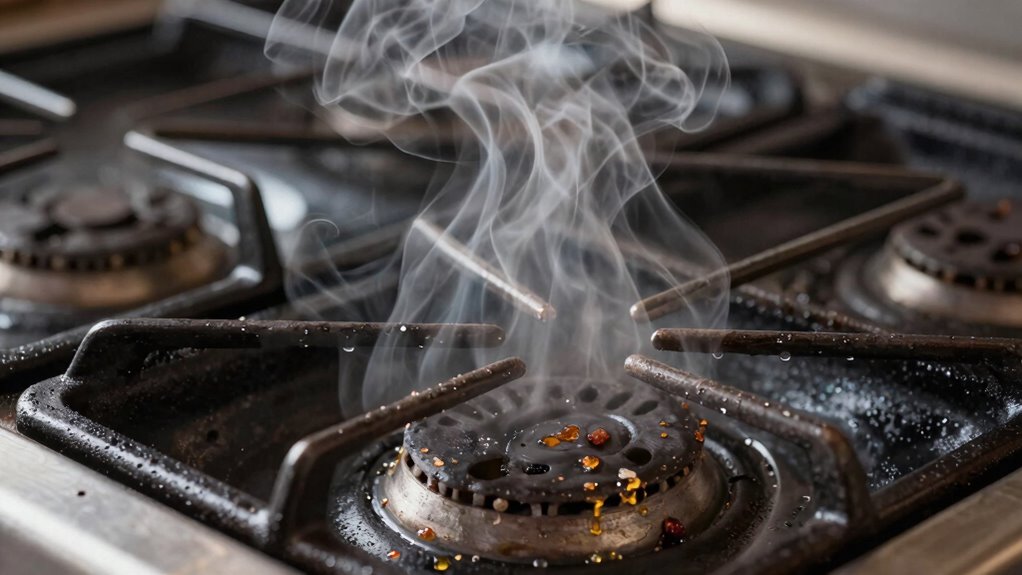

Steam vents are essential for achieving crispness in your dishes because they help control moisture and pressure inside the cooking vessel. By releasing excess steam, they prevent sogginess and condensation that can make food limp. This keeps surfaces dry and promotes a crispy exterior, especially for delicate foods like dumplings or tempura. If you want to master how vents boost texture and flavor, keep exploring—they play a bigger role than you might think.

Get baking supplies delivered free — and shop member deals
- Fast, free delivery on millions of items
- Access to Prime Big Deal Days deals on October 6–7
- Prime Video, Amazon Music and more included
Key Takeaways
- Vents prevent condensation buildup, helping foods stay dry and crispy rather than soggy.
- They regulate moisture and pressure, maintaining ideal conditions for crisp exterior development.
- Proper venting allows excess steam to escape, preserving crunchiness in delicate foods like tempura and dumplings.
- By controlling humidity, vents enable achieving a balanced environment for crisp, flavorful dishes.
- They support consistent cooking, ensuring even heat distribution and preventing sogginess that ruins texture.

Steam vents play a essential role in enhancing the crispness of foods, especially when steaming vegetables, seafood, or dumplings. When you use steam vents properly, they help regulate moisture and pressure inside the cooking vessel, which directly influences the texture of your food. One often overlooked benefit is how vents can impact the fermentation process in certain dishes, such as fermented vegetables or fish sauces. By allowing excess moisture to escape, vents prevent sogginess and promote a balanced environment that encourages the right fermentation conditions. This results in a more complex flavor profile and improved texture, giving your dishes a richer, more authentic taste.
Additionally, steam vents contribute greatly to flavor enhancement. When steam escapes through the vents, it carries away excess water vapor, preventing over-saturation. This means your food retains a firmer texture and develops a more concentrated flavor. For example, when steaming seafood or vegetables, vents help avoid over-steaming, which can dilute flavors and lead to mushiness. Instead, they help lock in natural juices and intensify the taste, making each bite more satisfying. This precise control over moisture and heat ensures your dishes stay crisp and flavorful, rather than turning limp or bland.
You might wonder how a simple vent influences the crispness of such delicate foods. The key lies in controlling the environment inside your steaming setup. Without vents, steam can condense and drip back onto the food, making it soggy. With vents, excess moisture escapes, allowing the surface of your food to stay dry and crisp. This is especially important for items like dumplings or tempura, where a crispy exterior is essential. By maintaining an ideal balance of moisture, vents help you achieve that perfect crunch while preserving tenderness inside.
Furthermore, proper venting supports the overall cooking process by preventing pressure buildup that could cause uneven cooking or even dangerous situations. It ensures that steam flows smoothly, avoiding hot spots that might burn or overcook parts of your dish. This consistent environment not only improves texture but also allows flavors to develop more fully during steaming, giving you a better culinary outcome.
In essence, steam vents are not just a gimmick—they’re a key tool for controlling moisture, enhancing flavor, and ensuring a crisp, well-textured finish. They help you master the delicate art of steaming, turning simple ingredients into restaurant-quality dishes that are both flavorful and satisfyingly crisp.
As an affiliate, we earn on qualifying purchases.
Frequently Asked Questions
Do Steam Vents Work With All Types of Food?
Steam vents work well with many types of food, especially those that benefit from moisture, like vegetables or baked dishes, enhancing crispness and texture. You should check dishwasher compatibility before using steam vents or consider countertop installation options to guarantee proper setup. Keep in mind that some delicate foods might not respond as well, so experiment to find what works best for your cooking style.
How Long Should Steam Vents Be Used During Cooking?
You should use steam vents for about 5-10 minutes during cooking, depending on the dish. This duration allows proper venting techniques to release excess moisture and enhance crispness without over-drying your food. Research shows that controlled venting improves texture and flavor. Keep an eye on your food, and adjust the time as needed; longer venting can be beneficial for certain recipes, but too much might dry out your ingredients.
Are Steam Vents Safe to Use in Microwave Ovens?
Yes, steam vents are safe to use in microwave ovens when designed for microwave safety. Look for vents with proper vent design, ensuring they’re made from microwave-safe materials and won’t cause sparks or damage. Always follow the manufacturer’s instructions, and avoid using vents not labeled microwave-safe. Proper vent design helps release steam safely, preventing pressure buildup and maintaining your microwave’s integrity.
Can Steam Vents Prevent Sogginess in Fried Foods?
Think of steam vents as your kitchen’s secret guardians of texture. They help moisture control by releasing excess steam, which prevents fried foods from becoming soggy. With proper use, steam vents preserve that crispy exterior you crave, keeping your dishes perfectly crunchy. By allowing steam to escape, you ensure your fried favorites stay crisp and delicious, turning simple reheating into a skillful dance of flavor and texture preservation.
Do Steam Vents Affect the Nutritional Value of Food?
Steam vents don’t substantially affect the nutritional impact or vitamin retention in your food. They mainly help release excess moisture, preserving texture and crispness. Since they don’t alter the core ingredients, your food’s vitamins and nutrients stay largely intact. You can enjoy crispy, well-cooked dishes without worrying about losing essential nutrients or vitamins, making steam vents a practical tool for healthier, flavorful meals.
Conclusion
Next time you hear that gentle hiss from your steam vent, imagine the delicate dance of moisture and heat working together. It’s like a secret rhythm that transforms your food, crisping the edges while keeping the inside tender. Embrace the steam’s whisper, letting it weave its magic. With each vent’s release, you’re not just cooking—you’re crafting perfect texture, a symphony of crispness and moisture that turns ordinary bites into extraordinary delights.
Fall Picks
fall essentials
As an affiliate, we earn on qualifying purchases.