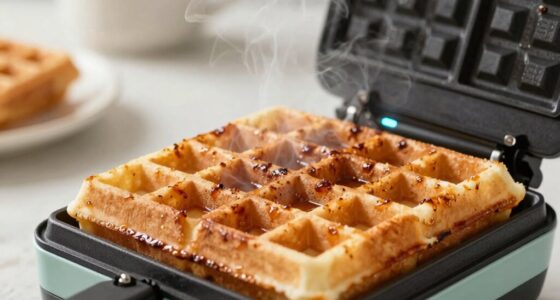
When comparing 120V and 240V waffle makers, you’ll notice differences beyond just the plug. The 240V models heat up faster, offering quicker cooking times and potentially better results, but they also consume more power and may require special electrical outlets. 120V machines are usually smaller, easier to plug in, and ideal for home use, but take longer to heat. To understand how these differences impact performance and installation, continue exploring these key factors.

Get baking supplies delivered free — and shop member deals
- Fast, free delivery on millions of items
- Access to Prime Big Deal Days deals on October 6–7
- Prime Video, Amazon Music and more included
Key Takeaways
- 240V waffle makers heat faster and achieve crispier textures due to higher power output.
- They tend to be larger, more industrial in design, suited for frequent or commercial use.
- Installing a 240V outlet may require electrical modifications, increasing initial setup costs.
- 120V models are more compact, easier to plug in, and ideal for standard home kitchens.
- Overall, 240V units offer quicker cooking times, but may involve higher upfront investment and electrical work.
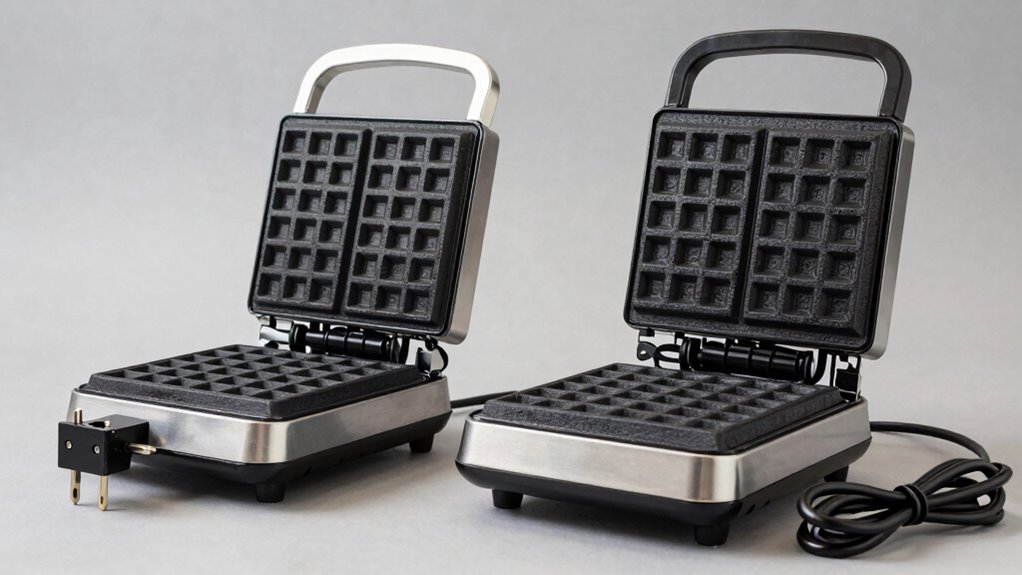
Choosing between a 120V and a 240V waffle maker can substantially impact your cooking experience, especially if you want quick, evenly cooked waffles. The voltage difference influences several factors, but one of the most noticeable is power consumption and heating speed. A 240V waffle maker generally draws more power because it operates at a higher voltage, which means it can generate heat faster. This increased heating speed allows you to prepare waffles more quickly, saving you time, especially during busy mornings or when you’re making multiple batches. Conversely, a 120V waffle maker typically consumes less power, leading to slower heating times. While it might take a bit longer to reach the desired temperature, it still produces good results, especially if you’re patient and don’t mind waiting a little longer for your waffles.
The higher power consumption of a 240V appliance isn’t necessarily a downside; it often translates into more efficient heating, giving you consistent results with less wait time. If you prefer waffles with a crispy exterior and fluffy interior, a 240V model helps you achieve that more reliably because it heats up rapidly and maintains a steady temperature. On the other hand, a 120V waffle maker, with its lower power draw, might be less aggressive in heating, but it still works well for casual use or if you’re cooking in a setting with limited electrical capacity. Keep in mind that because of the difference in power, a 240V waffle maker might also be more energy-efficient in the long run, especially if it shortens cooking time and reduces overall electricity use. Additionally, the electrical requirements for 240V appliances can vary depending on your home’s wiring and outlet setup.
However, the choice isn’t only about power consumption and heating speed. The voltage also affects the size and design of the appliance. 240V models are often larger or more industrial-looking, designed for more frequent or commercial use, whereas 120V models tend to be more compact and suited for home kitchens. Installing a 240V outlet might require additional electrical work if your home isn’t already set up for it, which could increase upfront costs. But if you’re looking for faster, more efficient cooking and are willing to handle the electrical setup, a 240V waffle maker offers significant advantages in terms of heating speed and overall performance.
As an affiliate, we earn on qualifying purchases.
Frequently Asked Questions
Do 240V Waffle Makers Cook Faster Than 120V Models?
A 240V waffle maker generally cooks faster than a 120V model because it offers higher power consumption, which translates to quicker heating speed. With more electrical energy, it reaches ideal temperature faster, reducing cooking time. So, if you want faster waffles, a 240V appliance can be more efficient. Just keep in mind that the increased power demands might require a dedicated circuit for safety and better performance.
Are 240V Waffle Makers More Energy-Efficient?
Yes, 240V waffle makers can be more energy-efficient because they often draw less current for the same power, reducing overall power consumption. This means you might see better energy savings over time, especially if you use the appliance frequently. Keep in mind that efficiency also depends on the waffle maker’s design and how you operate it. So, choosing a high-quality 240V model can help maximize your energy savings.
Can I Use a 240V Waffle Maker With a Standard Outlet?
You can’t use a 240V waffle maker with a standard outlet because of plug compatibility and wiring requirements. These appliances need a specific outlet designed for higher voltage, and your current outlet likely isn’t suitable. If you want to use a 240V waffle maker, you’ll need to have the proper wiring installed by a qualified electrician to meet safety standards. Never attempt to modify plugs or wiring yourself.
Do 240V Waffle Makers Cost More Than 120V Ones?
Ever wonder if 240V waffle makers cost more? Generally, yes—you’ll find a higher price difference and installation costs compared to 120V models. The initial investment is often steeper, but it’s due to the more powerful heating elements and specialty wiring needed. Keep in mind, these costs can add up quickly, so consider whether the performance benefits outweigh the extra expense before choosing a 240V waffle maker.
Are 240V Waffle Makers Suitable for Residential Use?
Yes, 240V waffle makers are suitable for residential use if your home’s electrical system supports the voltage. You need to check voltage compatibility and guarantee proper installation requirements are met, such as dedicated circuits and correct wiring. If your household can handle 240V safely, these waffle makers work well and often heat up faster. Always consult an electrician to confirm your setup before plugging in a 240V appliance.
Conclusion
So, whether you choose a 120V or 240V waffle maker, you’re not just picking a different plug—you’re accessing the power of breakfast mastery! The voltage can turn your waffle game from a simple snack into a breakfast revolution, transforming ordinary batter into golden, crispy perfection in record time. It’s not just a small change—it’s a game-changer that could make you the breakfast hero of your neighborhood! Choose wisely, and watch your waffle dreams become reality.
Fall Picks
fall essentials
As an affiliate, we earn on qualifying purchases.