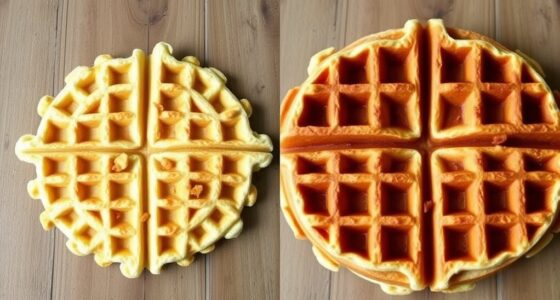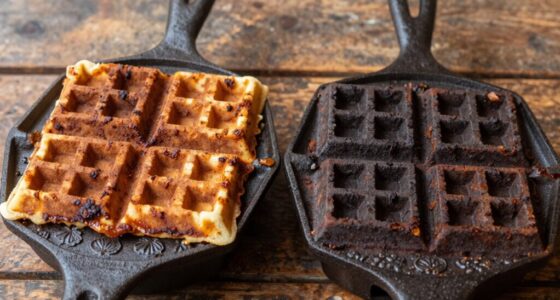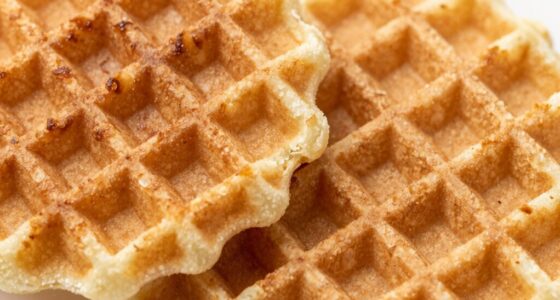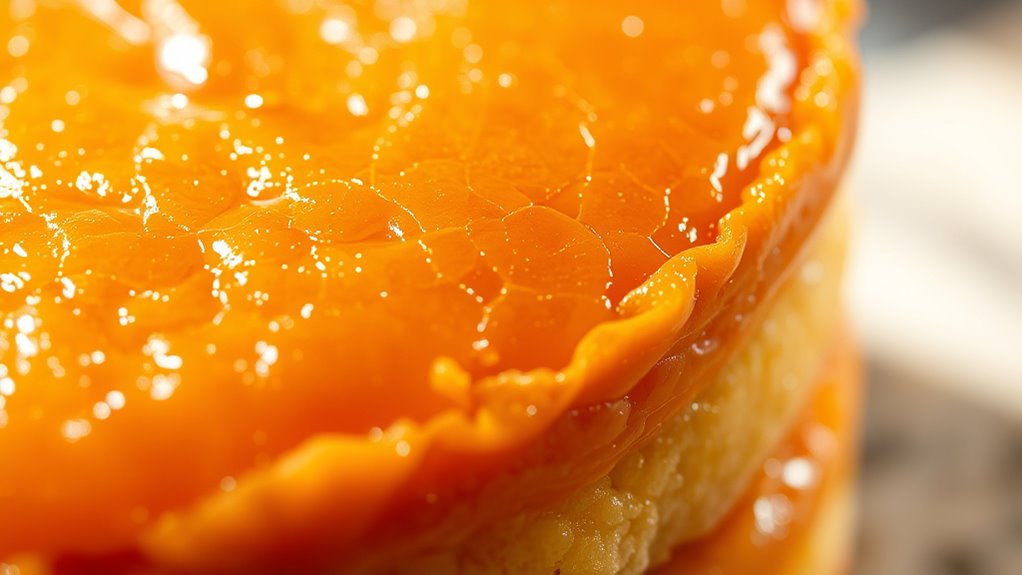

To achieve crispy edges in your desserts, you need to understand how sugar caramelizes during heating. As you heat sugar, it melts and undergoes chemical changes, developing rich flavors and a deep amber color. Controlling temperature and timing is key to prevent burning or undercooking. When done right, the sugar forms a crispy, flavorful crust that enhances texture and taste. Keep exploring these reactions further to perfect your caramelization skills.

Get baking supplies delivered free with Prime
- Fast, free delivery on millions of items
- Prime Video, Amazon Music and more included
- Member-only deals all year
Key Takeaways
- Sugar melts and undergoes chemical reactions, creating new compounds that develop rich caramel flavors.
- Monitoring color and temperature ensures proper caramelization for crispy edges without burning.
- Achieving the right amber hue indicates optimal dehydration and flavor development.
- Precise timing and constant stirring prevent overcooking, which causes bitterness or burnt notes.
- Proper caramelization results in a crispy exterior that contrasts with a soft interior, enhancing dessert texture.

Have you ever wondered what gives caramel its rich, golden hue and complex flavor? The answer lies in the process of sugar melting and caramel flavor development. When you heat sugar, it doesn’t just turn brown—it’s undergoing a series of chemical changes that transform simple sucrose into a deep, flavorful syrup. As the temperature rises, the sugar molecules begin to break down and recombine, producing new compounds that give caramel its distinctive taste and aroma. This transformation is fundamental for achieving those crispy edges in your baked or cooked treats. Understanding the chemistry behind this process helps you better control the outcome and avoid common pitfalls like burning or undercooking.
Caramel’s rich flavor and golden hue come from chemical changes during sugar melting and caramelization.
When you start melting sugar, you need to pay close attention to its color and texture. Initially, the sugar dissolves into a clear syrup, but as heat continues, it begins to darken. This darkening signals the onset of caramel flavor development. If you keep a watchful eye and control the heat, you can steer the process toward the perfect balance—rich, golden, and full of nuanced flavors without burning. The key is to understand that sugar melting is not just about turning sugar into liquid; it’s about carefully guiding the chemical reactions that produce complex, layered flavors.
As the sugar reaches the right temperature—usually between 320°F and 350°F—the caramel flavor becomes more pronounced. During this stage, the sugar undergoes a series of Maillard reactions and caramelization, creating compounds that contribute to that signature toasted, nutty aroma. These reactions are what give caramel its depth, making it more than just a sweet syrup. When you cook sugar properly, the edges of your dessert develop that tempting crispy texture, thanks to the rapid dehydration and formation of a thin, brittle layer. This crispy exterior contrasts beautifully with softer, chewy interiors, elevating the overall eating experience.
Achieving crispy edges depends on precise timing and temperature control during the caramelization process. Overcooking can lead to bitterness or burnt flavors, while undercooking might leave the edges soft and lacking that satisfying crunch. To get it just right, you should stir carefully and monitor the color development constantly. Once the sugar hits that ideal amber hue, you can swiftly remove it from heat to prevent further darkening. This quick action preserves the delicate balance of flavors and textures—crisp edges that are rich, slightly bitter, and perfectly caramelized. Mastering sugar melting and caramel flavor development isn’t just about achieving sweetness; it’s about crafting a complex, crispy edge that elevates your desserts to new heights.
digital sugar thermometer for caramelization
As an affiliate, we earn on qualifying purchases.
As an affiliate, we earn on qualifying purchases.
Frequently Asked Questions
How Does Sugar Type Affect Caramelization?
You’ll notice that different sugar types affect caramelization by influencing crystallization and flavor development. Granulated sugar caramelizes evenly, creating a smooth, rich flavor, while honey or maple syrup can accelerate crystallization, leading to a more complex taste. Using raw or unrefined sugars introduces unique flavors and textures, but may cause uneven caramelization. Choosing the right sugar guarantees crispy edges and enhances the overall depth of your caramelized treats.
What’s the Ideal Temperature for Caramelizing Sugar?
You should aim for a temperature of around 320°F to 350°F for caramelizing sugar. This range allows you to control the caramelization timing and develop rich, complex flavors. Keep in mind, the sugar crystal structure starts breaking down at these temperatures, forming the caramel’s characteristic color and texture. Carefully monitor the heat to prevent burning, and you’ll achieve perfect crispy edges and a delicious, glossy caramel.
Can Sugar Caramelize Without Added Fats?
Yes, sugar can caramelize without added fats. As you heat sugar, it undergoes sugar crystallization, transforming into a golden-brown syrup. This process enhances flavor development, creating rich, complex notes. Without fats, you’ll notice a purer caramel taste and crisp edges, perfect for toppings or confections. Just make certain of even heating and patience, as sugar alone can quickly burn if not monitored carefully.
How Does Humidity Influence Caramelization?
Humidity impact is significant, as high moisture levels can slow down caramelization. When humidity rises above 60%, moisture effects prevent sugar from reaching the necessary temperature, leading to uneven browning or sticky textures. You’ll notice that in humid environments, achieving crispy edges becomes more challenging because the moisture hampers the sugar’s ability to caramelize properly. To get consistent results, control humidity or work in a dry setting.
What Are Common Mistakes That Prevent Crispy Edges?
To get crispy edges, avoid overusing oil, which can make sugar too greasy and hinder proper caramelization. Guarantee even heat distribution; hot spots can cause uneven browning and soggy edges. Don’t rush the process—patience helps develop those crispy, caramelized edges. Keep an eye on the temperature, and stir gently to prevent burning or uneven cooking. These steps help you achieve perfect, crispy edges every time.
Conclusion
Remember, mastering caramelization takes patience, but the crispy edges and rich flavor are worth it. If you worry about burning the sugar, keep a close eye and stir gently. Don’t be intimidated—practice makes perfect, and soon you’ll create perfectly caramelized desserts that impress. So, embrace the process, enjoy the sweet aroma, and savor the delicious results. With a little attention, you’ll enjoy crispy, golden treats every time!
Halloween Picks
halloween
As an affiliate, we earn on qualifying purchases.